
Are Hand Tufted Rugs Good Quality? a Complete Guide


A homeowner can spend an afternoon comparing colours, patterns, and textures, only to discover that two rugs with nearly identical surfaces behave very differently after they reach the floor. One feels plush and settled in a quiet bedroom. The other begins to flatten, shed, or develop backing concerns in a busy entrance. The question “are hand tufted rugs good quality” therefore has no useful yes-or-no answer without considering how the rug is made, what it is made from, and where it will live.
For discerning homeowners across Greater Niagara, Hamilton, and Toronto, quality is best judged as room-specific performance. A hand-tufted rug can be a design-forward choice, but it generally isn't the same construction as an heirloom hand-knotted rug. The most confident purchase comes from understanding the difference.
Understanding the Value of Hand Tufted Construction
A typical conversation in a King Street Showroom begins with a hesitation familiar to any careful buyer. The rug looks artisanal, feels generous underfoot, and introduces exactly the colour balance a room needs. Yet the homeowner wonders whether the handcrafted appearance represents lasting value or just a polished surface over a short-life product.
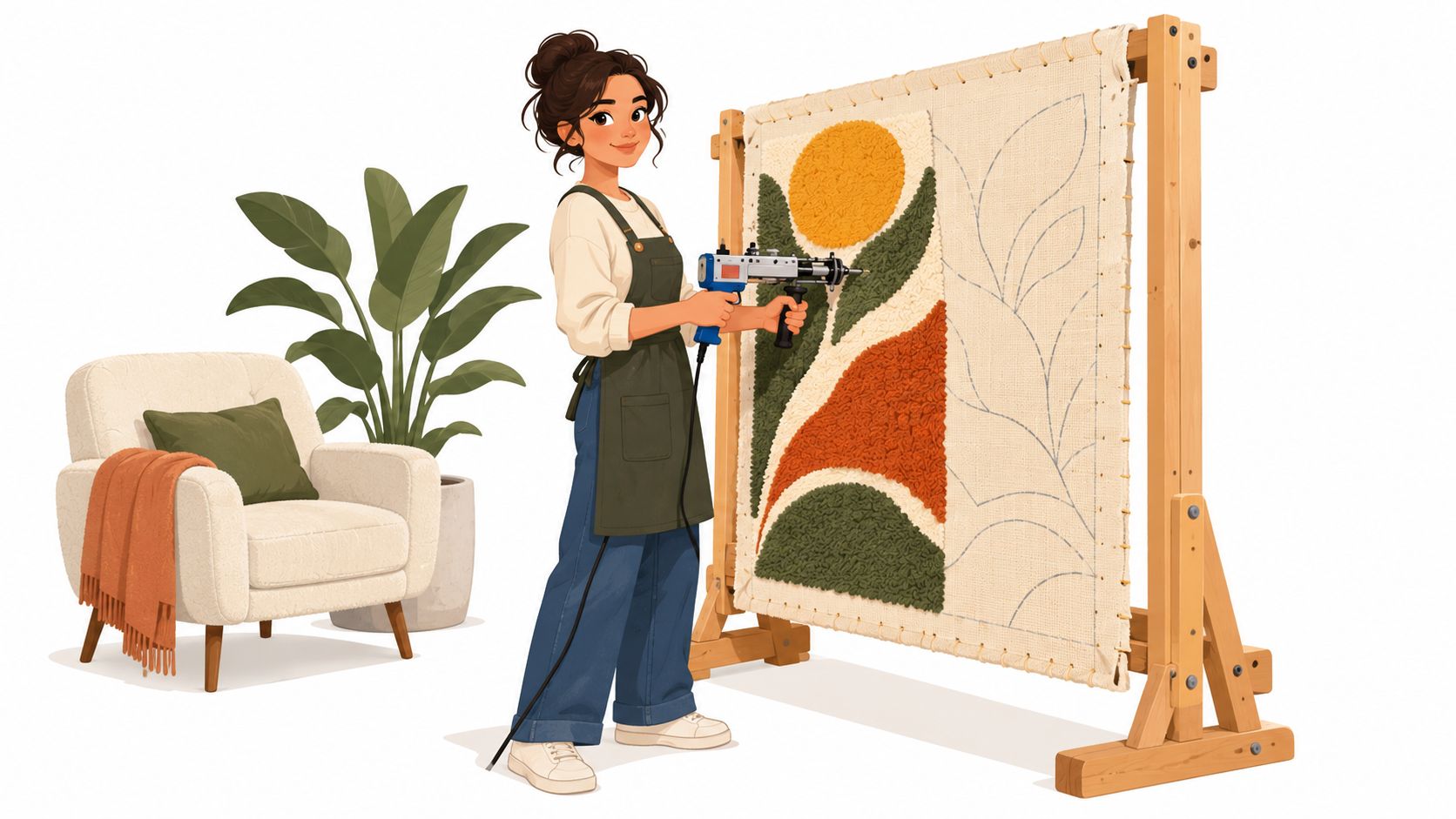
The answer begins with construction. A hand-tufted rug is made by pushing yarn through a foundation canvas, following a drawn design. The loops or cut fibres are then held in place with adhesive and a secondary backing. The result can offer rich texture, bold scale, and considerable design flexibility without requiring the slower, knot-by-knot structure of a hand-knotted rug.
The label is not the quality grade
Statistics Canada formally places carpet and rug mills within an established domestic industry that includes tufted, woven, and needle-punched products. Canadian trade documentation has also listed tufted rugs, mats, and runners as a distinct product line over many decades, so tufting isn't an obscure import-only method. The classification confirms that tufted rugs are a recognised product category, not that every rug in the category has the same quality.
That distinction matters. Hand-tufted describes a method, not a guarantee of heirloom quality. Fibre content, pile density, pile height, backing, adhesive, and finishing determine whether the rug feels substantial and remains stable. A beautifully designed rug with weak backing can disappoint, while a carefully specified wool rug can serve a room very well.
A hand-knotted rug creates a different conversation because each yarn segment is secured through knots in the foundation. Homeowners unfamiliar with that structure may benefit from this guide to what makes a hand knotted rug special. The distinction isn't about declaring one method universally superior. It is about matching the construction to the desired lifespan, room conditions, and design intent.
Art for your floor, with practical expectations
Rugs act as art for your floor and often establish a room's palette before furniture, lighting, and accessories are finalised. A hand-tufted design can be an excellent foundation for a complete room concept, especially where softness and expressive pattern matter more than generations of service.
For a broader Canadian perspective on selecting a rug's scale and character, homeowners can explore Critelli Furniture's guide to the best area rugs in Canada. The right question isn't whether hand-tufting sounds luxurious. It is whether the specification supports the way the room will be used.
How Hand Tufted Rugs Are Crafted
Hand-tufting begins with a primary canvas stretched over a frame. An artisan works from the reverse side, using a tufting gun to push yarn through the canvas along the planned design. The tool controls the placement of the yarn, while the artisan determines the direction, density, texture, and colour transitions.
Once the surface is complete, the exposed yarn is often trimmed, carved, or shaped to create a level pile or a more dimensional pattern. A latex adhesive is applied to the reverse to help hold the tufts in place, followed by a secondary backing, commonly a cotton canvas. That backing isn't decorative. It is part of the rug's structural system.
Three constructions, three forms of stability
The difference becomes clearer when the rugs are viewed from underneath.
| Construction | How the surface is secured | Practical implication |
|---|---|---|
| Hand-tufted | Yarn is punched through canvas and held with adhesive and backing | Plush and design-forward, with backing integrity as a major quality factor |
| Hand-knotted | Yarn is individually knotted into the foundation | Strong structural connection and potential for heirloom use |
| Machine-made | Automated equipment places and secures the yarn | Consistent production, with quality determined by the materials and build |
A hand-knotted rug's foundation carries the knots themselves. A hand-tufted rug depends more heavily on the interaction between canvas, adhesive, and secondary backing. That's why a buyer should turn over the rug rather than judging only its face.
What the reverse side reveals
A visible fabric backing usually indicates a tufted construction. A hand-knotted rug generally shows the structural relationship between the front and back rather than a fully applied canvas cover. Fringe can offer another clue. On a hand-knotted piece, it can form part of the foundation, while fringe on a tufted rug is usually decorative and attached separately.
None of these observations replaces a close inspection of the materials. A dense wool pile and flexible backing may create a dependable hand-tufted rug, while a poorly finished piece can show loose fibres, uneven edges, or excessive adhesive. For homeowners comparing construction styles, Critelli Furniture's hand-knotted rug guide provides useful context for understanding why knotting and tufting should not be treated as interchangeable terms.
Practical rule: A rug's face tells the design story. Its reverse tells the construction story.
The process also explains why hand-tufted rugs can support highly expressive, bespoke patterns. Artisans can work with bold shapes, carved relief, and unusual compositions without relying on the same knotting structure. That flexibility makes tufting especially relevant to a curated, contemporary interior, provided the backing and fibres suit the room.
Identifying Premium Materials and Build Quality
Quality inspection should begin with specifications, not adjectives. Words such as artisanal, luxury, and bespoke describe an aesthetic position, but they don't reveal whether a rug will recover from furniture, hold its backing, or remain comfortable under regular use.
A Canadian retail guide identifies premium hand-tufted rugs with pile weights around 2,500 to 3,000 grams per square metre and pile heights around 10 to 12 millimetres. The same guidance associates stable construction with cotton backings and flexible latex adhesion. These figures are useful reference points, not a substitute for examining the actual rug and its intended room. (Canadian hand-tufted rug guidance)
A specification-led inspection
The following checklist helps separate a considered purchase from a decorative short-life piece.
Fibre content: Wool is often a strong choice for a room that needs resilience, warmth, and a naturally substantial hand. Synthetic or blended fibres may suit particular design goals, but the buyer should understand how they respond to compression, sunlight, and cleaning.
Pile weight: A premium reference range of 2,500 to 3,000 grams per square metre indicates a substantial surface when the other construction details are sound. (Canadian hand-tufted rug guidance)
Pile height: A range around 10 to 12 millimetres can deliver plushness without automatically creating an excessively tall surface. (Canadian hand-tufted rug guidance)
Backing: A secondary cotton canvas with flexible latex is preferable to a brittle or poorly bonded backing system. The rug should lie flat, flex without alarming cracking, and show no obvious delamination.
Finishing: Edges should appear even and secure. Carved patterns should have deliberate transitions rather than ragged cuts. Excessive glue odour, loose tufts, or visible shedding deserve careful questioning before purchase.
Softness isn't the whole assessment
A plush hand can be persuasive, particularly in a showroom. Yet softness alone doesn't indicate density or longevity. A tall pile may feel luxurious initially but can crush more quickly under furniture and repeated traffic. Lower piles around 0.5 to 0.75 inches generally wear better than constructions above 1 inch, particularly where people walk frequently. (Canadian backing and pile guidance)
The lifespan comparison also deserves honest attention. One Canadian buying guide cites approximately 5 to 10 years for hand-tufted rugs and 50 or more years for hand-knotted rugs. (Canadian hand-tufted rug buying guidance) That doesn't make a tufted rug a poor purchase. It positions it correctly as a design-forward, mid-market choice rather than an automatic heirloom.
For a wool rug selected with a longer design horizon in mind, a homeowner can compare the construction principles represented in hand-knotted wool rugs in an 8 by 10 size, while still judging any hand-tufted option on its own specifications.
Evaluating Durability for Different Living Spaces
A hand-tufted rug doesn't have one universal performance profile. The same piece may be a thoughtful investment in a bedroom and a frustrating choice in an entryway, even when both rooms have attractive proportions and compatible colour schemes.
The decisive factors include foot traffic, furniture weight, sunlight, pets, children, vacuuming habits, and the likelihood of moisture or frequent spills. Room suitability is therefore a more reliable quality test than construction terminology alone.
A room-by-room comparison
| Room | Likely performance of a well-built hand-tufted rug | Design recommendation |
|---|---|---|
| Bedroom | Strong fit where traffic is moderate and comfort is central | Consider wool, a stable backing, and a restrained pile height |
| Living room | Suitable when traffic is controlled and care is consistent | Use furniture placement and a quality rug pad to reduce movement |
| Dining room | Possible, but chairs and spills increase demands | Prefer a dense, manageable pile that permits easy chair movement |
| Hallway or entryway | Higher risk of compression, soiling, and backing stress | Consider a more resilient construction if traffic is constant |
| Children's space | Depends on activity, cleaning needs, and moisture exposure | Avoid choosing solely for softness or visual appeal |
The guide to proper area rug placement is useful because placement influences more than appearance. Furniture should sit in a way that reduces exposed edges and limits concentrated pressure. A rug pad can also help reduce friction between the floor and backing, though the pad must be compatible with the rug and flooring.
The Southern Ontario test
In a Greater Niagara, Hamilton, or Toronto home, an entryway may receive outdoor grit, winter moisture, and repeated footwear. A bedroom usually offers a calmer environment, with less abrasion and fewer sudden spills. A high-quality hand-tufted wool rug can perform gracefully in the second setting while offering poor value in the first.
Sunlight deserves equal attention. Canada-focused rug guidance notes that glue can yellow in sunlight and that high-pile tufted rugs flatten more quickly under furniture. A designer should therefore review window direction, the location of heavy pieces, and the household's cleaning routine before recommending a specific pile.
The right rug isn't the most durable rug in every category. It is the rug whose construction suits the life of the room.
A family seeking a flexible, changing interior may value a hand-tufted rug's design freedom and approachable lifespan. A homeowner creating a formal room intended to remain in the family may prefer hand-knotted construction. Neither decision is automatically more refined. The refinement lies in choosing with performance in mind.
Considering Indoor Air Quality and Allergen Risks
A rug can look impeccable and still raise questions about the air inside a home. Appearance, softness, and pile density matter, but the backing adhesive, ventilation, cleaning routine, and indoor humidity also influence comfort, particularly in a Canadian winter when windows remain closed for long periods.
Hand-tufted rugs commonly use latex or adhesive layers to secure the yarn. That makes the backing a material question as well as a durability question. Canadian housing guidance emphasises low-emitting interior materials and adhesives, while independent flooring guidance recommends sealed finishes and indoor humidity around 35 to 55 percent to help limit mould and dust mites. (Canadian indoor air quality guidance)
Ask what lies beneath the surface
A careful buyer should ask for clear information about the backing and adhesive system. The following questions help focus the conversation:
- Emission profile: Are the backing materials and adhesives described as low-emitting?
- Odour: Does the rug have a strong chemical or rubber-like smell, and can it be aired out before installation?
- Moisture tolerance: What cleaning method is appropriate, and could excess water affect the latex?
- Ventilation: Can the room receive adequate air exchange after the rug arrives?
- Humidity: Is the home maintaining a stable indoor environment through winter?
These considerations don't mean every hand-tufted rug creates an air-quality problem. They mean that material transparency is part of quality. A rug destined for a bedroom or basement deserves more scrutiny than one placed in a well-ventilated seasonal space.
Allergy-conscious maintenance
Dust and allergens collect in floor coverings when cleaning is inconsistent or when the pile is difficult to access. A suitable vacuuming method, prompt attention to spills, and a professional cleaning plan can support a more comfortable room. Care providers may also offer practical context, such as this resource on Dublin carpet care by Top Cleaners, although Canadian homes still require advice suited to their own materials and climate.
Hand-tufted rugs should not be treated as washable by default. Excessive moisture can affect the adhesive or backing, so the care label and maker's guidance should determine the cleaning method. For a bedroom-focused routine, homeowners can also review essential tips for maintaining a dust and allergen-free bedroom.
A low-odour backing, controlled humidity, regular vacuuming, and sensible placement together create a more considered result. The best rug decision supports both the visual language of the room and the way the household breathes, cleans, and lives in it.
Making Your Informed Rug Purchase Decision
A discerning purchase begins with the room, not the label. The homeowner should first decide whether the rug needs to act as a soft backdrop, a dramatic focal point, a quiet bedroom layer, or a durable foundation beneath daily activity. Once that purpose is clear, construction can be judged against the demands of the space.
The following sequence keeps the decision practical:
Define the room's workload. Note traffic, furniture weight, pets, children, sunlight, and exposure to outdoor moisture.
Choose the desired design life. A hand-tufted rug may suit a room expected to evolve over time. A hand-knotted rug may better fit a formal interior intended as an heirloom.
Inspect the reverse. Look for a secure cotton backing, flexible adhesive, even edges, and no concerning signs of cracking, delamination, or excessive glue odour.
Review the specification. Ask about fibre content, pile weight, pile height, care requirements, and cleaning limitations. Premium references include 2,500 to 3,000 grams per square metre and 10 to 12 millimetres, but those figures must be considered alongside the room and the backing. (Canadian hand-tufted rug guidance)
Plan the complete room concept. The rug should relate to upholstery, wood tones, lighting, artwork, and circulation rather than sit as an isolated purchase.
Curated guidance over category assumptions
Critelli Furniture has served Southern Ontario as a family-run business since 1914, with a King Street Showroom and an interior design studio that treats furnishings as part of a complete room concept. Its Rug Market presents rugs as art for your floor, while its design services can help coordinate scale, colour, furniture placement, and material relationships.
That setting is useful for homeowners comparing luxury furniture Niagara options, interior design services St. Catharines, custom furniture Southern Ontario, and hand-knotted rugs Ontario. The value of a consultation lies in evaluating the rug against the architecture and the household, not in treating a particular construction as universally correct.
Designer's Insight: A bold leather chair from Hancock & Moore pairs well with a quieter wool rug when the room already has strong architectural lines. The rug can establish warmth and rhythm without competing with the chair's material presence.
The final stage should feel as composed as the selection itself. White-glove delivery can help create a smooth transition from showroom to home, particularly when a rug must be coordinated with furniture placement and the wider room plan. For homeowners building a timeless interior, that continuity matters as much as the initial choice.
Critelli Furniture offers a curated selection of rugs, premium furnishings, and design guidance for homeowners across Southern Ontario who want construction quality to support a complete room concept. Visit Critelli Furniture to explore the Rug Market, experience the craftsmanship in person at the King Street Showroom, or book a complimentary design consultation.