
Free Interior Design Consultation: What to Expect


A homeowner can spend weeks saving inspiration, comparing fabric swatches, and measuring a room, yet still hesitate when it's time to choose the sofa, rug, or dining table. The hesitation makes sense. Premium furniture should suit the room's proportions, daily routines, architecture, and future plans, not just look appealing under showroom lighting.
A free interior design consultation turns that uncertainty into a practical working session. The designer listens, measures, identifies constraints, and creates a clear path toward a complete room concept. For homeowners exploring luxury furniture Niagara, interior design services St. Catharines, or custom furniture Southern Ontario, the consultation should produce decisions, not vague style inspiration.
Why Homeowners Feel Stuck Before Design Decisions
A homeowner may arrive at a showroom with a saved folder full of beautiful rooms and still have no idea which direction fits the home. One image features a deep leather sofa, another shows a pale sectional, and a third depends on a rug size that may not suit the space. Online shopping multiplies the options without resolving the central questions: Will the furniture fit? Will the room flow properly? Will the colours work with the existing flooring and light?
The stakes rise when the purchase involves heirloom quality, bespoke upholstery, or a hand-knotted rug. A decision that looks minor on a screen can affect circulation, sightlines, comfort, and the character of an entire room. Choosing furniture before understanding the room often creates costly compromises, such as a chair that blocks a walkway or a sofa that overwhelms the fireplace.

Guidance replaces guesswork
A consultation gives the homeowner a knowledgeable second set of eyes before an irreversible order is placed. The designer considers how the household uses the room, which pieces must remain, where natural and artificial light fall, and which materials can withstand everyday life. That process protects the homeowner from buying attractive pieces that don't belong together.
The service also gives the project a sensible starting point. Homeowners interested in flooring can review practical advice on how to choose flooring that matches your decor before discussing furniture, since the floor, rug, and upholstery should read as one composition.
A first step without pressure
A complimentary meeting isn't a commitment to purchase. It's a diagnostic conversation that helps determine whether the project calls for single-room styling, whole-home planning, custom ordering, or further preparation. Homeowners can also understand the stages between initial research and final selection through this furniture buying journey guide.
Practical rule: A premium furniture decision should begin with the room, not with the product.
What Actually Happens During Your Complimentary Consultation
The consultation should feel organised, conversational, and specific. A good designer doesn't begin by pushing a particular sofa. The designer begins by understanding the people, the space, and the decision that needs to be made.
The opening conversation
The first discussion covers the homeowner's priorities. Is the room intended for quiet reading, family gatherings, formal entertaining, television viewing, or several uses at once? Which existing pieces have sentimental or practical value? What feels wrong today, and what must the finished room accomplish?
Style enters the conversation through images, materials, and reactions rather than labels alone. A homeowner may describe a preference for traditional design but respond most strongly to quiet woods, custom upholstery, and restrained colour. That information is more useful than a broad style category. Homeowners who enjoy layered textures and relaxed materials may also find relevant inspiration in these cozy rustic home decor ideas.
The room assessment
The designer then examines the room's physical conditions. In a showroom, the conversation can happen around full room settings, upholstery samples, case goods, and rugs. At home, the designer can assess:
- Room dimensions: Wall lengths, ceiling height, openings, and usable floor area.
- Movement patterns: Door swings, pathways, stair access, and clearances around furniture.
- Light conditions: Window placement, daylight changes, lamps, and overhead fixtures.
- Existing elements: Flooring, artwork, architectural details, and furniture that will remain.
Budget belongs in this discussion. A useful range lets the designer distinguish between ready-to-order pieces, custom upholstery, bespoke finishes, and more involved planning. It also prevents the homeowner from considering options that cannot be reconciled with the project's priorities.
The departure plan
The consultation ends with alignment. The designer summarises the room priorities, likely product categories, material direction, and next action. That might mean returning to the showroom to compare upholstery, reviewing rug sizes, arranging an in-home visit, or moving into a broader design engagement.
The process is collaborative by design. Homeowners can see how decisions are developed through Critelli's collaborative design process, rather than treating furniture selection as an isolated transaction.
The Tangible Outcomes You Will Receive
The value of a consultation lies in what the homeowner can act on afterward. A conversation that produces only a mood or a colour name hasn't gone far enough. The session should clarify the room's geometry, priorities, materials, and purchasing sequence.
A workable spatial direction
Space planning identifies where furniture can sit without compromising movement or comfort. The designer studies the relationship between seating, tables, windows, doors, media, and architectural focal points. A properly scaled arrangement can make a room feel calmer without adding more furniture.
That direction may include a recommended sofa orientation, chair placement, table size, and rug proportions. Homeowners can explore the principles in Critelli's interior design space planning guide before the appointment, then bring specific concerns to the designer.
A material and finish brief
Custom furniture becomes manageable when choices are narrowed with purpose. The designer can guide the homeowner through fabric performance, leather character, wood tones, metal details, cushion preferences, and finish samples. The aim isn't to eliminate choice. It's to create a curated selection that supports the room's use and visual language.
For example, a frequently used family room may need durable upholstery and supportive seating, while a formal sitting room may prioritise patina, tailoring, and visual refinement. Brands such as Stickley, Stressless, Magniflex, and Hancock & Moore can be considered within that broader room strategy, not as disconnected purchases.
The room's foundation
Rugs deserve their own decision. Critelli's Rug Market treats rugs as “Art for Your Floor”, and that description captures their role. A well-chosen rug anchors the seating arrangement, establishes scale, and ties upholstery to flooring, walls, and artwork.
Specialists can help distinguish between a rug that merely fills space and a hand-knotted piece that gives the room depth and permanence. Homeowners exploring hand-knotted rugs Ontario should bring colour references and room measurements, because the correct foundation depends on both the palette and the furniture plan.
A next-step sequence
The designer also clarifies custom-order considerations, budget range, and the level of support required. The result should be a concise plan that answers what happens next, which decisions come first, and which selections can wait.
How to Prepare for Maximum Value
Preparation changes the quality of the consultation. A homeowner doesn't need a finished design plan, but the designer does need accurate information. The more clearly the household describes the room, the more precisely the recommendations can respond.
Bring the room into the conversation
A useful preparation file can be digital or printed. It should contain:
- Measurements: Record wall lengths, ceiling height, windows, doors, vents, outlets, and fixed architectural features. The furniture measuring guide can help organise the information.
- Photographs: Take images from each corner and include the view toward doors, windows, and adjoining rooms. Daylight and evening photographs reveal different issues.
- Floor plans: Bring an architectural plan if one exists. Even an informal sketch can show relationships that a single photograph misses.
- Existing materials: Include fabric swatches, paint references, flooring samples, wood tones, and photographs of artwork or pieces that must stay.
- Inspiration: Save rooms, details, silhouettes, and materials that create a strong reaction. The reason for saving each image matters more than the number of images.
Separate needs from preferences
A successful consultation distinguishes must-have features from nice-to-haves. A household may require supportive reclining, stain-resistant upholstery, generous seating, mattress comfort, storage, or a specific delivery route. Those requirements should be written down before aesthetic preferences take over.
Decision-makers should attend whenever possible. If one person chooses the style and another manages comfort or budget, both perspectives belong in the room. Misalignment discovered after a custom order creates unnecessary friction.
Ask practical questions
Homeowners should ask how custom selections are handled, what information the designer needs next, how delivery is coordinated, and whether an in-home assessment would improve the recommendation. Budget conversations should be direct. A realistic range gives the designer room to protect priorities instead of spreading resources across too many compromises.
Designer's Insight: A room looks more considered when its strongest material appears more than once. A leather detail can echo a wood tone, a rug can repeat an accent colour, and a metal finish can connect lighting with hardware.
Why Southern Ontario Homeowners Benefit Most
Southern Ontario homeowners need design guidance that accounts for both local homes and local logistics. Ontario has one of Canada's strongest design labour markets. A Canadian design workforce report counted 40,050 designers in Ontario, representing 44% of Canada's design workforce, with about 90% working in major urban centres. The Canadian design workforce report places Southern Ontario within the country's most concentrated pool of design talent.
That concentration matters during a consultation. Homeowners in St. Catharines, the Greater Niagara area, Hamilton, and Toronto can access advice shaped by urban housing, established neighbourhoods, newer builds, and the practical constraints of custom furnishing projects. Critelli's interior design services in Toronto help turn an initial discussion into clear choices about scale, priorities, budget range, and the order of decisions.
A province with serious renovation intent
Ontario homeowners often approach interiors as substantial projects rather than casual decoration. RenoAssistance found that 66% of Ontario homeowners were likely or very likely to complete at least $5,000 in renovations within the next three years, while 82% planned interior improvements and the average projected interior-work budget was $31,000. These figures appear in the Ontario renovation survey reference.
That context makes a consultation practical. Someone planning custom seating, a bedroom suite, or a complete room concept can test proportions, materials, and sequencing before committing a substantial project budget. The meeting should end with fewer open questions, not a longer list of possibilities.
Local knowledge continues through delivery
A family-run furniture business founded in 1914 brings a long view of Southern Ontario homes. Critelli's King Street and St. Paul Street showrooms offer a local setting for comparing upholstery, finishes, mattresses, and rugs, while white-glove service supports the transition from selection to placement across the Greater Niagara, Hamilton, and Toronto markets.
White-glove delivery generally means scheduled in-home delivery to a room of choice, unboxing and assembly when needed, and removal of packaging. It doesn't automatically include lighting or artwork installation, as outlined by this Canadian white-glove delivery description. Confirming those details early keeps the handoff precise.
Real Transformations from Consultation to Completion
A consultation earns its place when it changes a decision. The following examples reflect the kinds of design problems that professional assessment can resolve, without reducing the process to a single style formula.
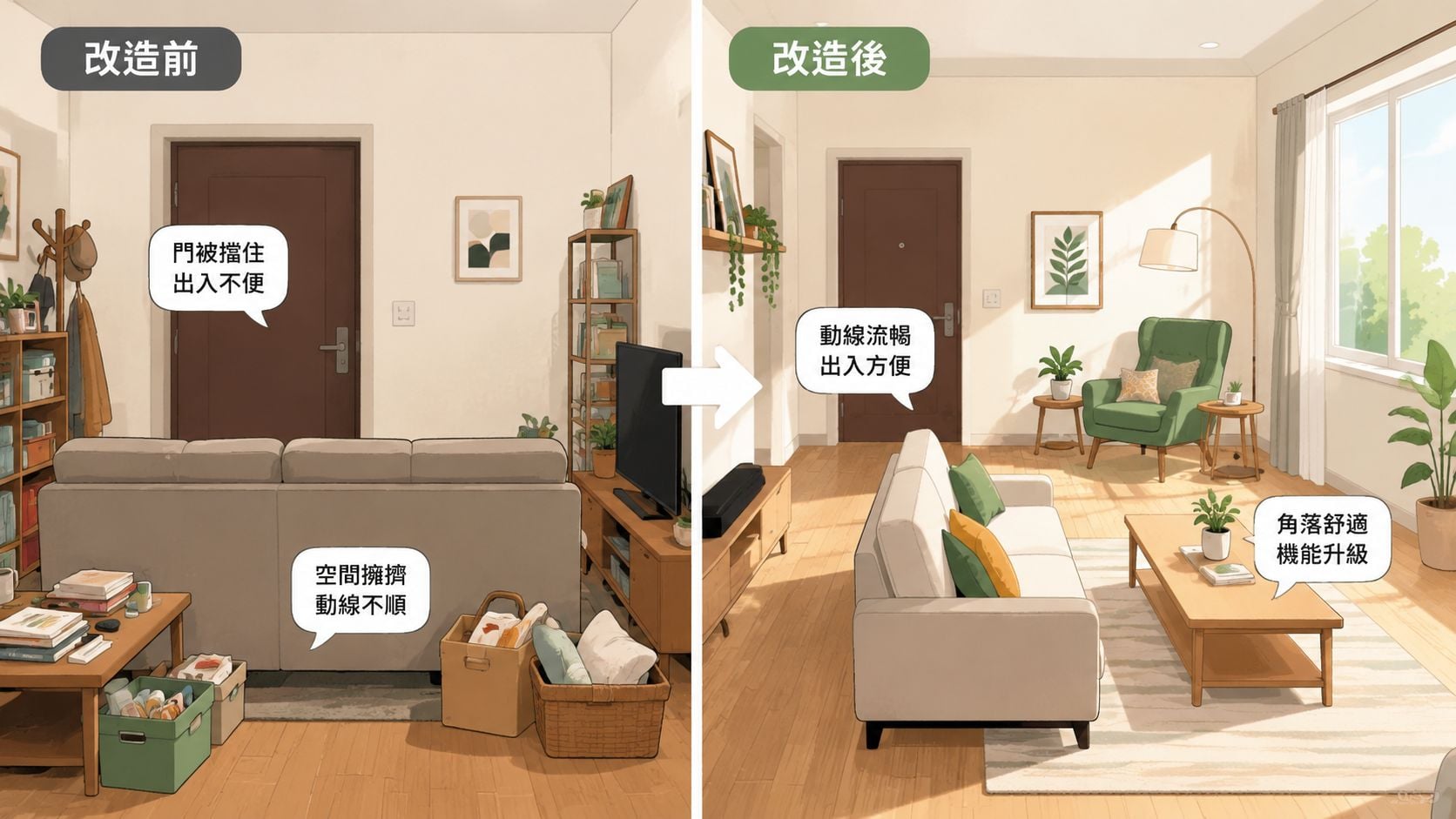
The living room with a blocked pathway
A living room may contain attractive furniture yet feel difficult to cross. The designer begins by identifying the primary route between the entrance, seating, and adjoining rooms. Instead of adding another occasional chair, the plan may rotate the sofa, adjust the chair angle, and place a properly sized rug beneath the main seating group.
The improvement comes from proportion and circulation. The room feels more open because people can move through it naturally, while each seat still supports conversation. A complete room concept also prevents the homeowner from selecting a sofa before understanding which tables, lamps, and rug will support it.
The bedroom that lacked cohesion
A bedroom suite can feel unfinished when the bed, nightstands, lighting, and rug were chosen separately. During consultation, the designer establishes the bed's visual weight, confirms the rug's position, and narrows upholstery and finish options to create a quieter relationship between the pieces.
The rug becomes the grounding element rather than an afterthought. A soft hand-knotted wool rug can give the room warmth, while custom upholstery introduces texture and a sense of permanence.
The dining room with the wrong scale
A dining table can look lost beneath a high ceiling or crowd the route to the kitchen. The designer reviews table proportions, chair clearance, lighting placement, and the sightline from adjacent rooms. A more suitable table scale, paired with appropriately sized seating and a centred fixture, restores balance without requiring construction.
Designer's Insight: Pairing a bold Hancock & Moore leather with a neutral hand-knotted wool rug can balance the room's energy. The leather provides presence, while the rug keeps the composition grounded.
Common Questions About the Consultation Process
Is there pressure to purchase?
A complimentary consultation should be educational and low pressure. Use the session to understand the room, set priorities, and decide whether the project is ready for product selection. A designer who listens carefully should also recommend more preparation when that is the sensible next step.
How long does it take?
A focused diagnostic session usually fits within a 60 to 90 minute window. Allow enough time to review measurements, room constraints, priorities, and budget feasibility without turning the meeting into a full design engagement. A Southern California consultation model shows how a structured consultation can define scope while keeping the discussion practical.
What if the homeowner isn't ready?
That's not a problem. An early consultation can identify decisions that need more research, including flooring, renovation sequencing, or which existing pieces should remain. You can leave with a clearer brief and return when the timing, budget, or household decisions are settled.
Are remote sessions possible?
Yes, certain projects can begin remotely. Photo review, measurement intake, floor-plan interpretation, and style discussion can happen by email or video. An in-store or in-home visit can follow when physical assessment becomes important. Remote consultation can function as a specification tool, not merely a casual conversation, as described through virtual design consultation services.
How does this differ from full-service design?
A consultation diagnoses the project and recommends a direction. Full-service design may continue into detailed space planning, sourcing, custom specifications, ordering, coordination, delivery, and placement. Ask which outputs are included at each stage, what decisions remain yours, and what happens after the meeting.
Your Next Step Toward a Curated Home
A well-prepared consultation gives homeowners expert guidance, personalised recommendations, and a practical route toward timeless craftsmanship. It can connect a room plan with curated collections from Stickley, Stressless, Magniflex, and Hancock & Moore, while leaving room for bespoke upholstery, artisanal finishes, and hand-knotted rugs.
Appointments can begin at the Critelli Furniture showroom on King Street or Critelli Modern on St. Paul Street in St. Catharines. Homeowners can also ask about in-home planning, remote consultation, custom ordering, and white-glove delivery. For businesses refining their own enquiry process, resources about home service lead capture AI may help explain how qualified consultation requests can be organised before a designer responds.
The Rug Market remains the natural destination for homeowners seeking Art for Your Floor, especially when the rug will establish the room's palette and scale. Book your complimentary design consultation today, then experience the craftsmanship in person at our King Street Showroom.
Critelli Furniture offers complimentary design consultations, complete room concepts, custom furnishings, the Rug Market, and white-glove delivery for homeowners across Southern Ontario. Visit Critelli Furniture to arrange a consultation and take the next confident step toward a curated home.