

Best Ergonomic Recliner for Back Pain: A Curated Guide


The most popular advice about choosing a recliner for back pain is often wrong. The softest chair isn't automatically the most supportive, and a dramatic lumbar bulge can be less useful than a modest contour that keeps the pelvis stable while the chair moves. The right question isn't “Which recliner feels plushest?” It's “Which chair fits the body, supports several positions, and makes movement easy?”
That distinction matters in California, where a national analysis found that 39.0% of American adults experienced back pain during the previous three months. In California, the age-standardized disability burden from low back pain reached 3,122.4 DALYs per 100,000 people in 2019, compared with 2,983.0 per 100,000 in 1990, a 4.7% increase (national analysis of back pain burden). Those figures don't prove that any recliner treats or prevents pain. They do show why fit, lumbar placement, pelvic stability, and controlled movement deserve more attention than appearance or cushion softness.
A useful recliner should act as a movement partner, not a posture prison. The following guide focuses on the qualities that can be tested in a showroom, then places those qualities within a complete room concept, from the chair's proportions to the rug beneath it.
Why the Softest Recliner Is Rarely the Most Supportive
A chair that swallows the sitter may feel luxurious for a few minutes, then allow the pelvis to roll backward and the lower back to lose contact with the support zone. That sinking sensation is often mistaken for comfort. In practice, a stable seat with responsive cushioning can be more forgiving because it supports the body without forcing it to hold an awkward position.
Softness is only one part of comfort
Ergonomic comfort has three practical tests:
- Pelvic stability: The hips stay supported rather than sliding forward as the back reclines.
- Lumbar contact: The chair meets the natural inward curve of the lower back without creating a hard pressure point.
- Controlled movement: The user can move from upright to semi-reclined and back without losing support.
A residential recliner isn't an office chair with a footrest attached. It has to work for reading, conversation, television, rest, and standing. A single fixed angle won't suit every activity, and a deep lounge seat can be a poor choice if the sitter can't reach the backrest without collapsing into it.
The most useful definition of the best ergonomic recliner for back pain is therefore functional rather than decorative. It's a chair that fits the user's dimensions, holds the pelvis in a balanced position, keeps the head and lower back supported as the angle changes, and makes frequent position changes realistic.
For buyers who want broader principles behind ergonomic furniture, Critelli's guide to what makes furniture ergonomic offers a useful starting point. Those principles apply especially well to recliners, where a small mismatch in seat depth or back geometry becomes more noticeable over time.
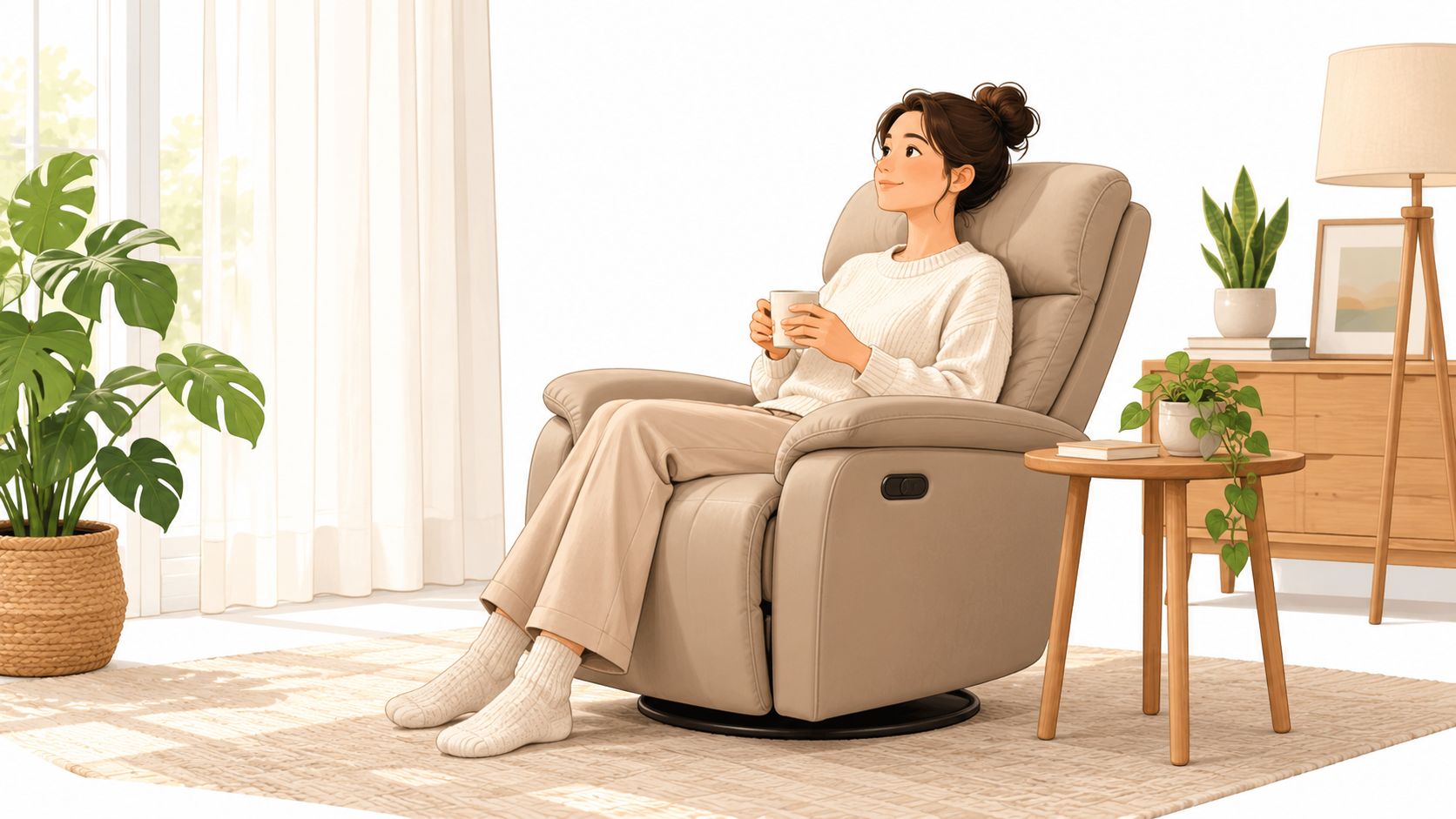
The sharper buying question
Instead of ranking chairs by padding, buyers should ask whether the chair remains supportive after the first impression fades. Practical guidance on workday back pain relief advice reinforces the value of movement and position changes alongside supportive seating.
Designer's Insight: A restrained, well-shaped recliner often has more long-term value than an oversized chair that looks inviting but leaves shorter users unsupported.
The Anatomy of a Back-Friendly Recliner
A recliner earns its ergonomic label through fit and movement, not plushness or showroom language. “Orthopaedic,” “zero gravity,” and “premium comfort” say little about whether the chair suits a particular body. Seat depth, lumbar height, arm position, and footrest geometry reveal far more.
Start with the lower back and pelvis
Lumbar contour should fill the natural inward curve of the lower spine without pushing the back forward or leaving a gap. Adjustable support helps when it changes position or firmness enough to suit the sitter. Fixed support works when its shape meets the back in the right place.
Pelvic support depends on the relationship between the seat and backrest. A steep slope or collapsing cushion can let the pelvis slide forward, forcing the sitter to round the lower back to maintain contact. Choose cushioning that feels resilient rather than rigid, then returns to shape instead of forming a hammock.
Seat depth requires an in-person test. Sit fully back and check that the front edge does not press behind the knees. Excess depth can leave the lower back unsupported, while insufficient depth may fail to support the thighs.
The recliner with lumbar support guide explains the feature, but the chair must still pass a physical fit test. Lumbar support only helps when its contour meets the user's back, not when it merely looks substantial in a product description.
Check the upper body and lower legs
Armrests should allow the shoulders to settle and provide stable support when standing. A headrest should support the head without pushing the chin forward or forcing the neck into extension.
The footrest should support the lower legs without sharply raising the knees or encouraging the pelvis to slump. Ontario workplace-ergonomics guidance recommends a backrest with height and angle adjustment, contoured lumbar and pelvic support, tilt resistance, adjustable seat depth, adequate width, a breathable non-slip surface, and a front edge that slopes downward to reduce pressure behind the knees (Ontario sitting guidance).
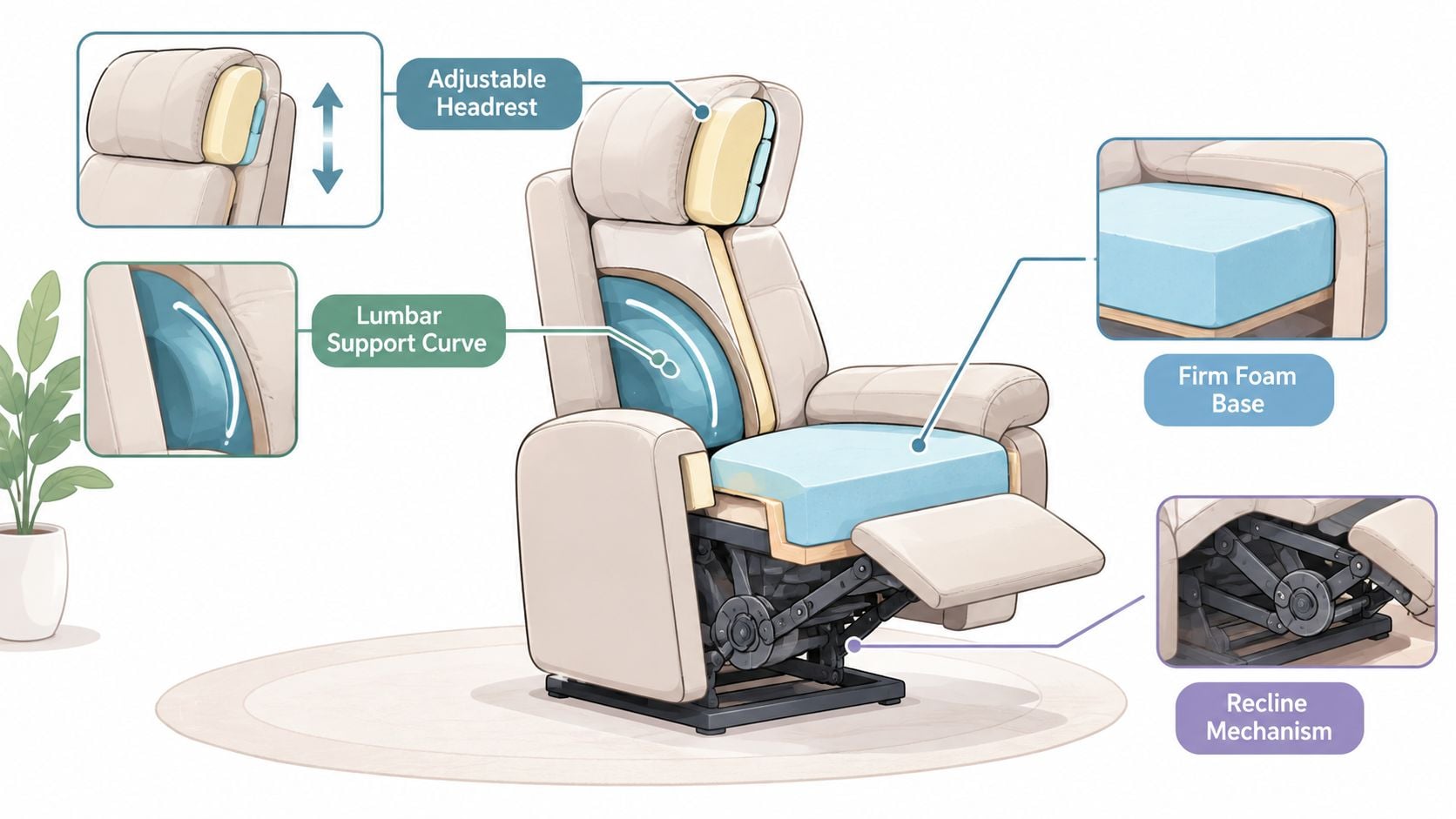
Practical rule: Open the footrest only if the back, pelvis, and head remain supported.
For broader back comfort tips from Aspen Falls, use the same test in the showroom. Check the chair upright, partly reclined, and fully reclined with the footrest extended. A good recliner should support position changes rather than trap the body in one posture.
Matching the Chair to the Moment You Will Use It Most
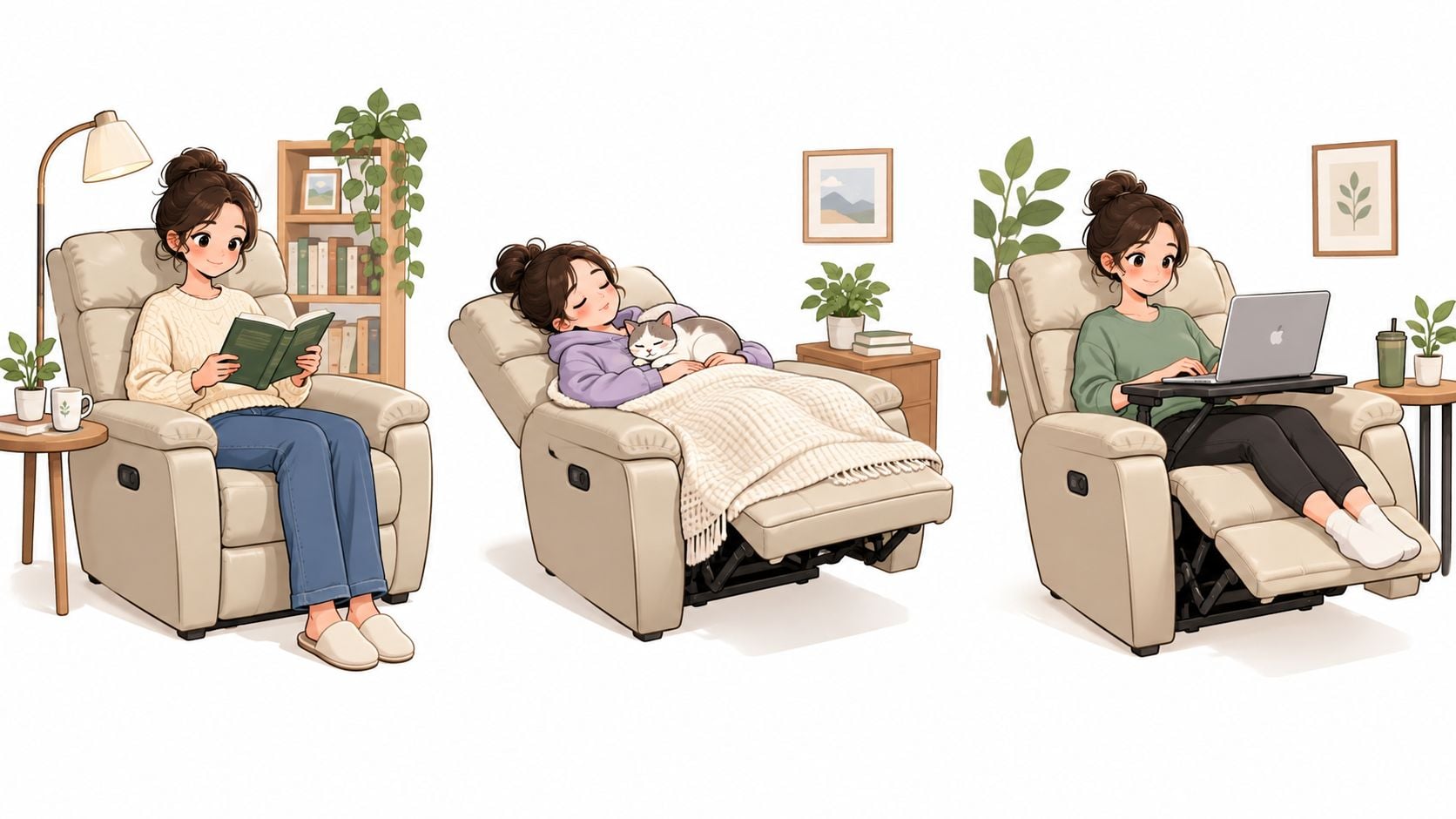
The best ergonomic recliner for back pain is the one that supports your main routine without turning your body into a fixed shape. An hour of evening television calls for different proportions than reading, laptop work, or an afternoon rest. Choose the dominant use first, then test how the chair moves with you through that activity.
| Use Case | Best Archetype | Key Ergonomic Lever | Watch Out For |
|---|---|---|---|
| Evening relaxation | Responsive lounge recliner, including a responsive Nordic-style recliner | Smooth recline, stable lumbar contact, and a headrest that follows the user | A deep seat that encourages pelvic slumping |
| Reading or laptop use | Upright, structured recliner from a design-led line | Upright back angle, supportive arms, usable head position, and firm-resilient cushioning | A chair designed only for deep lounging |
| Rest or occasional sleep | Nap-capable power recliner | Broad support through the back, controlled footrest movement, and easy return to upright | A footrest that traps the legs or leaves the neck unsupported |
For evening relaxation
A relaxation recliner should change position smoothly and provide several comfortable stopping points. A responsive recline mechanism can suit this role when the back and head support stay aligned as you shift from upright conversation to deeper rest. Fit still decides the result. No mechanism can correct a seat that is too deep or a headrest that lands too low.
Use the chair as a movement partner. Shift between upright and reclined settings, and check whether the pelvis stays supported rather than sliding forward as the seat opens.
For reading and working
A reading recliner needs controlled support. Keep your eyes level with a book or screen without rounding the shoulders or pushing the head forward. Supportive arms should let the shoulders settle while leaving enough freedom to adjust your position.
Power controls help when small changes are frequent, but a manual chair can work if you can alter the angle without straining. Review power recliner versus manual operation before choosing, especially if hand strength, reach, control placement, or access to a power source affects daily use.
For rest
A nap-capable recliner should make resting easy and returning upright straightforward. Test the full sequence before buying: recline, extend the footrest, change position, and close the chair without fighting the mechanism. The footrest should support the lower legs without trapping them, while the head and back remain supported as the chair moves.
Selection Criteria That Actually Predict Real Comfort
A showroom test should turn vague promises into pass-or-fail observations. The most useful criteria are visible in the way the chair holds the body through several positions, not in the marketing name attached to the model.
Test the range, not a single pose
Western University's Canadian ergonomic guidance identifies an adjustable recline range of approximately 93 to 113 degrees and recommends lumbar support that follows the back's natural curves, adjustable lumbar padding, and adequate backrest dimensions (Western University chair guidance). Those office-chair figures aren't a universal specification for every residential recliner. They are a useful reference for judging whether a chair offers genuine positional variety.
The user should test:
- Lumbar adjustment: Can the support be reduced if the contour feels too prominent?
- Seat depth: Does the lower back remain supported without pressure behind the knees?
- Headrest alignment: Does the head rest naturally in upright and reclined positions?
- Cushion resilience: Does the seat rebound and hold the pelvis, or does it allow the hips to sink?
- Upholstery surface: Does the material feel breathable and stable rather than slippery?
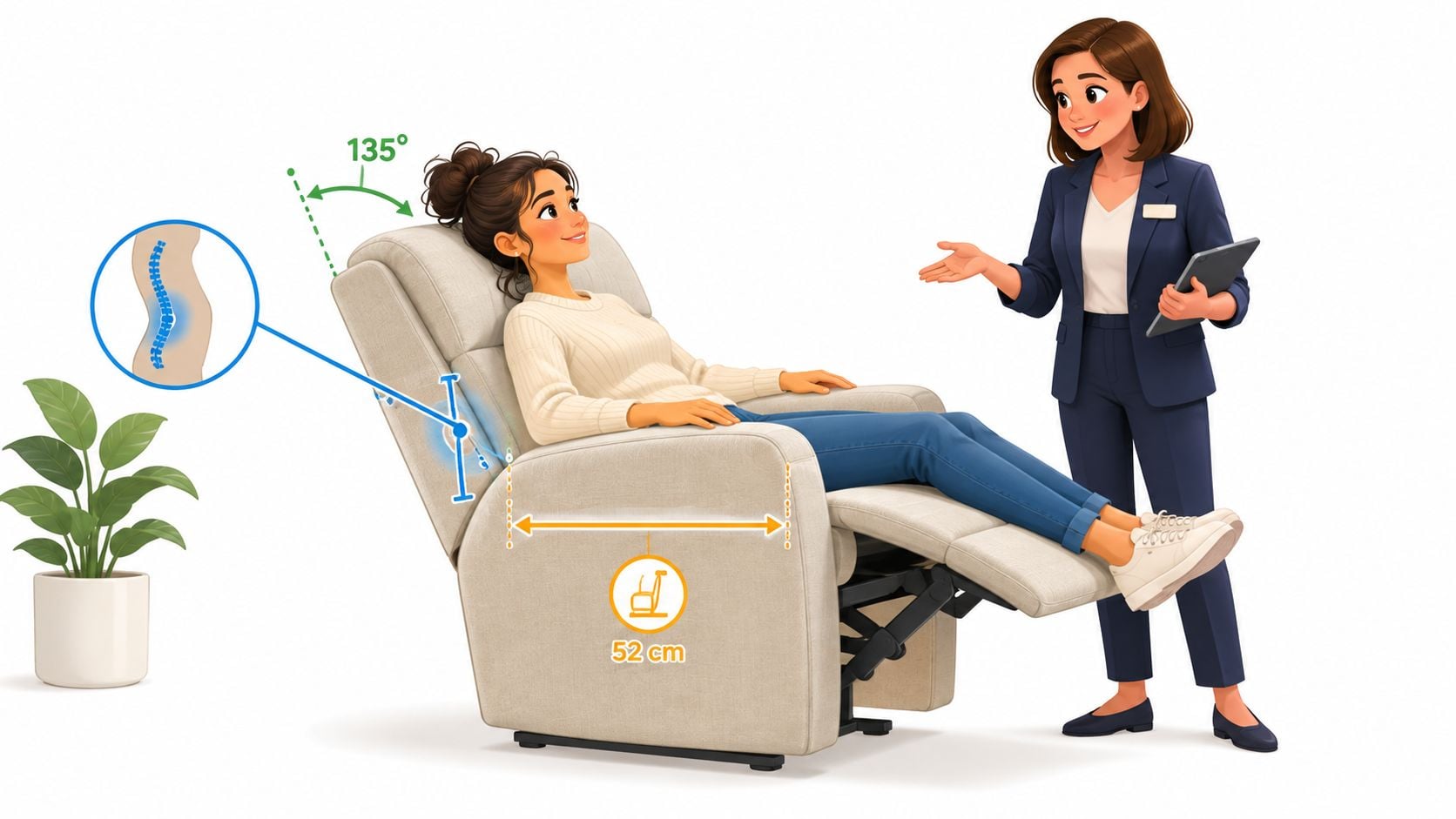
A practical seat depth measurement guide helps shoppers arrive with the right questions. The chair still needs to be checked with the actual user seated in it, because proportions change how every feature feels.
Reject labels that encourage stillness
A 2025 study of habitual office sitting found that participants who developed transient low-back pain sat more, moved their spines less frequently, and showed less thorax inclination and pelvic movement than pain-free participants (2025 sitting study). The practical lesson is direct. Aggressive lumbar support isn't automatically better if the chair keeps the user immobile or makes every position feel fixed.
A good chair should invite adjustment. The user should be able to recline slightly, return upright, alter the headrest, and move the legs without wrestling the mechanism. The best ergonomic recliner for back pain is the one that supports the body while allowing natural variation.
Movement, Not Stillness, Should Guide the Choice
A recliner should make the next position easy. University of Waterloo guidance recommends switching between sitting and standing approximately every 30 minutes and avoiding uninterrupted sitting or standing for longer than roughly 30 to 40 minutes where possible (University of Waterloo sit-stand guidance). Ontario Health also advises people with acute low-back pain to stay physically active and continue daily activities with modifications that maintain or improve mobility.
This changes how you should judge premium features. A power mechanism earns its place when it makes frequent adjustments simple. Stable armrests help the user stand without pulling against the back. A footrest matters when it retracts cleanly and leaves the legs free.
| Feature | Posture Change It Enables | Why It Matters |
|---|---|---|
| Smooth power recline | Small shifts between upright and semi-reclined positions | Reduces the need to remain at one fixed angle |
| Stable armrests | Controlled sit-to-stand movement | Gives the user steady support without twisting |
| Independent head adjustment | Supported reading, viewing, and resting positions | Helps maintain comfortable neck alignment |
| Clean footrest retraction | Easy return to upright and exit | Prevents the lower legs from becoming trapped |
| Supportive seat height | Feet contact the floor before standing | Makes transfers more stable and predictable |
The exit test matters
A chair that feels excellent only when fully reclined may be poorly suited to daily use. Return the backrest upright, place both feet securely on the floor, lean forward slightly, and stand. The movement should feel controlled, without a sudden jolt or a deep push through the lower back.
The chair should support movement throughout the day. It should let the user shift position, adjust the angle, and leave the seat without a struggle.
The best recliner doesn't hold the user still. It makes the next position easy.
That is a design criterion, not a medical promise. People with persistent or severe symptoms should follow clinical guidance. Furniture selection should focus on fit, control, and practical movement.
What a Proper Showroom Trial Actually Looks Like
“Try it in store” is sound advice only when the trial has a method. A proper test takes the chair through the positions it will occupy at home and gives the body enough time to reveal pressure points.
The Critelli showroom protocol
At the King Street Showroom, a buyer can use a simple sequence:
- Begin upright. Sit fully back with the feet supported. Check the lumbar contact, seat depth, shoulder position, and headrest height.
- Read for several minutes. Hold a book or use a comparable viewing position. The arms should remain relaxed, and the head shouldn't reach forward.
- Move to semi-recline. Change the back angle gradually. Watch whether the pelvis slides forward or the lumbar support loses contact.
- Extend the footrest. Check the knees, lower legs, and head. The footrest should support without forcing the knees sharply upward.
- Return to upright. Retract the footrest, place the feet on the floor, and stand using the armrests.
- Repeat the movement. A mechanism that feels smooth once should remain smooth after several changes.
A brief sit can miss problems. The body often notices seat-depth errors, pressure behind the knees, or an overactive lumbar contour only after the sitter changes position.
The room belongs in the decision
Critelli's Design Studio treats furniture as part of a complete room concept, not as an isolated purchase. A design consultation can address the chair's scale, upholstery, lighting, circulation path, and relationship to nearby seating. For clients across the Greater Niagara, Hamilton, and Toronto markets, an in-home consultation can add information that a showroom test can't provide, including doorway access, floor protection, sightlines, and the chair's final placement.
Designer's Insight: The strongest recliner placement leaves enough breathing room for the footrest to open without interrupting the room's main walking route.
The process should be collaborative rather than rushed. Buyers should bring the dimensions of the intended room, note any mobility concerns, and describe whether the chair will serve reading, rest, conversation, or all three.
Buyer-Specific Scenarios and When a Recliner Is Not Enough
No single recliner suits every body or symptom pattern. The BOLD cohort included 5,239 adults aged 65 and older receiving primary care for a new back-pain episode, with participants recruited through three integrated health systems, including Kaiser Permanente Northern California. The study found that age, sex, race, and education were associated with differences in pain intensity, functional disability, and quality of life (BOLD cohort research). That is a strong argument against one-size-fits-all seating.
Four practical buyer profiles
Persistent pain: A user with recurring discomfort should favour adjustable positions, stable cushioning, and easy exits. The chair should support daily routines without encouraging long, uninterrupted sessions.
Older adults concerned about transfers: Armrest stability, seat height, controlled power movement, and a footrest that retracts fully deserve priority. The chair should be tested from both sitting and standing, not judged only while reclined.
Post-surgical recovery: The appropriate chair depends on the procedure and the clinical team's instructions. A recliner may assist with controlled positioning, but its height, angle, and exit mechanism should be approved against the individual recovery plan.
Primary evening relaxation: A user who mainly reads or watches television may not need the most elaborate mechanism. The chair needs reliable lumbar contact, a supportive headrest, and several comfortable positions rather than one dramatic full-recline setting.
Community-level research also shows why fit matters across different populations. A study of 905 African American and Latino older adults in South Los Angeles found chronic low-back pain in nearly 55% of Latino participants and 48% of African American participants. Those are community-study estimates, not statewide prevalence rates, but they illustrate the need for designs that accommodate different bodies and routines.
Know the clinical boundary
A recliner is furniture, not treatment. Persistent or worsening pain, numbness, weakness, changes in bladder or bowel control, or pain accompanied by neurological symptoms warrants clinical assessment rather than a furniture purchase.
A chair can make sitting and standing more manageable. It can't diagnose the cause of pain or replace professional care. That boundary strengthens the buying decision because it keeps comfort, mobility, and safety in their proper roles.
From the Showroom Floor to the Living Room
The purchase is complete only when the chair works in the home. Before ordering, buyers should confirm the delivery path, room placement, power access, upholstery care, warranty terms, and any available financing. A beautiful recliner that can't clear the doorway or open fully in its intended position isn't a successful selection.
Service is part of the design
White-glove delivery should create a smooth transition from showroom to home. The service conversation should cover in-room placement, assembly where applicable, inspection, floor protection, and packaging removal. Critelli's white-glove furniture delivery service reflects the practical value of having the piece positioned carefully rather than left at the entrance.
Critelli Furniture was founded in 1914 by Joseph Critelli and his son Thomas, established a St. Catharines presence in 1939, and continues under fourth- and fifth-generation family ownership. The company was 110 years old in 2024. That heritage supports a service model centred on relationships, craftsmanship, and furniture intended to remain part of the home.
Build the room around the chair
A recliner shouldn't look like an afterthought. The Design Studio can coordinate the upholstery with surrounding pieces, balance the chair's scale, and create a complete room concept. A rug often provides the first visual anchor.
Designer's Insight: Pairing a bold leather recliner with a neutral hand-knotted wool rug creates balance. The chair supplies structure and presence, while the rug acts as Art for Your Floor and establishes the room's foundation.
The Rug Market's curated selection of artisanal pieces gives homeowners a way to connect comfort with composition. For buyers searching for Luxury furniture Niagara, Interior design services St. Catharines, Custom furniture Southern Ontario, or Hand-knotted rugs Ontario, the strongest result is a room that feels considered from every angle, not a chair selected in isolation.
Critelli Furniture offers fit-focused recliner guidance, a curated selection of design-forward seating, complimentary Design Studio consultations, and white-glove service across Southern Ontario. To assess the chair properly and connect it with the room's broader design, visit Critelli Furniture and experience the craftsmanship in person at the King Street Showroom.