
Sheet Thread Count Explained: What Buyers Should Know

Most shoppers are told to buy the highest sheet thread count they can afford. That advice is convenient, memorable, and often wrong. A large number on a package can describe a dense, warm fabric, a multi-ply yarn construction, or a synthetic fibre that feels nothing like fine cotton.
A sheet is a material close to the skin for hours at a time. Its comfort depends on fibre content, yarn construction, weave, finishing, and care, with thread count serving as one specification among them. Canadian labelling rules require textile products to disclose fibre content and the percentage of each fibre present at 5% or more by mass, but thread count isn't identified in those requirements as a mandatory standardised label field. Canadian textile labelling requirements therefore give shoppers a useful starting point, not a government-certified quality grade.
For buyers across Southern Ontario, the better question isn't “What's the highest number?” It's “Does this construction suit the way the sleeper rests, the room's climate, and the feel the bedroom needs?” That's the standard used by a thoughtful designer, and it's the standard that protects a purchase intended to offer heirloom quality rather than short-lived softness.
Why a Bigger Number Does Not Mean a Better Sheet
The most popular advice about sheet thread count reduces a textile to a score. That makes shopping easy, but it ignores the way the fabric was made. Thread count normally means the combined number of lengthwise and crosswise yarns within one square inch, yet the number says little by itself about whether those yarns are cotton, polyester, single-ply, multi-ply, crisp, lustrous, breathable, or heavily finished.

A 200-thread-count cotton percale and a 1,200-thread-count polyester microfibre can feel radically different. The larger figure doesn't make the second fabric six times better. It may make the sheet denser, warmer, or smoother, but density isn't the same as breathability, durability, or comfort. Canadian bedding guidance places well-made cotton percale at approximately 200 to 300 thread count, and cotton sateen at roughly 300 to 500, with higher counts generally creating a heavier fabric rather than a proportional improvement. Canadian bedding guidance on thread count and construction
The label is only the first conversation
A number becomes useful only after the material has been identified. A long-staple cotton sheet with a clean weave and restrained finishing can offer a more graceful hand than a high-count sheet made with shorter fibres or a complicated yarn structure. The label needs to be read alongside the fibre percentage, weave, ply, fabric weight, care instructions, and country of manufacture.
Good buying advice differs from luxury marketing. The principles of quality in furniture descriptions apply to textiles as well. A convincing description should tell shoppers what the product is made from and how it is constructed, rather than relying on one impressive headline.
Designer's Insight: A sheet should support the mood of the bedroom. A cool percale suits a light, tailored room, while a smoother sateen can complement upholstered furniture, layered lighting, and a more enveloping palette.
A Southern Ontario buyer should treat thread count as a starting point, not a verdict. The right number is the one that makes sense within a particular fibre and weave family. Once that distinction is clear, inflated claims become much easier to spot.
How Thread Count Is Actually Counted
Thread count is a simple idea dressed in technical language. In woven fabric, the warp yarns run lengthwise, from the top of the sheet towards the foot. The weft yarns run across the width. Textile professionals may call the lengthwise yarns “ends” and the crosswise yarns “picks.”
The advertised count combines those two directions within one square inch. If a fabric contains one group of yarns running vertically and another crossing horizontally, both groups contribute to the final figure. That's why a label's number isn't the count of one type of thread alone.
A household analogy makes the structure clear
A kitchen towel offers a useful comparison. Hold one up and notice the small squares formed where the yarns intersect. A plain weave creates a regular over-and-under pattern, giving the towel a straightforward grid. A sateen weave changes the sequence, allowing the surface yarns to float more prominently and creating a smoother appearance.
Two towels can use similar raw material but show different surface character because the yarns are organised differently. Sheets work the same way. The weave affects how tightly the yarns sit, how much light reflects from the surface, how the cloth bends, and how the fabric manages heat.
A single-ply 300-count cotton percale and a two-ply 600-count cotton sateen can both be well-made. Their numbers look far apart because the yarns have been counted differently, while the fabrics also have distinct structures and intended sensations. The percale may feel crisp and airy. The sateen may feel smoother, denser, and warmer.
What a useful comparison requires
Thread-count comparisons become technically meaningful only when the following details are reasonably alike:
- Fibre: Cotton, linen, polyester, and blended fabrics behave differently.
- Yarn construction: Single-ply and multi-ply yarns can produce very different headline numbers.
- Weave: Percale and sateen distribute yarns and reflect light differently.
- Finishing: Brushing, calendaring, mercerisation, and other processes alter the hand.
- Fabric weight: A denser sheet can feel substantial, but weight doesn't automatically indicate longevity.
The guide to reading product descriptions offers a useful broader habit: separate a product's measurable specifications from the language designed to create desire. That habit serves bedding buyers well. A thread-count figure has meaning, but only within the construction that produced it.
Single-Ply and Multi-Ply Yarns
Ply is the variable most likely to make a headline number look more impressive than the fabric feels. A single-ply yarn is formed from one strand. A multi-ply yarn twists two or more strands together before weaving. The finished fabric may be sturdy or substantial, but the advertised number can count the component strands rather than presenting a straightforward picture of the woven structure.
A simple example shows the problem. A single-ply sheet advertised at 200 thread count isn't directly comparable with a two-ply sheet advertised at 600. The second number may reflect additional strands within the yarn, not three times as many independent woven yarns arranged across the fabric. The buyer sees a larger figure, while the cloth may just feel denser or heavier.
Read unusually high counts as a prompt
Claims above 800 thread count deserve questions, not automatic admiration. The number may be legitimate under a particular counting method, but the buyer should ask whether the yarn is single-ply or multi-ply, which fibres are present, and whether the stated count is being compared with products using the same convention.
The phrase “woven with fine yarns” also needs context. Fine yarn can support a refined fabric, but the description should be accompanied by clear information about fibre content, weave, ply, and finishing. If those details are absent, the language is doing too much of the selling.
| Yarn Construction | Typical Count Range | Hand Feel | What to Watch For |
|---|---|---|---|
| Single-ply cotton | 200 to 400 | Crisp, clean, and breathable when paired with percale | Confirm fibre quality and weave rather than assuming the number tells the whole story |
| Single-ply cotton sateen | 300 to 500 | Smooth, fluid, and slightly warmer | Check whether the surface lustre comes from weave and finishing |
| Multi-ply cotton | Varies widely | Dense, substantial, and sometimes overly heavy | Ask how the count was calculated and how many strands form each yarn |
| Synthetic microfibre | Often marketed at unusually high counts | Soft, smooth, and potentially warmer | Verify fibre percentage and assess breathability before purchase |
A 400-count single-ply sheet can be a wiser choice than a 1,000-count multi-ply alternative if the goal is balanced comfort and transparent construction. The better purchase is the one whose fibre, yarn, and weave can be understood and felt, not the one with the most theatrical number.
Practical rule: If the seller can't explain the ply and counting method in writing, the advertised count shouldn't guide the decision.
Fibre, Weave, and Finishing
Thread count becomes useful only after the material has passed inspection. Cotton, linen, and synthetic fibres don't respond to weaving in the same way, so a number copied from one category can't be used as a universal quality scale.
Cotton offers a versatile base for bedding, particularly when the yarns are long and evenly spun. Long-staple Egyptian or Supima cotton can produce a smoother surface because longer fibres create fewer exposed ends. Linen, made from flax, has a more relaxed hand and naturally lower count potential because its fibres are thicker. It's valued for airflow, texture, and the way it softens through use. Synthetic microfibre can feel exceptionally smooth, but its surface sensation shouldn't be confused with the breathability of natural fibres.
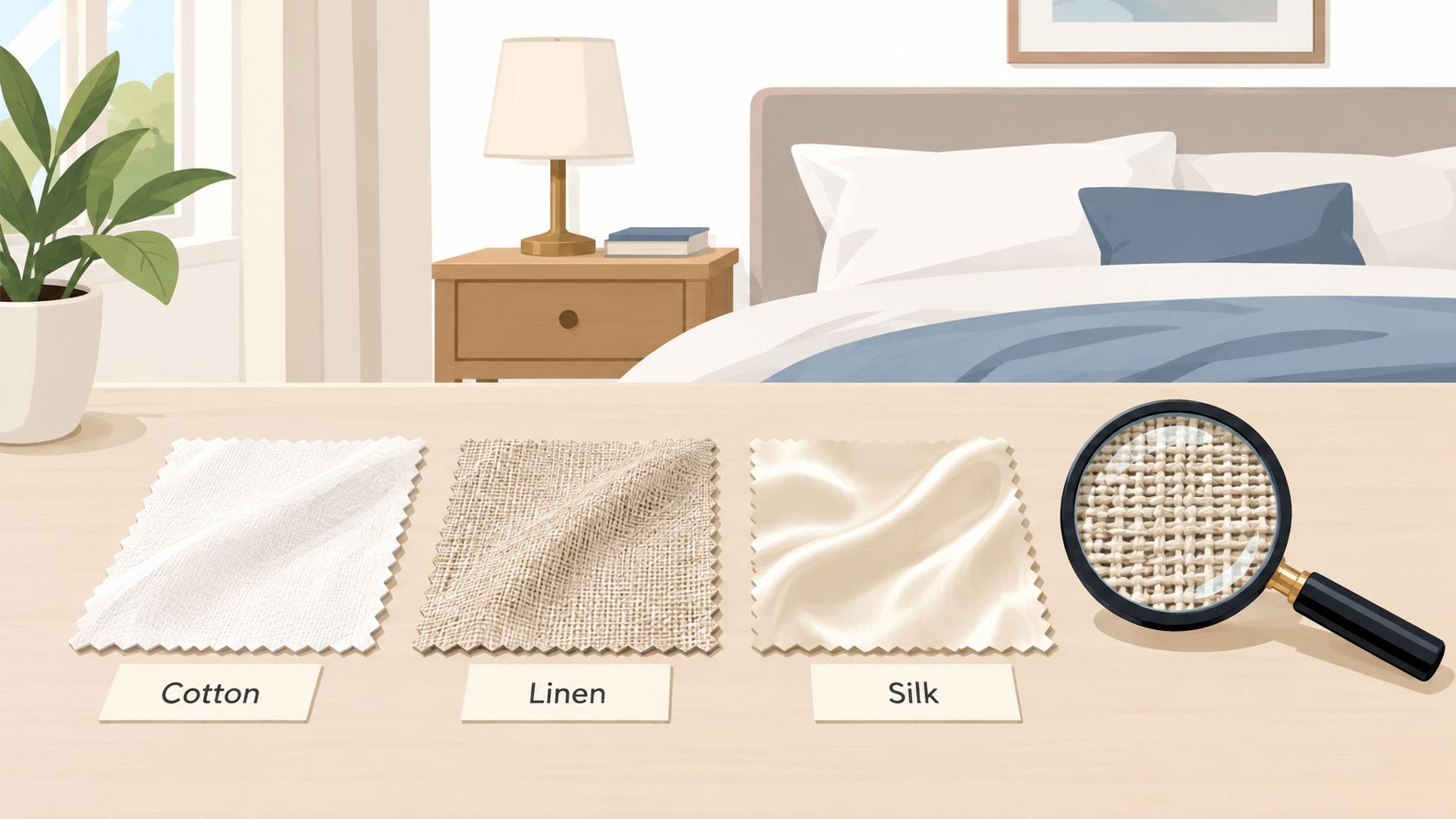
Percale and sateen make different promises
Percale uses a plain, balanced weave. It generally feels crisp, cool, matte, and structured. It suits sleepers who dislike cling and prefer a clean hotel-like finish. Sateen uses a construction that places more yarn on the surface, producing a smoother, more lustrous hand that tends to feel warmer and more enveloping.
Neither weave is automatically superior. A hot sleeper may value percale's airy character, while someone who prefers a cosy, polished bed may favour sateen. The correct choice depends on the room, the sleeper, and the desired atmosphere.
Finishing changes the first impression
Finishing can alter how a sheet looks and feels before it has even been washed. Mercerisation can increase lustre and help cotton accept colour. Singeing removes loose surface fibres, supporting a cleaner hand. Calendering presses the fabric through rollers, creating a smoother appearance that may feel especially polished at first.
These processes can be useful, but they shouldn't obscure construction. Two sheets with the same stated count may differ because one has been brushed, pressed, treated for softness, or finished for sheen. The complete bedding and mattress protector guide reinforces the larger design principle: bedding works as a system, not as an isolated number.
The practical rule is straightforward. Choose fibre and weave according to sleep style first. Use thread count to refine the choice within that family. That sequence protects buyers from comparing fabrics that were never meant to feel alike.
Practical Thread Count Ranges by Material
The useful range depends on the material, the sleeper, and the room. Cotton percale, cotton sateen, linen, and microfibre behave differently, so their thread counts cannot be judged on one universal scale. Start with the hand and climate you want, then use the label to narrow the choice.
For a hot sleeper, cotton percale is the practical starting point. Its lighter, crisper construction supports airflow and a clean feel. Cotton sateen suits a colder bedroom or anyone who prefers a smoother, more enveloping surface. A higher count only helps when the fibre, yarn, and weave support the intended result.
Match the range to the sleeper
| Material or Weave | Useful Range or Measure | Best Suited To | Buying Priority |
|---|---|---|---|
| Cotton percale | Moderate count within its weave | Hot sleepers and year-round use | Crisp hand, regular weave, reliable fibre content |
| Cotton sateen | Higher count within its weave | Cold sleepers and those seeking a smoother surface | Lustre, drape, yarn quality, and manageable warmth |
| Long-staple cotton | Judge within the chosen percale or sateen construction | Buyers who value a smooth, durable hand | Fibre disclosure and yarn quality |
| Linen | Better judged by fabric weight and hand than count | Warm rooms and relaxed interiors | Airflow, texture, finishing, and laundering expectations |
| Microfibre | Treat claims above 600 with caution | Buyers seeking a very smooth synthetic surface | Fibre percentage, heat behaviour, and transparency |
The useful comparison is between sheets serving the same purpose. For example, compare two percale sheets by dryness, airflow, yarn regularity, and drape before comparing their numbers. A percale with a moderate count can be a better hot-weather choice than a denser fabric that feels heavy or slick.
Linen should not be marked down for a lower number. Its thicker plant fibres naturally limit how many yarns occupy a square inch. Its appeal lies in texture, airflow, and gradual softening. A well-made linen sheet may feel relaxed at first and become more inviting with proper care.
Microfibre deserves the sharpest reading of the label. A very high advertised count may reflect extremely fine synthetic fibres rather than better bedding. Check fibre content and heat behaviour, then handle the fabric for excessive slickness or trapped warmth.
Choose the range that fits the body and the room. The mattress, duvet, bedroom temperature, colour palette, and furniture all shape how the sheet will perform. Thread count is one construction variable, not the buying decision.
How to Verify Quality in a Showroom
A product page can display a number. A showroom lets the hands test the fabric. That difference matters because touch reveals qualities the label can't fully describe, including stiffness, spring, surface drag, drape, and the contrast between crispness and artificial slickness.

Use a disciplined inspection
Feel the surface. Run the hand across the fabric, then lift an edge. Percale should feel clean and dry rather than waxy. Sateen should feel smooth without seeming plasticky. Linen should show character rather than pretending to be perfectly slick.
Hold it towards the light. A regular weave should look even, without obvious gaps, streaks, or inconsistent tension. Light can reveal construction better than a glossy product photograph.
Inspect the selvage. The finished edge can offer clues about manufacturing and country of origin. It won't answer every question, but it gives the buyer another point of comparison.
Read the sewn-in label. Confirm the fibre percentages, not merely the word “cotton.” Canadian rules require fibre information to be factual, legible, and accessible, with fibres present at 5% or more by mass disclosed. Canadian guidance for textile businesses
Request the construction details in writing. Ask for the weave, ply, care instructions, country of manufacture, and the method used to state the thread count. Keep the invoice and compare the sewn-in label with the packaging.
Design context improves the choice
A design-led consultation places the sheet beside the room rather than treating it as a separate transaction. The designer can assess whether a crisp percale supports the bedroom's curated furniture, or whether a warmer sateen balances a cool palette and a more enveloping headboard. Bedding becomes part of a complete room concept, alongside the mattress, lighting, rugs, and storage.
That approach resembles selecting a rug as the foundation of a room. The sleep sanctuary guide connects bedding with lighting, temperature, mattress support, and the wider sensory environment. The right sheet should belong to that composition.
For custom or imported bedding, Canadian guidance also recognises situations where fibre and dealer information may appear on an invoice or bill of sale when properly labelled samples or swatches are available beforehand. A careful buyer should ask questions before ordering, retain documentation, and confirm the delivery terms.
White-glove service should mean more than leaving a parcel at the door. The defined service can include room-of-choice placement, unpacking, assembly where included or purchased, inspection, and packaging removal. Those details should be confirmed in writing, especially for a broader bedroom order moving from a showroom into the home.
Caring for Your Sheets to Preserve Their Quality
A well-constructed sheet can lose its hand through careless laundering. The routine should protect the fibre, preserve the weave, and avoid adding coatings that mask the fabric's natural character.
Use the care label as the final authority, but a practical routine begins with moderate washing temperatures suited to the material. Cotton usually tolerates warm laundering when the label permits it. Linen benefits from a gentler approach, while microfibre generally performs best with cooler washing and restrained heat. Mild detergent is preferable for long-staple fibres because harsh products can leave them brittle or dull.
Preserve the surface
- Skip unnecessary softener. Fabric softener can coat the yarns and interfere with the feel of performance weaves. Clean water and an appropriate detergent often preserve the surface more effectively.
- Dry with restraint. Tumble drying on low reduces stress and shrinkage. Line drying can support longevity, but direct, intense sunlight may alter colour over time.
- Avoid overloading. Sheets need room to move through the wash. Crowding encourages uneven cleaning and creasing.
- Rotate thoughtfully. A small rotation gives each set time to rest and keeps wear from concentrating in one place.
- Store completely dry. Folded sheets belong in a cool, dry, ventilated cupboard. Damp storage invites mildew, while prolonged compression can create permanent creases.
Care is part of the purchase. The same patience that preserves heirloom furniture and hand-knotted rugs protects fine bedding. For garments and textiles that need a more specialised approach, these bridal care instructions offer a useful reference for thinking about delicate fibres, storage, and handling.
A regular change schedule also helps prevent oils and moisture from accumulating in the fabric. The guidance on how often sheets should be changed can help households establish a routine without relying on guesswork. Clean sheets should feel like the material selected in the showroom, not like a layer of detergent or finish.
A Simple Framework for Choosing the Right Sheet
A sound decision can be reduced to three questions.
First, what suits the sleeper?
Hot sleepers usually need a breathable fibre and a crisp weave. Cold sleepers may prefer the smooth, denser hand of sateen. Linen offers relaxed texture and airflow, while cotton gives a broader choice of finishes and weights.
Second, what range fits that material?
Start with the appropriate family rather than scanning for the largest number. Cotton percale generally belongs around 200 to 300, cotton sateen around 300 to 500, and linen should be judged more by weight, hand, and construction than by thread count. Unusually high synthetic claims deserve verification.
Third, what does the fabric reveal in person?
The hand, drape, weave regularity, label, and written specifications should agree. If the fabric feels wrong, a convincing number won't improve it. If the description is vague, the purchase isn't ready.
Sheets also need to work with the bedroom as a whole. A complete room concept brings together the mattress, bed, upholstered pieces, lighting, colour, and rug. In a design-forward home, the rug can serve as Art for Your Floor, establishing the foundation while the bedding supplies the intimate, tactile layer.
A considered showroom visit is especially valuable for homeowners across the Greater Niagara, Hamilton, and Toronto markets who want custom furniture, hand-knotted rugs, and bedding to speak the same design language. The best result is not the highest sheet thread count. It's a room that feels coherent, comfortable, and made to last.
Experience the craftsmanship in person at Critelli Furniture, where a curated selection, design studio expertise, and white-glove service bring the sheet, bedroom furniture, and room foundation together. Book your complimentary design consultation today, or visit the Rug Market to find your room's foundation.