
Rug Store Hamilton: Discover Quality Artisanal Rugs in 2026

A client once brought me a room plan for a Hamilton home with beautiful seating, good lighting, and no sense of centre. The change that resolved it wasn't another chair or a new lamp. It was the rug.
The Soul of the Room An Introduction
A rug isn't the last decorative layer. It's often the first serious design decision in the room. When chosen well, it gathers upholstery, wood tones, art, and architecture into one clear conversation.
That's why I've always preferred to think of rugs as art for your floor. A strong piece does more than soften a surface. It establishes mood, gives structure to open space, and tells you which colours should lead and which ones should support.
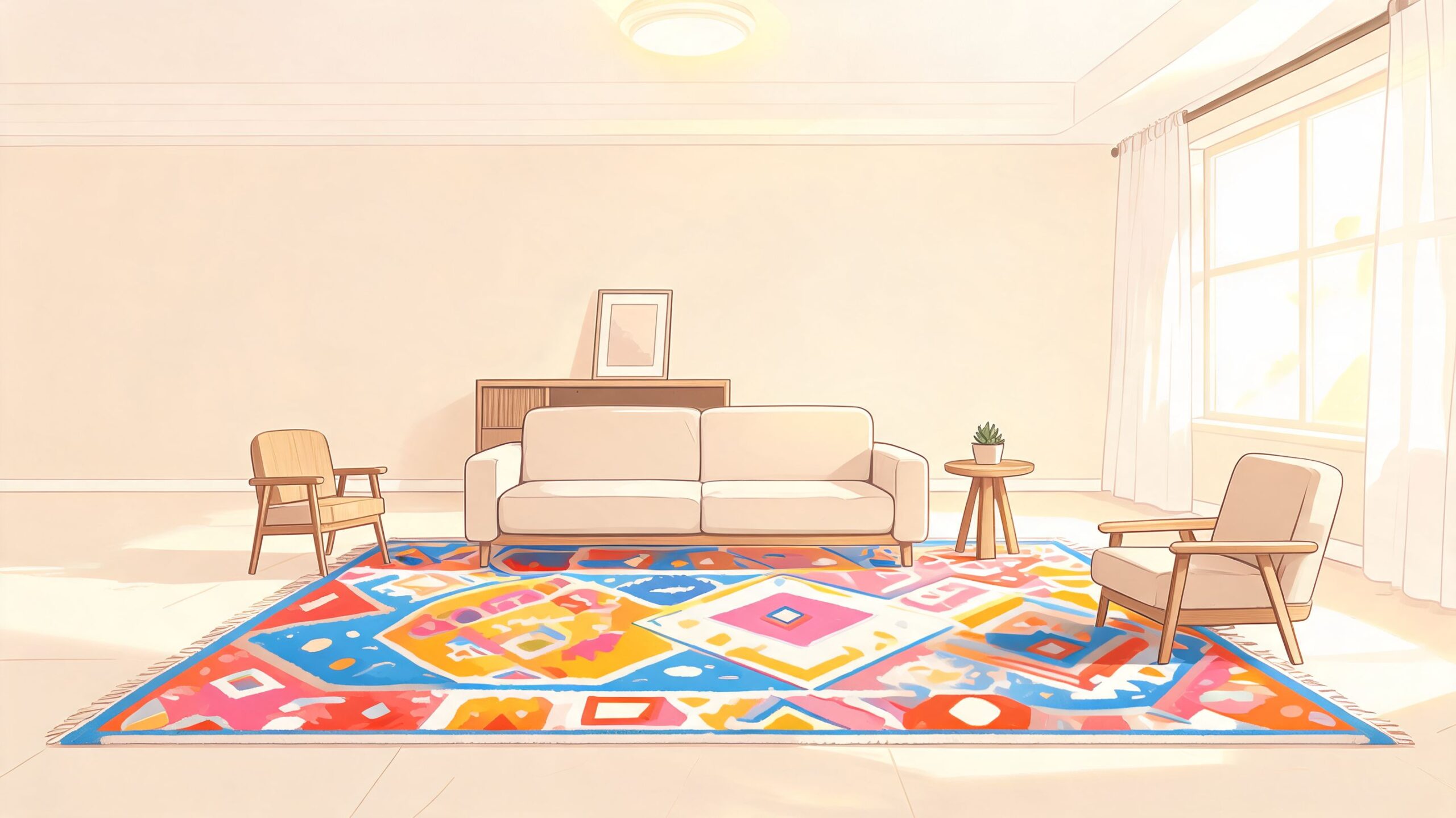
In Southern Ontario homes, especially across the Greater Niagara, Hamilton, and Toronto markets, I see the same turning point again and again. A room can have excellent furniture and still feel unresolved if the floor doesn't anchor it. The right rug gives the eye a place to land. It can quiet a busy mix of finishes, or it can bring life to a room that feels too careful.
A rug creates the room's language
Consider a living room with a well-designed sofa, a pair of wood-framed chairs, and a glass coffee table. Without a rug, each piece reads as separate. Add a hand-knotted wool piece with softened reds, tobacco, cream, and faded blue, and suddenly the room has a palette. The wood looks richer. The upholstery looks more intentional. The art on the wall feels chosen rather than merely hung.
That's the difference between buying a floor covering and curating a foundation.
For homeowners searching for rug store hamilton, this matters. The best choice isn't merely the rug that fits the dimensions. It's the one that supports a complete room concept. If you're refining a home that sits between classic and contemporary, the principles behind transitional style interior design often explain why certain rugs feel effortless. They bridge periods, soften contrasts, and make mixed furnishings feel collected.
A timeless rug doesn't shout for attention every day. It keeps revealing itself as the room grows around it.
Why heirloom quality changes the decision
A well-made rug has a different rhythm from a quick purchase. It doesn't need to chase trends because it already carries texture, craftsmanship, and visual depth. In practical terms, that means it can move with you from one house to another, from one room to another, and still feel relevant.
That's why I always encourage homeowners to think beyond immediate convenience. The rug under your feet may become the piece your children remember from the house, or the foundation you redesign around years later. Good rugs age into a home. Poor ones merely occupy it.
How to Evaluate a True Rug Curator
Not every store that sells rugs curates them. That distinction matters more than most buyers realise.
A retailer can offer a large wall of options and still provide very little guidance. A true curator edits. They know why one weave suits a formal sitting room and another belongs in a family room. They can explain what gives a piece tension, softness, durability, or grace. They don't just ask what size you need. They ask how you live.
Start with history and point of view
A store's history doesn't guarantee taste, but it often reveals whether the business has learned how homes evolve across generations. Established in 1914 in St. Catharines, Critelli Furniture has served the Greater Niagara, Hamilton, and Toronto markets for over 110 years, and family-owned establishments like it have outlasted 70% of competitors founded pre-1920 in Southern Ontario, according to this regional longevity reference. Longevity like that usually reflects something important. Clients return when guidance is sound and standards hold.
When you walk into any rug store in Hamilton, look for a point of view rather than sheer volume.
Ask questions such as:
- How is the assortment selected. Does the store carry rugs that relate to architecture, furniture scale, and real use, or does everything feel interchangeable?
- Who explains materials and construction. Can someone distinguish hand-knotted, hand-tufted, flatweave, and machine-made in practical terms?
- What happens after purchase. Will anyone help with placement, underpad choice, or care guidance?
- Do they speak in design language. A serious rug specialist should be able to discuss proportion, palette, traffic flow, and visual weight.
What curation looks like in practice
A curated selection usually has range, but not chaos. You'll see varied origins, fibres, and patterns, yet the collection still feels coherent. That coherence is useful because it saves you from making decisions inside a fog of near-identical options.
Here's a simple comparison:
| Consideration | Basic retailer | True rug curator |
|---|---|---|
| Selection | Broad but repetitive | Edited with intention |
| Guidance | Product-led | Room-led |
| Materials knowledge | Surface-level | Specific and comparative |
| Sourcing story | Minimal | Clear understanding of makers and methods |
| Aftercare advice | Limited | Part of the service |
Practical rule: If the conversation begins and ends with price and size, you're in a shop. If it expands to architecture, lifestyle, materials, and long-term placement, you're closer to a curator.
Look for sourcing intelligence
One of the clearest signs of expertise is how the store talks about origin and construction. A knowledgeable specialist won't romanticise every handmade piece, nor will they dismiss machine-made rugs where they make sense. They'll explain trade-offs directly.
For example, hand-knotted rugs often bring nuance, irregularity, and a sense of artistry that machine-made pieces rarely replicate. But a machine-made rug can be a wise choice for a mud-adjacent room, a busy secondary space, or a client who wants precise performance characteristics.
That balance is the mark of confidence. Good curators don't push one answer. They narrow the right answer.
Defining Your Space with a Designer's Eye
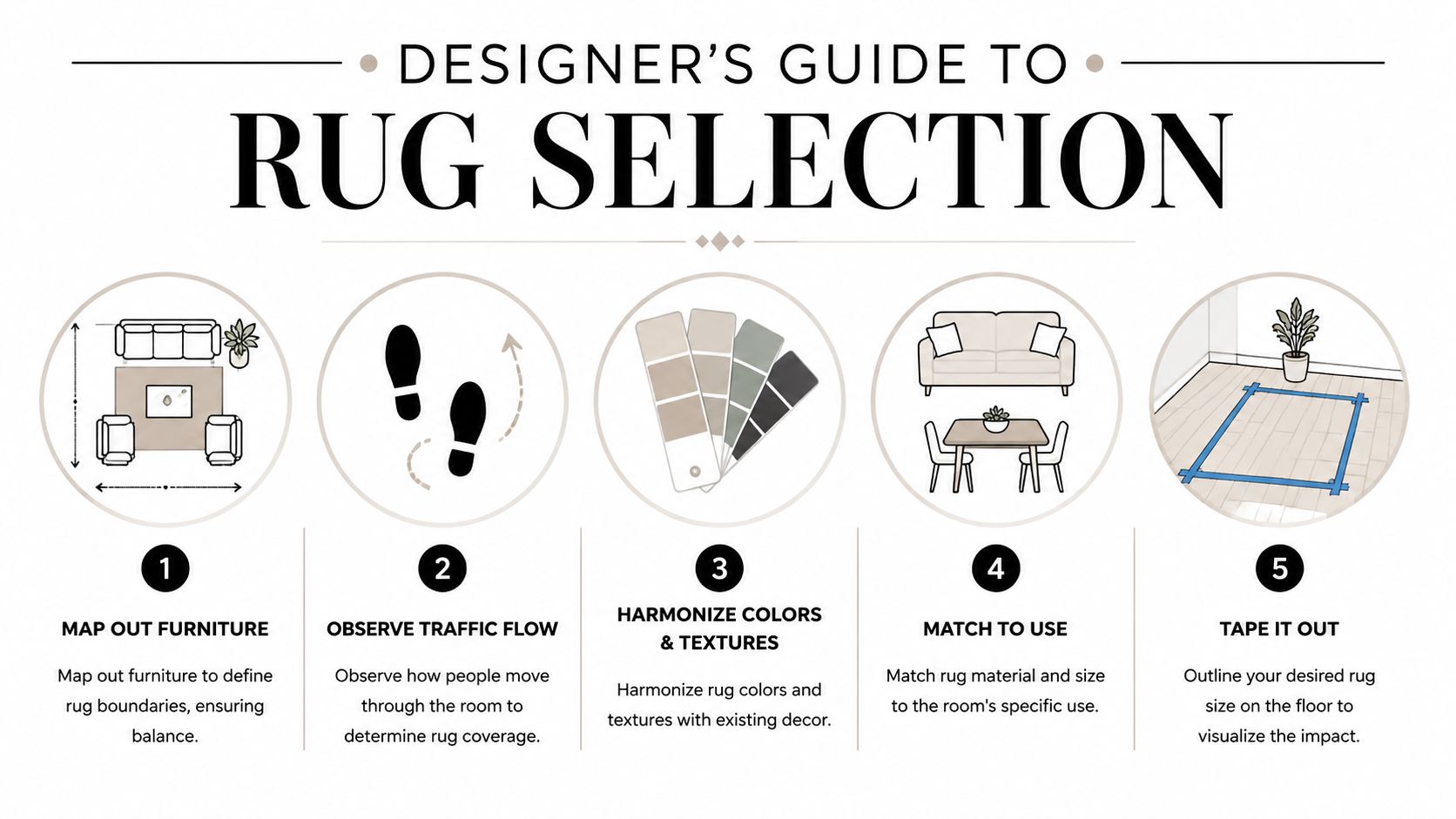
Before you step into any rug store hamilton shoppers recommend, study your room the way a designer would. Measurement matters, but proportion matters more. The right rug doesn't just fit the floor. It defines how the furniture belongs on it.
Too often, homeowners buy the smallest size that seems workable. That almost always weakens the room. A rug that floats in the middle like an island makes even beautiful furniture feel disconnected.
Begin with the room's function
A living room, dining room, bedroom, and lower-level lounge all ask different things of a rug. Start by identifying what the room must do every day.
- Living room use. Decide whether the rug should gather all major seating pieces or support only the front legs. In most formal and family seating arrangements, some visible relationship between the furniture and the rug is essential.
- Dining room use. Pull chairs back and imagine real movement. If the rug feels generous when the chairs are tucked in but awkward when they're used, it's too small.
- Bedroom use. Think about where your feet land in the morning. A rug should provide softness where the body experiences the room, not just where the eye sees it.
- Open-concept spaces. Use the rug to establish one clear zone. The rug can define conversation, dining, or reading without adding walls.
Read the architecture, not just the dimensions
Hamilton homes often have strong architectural personalities. A Victorian room with trim, fireplaces, and narrower proportions wants a different rug presence than a modern condo with wide sightlines and fewer visual interruptions.
In older homes, I usually pay close attention to thresholds, radiator placement, and original wood floors. In newer condominiums near the lake, acoustics, reflected light, and clean furniture lines often become the priority. If you'd like a practical companion to room planning, this guide on how to choose an area rug size is helpful for visualising scale before you commit.
Climate changes material choices
Below-grade spaces deserve special attention in this region. Homeowners in Hamilton and the Niagara region should consider the local climate. Ontario's humid continental climate can increase mold risk in basements by 25%, making naturally moisture-resistant materials like wool a superior choice for below-grade spaces, as noted by this rug material guide.
That doesn't mean every basement must look rustic or overly practical. It means the material choice should respect the room's conditions as much as its style.
Designer's Insight: Tape the rug outline directly onto the floor before you shop. Walk the room for a day. You'll notice traffic pinch points, furniture crowding, and whether the scale supports the room's natural rhythm.
Use colour with restraint and purpose
A rug often carries more visual information than any other surface in the room. It can introduce warmth, coolness, softness, contrast, or movement. If you're deciding between palettes, it helps to understand how colour changes mood and spatial perception. This short piece on transform your space with colour psychology offers a useful framework for thinking beyond simple matching.
A final note on light. Morning light, north light, and evening lamp light can all shift a rug's personality. Cream may read warm in one home and cool in another. Blue-grey may feel elegant in daylight and flat after sunset. Always assess a rug with the room's actual lighting in mind.
A Curated Palette Materials Weaves and Origins
The world of rugs becomes much easier to understand once you stop sorting by style name alone. Material, weave, and origin tell you far more about how a rug will live in a room.
That's where many buyers get stuck. They know what they like visually, but they can't yet tell whether that preference suits their floor, their household, or their architecture. The answer usually lies in the structure of the rug itself.
Wool silk and natural fibres
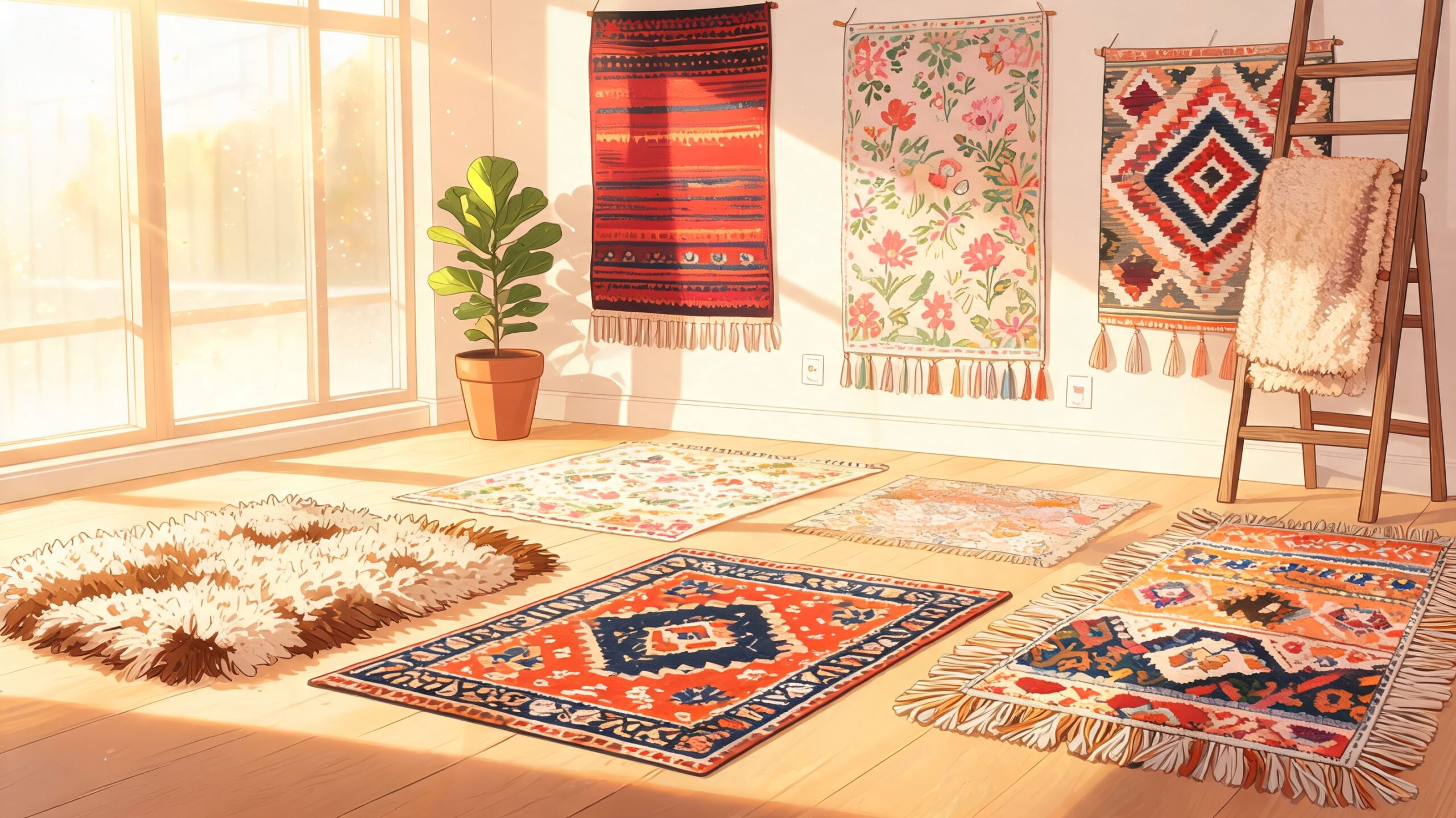
Wool remains one of the most dependable choices for serious interiors. It has body, warmth, and a forgiving surface character that works beautifully in living rooms, bedrooms, and studies. In hand-knotted form, wool also carries colour with depth. Subtle abrash and tonal variation give the rug life.
Silk adds lustre and refinement. Used sparingly or as highlighting detail, it can give a pattern extraordinary dimension. It's better suited to lower-impact spaces or rooms where visual elegance matters more than rugged use.
Natural fibres such as jute and sisal bring texture and architectural simplicity. They can be excellent in relaxed interiors, though they aren't always the best answer where softness underfoot or stain sensitivity is the priority.
Hand-knotted versus machine-made
Hand-knotted rugs embody practical honesty. They offer individuality, craftsmanship, and often a more nuanced visual field. You'll see variation that makes the piece feel alive. They suit clients who want a rug with authorship and soul.
Machine-made rugs can be remarkably useful when performance comes first. In Southern Ontario, homes experience 150-200 freeze-thaw cycles annually, and rugs often contend with abrasive grit tracked in from outdoors. In that context, machine-made rugs using heat-set polyester with high tuft density of 300,000-500,000 points per square metre show 40% less matting over 5 years compared with low-density alternatives, according to this construction-specific reference.
That doesn't make them more beautiful than a finely woven heirloom. It makes them sensible in certain settings.
Match the rug to the room
A quick comparison can help:
| Room condition | What often works well | What to watch for |
|---|---|---|
| Formal sitting room | Hand-knotted wool or wool-silk | Excessively casual texture |
| Busy family room | Durable wool or dense machine-made construction | Delicate fibres in heavy traffic |
| Condo living area | Low to medium pile with clean edges | Overly thick pile that crowds furniture |
| Entrance-adjacent room | Tighter weave and resilient surface | Loose, plush textures that trap grit |
Some rugs are meant to impress at first glance. Better rugs continue to reward attention after years of use.
Origins shape character
Origin isn't just a label. It often signals a design vocabulary.
A Persian Gabbeh may bring bold geometry, generous scale, and a grounded handmade quality. A Turkish Oushak often offers muted elegance, airy pattern, and a faded palette that pairs beautifully with both antiques and modern upholstery. Contemporary artisanal rugs can bridge these influences, giving a room softness without losing structure.
Sustainability also belongs in this conversation. More homeowners now want to know where fibres came from, how dyes were handled, and whether the sourcing story is traceable. That interest has made curated collections of Tapis rugs and carpets and other design-forward lines more compelling to buyers who want both beauty and accountability.
The best material choice isn't the most expensive one. It's the one whose construction, visual language, and wear pattern align with the life of the room.
The Bespoke Purchase Journey From Showroom to Home
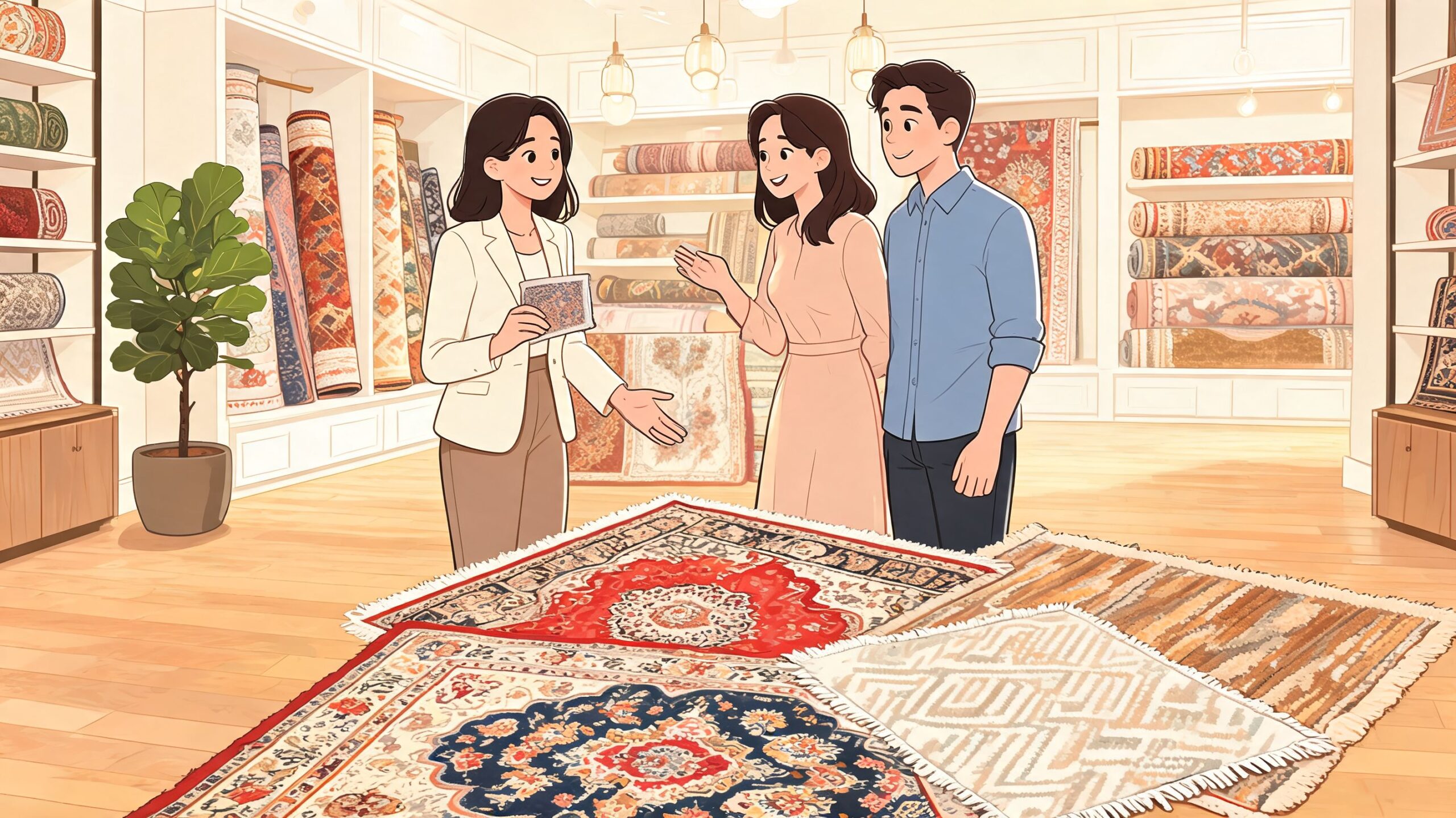
The finest rug purchases rarely happen in a rush. They unfold through comparison, sample viewing, and a clear understanding of the room they're entering.
That process matters even more today because buyers aren't only looking for decoration. The demand for bespoke, eco-friendly home goods is rising. In Southern Ontario, 62% of homeowners prioritize eco-materials, and searches for “sustainable rug stores Hamilton” have spiked 40% year-over-year, yet few retailers serve that interest well, according to this consumer trend reference. People want meaning, not just merchandise.
Why the showroom is only the beginning
A rug can look composed under showroom lighting and feel entirely different at home. Wall colour, floor tone, window direction, and surrounding upholstery all change the reading. That's why sample review and in-home consideration are so valuable.
In practice, a good purchase journey often includes:
- Edited options that reflect the room's architecture and not just the buyer's first instinct
- Material discussion so the client understands the difference between what looks good now and what will age well
- Custom thinking around size, palette, edge treatment, or sourcing where a standard option falls short
The complete room concept
Rug selection becomes more successful when it's tied to the whole interior. A strong consultant doesn't isolate the floor from the rest of the room. They consider whether the rug should quiet a bold sofa, sharpen a soft palette, or connect wood finishes that currently feel unrelated.
That same philosophy extends beyond the purchase itself. The handoff from store to home should be calm and exact. Professional delivery, inspection, placement, and setup aren't extras in a premium environment. They protect the piece and preserve the design intent. If you're comparing service standards, a resource on furniture assembly services near me shows the level of coordination homeowners should expect when a room is being installed properly.
A bespoke rug experience should remove uncertainty, not add ceremony. The service matters because the room matters.
What works and what doesn't
What works is slow enough to be thoughtful. Homeowners review options in their own light, with their own finishes, and with honest discussion about use.
What doesn't work is buying on isolated showroom appeal alone. A rug may be beautiful and still wrong for the room. The purchase should feel less like a transaction and more like the final selection of a piece already in conversation with the home.
Living with Your Artwork A Guide to Long-Term Care
A rug of heirloom quality doesn't ask for anxious treatment. It asks for consistent stewardship.
Most long-term issues come from neglecting simple habits. Grit sits in the pile too long. Sun exposure falls unevenly. Spills are rubbed instead of blotted. None of this is dramatic, but each choice affects the way a rug ages.
Everyday care that protects the pile
Start with routine maintenance that respects the construction.
- Vacuum gently. On wool and other natural pile rugs, avoid aggressive beater-bar action unless the maker specifically recommends it.
- Rotate periodically. This helps distribute wear and light exposure more evenly.
- Use an underpad. A proper pad improves stability, reduces friction against the floor, and helps the rug keep its shape.
- Address spills quickly. Blot with a clean cloth. Don't scrub, and don't oversaturate the fibres.
For homes in this region, stability matters. For Canadian climates with high humidity, polyester blend rugs exhibit less than 2% dimensional change in immersion tests, preventing the buckling often seen on hardwood floors in Niagara and Hamilton homes, according to this performance reference for polyester blends. If you've selected that type of construction for a practical room, the care routine is still important, but the rug may be more forgiving of moisture fluctuation.
Know when home care stops being enough
There's a point when a rug needs professional attention. Embedded grit, odour, broad soiling, and pet accidents usually require more than surface cleaning.
If you're arranging periodic professional maintenance, it helps to understand what deep carpet shampooing involves and where it may fit within a broader care plan for household floor coverings. For artisanal and hand-knotted pieces, always confirm that the cleaning method suits the specific fibre and construction before proceeding.
Protecting a rug isn't about keeping it untouched. It's about letting it be lived with, then caring for it correctly.
A calm response to spills and wear
Don't panic over the first mark. Rugs are made to be inhabited.
Respond quickly, avoid harsh chemicals, and seek expert cleaning advice before experimenting with household solutions. With the right habits, a good rug doesn't become fragile. It becomes seasoned.
Find the Foundation for Your Home's Story
The best rug decisions are rarely impulsive. They happen when a homeowner begins to see the floor as part of the architecture of living, not just the backdrop for furniture.
That shift changes everything. You stop asking only what matches. You start asking what anchors the room, what supports the light, what gives the furnishings context, and what will still feel right after tastes evolve.
The qualities worth insisting on
If you're choosing among options in the rug store hamilton market, keep your standards clear.
- Trust the guide as much as the goods. Expertise should feel calm, specific, and rooted in real rooms.
- Choose for your space, not a display vignette. Your light, layout, and traffic patterns should lead.
- Respect craftsmanship. Material and weave determine far more than showroom appearance.
- Plan for longevity. A rug with staying power earns its place year after year.
There's also a deeper reward in getting this right. A rug often becomes the piece that sustains a home through change. Furniture may move. Walls may be repainted. Art may be rearranged. The rug remains the visual memory under it all.
A room should feel collected
Rooms with lasting beauty seldom come from buying every piece at once. They come from thoughtful layering. The rug is often the first layer that makes the later decisions easier. It can guide upholstery, support wood tones, and even shape how seating should be arranged. If you're refining the room beyond the rug itself, this advice on how to arrange furniture in living room can help you see how the foundation and the furnishings should work together.
A well-chosen rug doesn't finish a room in the superficial sense. It gives the room its point of view.
Experience heirloom quality, design-forward guidance, and a smooth white-glove approach with Critelli Furniture. Visit the Rug Market to find your room's foundation, experience the craftsmanship in person at the King Street Showroom, or book your complimentary design consultation today.