
Premium TV Consoles and Stands: 2026 Style Guide

A great room can lose its poise in a single corner. You may have the right sofa, balanced lighting, and art chosen with care, yet the television wall still feels unresolved because the screen sits on a temporary stand, cords collect below, and every device announces itself.
That's usually the moment homeowners begin looking at tv consoles and stands differently. Not as a last-minute utility piece, but as fine furniture that has to carry both the visual weight of the room and the practical demands of modern living. In homes across Niagara, Hamilton, and Toronto, that choice often determines whether a room feels settled or merely furnished.
Beyond the Screen The TV Console as Fine Furniture
The television console has always been more than a platform. In Southern Ontario, it entered the home as a statement piece. Following the launch of CBC's national TV service in 1952, television consoles became status symbols, and early models often weighed up to 200 pounds and measured 4 to 5 feet wide, with Canadian makers such as Electrohome building them as furniture first and electronics second, a tradition noted in this history of television adoption and console design.
That history matters because it explains why the best media pieces still feel grounded, architectural, and purposeful. A proper console doesn't apologise for the screen. It frames it.
For a family firm with roots dating back to 1914, that idea feels familiar. Good furniture has always done two jobs at once. It serves the life of the house, and it strengthens the room around it.
When a room feels finished
A thoughtful console can soften the technical character of a television wall. Rich wood grain introduces warmth. Proper scale gives the screen a base. Doors and drawers turn visual noise into order.
A television may be modern technology, but the furniture beneath it should still honour the room.
That's why many homeowners gravitate toward pieces with the presence of a sideboard or credenza rather than something that looks disposable. If you already own an older cabinet and are considering whether it can be adapted rather than replaced, this How to Upcycle Furniture guide offers useful ideas for evaluating an existing piece with fresh eyes.
Why this piece sets the tone
The television wall often becomes a secondary focal point that behaves like the primary one. If that sounds contradictory, it's because many rooms are designed around conversation, but daily life still pulls attention toward the screen. The furniture under it has to reconcile both uses.
A design-led approach helps. Some homeowners begin by browsing design TV units for living spaces to understand how a console can read as cabinetry rather than equipment support. That shift in perspective changes the whole selection process. You stop asking, “Will this hold the TV?” and start asking, “Does this belong in the room for the next decade?”
Finding Your Home's Design Language
Most mistakes with tv consoles and stands begin with the piece itself. The better approach begins with the home.
A console should speak the same language as the architecture, the flooring, the upholstery, and the light in the room. In a crisp condo near the lake, that language may be linear and restrained. In an older Hamilton home, it may be warmer, layered, and more rooted in wood tones.
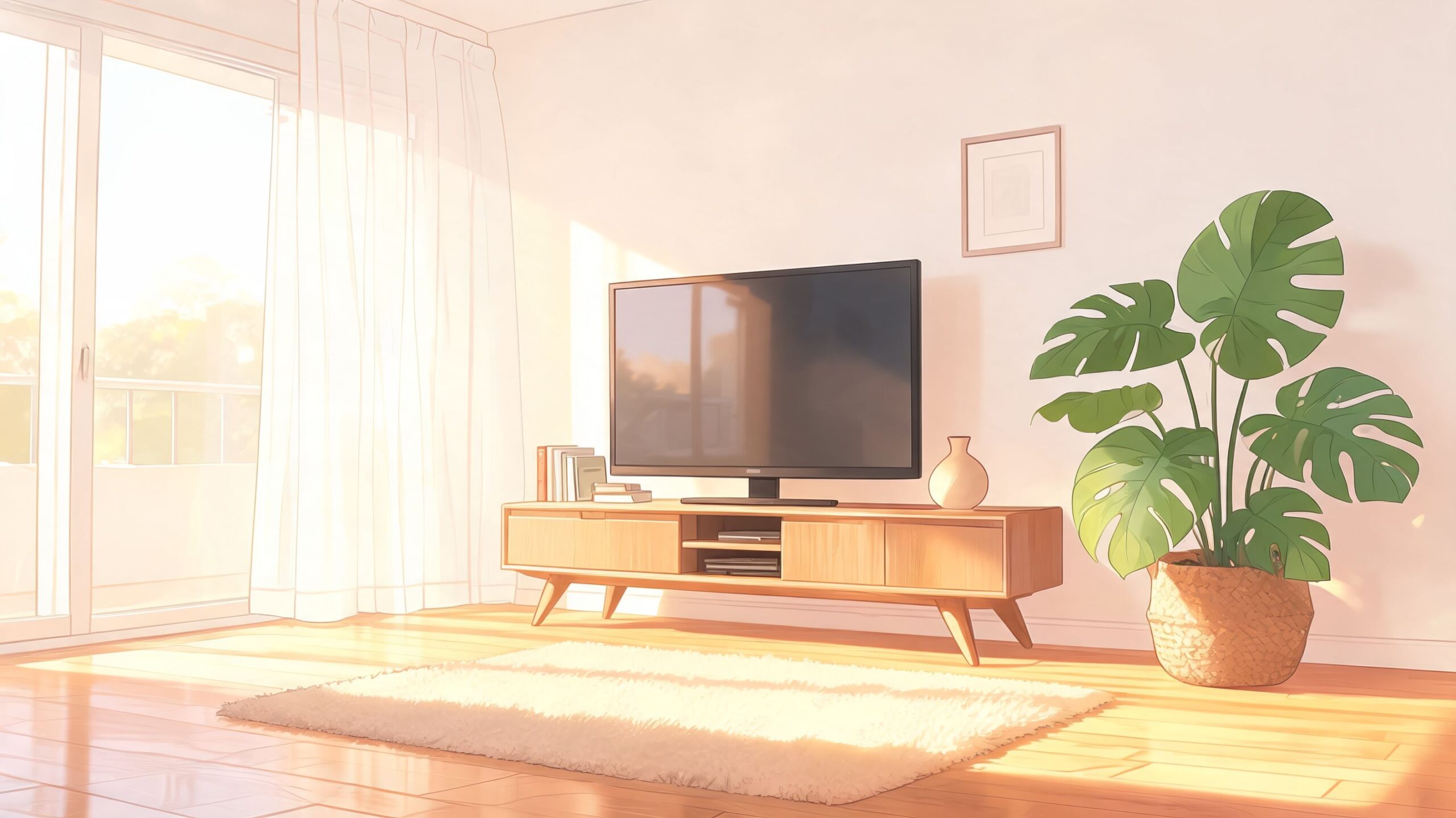
Start with the bones of the room
Look first at what can't easily be changed.
- Architecture matters. Baseboards, window trim, fireplace surrounds, and ceiling height all suggest whether the room wants something substantial or spare.
- Flooring sets the undertone. Pale oak, walnut, maple, and painted floors each call for different cabinet finishes.
- Existing seating gives clues. A room anchored by structured upholstery wants a different console than one softened by rolled arms and traditional case goods.
If your style sits between classic and contemporary, a helpful reference is this guide to transitional style interior design. It explains why some rooms call for balance rather than strict allegiance to one period or look.
Recognise the major furniture dialects
Some pieces whisper. Some speak with authority. Neither is wrong.
A few broad directions tend to endure:
| Design language | What it looks like in a console | Best suited to |
|---|---|---|
| Traditional | Framed doors, richer finishes, visible craftsmanship | Older homes, formal living rooms, layered interiors |
| Arts and Crafts inspired | Honest joinery, sturdy proportions, oak or cherry character | Homes that value permanence and architectural warmth |
| Contemporary | Clean planes, minimal hardware, disciplined lines | Condos, open-plan homes, pared-back interiors |
| Transitional | Soft modern lines with classic materials | Homes mixing old and new comfortably |
A Stickley-inspired piece, for instance, doesn't rely on trend. It brings quiet authority through proportion, grain, and joinery. A sleek contemporary console does something different. It reduces visual interruption and lets the room breathe.
Match mood before finish
Homeowners often focus too early on stain colour. Mood comes first.
Ask these questions instead:
Should the console anchor the wall or recede into it?
A darker or more architectural piece can ground a large wall. A lighter finish can reduce visual heaviness.Do you want the television area to feel formal or relaxed?
Formal rooms benefit from cabinetry details, symmetry, and refined hardware. Casual rooms can handle more openness and lighter profiles.Will the piece live alone or as part of a complete room concept?
If the console sits near a bookcase, accent chair, or fireplace wall, it should participate in that larger composition.
Designer's Insight
Our designers often suggest choosing the console by the room's temperament, not by the television's brand. The screen changes. The room remains.
This is also where Interior design services St. Catharines become valuable for homeowners who want a composed result rather than a series of separate purchases. A console rarely looks its best in isolation. It looks right when the whole room agrees with it.
Choosing Materials for Heirloom Quality
A fine TV console works like a dining sideboard that happens to support technology. It must carry weight, tolerate warmth from components, resist everyday abrasion, and still look composed after years of use. That is why material selection deserves the same care you would give any permanent case piece in the home.
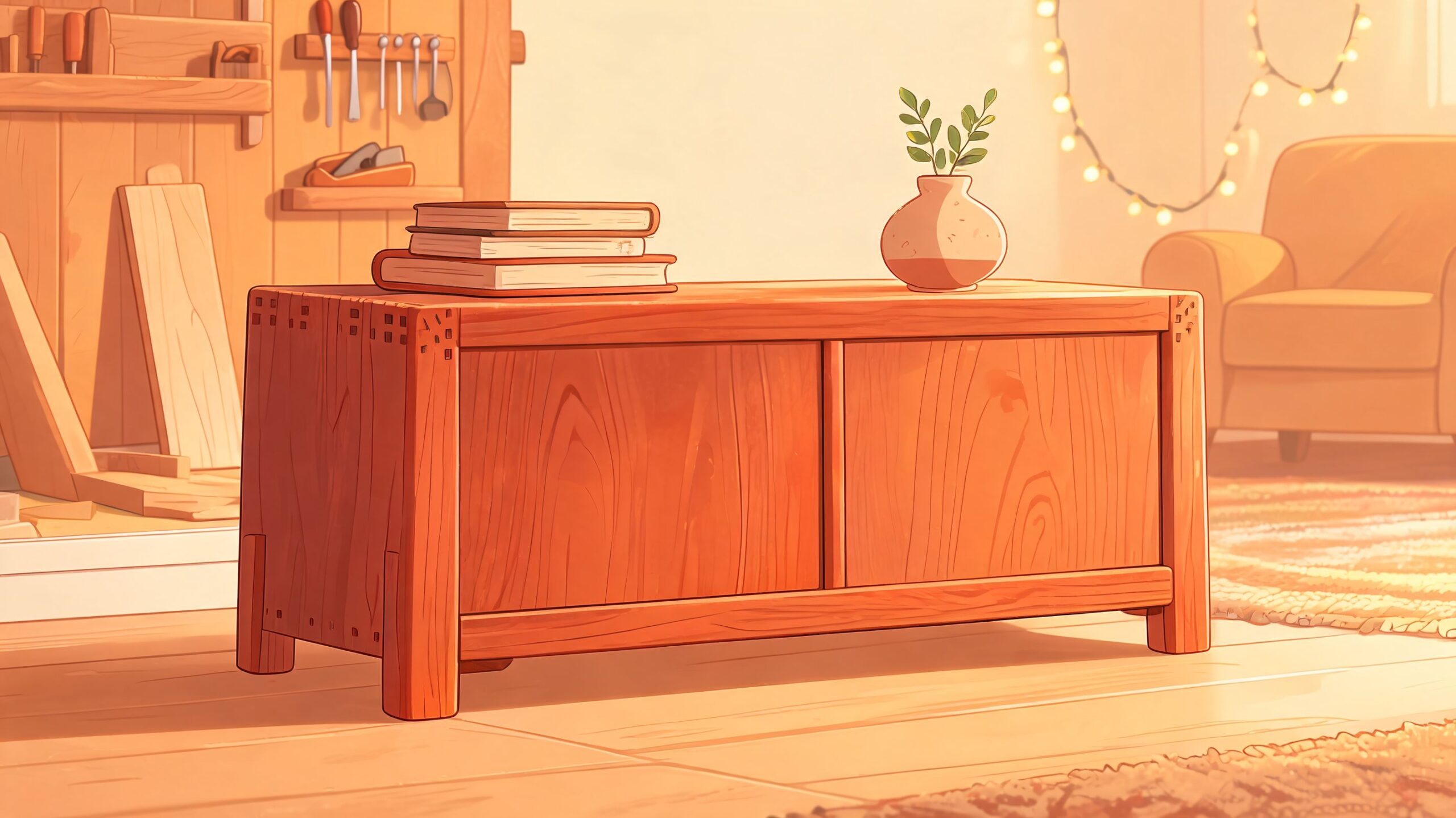
Solid wood and long-term structure
Structure comes first.
A large television, soundbar, speakers, gaming systems, and decor can place uneven stress across the top and interior shelves. A practical rule is to choose a console rated for at least 1.5 times your television's weight, especially if the piece will also hold additional equipment, as outlined in this guidance on what features to look for when buying a TV stand.
Weight capacity, however, is only part of the story. Two consoles can claim similar numbers and age very differently. The better piece usually reveals itself in the quiet details. Doors hang square. Drawers close cleanly. Shelves feel firm under the hand. The cabinet sits flat and steady, rather than shifting slightly on the floor.
Look for these signs of lasting construction:
- Substantial tops and shelves with real thickness and little flex
- Well-fitted doors and drawers that align evenly and move smoothly
- Joinery with purpose, rather than cabinets relying mainly on quick assembly hardware
- A stable, grounded base that feels secure in busy family rooms
The case for Canadian-made hardwoods
Southern Ontario asks a great deal of wood furniture. July humidity swells the air. Winter heating dries it out. A console built with appropriate hardwoods and careful construction handles those seasonal changes with far more grace than lightweight imports made for short service lives.
A useful starting point appears in this guide to choosing the right hardwood for longevity and style. For tv consoles and stands, maple, cherry, and oak remain trusted choices because they balance durability, repairability, and visual depth. Oak offers pronounced grain and a sense of permanence. Maple reads cleaner and more refined. Cherry develops a richer patina over time, which suits clients who want the piece to mature rather than merely endure.
That last point matters. An heirloom is not a piece that avoids age. It is a piece that wears beautifully.
Veneer has a proper role in fine furniture
Many homeowners hear “veneer” and assume compromise. Fine furniture tells a more nuanced story.
A well-executed veneer over a stable core can create broad, balanced surfaces that resist some of the movement common in wide solid-wood panels. It also allows for careful grain matching across doors and drawer fronts, which gives the cabinet a calm, polished face. In a high-quality console, veneer is a cabinetmaker's tool, not a shortcut.
Poor construction is the primary problem. Thin finishes, weak substrates, and poorly applied edges fail early. Thoughtful bespoke work often combines materials according to their strengths. Solid wood serves the frame, edges, and places that take impact. Veneered panels serve broad surfaces where stability and visual continuity matter most.
Sustainability that holds up over time
Sustainability begins with longevity. A console that serves for twenty years is a better environmental choice than one replaced every few seasons.
For Southern Ontario households, local and Canadian-made furniture also offers practical advantages. Makers who understand this climate are more likely to specify woods, joinery, and finishes suited to shifting humidity. Locally crafted pieces also make customization easier, whether that means adjusting shelf heights for audio equipment, choosing low-VOC finishes, or selecting species that suit both your room and your values.
That is the distinction worth keeping in mind. Sustainable furniture is not only responsibly sourced. It is well built, repairable, adaptable to changing technology, and worthy of remaining in the room long after the current screen has been replaced.
The Art of Proportion Sizing and Ergonomics
A beautiful console can still be wrong for the room if its proportions are off. Design becomes technical at this stage, though it shouldn't feel intimidating. Most sizing decisions come down to three relationships. The screen to your eye, the console to the screen, and the furniture to the room itself.
The most important number is simple. The professional standard places the centre of the screen at approximately 42 inches from the floor, and in Southern Ontario homes where sofa seat heights commonly range from 16 to 18 inches, a console height of 18 to 24 inches usually supports that ergonomic target, as described in this guide to TV stands and media console dimensions.
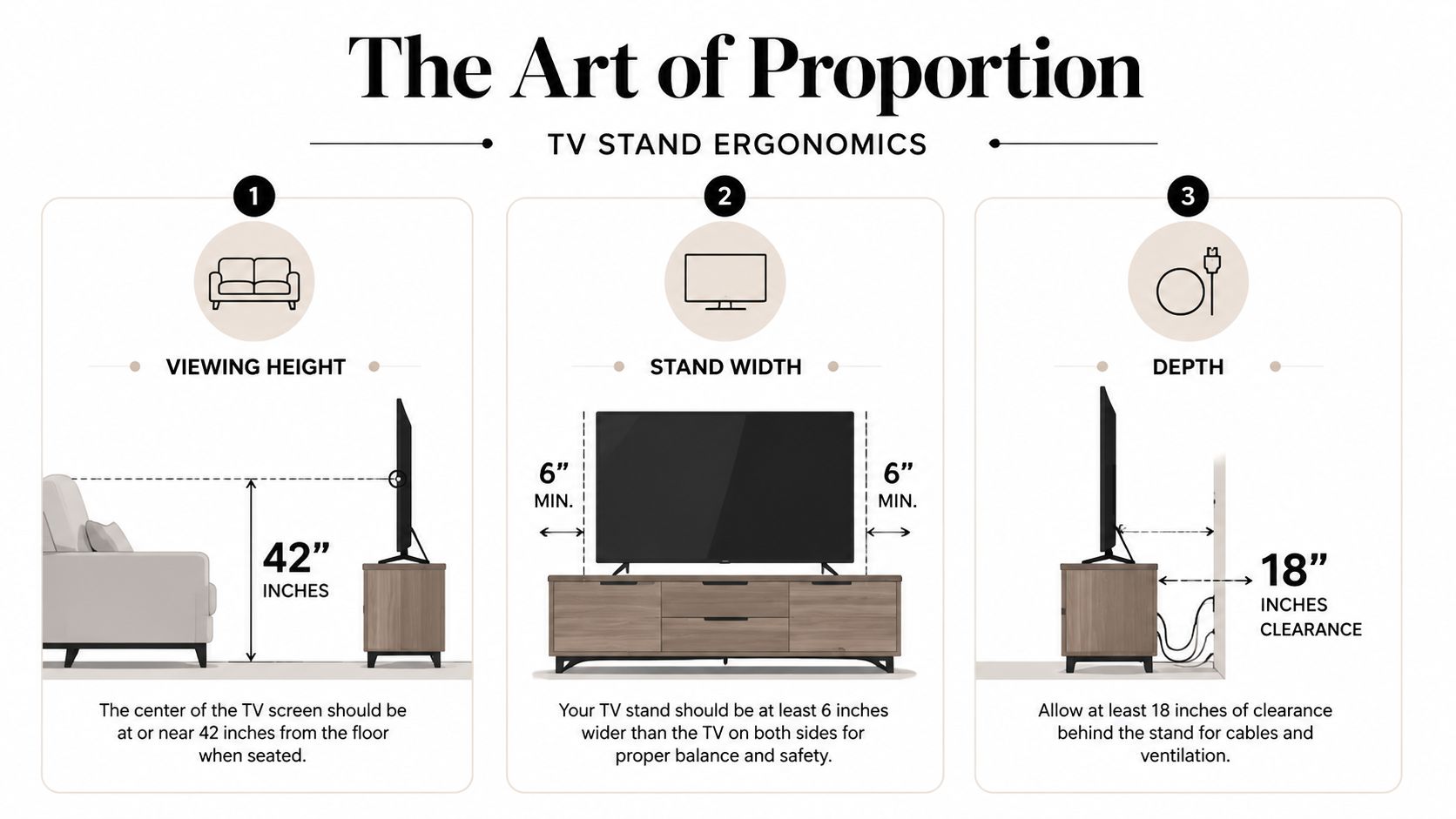
Height first, not width
Many people shop by width because that's the easiest thing to see online. Comfort starts with height.
If the console is too tall, your chin lifts. If it's too low, the room can feel visually dropped, especially if the television is very large. The right height keeps the viewing experience relaxed and lets the console feel integrated with nearby seating.
One simple way to consider your options:
- Low seating usually pairs well with a console in the lower part of the accepted range
- More upright seating can tolerate a slightly taller cabinet
- Large screens on short stands can still work if the screen centre stays close to natural eye level
Width and visual balance
The stand should look supportive, not undersized. It should also avoid swallowing the wall unless that effect is intentional.
This simple comparison helps:
| Room condition | Better console choice | Why it works |
|---|---|---|
| Compact sitting room | Visually lighter cabinet with disciplined width | Keeps the room from feeling crowded |
| Wide wall with large screen | Longer console with strong horizontal line | Gives the television a proper architectural base |
| Open-concept space | Console that relates to nearby furniture lengths | Helps tie zones together |
| Formal room | Piece with more presence and cabinetry detail | Supports a layered, furnished look |
One of the most common errors is forgetting that a television's advertised size refers to its diagonal, not its actual width. For that reason, many homeowners use a room-planning reference such as this complete guide to finding optimal TV positioning before making a final selection.
If your first reaction is that the console looks either too slight or too dominant, trust that instinct. Proportion usually announces itself immediately.
The console in relation to the room
A television wall doesn't exist alone. Doors open nearby. Traffic flows past it. Lamps, art, and seating all share the same visual field.
Think about these spatial checks before you commit:
Walkway comfort
You should be able to move through the room naturally without the cabinet projecting awkwardly into circulation.Depth in real use
A very deep console can feel bulky fast, especially in condos or narrower homes.Wall presence
The piece should feel intentional against the wall behind it, not like a placeholder waiting for something larger.Relationship to neighbouring furniture
If the sofa, occasional chairs, and cocktail table are all delicate, an overly heavy console can distort the room's balance.
A designer's way to test scale
Stand at the room entry and look only at the lower half of the television wall. If the base feels stable and composed before your eye even registers the screen, the proportion is likely right. If the eye goes first to imbalance, the room is telling you something useful.
This is the sort of judgement a Design Studio makes every day. It's one reason why Luxury furniture Niagara clients often find that the best-sized piece isn't always the one they first considered online.
Seamless Storage and Cable Management
The modern television area rarely suffers from a lack of technology. It suffers from visible technology.
A good console hides complexity without making daily use frustrating. Remotes should still work. Equipment should still breathe. Access should still be simple when something needs to be reset, updated, or replaced.
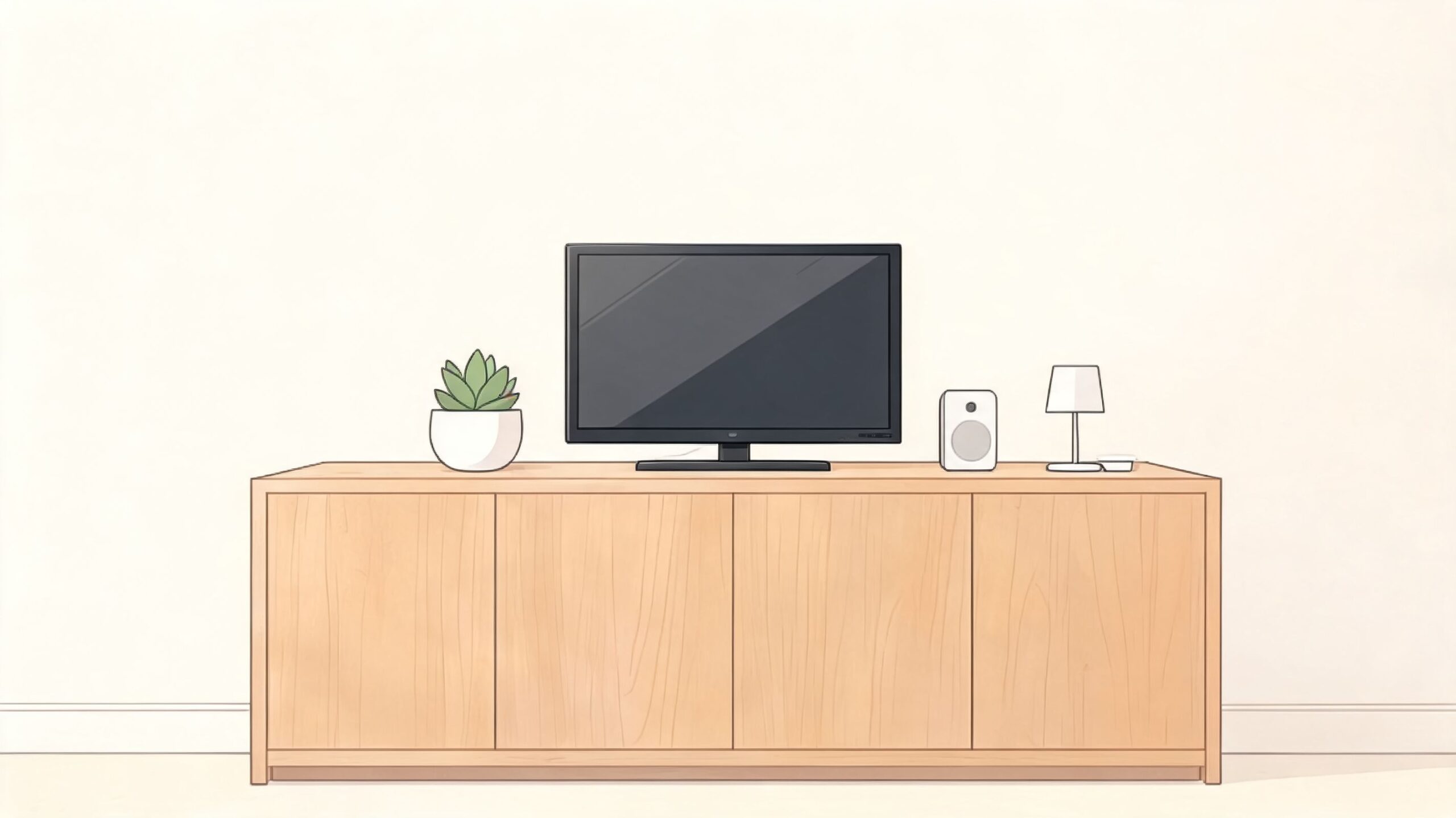
In Southern Ontario, 68% of households own smart TVs, yet few have media furniture optimised for this reality. That's why discreet management for sound systems, smart home devices, and hidden wiring has become such an important design concern, as noted in this discussion of smart-ready media stand considerations.
What invisible tech luxury actually means
It doesn't mean eliminating equipment. It means controlling what the room has to see.
Look for these features when evaluating tv consoles and stands:
- Cable passages placed with intention so cords don't bunch awkwardly behind shelves
- Ventilated compartments for devices that generate heat
- Doors or panels that conceal components while keeping access practical
- Space for power management so cords and adapters aren't crushed against the back panel
Plan around your actual equipment
Many homeowners buy the cabinet first and think about components later. Reverse that.
Make a short inventory:
Television base or feet Confirm how the screen sits. Some televisions require more width between supports than expected.
Audio equipment
A soundbar, receiver, or compact speakers may need open frontage or thoughtful shelf spacing.Gaming or streaming devices
These often need easy reach and reliable airflow.Smart home accessories
Hubs, voice assistants, and control units shouldn't be an afterthought if you want a tidy result.
One practical option in the market is Critelli Furniture, which offers entertainment stands designed for different TV and audio system configurations. In a design consultation, that kind of piece can be evaluated as part of the room rather than as a stand-alone storage box.
Hidden wiring should look effortless when the room is finished. It almost never happens by accident.
Don't forget the move into the home
Cable management often goes wrong during installation, not shopping. A beautiful cabinet arrives, the television comes in, and suddenly cords are draped temporarily with the promise of fixing them later.
If you're relocating equipment before a new setup, this advice on packing your TV in a cardboard box is a useful planning resource. Safe handling at the move stage makes it much easier to install everything neatly once the console is in place.
For households using voice assistants and multi-device systems, the strongest results usually come from bespoke thinking. A carefully planned opening in the right location is better than a generic cut-out in the wrong one. Fine furniture should support technology unobtrusively, not surrender its integrity to it.
Creating a Complete Room Concept
The television wall becomes much more elegant when it stops behaving like an isolated zone. A console works best when it belongs to the room's full composition. That means considering seating, rugs, lighting, and circulation together.
Homeowners often discover at this point that the console was never the whole problem. The room may lack a centre of gravity.
Start from the floor up
A console gains authority when it sits within a clearly defined furnishing plan. One of the most effective tools is the rug. At its best, a rug isn't accessory décor. It is Art for your Floor, the element that gathers seating, stabilises the focal area, and gives the television wall a visual counterpart.
For many living rooms, the sequence is simple:
- The rug defines the conversation area
- The seating responds to the rug
- The console anchors the opposing side
- Lighting and accent pieces complete the rhythm
That's why Hand-knotted rugs Ontario buyers so often find that the right rug improves the television wall without changing the television at all. The room feels intentional because the floor plane is finally organised.
Balance visual weight across the room
A substantial media console has presence. It needs companions.
If one side of the room holds the television and a broad cabinet, the opposite side may need softness through upholstery, a substantial cocktail table, or layered window treatments. The goal isn't symmetry in the strict sense. It's equilibrium.
This room-planning guide on how to arrange furniture in a living room is useful because it frames furniture as a relationship system rather than a row of separate purchases.
A room feels calm when no single object looks as though it landed there alone.
Think in sight lines
From the primary seat, you should see a coherent composition. From the room entry, you should see order. From adjacent spaces, you should see enough continuity that the living room feels connected to the rest of the home.
A few finishing moves often help:
- Repeat one material from the console elsewhere, perhaps in a side table, frame, or lamp base
- Echo one shape such as rounded corners, slender legs, or panelled fronts
- Use restrained styling on the console surface so it supports the room rather than competing with the screen
This is the essence of a complete room concept. The television doesn't disappear, but it stops interrupting the design story.
The White-Glove Experience and Lasting Care
A well-chosen TV console often meets its true test on delivery day.
You have measured carefully, selected the wood with intention, and planned the room so every line feels settled. Then the piece arrives. If it is dragged across the floor, assembled in haste, or set down a few inches off balance, the result is much like hanging a fine painting crooked. The object may still be beautiful, but the room loses its composure.
That is why white-glove service matters for fine furniture. A console built to serve the home for decades deserves careful handling from the truck to its final position, especially when the piece is substantial, fully finished, and suited to a specific wall, rug, and seating plan.
What proper delivery protects
Good delivery protects more than the cabinet itself. It protects the design decision behind it.
- Placement is precise, so the console sits where sight lines, speaker locations, and traffic flow were intended
- Assembly is handled correctly, which helps drawers, doors, and hardware perform as they should from the start
- Floors, walls, and corners are protected, which matters in older homes and newly finished spaces alike
- Packing materials leave with the crew, so the room is ready to live in rather than waiting for a second round of cleanup
For clients who enjoy rooms with depth and character, a media area also benefits from one carefully chosen accent nearby. Natural stone is especially effective because it brings weight, variation, and age-old material presence. Pieces like the luxury mineral decor at Astro West can complement a wood console without competing with it.
Caring for the piece over time
Lasting care is usually simple. Consistency matters more than complicated products.
Keep the console out of strong direct sun when possible, particularly if the room receives long afternoon light. Dust with a soft cloth. Clean spills promptly. If the surface is wood, avoid heavy silicone polishes that leave buildup and can dull the clarity of the finish over time.
Southern Ontario homes ask a bit more of furniture because the seasons shift so sharply. Winter heating dries the air. Summer humidity returns it. An heirloom-quality console should be built for that cycle, but wise care still helps. Stable indoor humidity, modest cleaning habits, and occasional hardware checks will do more for longevity than any miracle treatment.
Over the years, the piece settles into family life. Minor changes in patina become part of its character. That is the quiet mark of fine furniture. It no longer feels like something bought for a television. It feels like a permanent part of the house.
Explore the craftsmanship in person at Critelli Furniture in the King Street Showroom, where a curated selection, thoughtful room planning, and white-glove service help turn a television wall into a complete interior. If you'd like guidance customized for your space in Niagara, Hamilton, or Toronto, book your complimentary design consultation today. Visit the Rug Market to find your room's foundation.