
White Side Table: A Complete Buying & Styling Guide

A room can be beautifully furnished and still feel unresolved. The sofa is right. The rug has presence. The lighting is soft and flattering. Yet one corner looks empty, or worse, improvised with a piece that's the wrong height, the wrong finish, or the wrong mood.
That's often where the white side table earns its place. It isn't just a practical perch for a lamp or a coffee cup. In a well-composed room, it becomes the quiet element that ties scale, lightness, and function together. In Southern Ontario homes, especially those balancing heritage architecture with current living, that balance matters more than is often appreciated.
As designers, we rarely think of an accent table as a standalone purchase. We consider how it lives beside upholstery, how it reflects daylight, and how its finish will behave through humid summers and dry heating seasons. A white piece can sharpen a room, soften a heavier seating arrangement, or bring a clean note to richly layered interiors without feeling stark.
The Finishing Touch Your Room is Missing
A white side table often enters the conversation late. Homeowners usually start with the larger pieces first. A carefully chosen sofa, a comfortable chair, a statement rug. Then they step back and notice the room still lacks rhythm.
That missing rhythm usually shows up in the spaces beside seating. A table that's too dark can weigh down a bright room. One that's too bulky interrupts movement. One that's purely decorative never earns its footprint. The best white side table solves all three problems at once. It lightens the composition, supports daily use, and brings a finished quality that reads as intentional rather than incidental.
Why white works so well in Southern Ontario homes
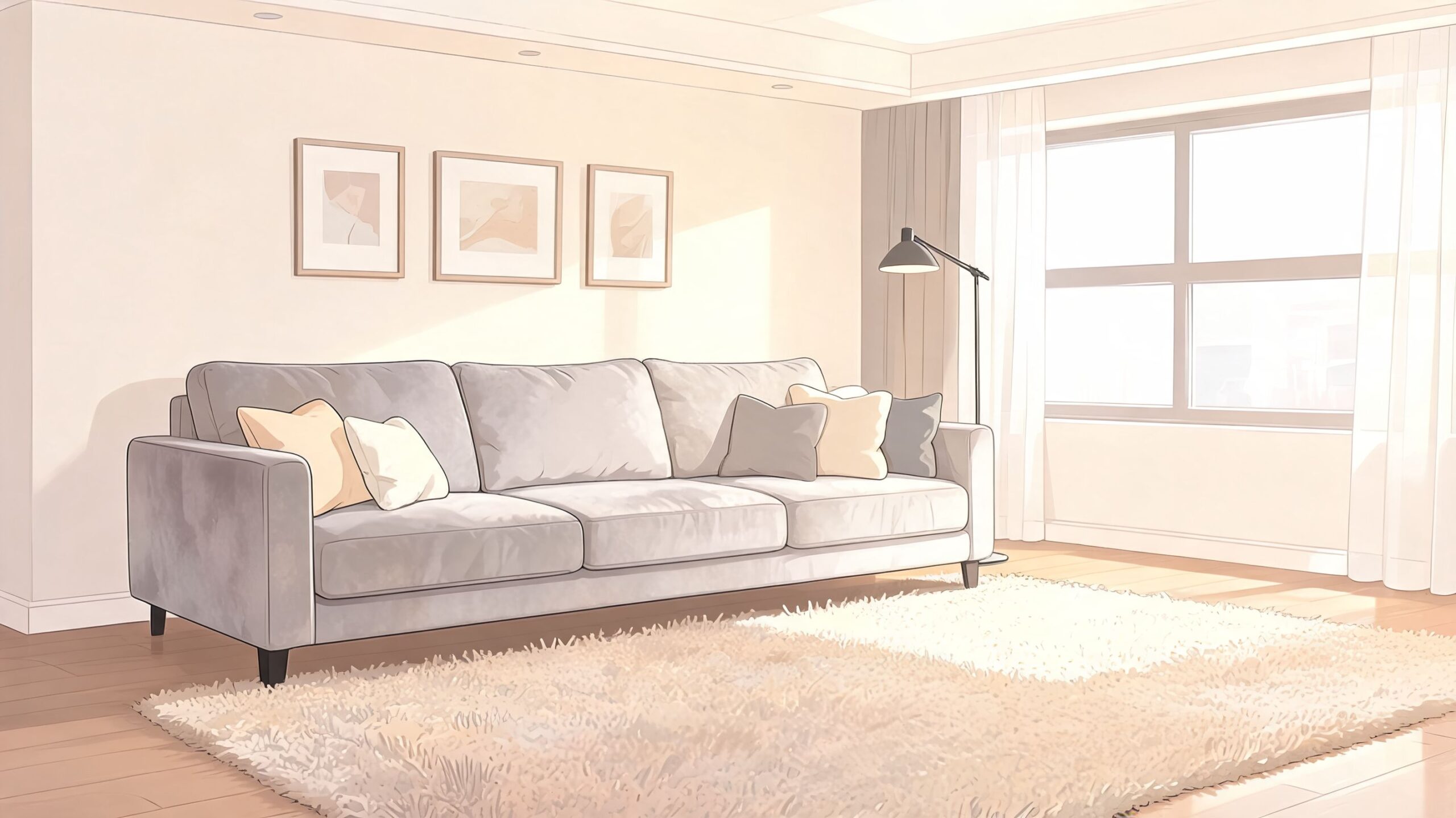
White has a particular usefulness in our region. It sits comfortably in lakefront condos, classic red-brick homes, and newer open-concept spaces because it reflects available light and pairs easily with wood, leather, linen, brass, and stone. It can feel crisp in a modern room or understatedly elegant in a more traditional setting.
Regional demand reflects that versatility. In Ontario, which accounted for 38.5% of national furniture retail sales in 2024, neutral-toned occasional tables, including white finishes, comprised 22% of side table sales, according to market data on the side table category. That tells us homeowners aren't looking for novelty alone. They're choosing pieces that adapt gracefully.
Critelli has been family-run since 1914, and that kind of longevity shapes how a room is approached. Good rooms don't come from collecting attractive objects. They come from knowing how each piece contributes to a complete, liveable whole.
A white side table should never feel like filler. It should look as though the room was waiting for it.
The accent piece that changes the whole room
The strongest rooms use small pieces strategically. A white side table can:
- Brighten a dense seating area by breaking up heavy visual mass from dark upholstery or wood casegoods.
- Support a layered palette when you want contrast without introducing another strong colour.
- Connect classic and contemporary elements in homes that mix older architecture with newer furnishings.
That's also why a side table often belongs inside a broader room conversation, not a quick online search. The home that feels restful and resolved is usually the one where every piece has been chosen in relation to something else. That philosophy sits at the centre of loving your space as a form of self-care.
Exploring Materials and Artisanal Styles
Material choice changes everything. Two white side tables can share a similar silhouette and feel entirely different once they're placed beside a sofa. One may read clean and architectural. The other may feel soft, refined, and more traditional.
In Southern Ontario, material choice also affects durability. Beauty matters, but so does how a finish handles humidity, sunlight, and regular use.
What works best by material
A white lacquered or laminated table offers a polished, design-forward look. It's especially useful in contemporary interiors where you want the table to feel crisp and edited. The trade-off is that high-gloss surfaces show fingerprints more readily, so they suit homes where a cleaner, more formal look is welcome.
Painted wood feels warmer and often works beautifully in transitional or classic settings. The challenge is quality. Lower-grade painted pieces can chip, yellow, or telegraph movement through the finish over time.
Engineered wood with durable white laminate has become a practical favourite for many homes in Niagara and St. Catharines. For homes in the region, engineered wood cores with UV-resistant white laminates or stone tops exhibit 40% less warping than solid pine, according to the referenced product and durability context. In our climate, that matters.
Stone-topped tables add gravitas. They're excellent when you want a white side table to feel substantial rather than airy. They also pair well with richer seating, especially leather, because the material contrast gives the room depth.
White Side Table Material Comparison
| Material | Best For… | Maintenance Level |
|---|---|---|
| Painted wood | Transitional and classic rooms with softer detailing | Moderate |
| Engineered wood with white laminate | Everyday living spaces that need stability and easy care | Low |
| Stone top with white base | Sophisticated rooms that need visual weight and durability | Moderate |
| Powder-coated metal with white finish | Modern spaces, lighter visual profiles, compact rooms | Low |
| High-gloss lacquer | Contemporary interiors with a polished look | Moderate |
Practical rule: If the room gets strong daylight and seasonal humidity, choose a finish that was designed for movement and wear, not just showroom appeal.
Matching the table to the room style
A white side table doesn't have to mean one aesthetic.
For a modern room, look for slimmer profiles, waterfall forms, metal bases, or a crisp rectangular shape. These pieces sit well beside low-profile upholstery and work especially well when the room already has disciplined lines.
For a transitional room, the white finish should feel softer. Subtle moulding, a shaped leg, or a shelf can keep the piece from feeling too sharp. If you enjoy rooms that bridge old and new, wood end table styles worth comparing can help clarify what silhouette feels most at home.
For a classic room, white often works best when balanced by tactile materials. Think aged brass hardware, a honed stone top, or cabinetry details that feel crafted rather than slick.
Storage and integrated function
Not every side table should be open and sculptural. In many homes, a drawer or shelf is the difference between a room that looks composed and one that gathers clutter by evening.
Storage is especially useful when the table sits beside the seat where daily life happens most. Remotes, reading glasses, chargers, coasters, and notebooks all need a place to land. If those items don't have one, the tabletop becomes crowded and the room loses its calm.
Smart features can also be worthwhile, but they should be discreet. A well-integrated charging solution is helpful. Visible cords and bulky add-ons are not. The more refined the room, the more important it is that utility disappears into the design.
Achieving Perfect Scale and Proportion
Most side table mistakes come down to scale, not style. Homeowners often choose a piece because the finish is right, then discover it feels awkward beside the sofa. It's too tall, too low, too narrow to be useful, or too broad for the walkway.
The good news is that proportion is easier to solve than people think. Start with height. That single measurement determines whether the table feels effortless or mildly annoying every day.
Height first, always
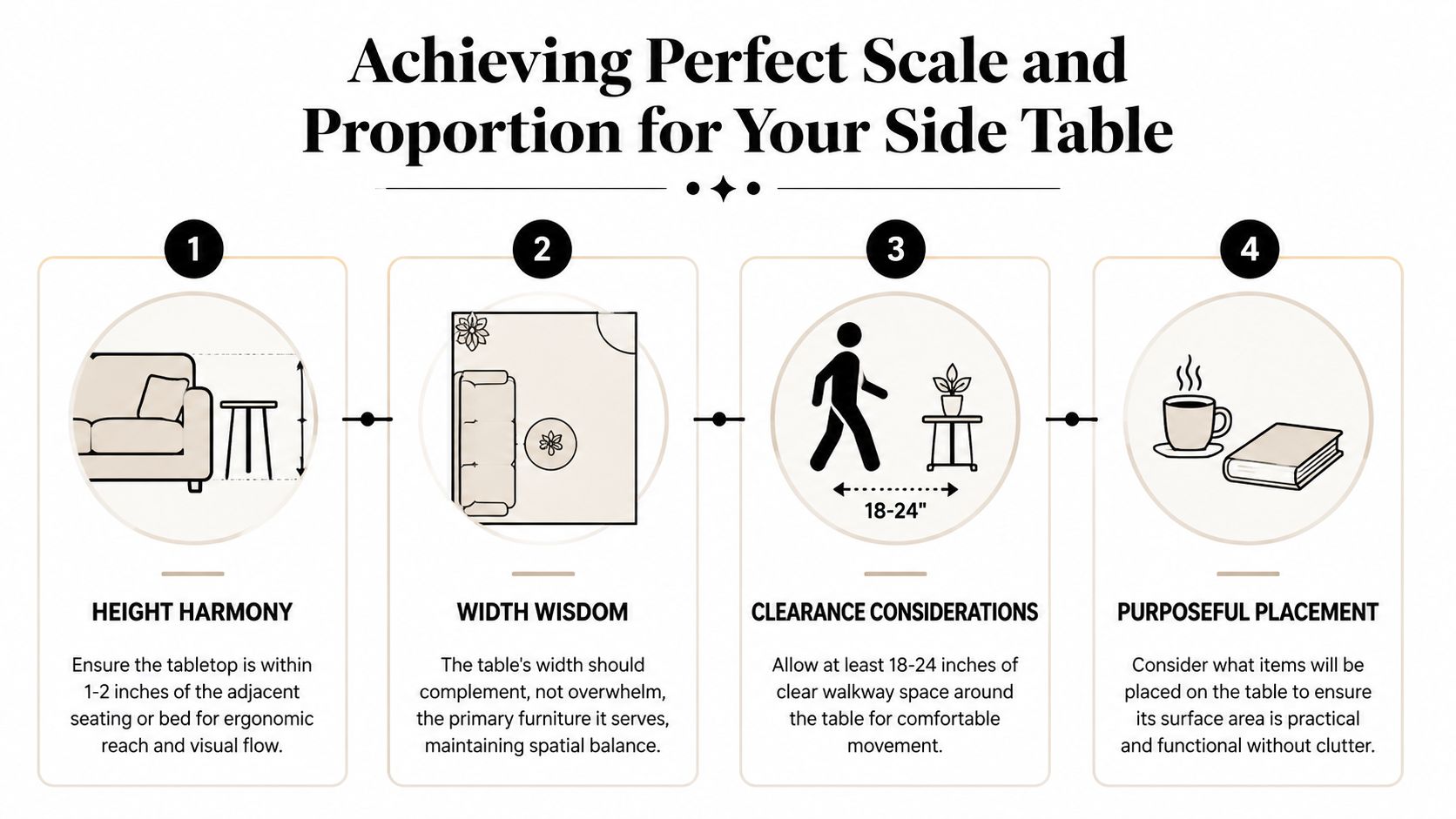
Industry data shows that a side table measuring within ±2 inches of a sofa's arm height, typically 22 to 25 inches, can reduce user strain by up to 35% when reaching for an item, according to the cited sizing guidance and product benchmark. That's one of those design rules people feel immediately, even if they can't explain it.
If the table sits far below the arm, reaching for a drink or book becomes awkward. If it towers above the arm, the room starts to look unresolved. The best height is usually level with the arm or just slightly below it.
Width and clearance matter just as much
A side table should support the seat it serves without crowding it. In compact rooms, a round table often softens circulation and makes movement easier around corners. In larger seating groups, a square or rectangular table can hold its own more confidently.
Three checks help prevent the most common proportion errors:
- Measure the sofa arm first so the tabletop lands close to a natural reach point.
- Check walkway space around the table so movement stays comfortable and unforced.
- Think about actual use such as a lamp, drink, book, or decorative object, rather than buying a table with too little usable surface.
For homeowners working through tighter layouts, I often recommend studying guides on creating inviting small living areas. The principles are closely related. Scale isn't only about fit. It's about how the room breathes.
Shape changes the feeling of a room
Round tables are forgiving. They work beautifully beside curved chairs, in narrow passages, and in spaces where you want the eye to move more easily. If your room feels boxy or rigid, a round white side table can introduce relief.
Rectangular and square tables feel more architectural. They suit structured sofas and cleaner plans, particularly when symmetry matters. If that's the direction you're considering, round end tables versus other silhouettes are useful to compare before committing.
Designer's Insight
If you're torn between two sizes, choose the one that better serves the seating height, not the one that simply fills the gap beside the sofa. Rooms feel more elegant when function leads and mass follows.
Styling a Cohesive Room Concept
A white side table becomes persuasive when it participates in the whole room. On its own, it may be attractive. In relationship to upholstery, lighting, textiles, and art, it becomes memorable.
That's the difference between decorating and designing. Decorating can stop at surface appeal. Design asks how every element supports the next.
Pairing with upholstery and finishes
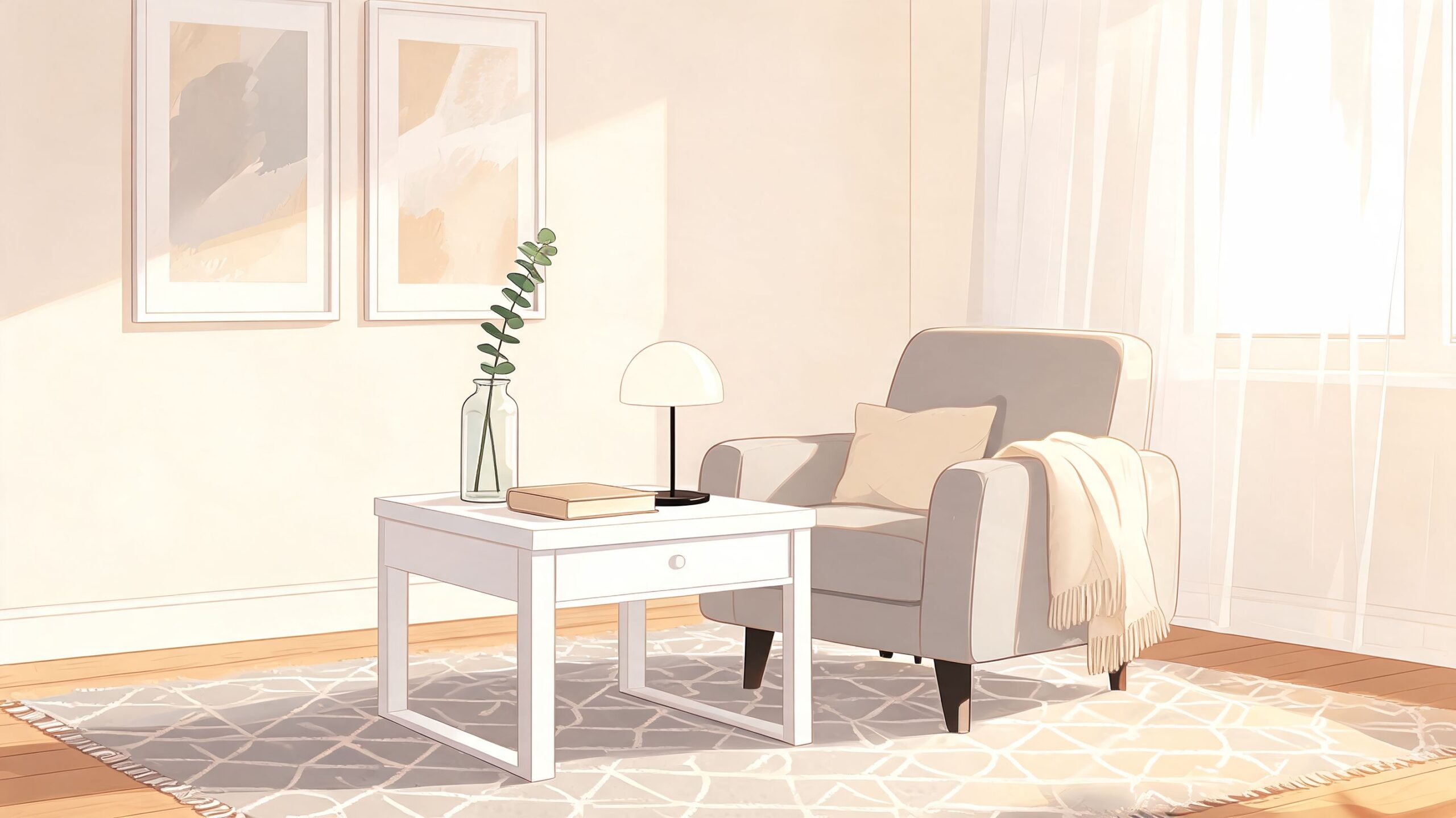
One of my favourite combinations is a crisp white table beside rich leather. A precise white lacquer or painted finish can sharpen the depth of a Hancock & Moore sofa or a richly toned chair without competing with the grain and patina. The contrast feels collected.
White also works beautifully with pale neutrals, but the room needs texture to keep it from feeling flat. That might come from linen upholstery, cerused wood, aged metal, or a hand-knotted rug with subtle variation. Without texture, white can read sterile. With texture, it reads refined.
For homeowners drawn to a balanced mix of classic and current, transitional style interiors offer a helpful lens. A white side table often plays that bridging role particularly well.
The rug anchors the conversation
The table should never look as though it was dropped onto the rug as an afterthought. The rug is the foundation. It sets the visual temperature of the room and tells the table what kind of role to play.
In The Rug Market, we often describe rugs as Art for your Floor because they establish pattern, movement, and proportion long before accessories are introduced. A white side table sitting on a hand-knotted rug with nuanced colour variation will feel softer and more integrated than the same table on a flat, overly uniform base.
A useful styling sequence is simple:
- Start with the rug and decide whether the room needs warmth, contrast, or quiet texture.
- Choose the upholstery that defines comfort and scale.
- Select the white side table as a linking element that either lightens, sharpens, or softens what's already in place.
The best accent tables don't ask for attention. They give the rest of the room a place to settle.
Special considerations for heritage homes
Many homes in Niagara and St. Catharines have architectural character that deserves more than generic accent furniture. In these settings, finish specification matters. For the many heritage homes in the region, standard painted furniture often fails within 2 to 3 years due to high humidity, while a bespoke, marine-grade polyurethane finish can extend the life of a piece by 5+ years, according to the referenced guidance on white painted furniture in humid environments.
That doesn't mean every room needs ornate furniture. It means the construction and finish need to respect the house. In a Victorian or older brick home, I'd rather see a clean white table with a carefully chosen finish than a trend-driven piece that starts deteriorating too soon.
If you enjoy seeing how thoughtful placement changes the perception of a room, Bounti's staging before and after offers useful visual context. The lesson is simple. Small pieces often carry more visual responsibility than people expect.
Preserving the Beauty of Your Investment
A well-made white side table doesn't ask for difficult maintenance, but it does reward consistent care. The goal isn't to keep it untouched. The goal is to preserve the finish so it continues to look composed through everyday use.
That's especially important with white finishes because they reflect light so clearly. Smudges, rings, abrasion, and buildup show sooner than they do on darker surfaces.

Care by finish type
Lacquered and laminated surfaces are usually the easiest to maintain. Use a soft cloth, wipe spills promptly, and avoid abrasive pads or harsh cleaners that can dull the sheen. If the table has a high-gloss finish, dust more often than you think you need to. Fine surface debris is what creates that tired, hazy look over time.
Painted wood needs a little more gentleness. Moisture left under a vase, diffuser, or glass can mark the surface, particularly if the finish has micro-cracks from seasonal movement. Coasters and felt pads aren't fussy. They're protective.
Stone tops have their own needs. They generally handle daily use well, but they shouldn't become a catch-all for toiletries, oils, or anything that can leave residue. A side table with a stone inset still benefits from regular wiping and a clear discipline about what lives on top of it.
Simple habits that protect the piece
- Use felt under decorative objects so ceramics and metal accessories don't scratch the finish.
- Keep sunlight in mind if the table sits near a bright window, particularly with painted surfaces.
- Lift, don't drag when adjusting placement. Small side tables are often damaged at the legs and joints during quick room resets.
- Rotate tabletop styling now and then so one area doesn't take all the wear.
A piece becomes heirloom quality not only because of how it was made, but because of how it's kept.
White-glove delivery also matters more than often realized. A table that arrives properly inspected, handled carefully, and positioned correctly starts its life in the home in far better condition. Long-term care begins before the first lamp is placed on top.
For wood and painted finishes in particular, this guide to protecting wood furniture from scratches and stains is a practical reference worth keeping close.
Bringing Your Vision Home with Critelli
Choosing the right white side table isn't about filling an empty spot beside a chair. It's about finishing a room with intention. The right piece respects the architecture, suits the climate, supports the way you live, and contributes to a complete room concept rather than standing apart from it.
That's where experienced guidance changes the outcome. A designer looks beyond the isolated product and considers scale, upholstery, rug selection, finish performance, and how the piece will feel once it's in use. In a heritage home in Niagara, that might mean specifying a finish that can handle seasonal humidity. In a compact condo, it may mean selecting a lighter profile that keeps the room visually open. In a family room used every evening, it often means balancing elegance with practical storage.
Critelli's strength has always been in that fuller view. Since 1914, the family-run business has helped Southern Ontario homeowners build rooms with lasting character, not quick fixes. The Design Studio approaches furniture as part of a layered, coherent environment. The Rug Market offers the foundation many rooms are missing. White-glove delivery then carries that vision from the showroom into the home with the kind of care premium furnishings deserve.
That combination matters for clients across St. Catharines, the Greater Niagara region, Hamilton, and Toronto who want more than a catalogue solution. They want luxury furniture Niagara homeowners can live with comfortably, interior design services St. Catharines clients can trust, custom furniture Southern Ontario homes can be shaped around, and hand-knotted rugs Ontario collectors can build a room upon.
The white side table may be small in scale. Its role isn't.
Experience heirloom quality, curated selection, and timeless craftsmanship at Critelli Furniture. Visit our King Street Showroom to experience the craftsmanship in person, book your complimentary design consultation today, or visit the Rug Market to find your room's foundation.