
Side Tables Modern

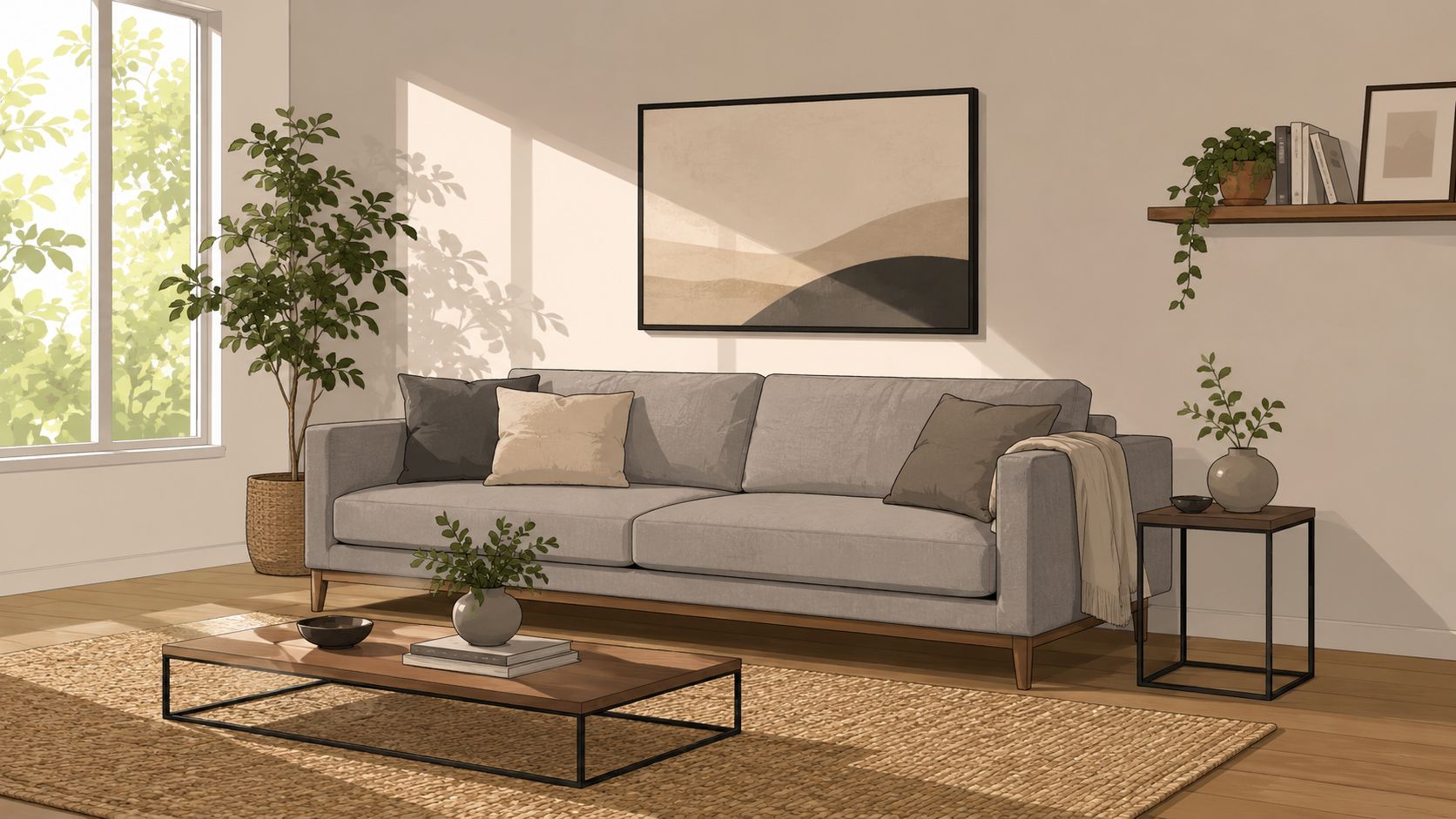
A living room can look nearly finished and still feel unsettled. The sofa is right, the rug has warmth, the lighting is soft, yet the room seems to be waiting for one more decision. In many homes, that missing decision is the side table, because a modern side table does more than hold a lamp. It tells the eye where the room ends, where conversation begins, and whether the space feels curated or furnished.
At Critelli Furniture, that distinction matters. Since 1914, the family-run showroom has treated every piece as part of a complete room concept, not a standalone purchase, which is exactly the mindset a room like this needs. A thoughtful side table can finish the seating area with heirloom quality, visual balance, and everyday usefulness, especially when the rest of the room already carries the quiet confidence of timeless craftsmanship. For buyers who want more than surface-level style, a well-chosen table can be the final, decisive layer that brings the whole space into focus.
For a useful companion to this kind of room-making, ways to cozy up any room offers a good reminder that atmosphere comes from layers, not from one dramatic object.
A room can have excellent furnishings and still feel incomplete if the side table is treated as an afterthought. The better approach is to think of it as the small piece that confirms the room's rhythm, much like the final frame on a finished wall.
For anyone curious about the broader language of contemporary interiors, the principles behind modern furniture design are helpful because they explain why restraint, proportion, and material honesty tend to age gracefully.
Why the Modern Side Table Is the Final Design Decision
A seating area often reaches its most convincing state only after the side table lands in the right place. The sofa may be generous, the rug may be well chosen, and the palette may already feel composed, but the room still needs one object to settle scale and function. That object is usually the modern side table, because it sits at the point where comfort, utility, and visual structure meet.
The best rooms do not feel over-decorated. They feel inevitable. A side table achieves that when it belongs to the seating group so naturally that nothing else seems capable of taking its place.
The table that finishes the composition
Modern interiors depend on edited choices, and a side table is one of the clearest examples of that discipline. It can hold a drink, support a lamp, or give a book and remote a proper home, but its deeper job is compositional. It creates a resting point for the eye and keeps the seating area from floating loose within the room.
That is why buyers who choose modern side tables wisely often find they feel less like accessories and more like anchors. They help define a conversation zone without blocking circulation, and they reinforce the idea that a room should feel designed from corner to corner. In that sense, the table is not a small purchase. It is the final signal that the room has been considered.
Practical rule: if a room feels finished only when a lamp, tray, or stack of books is added, the side table is doing real design work.
A useful companion to this kind of room-making is ways to cozy up any room, which is a good reminder that atmosphere comes from layers, not from one dramatic object.
Canadian buyers feel this decision quickly in compact homes, where a table that is too large crowds the seating area and one that is too small looks accidental. Scale matters just as much as style, especially when the room needs to do more than one job. Accessibility matters too. A beautiful table that is awkward to reach, too low for the sofa, or hard to move when you need it will work against daily use, no matter how refined it looks.
A helpful perspective on the philosophy behind clean-lined furnishings appears in Critelli's guide to modern furniture design, where the emphasis is on coherence rather than clutter. That approach suits modern side tables especially well, because their value comes from how they resolve the room.
Defining Modern Side Table Styles
A modern side table often decides whether a room feels resolved or merely furnished. In a small Canadian living room, that role becomes even more visible. The table has to hold its place without crowding the seating, support daily use without making movement awkward, and still look deliberate from across the room.
Modern side tables are recognised by what they leave out as much as by what they include. Clean lines, geometric clarity, minimal ornamentation, and honest material expression are the core signals. The profile stays disciplined, the silhouette usually reads quickly, and the form feels intentional rather than decorative for its own sake.
That restraint does not have to feel severe. A slender wood base, a softly edged stone top, or a brushed metal frame can still bring warmth when the proportions are calm and the materials are well chosen. The result is usually more composed than a heavily carved or historically referenced piece, because the modern table lets the room breathe instead of competing with it.
How modern differs from traditional and transitional pieces
Traditional side tables often rely on decorative legs, visible carving, or more elaborate profiles. Transitional pieces sit between that world and the modern one, borrowing some ornament while keeping the overall shape simpler. Modern tables reduce the language further, so the table reads as a clear shape within the room rather than as an object competing for attention.
That clarity is why the design-studio approach works so well in real homes. The right table does not need to shout if the sofa, rug, and lighting are already speaking clearly. It needs to answer them with the same level of discipline, and it needs to do so at a scale that makes sense for the way the room is used.
A curated selection that includes recognised craftsmanship names such as Stickley can show how restraint and quality come together when the materials are handled with care. For buyers drawn to the mid-century side of the spectrum, Critelli's modern mid-century furniture collection offers a useful frame of reference for understanding how simple forms can still feel rich and layered.
A practical comparison helps here. A traditional table may suit a room that wants more ornament, while a modern side table usually works better where circulation is tight, finishes need to feel lighter, and the furnishings have to support a cleaner visual field. That matters for accessibility too, because a table that is too low, too deep, or awkward to reach can look right and still fail in daily use.
The modern table succeeds when it supports the room without taking over it.
Materials and Finishes That Define Quality
Material choice shapes how a side table lives in the room long after the styling is done. A surface that looks elegant in a showroom may behave very differently beside a bright window, next to a busy sofa, or in a home where the table gets used every day. That is why material selection is a performance decision as much as a visual one.
Tempered glass is commonly specified at 12 mm thickness, and it is valued for water resistance and UV resistance. That makes it a strong candidate for bright spaces, patio-adjacent rooms, or any setting where the table may need to cope with sunlight and the occasional spill. By contrast, acrylic is cited with 8,000 to 10,000 psi tensile strength, but it tends to shatter rather than bend under overload, so it calls for careful load awareness.
Matching the finish to the room's real use
Residential side tables are often designed around a minimum static load capacity of 25 lbs, which is enough to support the common living-room jobs of holding a lamp, a drink, or a stack of reading material. The point isn't to overburden the table. It's to match the material to the way the room functions.
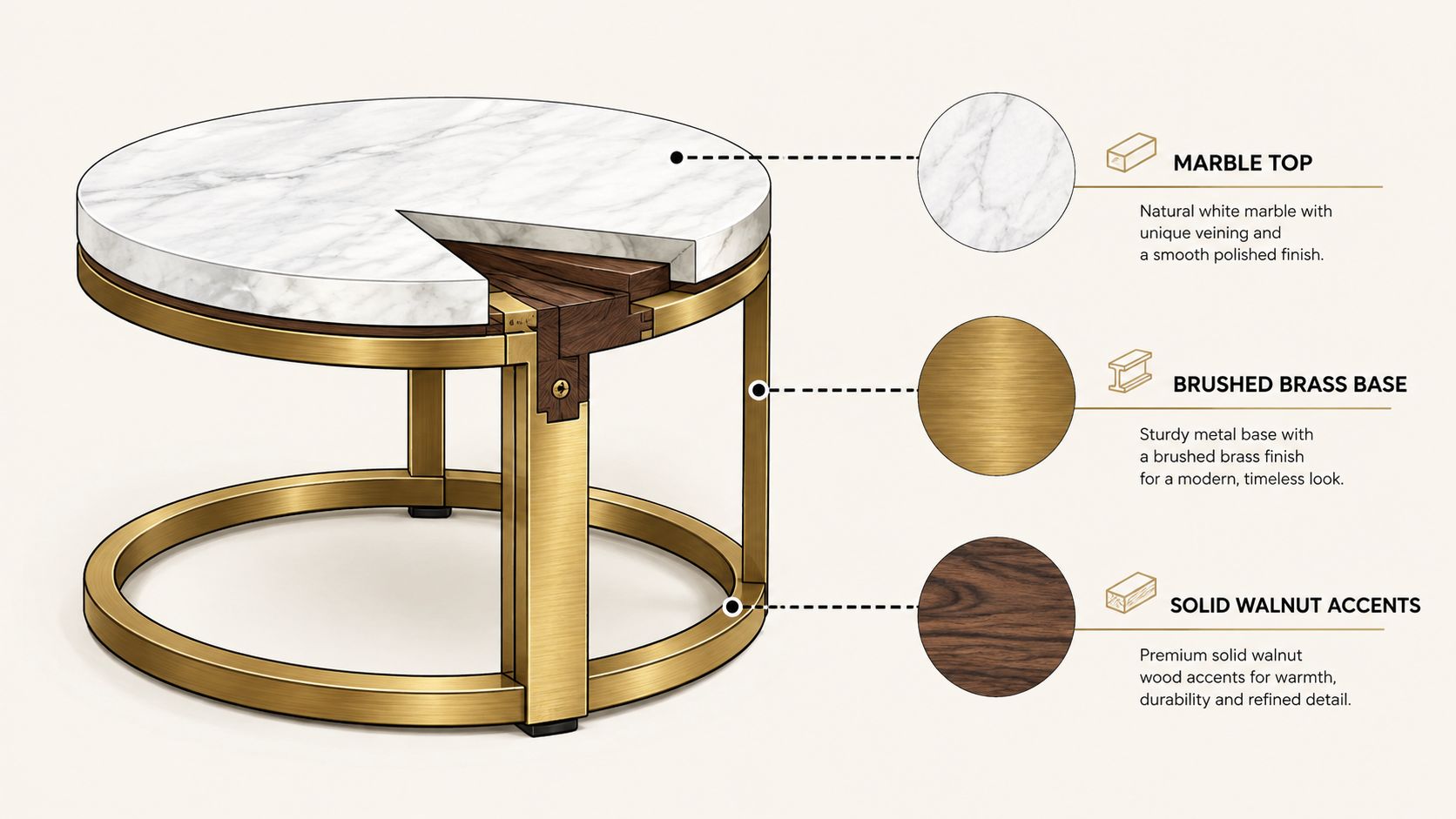
Wood brings warmth and a sense of permanence, especially when the grain is allowed to show. Metal adds a sharper architectural line. Brass can soften that line with a warmer sheen, while matte finishes tend to hide minor wear more gracefully than high-gloss surfaces, which ask for more careful maintenance.
For readers comparing more rustic or traditional material stories, the Farmhouse World buying guide is a useful contrast because it highlights how finish and form change the mood of a table even when the basic function stays the same. For solid construction details, Critelli's solid wood furniture page shows why weight, texture, and longevity often go hand in hand.
Designers often favour this rule, if the table sits in a room with strong daylight, the finish should be judged by how it behaves at noon, not just by how it photographs at night.
Sizing and Scale for Your Space
Size determines whether a side table feels effortless or awkward. The living-room range most guides return to is 18 to 24 inches high, with round tops typically around 16 to 20 inches in diameter and rectangular tops around 14 to 18 inches wide. Those measurements are helpful, but the arm-height relationship matters even more in daily use.
The most practical rule is to keep the tabletop within 2 inches of the adjacent sofa or chair arm height. That closeness reduces wrist elevation and reach distance, so drinks, remotes, and books stay easy to manage without a strained posture. A table that sits too high or too low can look fine at first, then feel irritating every time someone reaches for it.
Side Table Sizing Guide by Room and Seating
| Room Type | Seating Height | Ideal Table Height | Top Diameter/Width |
|---|---|---|---|
| Sofa side table | Standard sofa arm | Within 2 inches of arm height | Round 16 to 20 inches, rectangular 14 to 18 inches |
| Lounge chair table | Chair arm at seated reach | Within 2 inches of arm height | Round 16 to 18 inches, rectangular 14 to 16 inches |
| Bedroom corner table | Low accent seating or bed-adjacent use | 18 to 24 inches | Round 16 to 20 inches, rectangular 14 to 18 inches |
| Entryway accent table | No fixed seating, decorative use | 18 to 24 inches | Round or rectangular, sized to walkway clearance |
Compact Canadian homes need even more attention to scale. Statistics Canada reported that 45.4% of households in the Toronto CMA lived in apartments in 2021, which helps explain why narrow profiles, visual weight, and walkway clearance matter so much in Southern Ontario homes. In dense urban settings, a side table should feel present without pinching circulation.
That's where proportion becomes design, not just measurement. A slimmer table can suit a tight apartment, but a slightly heavier visual form can also work well because it anchors the room and prevents the furniture from seeming to float. The right answer depends less on trend and more on how the room is used.
Walk the path people use every day. If the table interrupts it, the proportion is wrong.
Placement and Styling for Complete Room Concepts
A side table earns its place when it supports the whole room, not just the chair beside it. In a living room, it can complete the seating group. In a bedroom corner, it can behave like a refined nightstand. In an entryway, it can become a deliberate landing spot for a lamp, a bowl, or a single sculptural object.
The most useful styling choices don't pile things on. They create a small, legible composition. A lamp gives height, one lower object gives weight, and a book or tray introduces rhythm without making the surface busy.
Designer's Insight
Pair a bold Hancock & Moore leather chair with a neutral hand-knotted wool rug from the Rug Market, then let the side table carry a quieter material tone. That balance gives the room enough contrast to feel layered without becoming restless.
A room with open sightlines can benefit from a side table that looks slightly more grounded than the lightest possible option. Heavier-looking or sculptural forms can be smarter than ultra-thin ones in small spaces because they visually anchor the arrangement and reduce the feeling that the furniture is floating in separate islands. This is especially useful in condos and compact family rooms where every piece has to earn its presence.
Lighting matters too. For reading setups, design guidance places the reading plane at 300 to 500 lux, which helps reduce eye strain when the table supports a lamp. That level of clarity makes the side table part of a functional evening routine, not just a decorative perch.
For broader room-planning logic, Critelli's interior design space planning resource is a useful reference because placement is never just about where a table fits, it's about how the whole room moves around it.
A side table placed with intention can tie together a sofa, rug, and architectural line with very little effort. That's the quiet power of the piece. It steadies the room.
Care and Maintenance for Lasting Beauty
A well-made side table should age gracefully, but it still needs the right care. Wood, glass, metal, and acrylic each ask for a different routine, and matching the routine to the material keeps the table looking composed rather than tired. The goal is simple, protect the finish without overhandling the piece.
Wood surfaces respond well to regular dusting with a soft, lint-free cloth. Coasters are still the easiest defence against water rings, and periodic use of a quality furniture polish helps preserve the finish. Glass tables need microfiber cloths and streak-free cleaners, plus a little caution around edges and abrasions, because surface scratches become visible quickly on reflective tops.
Material-specific care that actually works
- Wood: Wipe dust away often, use coasters every day, and polish only with a product suited to the finish.
- Glass: Clean with a microfiber cloth, avoid abrasive pads, and check the edges while moving objects on and off the surface.
- Metal: Dust the frame regularly and avoid harsh cleaners that can dull brass or encourage corrosion on wrought iron.
- Acrylic: Use a gentle cloth and avoid abrasive compounds, because the surface can mark more easily than it first appears.
Stability matters just as much as surface care. A side table should sit level, with feet adjusted before the wobble becomes part of the room's routine. That protects the flooring, preserves the joinery, and keeps drinks from skating across the top.
Packaging and transport matter too. The The Box Warehouse removal blankets are a good reminder that moving protection prevents avoidable scuffs, dents, and corner damage before the table ever reaches its final position. Critelli's white-glove delivery service extends that logic by handling inspection, assembly, placement, and packaging removal so the piece starts its life in the home in proper condition.
Custom and Commission Options for Bespoke Solutions
Off-the-shelf works beautifully when the proportions are right and the finish answers the room. When it doesn't, bespoke work becomes the cleaner solution. A custom side table can solve an awkward clearance, match a particular sofa arm height, or bring a material language into the room that no standard piece quite captures.
That is where a design studio becomes more than a nice extra. Professional space planning, a deep library of fabrics, leathers, and finishes, and in-home consultation all help the table harmonise with architecture, light, and the rest of the furnishings. The result feels settled rather than improvised.
Why bespoke often makes the room easier
- Better fit: The table can be sized for the exact seating height, circulation path, and visual weight of the room.
- Stronger coherence: The finish can echo the rug, upholstery, or millwork without looking overly matched.
- More considered function: Drawers, shelves, or softer edges can be added where a household needs them.
In Southern Ontario, that approach aligns well with Custom furniture Southern Ontario buyers who want one room to feel more resolved without replacing everything at once. For some homes, especially in Luxury furniture Niagara, the side table becomes the easiest place to begin a broader refresh, because it changes the room's reading without demanding a full redesign. The same logic fits families seeking Interior design services St. Catharines, where a single well-made piece can clarify the whole seating arrangement.
Critelli's guide to the best custom furniture makers is relevant here because bespoke is not complicated when the process is handled by people who already know how a room should function. For more than a century, Critelli has served the Greater Niagara, Hamilton, and Toronto markets with a design-led, white-glove approach that keeps the transition from showroom to home smooth.
Visit Critelli Furniture to explore side tables that bring proportion, material, and room planning together with the same care as the rest of the home. Experience the craftsmanship in person at our King Street Showroom, then book your complimentary design consultation today so the right table can be selected for the room it's meant to finish.