
Swivel Chairs Leather: A Buyer’s Guide to Timeless Style

You’re often looking for one chair to solve several problems at once. It has to feel polished enough for the front room, comfortable enough for a long evening, compact enough to turn easily, and substantial enough that it doesn’t look temporary six months from now.
That’s where swivel chairs leather earns its place. A good one gives you movement without visual clutter, softness without fuss, and a sense of permanence that fabric rarely matches in the same way. In Southern Ontario homes, where rooms often need to work harder than they used to, that combination matters.
More Than Just a Seat The Enduring Appeal of a Leather Swivel Chair
The right leather swivel chair tends to become the chair everyone chooses first. It settles into a reading corner, finishes a home office, or softens the edge of a living room seating plan that might otherwise feel too static. The swivel matters more than many people expect. It lets the chair respond to the room rather than sit in it like an immovable block.
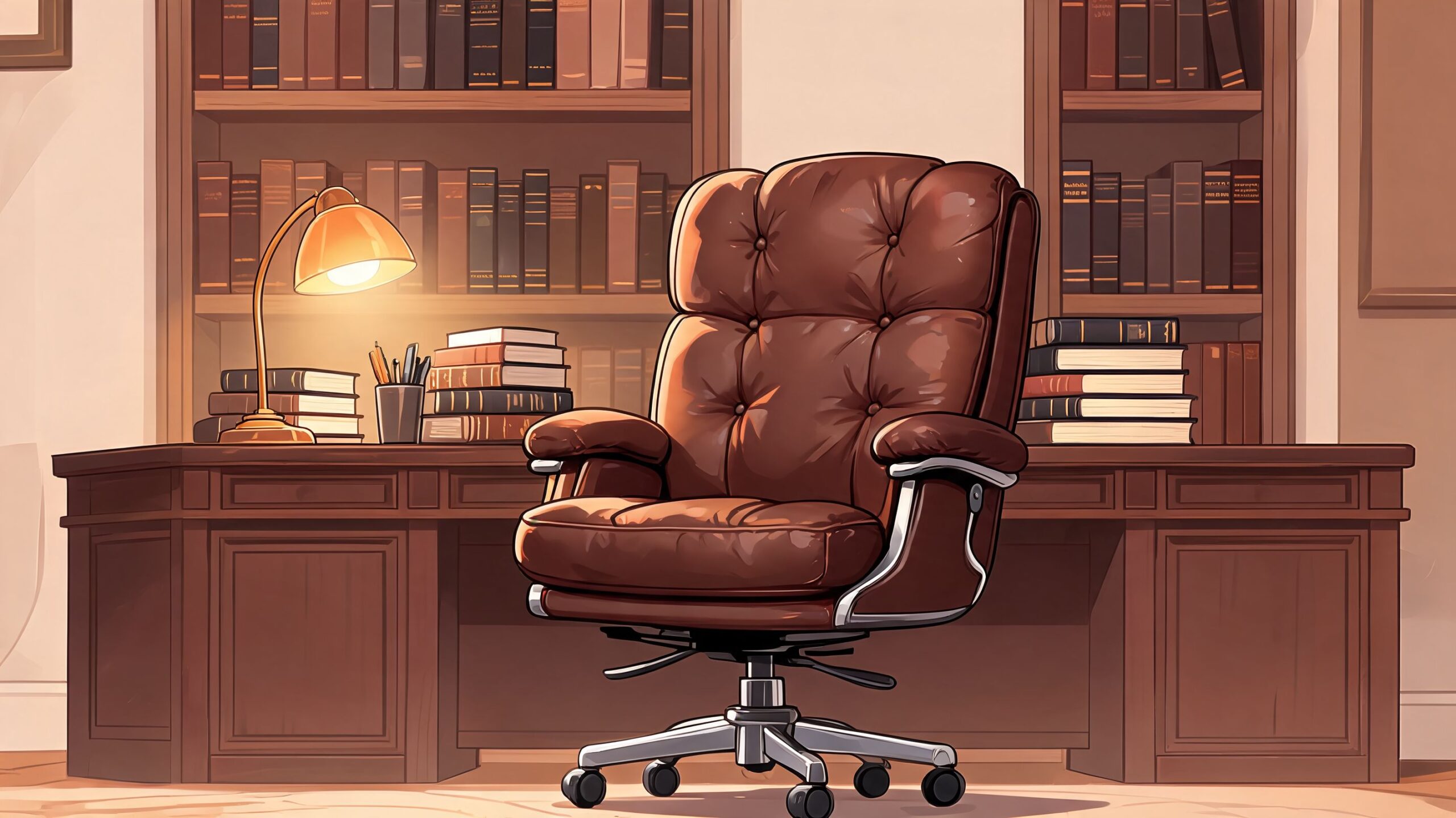
The category also carries real design history. The swivel chair concept dates back over 500 years, and Thomas Jefferson famously drafted parts of the U.S. Declaration of Independence in his own modified version in 1776, as noted in the history of the swivel chair. That heritage helps explain why a leather swivel chair still reads as both practical and distinguished.
Why it still feels current
Leather has a way of making motion feel more refined. A swivel base adds flexibility, but the leather keeps the piece grounded. That balance is why these chairs work in so many settings, from a tailored library to a more relaxed family room.
In practice, the best pieces do three things well:
- They transition across uses. A chair that works by the fire often works beside a desk or angled into a conversational grouping.
- They age with character. Natural leather develops a lived-in surface that often looks better with care and time.
- They reduce visual noise. One well-shaped swivel chair can do the work of a bulkier recliner or a pair of more rigid accent chairs.
A leather swivel chair succeeds when you stop noticing the mechanism and start noticing how naturally the room works around it.
Why heirloom thinking matters
A swivel chair is a moving piece of furniture. That means it has more to prove than a stationary club chair. If the materials are mediocre, you’ll feel it quickly in the base, the seat, and the finish. If the construction is thoughtful, the chair becomes the kind of object a family keeps, reupholsters, and moves from house to house.
That’s the mindset worth bringing to the search. Not trend-shopping. Not quick replacement. An heirloom quality piece should earn its place through use, not just appearance.
Decoding the Language of Leather From Aniline to Protected Finishes
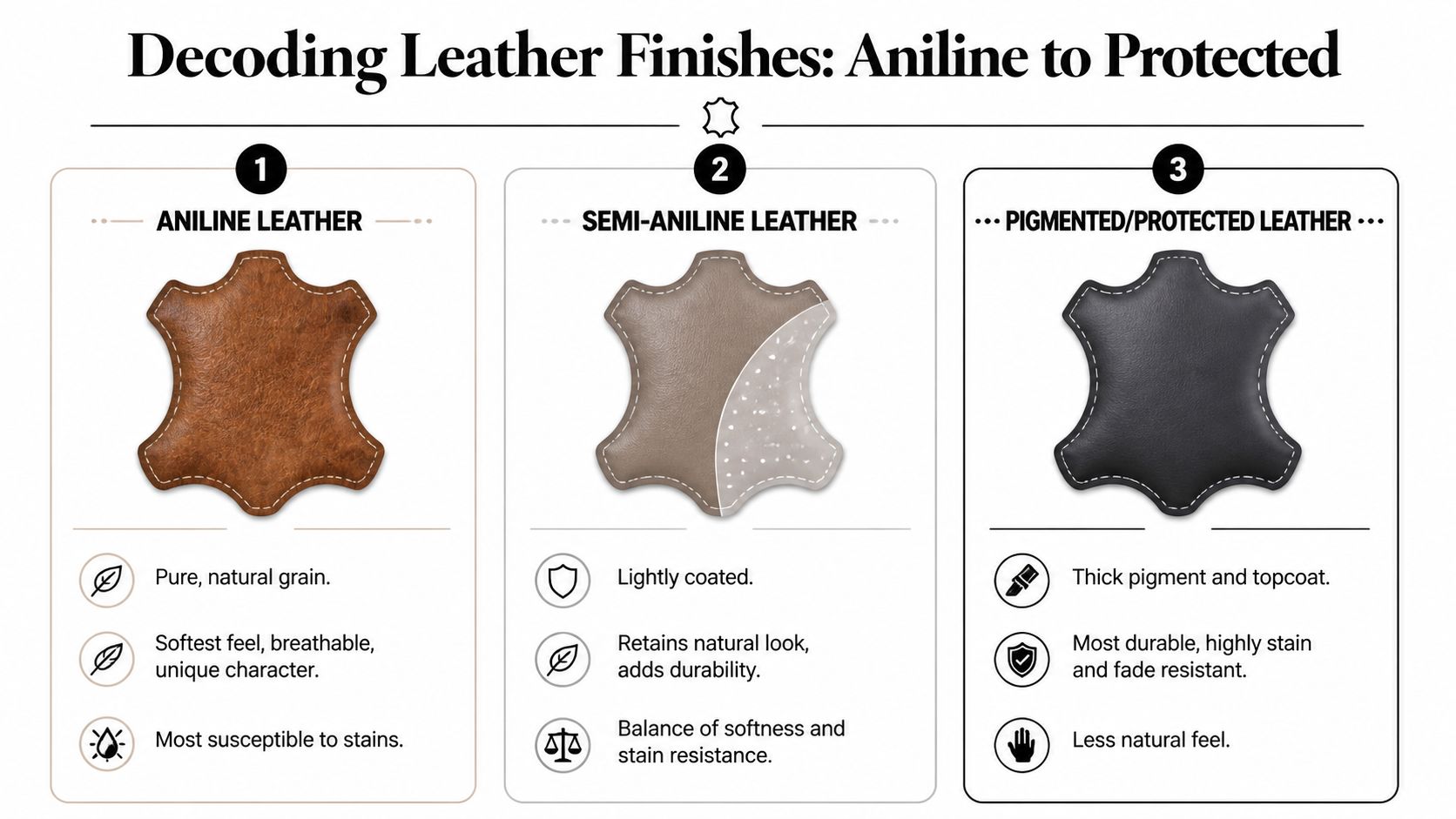
Leather terminology confuses even experienced shoppers because the words sound technical but the choice is highly personal. The finish affects how the chair feels in hand, how it wears, and how forgiving it will be in daily life.
This visual helps sort the basics.
What aniline gives you
Top-grain aniline leather is the finish many design professionals love most because it preserves the natural grain and keeps the hand soft and breathable. It also performs better than some buyers assume. According to details associated with the Axton Swivel Leather Club Chair, top-grain aniline leather shows 20 to 30 percent higher abrasion resistance in standardised testing than corrected-grain leathers, which makes it a strong option for moving seating in our region’s changing climate, as noted in the Hooker Furnishings product details.
That doesn’t mean aniline is carefree. It means it’s durable in the right household, with the right expectations.
Where semi-aniline and protected finishes fit
Semi-aniline sits in the middle. It keeps more natural character than a heavily coated leather, while giving you added everyday protection. For many homes, this is the most balanced choice.
Protected or pigmented leather offers the easiest maintenance profile. It usually looks more uniform and feels a bit less open-pored. Some buyers prefer that consistency. Others find it lacks the depth and softness that make leather compelling in the first place.
Practical rule: Choose the finish for the way you live, not the way you hope to live.
Choosing Your Leather Finish
| Leather Type | Appearance & Feel | Durability & Maintenance | Best For |
|---|---|---|---|
| Aniline | Rich natural grain, soft hand, visible markings, breathable | Durable, but needs attentive care and faster spill response | Quiet studies, formal sitting rooms, design-led spaces |
| Semi-aniline | Natural look with a subtle finish, balanced softness | Easier to maintain than aniline, better day-to-day forgiveness | Most family rooms, home offices, mixed-use spaces |
| Protected or pigmented | More uniform colour and surface, less natural variation | Most forgiving for wear, routine cleaning, and sunlight exposure | Busy households, multi-purpose rooms, high-contact seating |
What works and what doesn’t
What works is matching finish to lifestyle. If you love patina, variation, and a softer hand, aniline can be beautiful. If you want less anxiety around daily use, semi-aniline often makes more sense. If children, pets, or heavy entertaining are part of the room’s rhythm, protected leather may be the wiser choice.
What doesn’t work is buying the most natural leather available and then resenting it for behaving like a natural material.
For anyone comparing material quality more closely, this guide to a full grain leather chair gives useful context on what separates premium leather from lower-grade alternatives.
Examining the Craftsmanship Beneath the Surface
The leather gets the attention. The frame and mechanism determine whether the chair still feels solid years from now.
That matters especially with swivel seating. A moving chair asks more from its joinery, base, and balance than a fixed occasional chair ever will.
Why kiln-dried hardwood matters
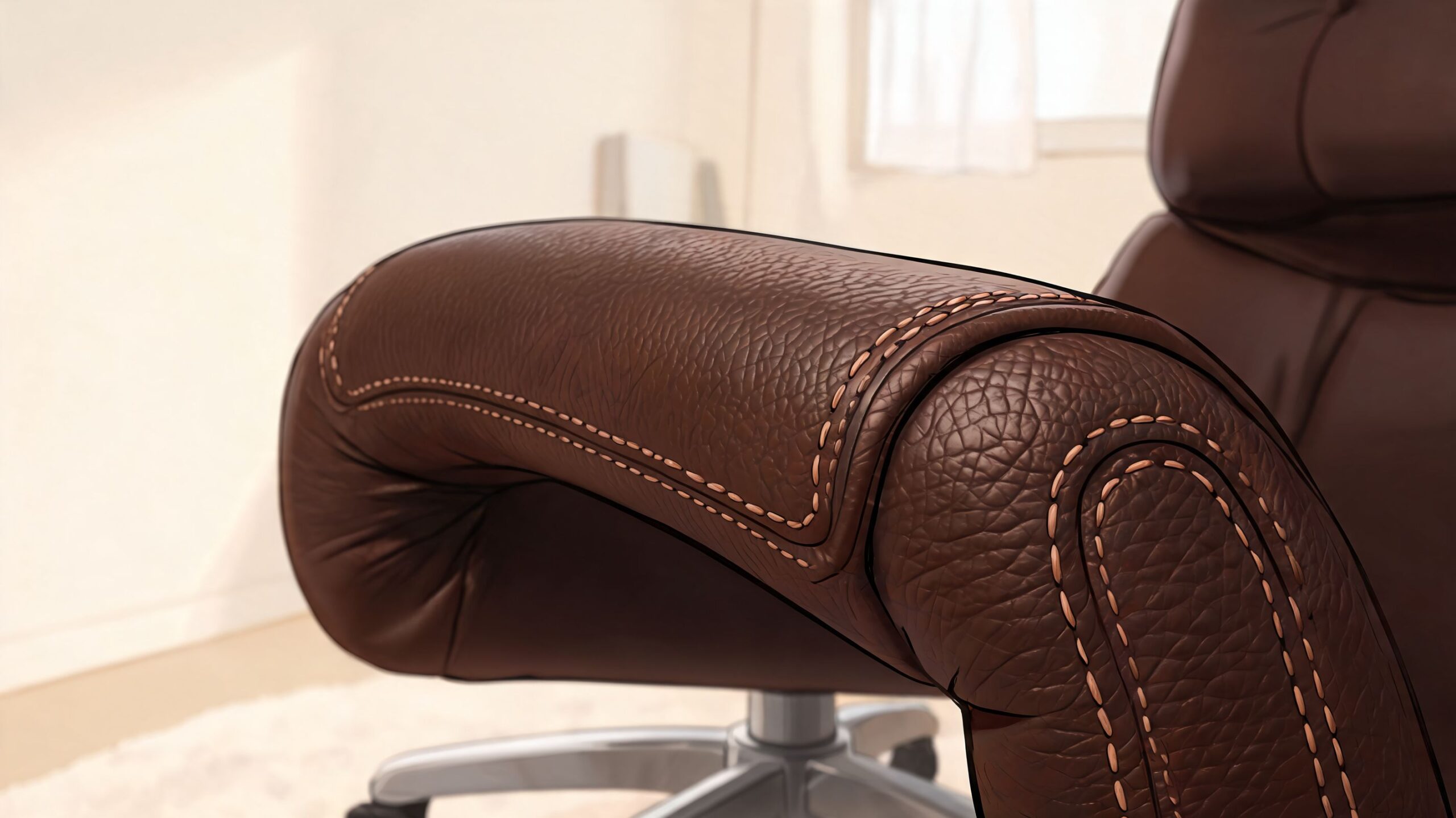
In Southern Ontario, seasonal moisture changes are hard on furniture. That’s why kiln-dried hardwood frames deserve special attention. Product specifications tied to the Viv Leather Swivel Chair note that kiln drying reduces wood moisture content to 6 to 8 percent, helping prevent warping, and that this construction can extend the functional life of a swivel mechanism to over 50,000 cycles, which is double that of air-dried wood frames, according to the Viv Leather Swivel Chair details.
That’s not showroom trivia. It shows up in daily use.
A stable frame keeps the seat square, the arms level, and the swivel action consistent. An unstable frame often reveals itself through creaks, subtle rocking, or a chair that never quite returns to centre comfortably.
What to look for in the base and seat
The best swivel bases move smoothly and predictably. They don’t lurch, scrape, or feel loose under the body. You should be able to pivot without feeling like the chair is fighting you.
A few signs of stronger construction:
- Smooth rotation that feels controlled rather than overly loose
- Consistent seat support with no hollow or collapsing sensation at the centre
- Precise upholstery alignment so seams stay disciplined around a moving frame
- Balanced proportions that keep the chair stable even when turned off-axis
If a swivel chair feels charming only when no one is sitting in it, it isn’t well made enough.
The hidden trade-off
A beautifully finished leather chair can still disappoint if the frame underneath is average. That’s the trade-off many buyers miss. Surface beauty is easy to notice in a showroom. Structural quality takes a more trained eye.
If you’re pairing a swivel chair with existing seating, it also helps to assess how its frame weight and visual density compare with the rest of the room. A broad guide to grey leather sofa styling and proportion can help when you’re balancing heavier leather pieces together.
Finding Your Perfect Fit A Guide to Ergonomics and Scale
Luxury isn’t only what you see. It’s what your body notices after an hour.
A leather swivel chair can look impeccable and still be wrong for you if the seat is too deep, the arms sit awkwardly, or the back fails to support the way you lounge, read, or work. The best chairs invite movement without asking you to hold tension.
Comfort starts with posture, not padding
Buyers often focus on softness first. That’s understandable, but softness alone can be misleading. A seat that feels plush for two minutes may feel unsupportive by the end of the evening.
What usually matters more:
- Seat depth should let you sit back comfortably without cutting off support behind the knees.
- Arm height should allow the shoulders to relax.
- Back shape should support the position you naturally return to, not force a posture that feels formal but tiring.
- Swivel ease should help you engage with the room, especially in open-concept layouts.
This is why many high-end designs feel better over time than they do in a quick sit. They’re engineered for repeated use, not just a soft first impression.
Scale decides whether the chair feels intentional
Even a superb chair can look wrong if its proportions are off. In a compact condo, an oversized leather swivel can dominate the room. In a larger Niagara or Hamilton home, a chair that’s too slight can disappear beside a substantial sofa or rug.
Before buying, measure the footprint, the turning radius, and the path around nearby tables. If you want a helpful planning guide, this resource on how to avoid furniture fitting mistakes is worth reviewing before anything is ordered.
A chair should turn freely without clipping a table edge, brushing drapery, or forcing the whole room to accommodate it.
For clients comparing silhouettes, a broader look at living room lounge chairs can clarify how barrel backs, lower profiles, and deeper seats each change the feel of a room.
Styling Your Leather Swivel Chair Within a Room Concept
A leather swivel chair shouldn’t read like an isolated purchase. It should feel integrated, as though the room always intended to have it there.
That’s where styling becomes more than accessorising. The chair’s colour, sheen, scale, and base all influence the surrounding palette. It can be the room’s quiet anchor or its focal point.
One chair can set the tone
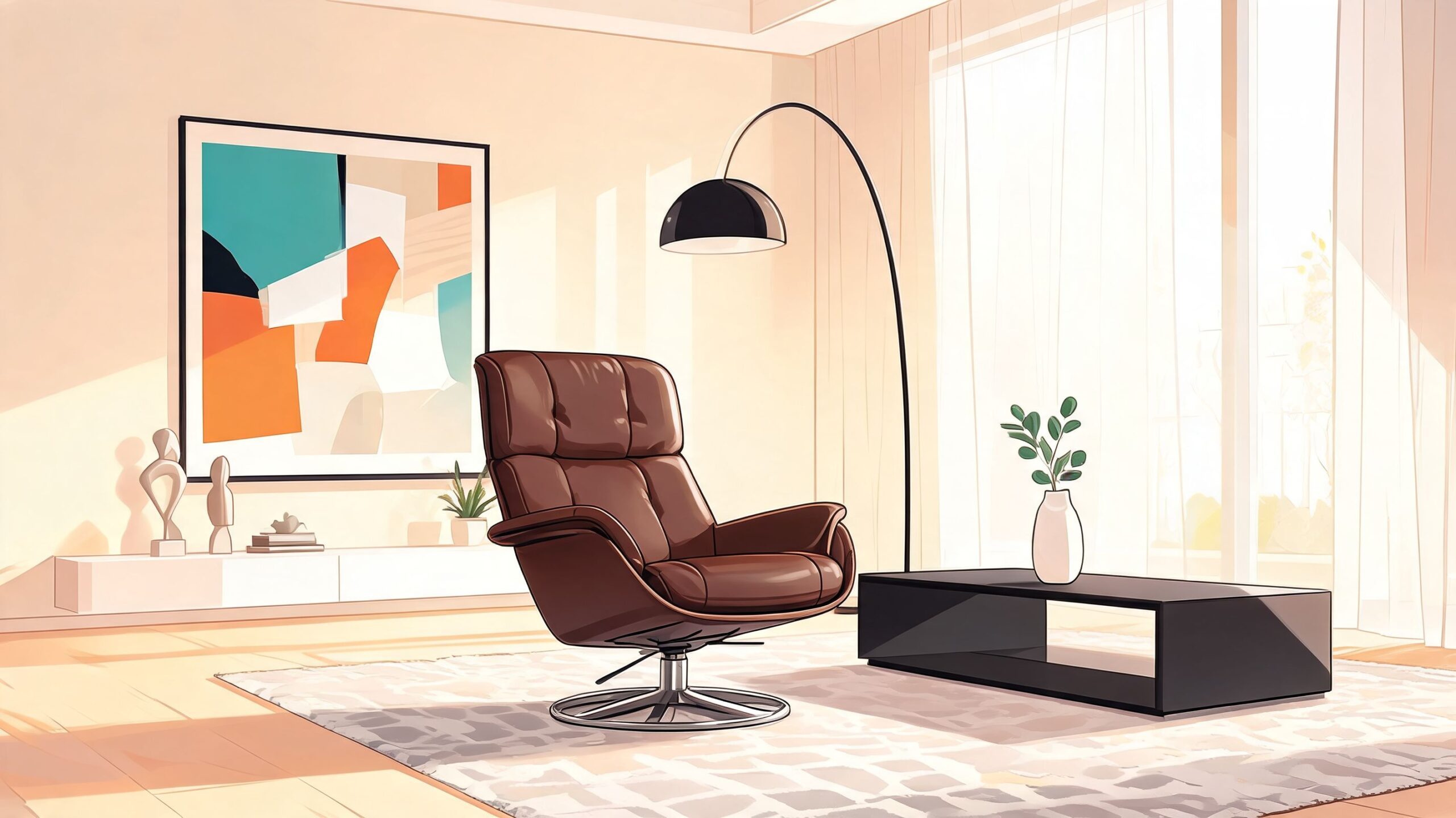
The Eames Lounge Chair, designed in 1956, showed exactly how effective this can be. It paired supple leather upholstery with a swivel base and helped define mid-century modern luxury, proving that a single chair can become both the artistic and functional focal point of a room, as noted in this look at the evolution of modern swivel chairs.
That principle still holds.
A dark leather swivel chair in a city condo can sharpen a clean architectural interior. A warmer cognac or bomber tone can soften stone, wood, and plaster in a larger country property. In transitional rooms, a rounded leather swivel often bridges modern lines and traditional millwork more gracefully than a rigid accent chair.
How to build the room around it
Think in layers, not matches.
- Start with the chair’s tone. Warm brown leather pairs well with walnut, aged brass, and wool. Black leather often wants contrast through oak, linen, or lighter plaster tones.
- Use a rug to steady the movement. The swivel chair moves physically, so the rug should ground it visually. Art for your Floor becomes more than a phrase in this context. A hand-knotted rug gives the chair a defined territory within the room.
- Balance hard and soft surfaces. Leather brings polish. Add woven textiles, drapery, matte ceramics, or a textured throw so the room doesn’t feel overly slick.
Designer’s Insight
Our designers suggest pairing a bold Hancock & Moore leather with a neutral hand-knotted wool rug to balance the room’s energy. The rug becomes the foundation, and the chair becomes the sculptural note that gives the seating area its point of view.
For homeowners refining that in-between look, this perspective on what transitional style interior design means can help connect a leather swivel chair to the rest of a complete room concept.
What doesn’t work
What tends to fail is over-coordination. Matching the leather exactly to every wood tone and accent can make the room feel staged rather than collected. A better room has tension. Leather against linen. Nailhead near boucle. A structured chair over an expressive rug.
That mix is what gives a space depth.
A Lifetime of Luxury Maintaining Your Leather Chair
A leather swivel chair earns its beauty over time, but only if it’s cared for with some regularity. Neglect usually shows first at the places you touch most. Arm fronts, headrest areas, and seat edges.
Southern Ontario adds a specific complication. Our humidity shifts aren’t gentle, and leather responds to them.
The regional reality
In Southern Ontario, average annual humidity can reach 70 to 80 percent, and proper conditioning is important because even quality leathers can dry and crack without it. A quarterly conditioning routine is recommended to maintain suppleness, as noted in guidance on luxury swivel chairs and leather care.
That routine is simple, but consistency matters more than intensity.
A maintenance rhythm that works
- Dust lightly and often. Use a soft dry cloth so grit doesn’t sit on the surface and abrade the finish.
- Respond to spills quickly. Blot. Don’t scrub. Aggressive rubbing can push moisture deeper or disturb the finish.
- Condition quarterly. This helps natural leather stay supple through heating season and humid summer swings.
- Keep the chair out of harsh direct sun. Light can dry and fade leather unevenly.
- Rotate how you use it when possible. If one family member always sits in one exact position, that side will age faster.
Leather doesn’t need constant fuss. It needs calm, regular care.
What owners often get wrong
The most common mistake is over-cleaning with household products that were never meant for leather. The second is doing nothing for years and then trying to reverse dryness after the surface has already stiffened.
A better approach is preventive. If you’d like a broader care reference, this guide on how to care for leather furniture is a useful companion after purchase.
From Our Showroom to Your Home The Bespoke Critelli Journey
Choosing among swivel chairs leather is rarely about one detail alone. Leather finish, frame integrity, ergonomic fit, and room placement all need to align. When they do, the result doesn’t feel like a simple furnishing. It feels settled, personal, and built for the long term.
That’s where a century-old family business brings real value. Since 1914, Critelli Furniture has served Southern Ontario with a curated, design-forward approach grounded in timeless craftsmanship, bespoke guidance, and an understanding that furniture should support a complete room concept, not just fill an empty corner. The Design Studio helps clients refine leather, silhouette, scale, and surrounding finishes so the chair belongs to the home from the start. The Rug Market adds the next essential layer with Art for your Floor, giving the room its foundation.
Just as important, the experience doesn’t end at selection. White-glove service ensures a smooth transition from showroom to home across St. Catharines, the Greater Niagara region, Hamilton, and Toronto. That level of care is part of what turns a good purchase into a lasting relationship.
Experience the craftsmanship in person at Critelli Furniture. Visit the King Street Showroom, book your complimentary design consultation today, or visit the Rug Market to find your room's foundation.