
Luxury Full Grain Leather Chair: a Timeless Choice

You’re likely looking at a room that feels almost finished. The sofa is in place. The lighting works. The architecture has promise. Yet one corner still lacks authority. It needs a piece that doesn’t merely fill space, but gives the room a point of view.
That’s where a full grain leather chair earns its place. In a well-designed home, one chair can do a remarkable amount of work. It can soften a modern room, add gravity to a casual one, and become the seat everyone chooses first. It can also age with dignity rather than wear out.
In a century-old family business, you learn to tell the difference between furniture that lasts a season and furniture that becomes part of a family’s story. A chair of heirloom quality carries memory well. It sees late-night reading, holiday conversation, Sunday quiet, and the ordinary rituals that make a house feel lived in.
The Enduring Allure of an Heirloom Chair
A fine chair often begins as a practical decision. You need a reading seat, a fireside perch, or a comfortable place to land after a long day. Then, if you choose well, it becomes something larger. It turns into the chair that appears in family photographs, the chair guests mention, the chair no one wants to replace because it still feels right years later.
Mass-produced furniture rarely offers that sort of relationship. It’s built for quick appeal. The silhouette is familiar, the finish is flat, and the materials are selected to meet a price point rather than a lifetime. A well-made leather chair works differently. It brings weight, texture, and character into a room from the first day, then deepens over time.
That’s why many discerning homeowners treat a full grain leather chair as an anchor piece rather than an accessory. It has visual permanence. It also has emotional permanence. The best ones don’t chase trends. They settle into a home and begin to belong there.
A family business founded in 1914 understands that kind of longevity. The philosophy behind enduring interiors hasn’t changed nearly as much as people think. Good rooms still rely on proportion, natural materials, and craftsmanship that rewards close inspection. That heritage sensibility is part of what makes heritage furnishings and lifestyle interiors so compelling to clients who want more than a temporary solution.
A chair becomes heirloom quality when it improves with use instead of declining from it.
What Exactly Is Full-Grain Leather
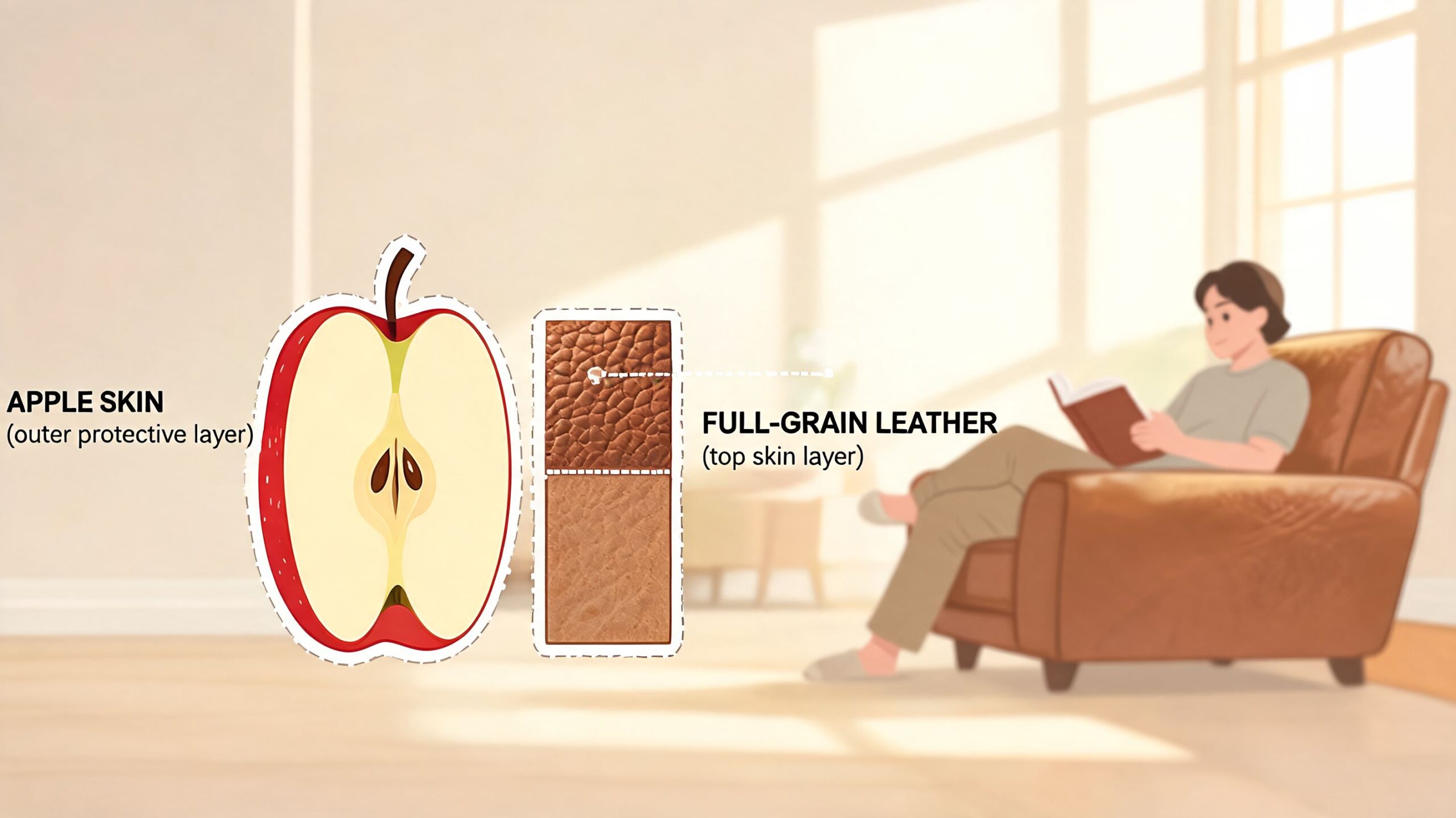
People hear the term “full-grain” often, but many aren’t given a clear explanation. The simplest way to understand it is to think about the outer skin of a fruit. The surface tells you something about what’s natural and intact. Once that surface is heavily altered, you may still have the material, but not in its most honest form.
The natural surface matters
Full-grain leather comes from the uppermost portion of the hide and retains its natural surface. That means the pores, subtle markings, grain variation, and small signs of life remain visible. These aren’t flaws in the luxury sense. They are evidence that the material is real, uncorrected, and individual.
A chair upholstered in full-grain leather won’t look machine-perfect, and that’s precisely the point. If every panel looks identical, alarm bells should ring. Natural leather has movement in the grain. It has slight shifts in tone. It may show healed marks or tiny variations from one area to another.
These details give the chair depth. They also make the piece feel warmer and more human in a room filled with harder surfaces like stone, glass, or painted millwork.
Why full-grain ages so beautifully
The word many clients eventually learn is patina. Patina is the soft visual richness that develops through use, light, and touch. It isn’t damage. It’s the opposite. It’s the leather becoming more expressive.
Over time, a full grain leather chair often develops:
- Richer colour variation, especially where hands and clothing make regular contact
- A softer sheen, rather than a synthetic-looking gloss
- A more supple hand, which makes the chair feel settled and welcoming
- Individual character, because no two homes wear leather in quite the same way
This is why one vintage leather chair can look more beautiful than it did when new. It has lived a little.
Practical rule: If you want a material that tells a story as it ages, choose one that keeps its natural surface intact.
Why shoppers sometimes get confused
Part of the confusion comes from leather terminology being used loosely in the marketplace. “Genuine leather” sounds reassuring, but it doesn’t automatically mean premium. “Top-grain” sounds like it should be the top standard, but it refers to a different processing level. “Bonded” contains leather content, yet behaves very differently over time.
That’s why education matters. Once you understand what full-grain is, price differences start to make sense. So does the tactile difference when you sit in a good chair and instinctively know it feels substantial.
If you’d like to see how natural leather reads in a softer, more contemporary application, a grey leather sofa in a refined living space can be a useful point of comparison.
A Comparative Guide to Leather Types
A leather label can sound impressive and still tell you very little about how a chair will live in your home. In our family business, we teach clients to read leather the way a tailor reads cloth. Start with the surface, then ask how it will wear, how it will feel after years of use, and whether it suits the room, the household, and the climate.
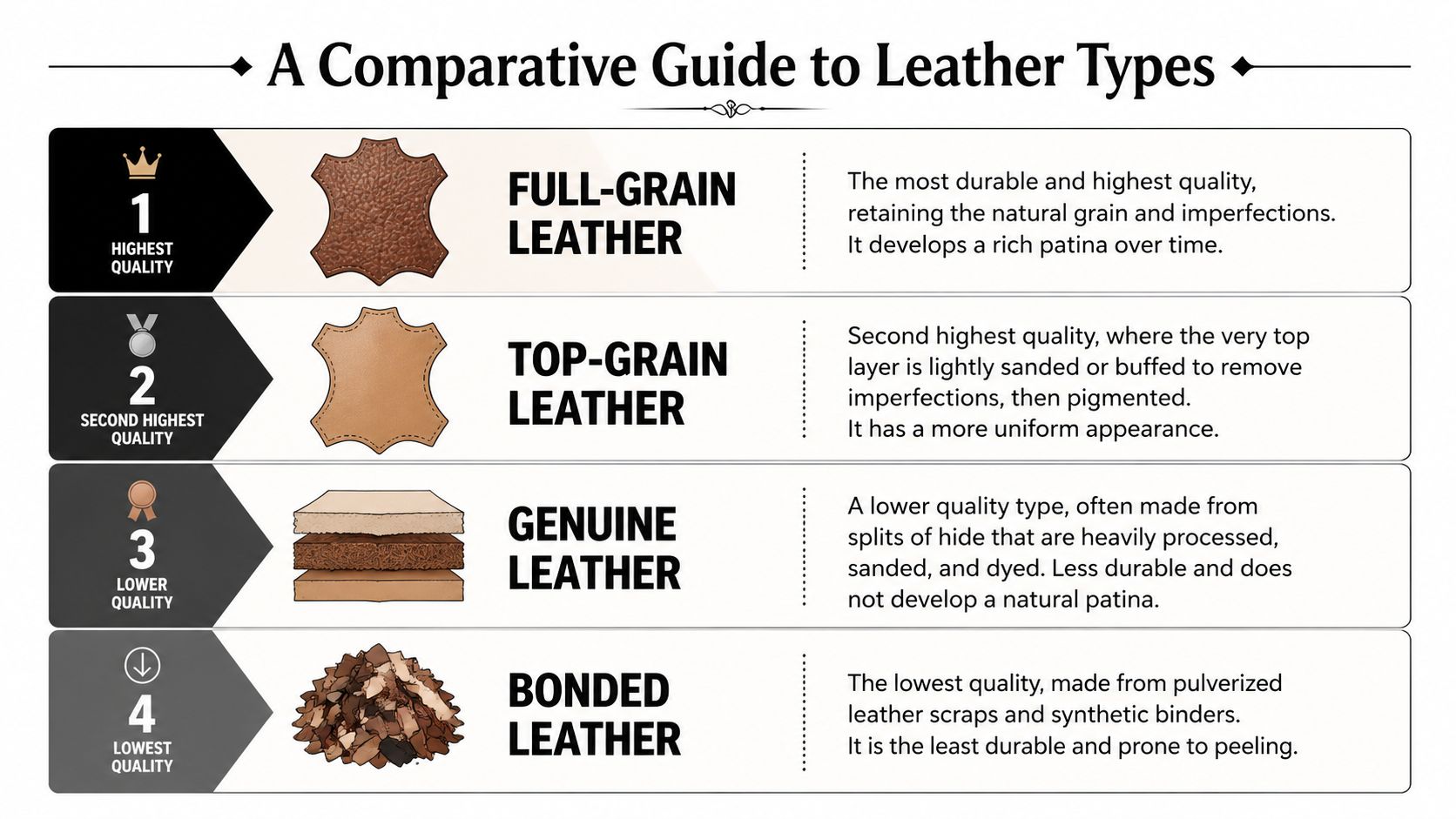
The hierarchy at a glance
| Leather type | What it is | Appearance | How it ages |
|---|---|---|---|
| Full-grain | Natural upper surface retained | Rich, varied, authentic | Develops character and patina |
| Top-grain | Upper layer, lightly corrected | More even and uniform | Ages neatly, but with less depth |
| Genuine leather | Lower-grade real leather, more processed | Often embossed or coated | Tends to wear rather than mature |
| Bonded leather | Leather fragments mixed with binders | Uniform at first | Most prone to surface failure |
Full-grain leather
Full-grain sits at the top for a reason. It keeps the original surface of the hide, so you see the fine variation that gives a chair depth and presence. In a well-made frame with proper cushioning, that surface quality becomes part of the chair’s long-term value. It is one of the few upholstery materials that can feel more personal as the years pass.
That matters in Southern Ontario, where homes work hard. We move from dry indoor heat in winter to muggy summer days, and many rooms see daily use from family gatherings, reading hours, and long evenings by the fire. Full-grain leather rewards that kind of life if the owner is willing to care for it properly. The result is less like a disposable purchase and more like an heirloom that settles into the house.
Top-grain leather
Top-grain leather begins with a good hide, but the surface is corrected to create a more even appearance. That makes it a sensible choice for clients who prefer a cleaner, more refined look or who want a bit more predictability across large upholstered pieces.
It also helps to understand where top-grain can fit well. In homes with strong sun exposure, frequent entertaining, or owners who want lower visual variation, top-grain can be a practical middle ground. You give up some of the natural nuance of full-grain, but you gain a more controlled finish. For some interiors, especially transitional rooms with a polished look, that trade can make good design sense.
Genuine leather
“Genuine leather” is accurate, but it is not a mark of top quality. It usually comes from lower layers of the hide and is often heavily treated to create a more finished appearance. The result can look appealing on a showroom floor, yet it rarely carries the same depth, resilience, or long-term beauty as the better grades above it.
Clients often find this category confusing because the name sounds reassuring. A clearer way to read it is this. Genuine leather confirms the material is real leather. It does not confirm that it is the finest cut or the best choice for an investment chair.
Bonded leather
Bonded leather is made from leather fibres and scraps mixed with synthetic binders, then finished to imitate a continuous surface. It can look tidy at first. Over time, it is the least dependable option in this group, especially on frequently used seats, arms, and back cushions where friction is constant.
For a chair you hope to keep for many years, bonded leather usually works against the goal.
Which one offers the best value
Price and value are not the same thing. A less expensive chair can cost more in the long run if the upholstery fatigues early or the piece loses its visual appeal after a few seasons of regular use. Full-grain often asks for more upfront, but in the right construction it gives something lower grades often cannot. Enduring beauty that still belongs in the room ten or fifteen years from now.
That is the point many comparison charts miss. Leather quality should never be judged in isolation. The hide, the suspension, the seat cushion, the tailoring, and the scale of the chair all work together. A superb leather wrapped around a weak frame is still a poor investment. If you want a broader explanation of how leather compares with other coverings, this guide to upholstery materials and furniture coverings gives helpful context.
Availability matters too, but broad claims about tariffs or certification can date quickly and vary by maker. In practice, the wiser question for Ontario homeowners is simple. Is this leather stocked, is it suitable for your household, and is the chair built well enough to justify the material? That is how you choose a piece with staying power, not just a label with polish.
How to Identify a Genuine Full-Grain Leather Chair
The best showroom test still begins with your senses. You don’t need laboratory tools. You need patience, good light, and the confidence to look closely.
Start with the surface
A genuine full grain leather chair should not look stamped out by a machine. The grain should vary slightly across panels. You may notice small pores, faint creases, or natural markings that don’t repeat in a perfect pattern.
If the surface looks overly uniform, almost printed, be careful. Lower-grade or heavily corrected leathers often rely on consistency to simulate quality. True luxury materials usually reveal more nuance, not less.
A quick visual checklist helps:
- Look for variation. Natural hides don’t repeat the same pattern like wallpaper.
- Notice the pores. Fine, irregular texture is a good sign.
- Accept character marks. Small healed scars or growth lines can indicate authenticity.
- Check the sheen. A soft glow is different from a plastic-looking shine.
Then use your hands
Good leather has a distinct feel. It should feel supple, warm, and responsive. When you press into it, the surface should have life to it rather than behaving like a coated shell.
Some premium full-grain leathers have a slightly waxy or silky hand. Others feel drier and more matte. That variation is normal. What matters is that the material doesn’t feel cold, rigid, or artificially slick.
If your hand tells you “this feels like a coating,” trust that instinct and ask more questions.
Don’t ignore the smell
Real leather usually has an earthy, rich smell. It’s difficult to mistake once you’ve encountered it a few times. Synthetic or heavily processed materials often smell chemical, sharp, or faintly plasticky.
Smell isn’t the only test, but it’s an excellent supporting clue.
Ask one practical question
Ask the showroom team exactly how the leather is described by the maker. Not “is it real leather?” but “is this full-grain, top-grain, or a corrected leather?” Precision matters.
A useful companion read before shopping is what to look for in your new sofa or chair. It helps sharpen your eye before you walk into a showroom.
Beyond the Leather The Anatomy of Timeless Seating
A beautiful hide can’t rescue poor construction. If the frame is weak, the suspension is mediocre, or the cushioning collapses too quickly, even the finest upholstery becomes a disappointment. That’s why seasoned designers never judge a chair by leather alone.
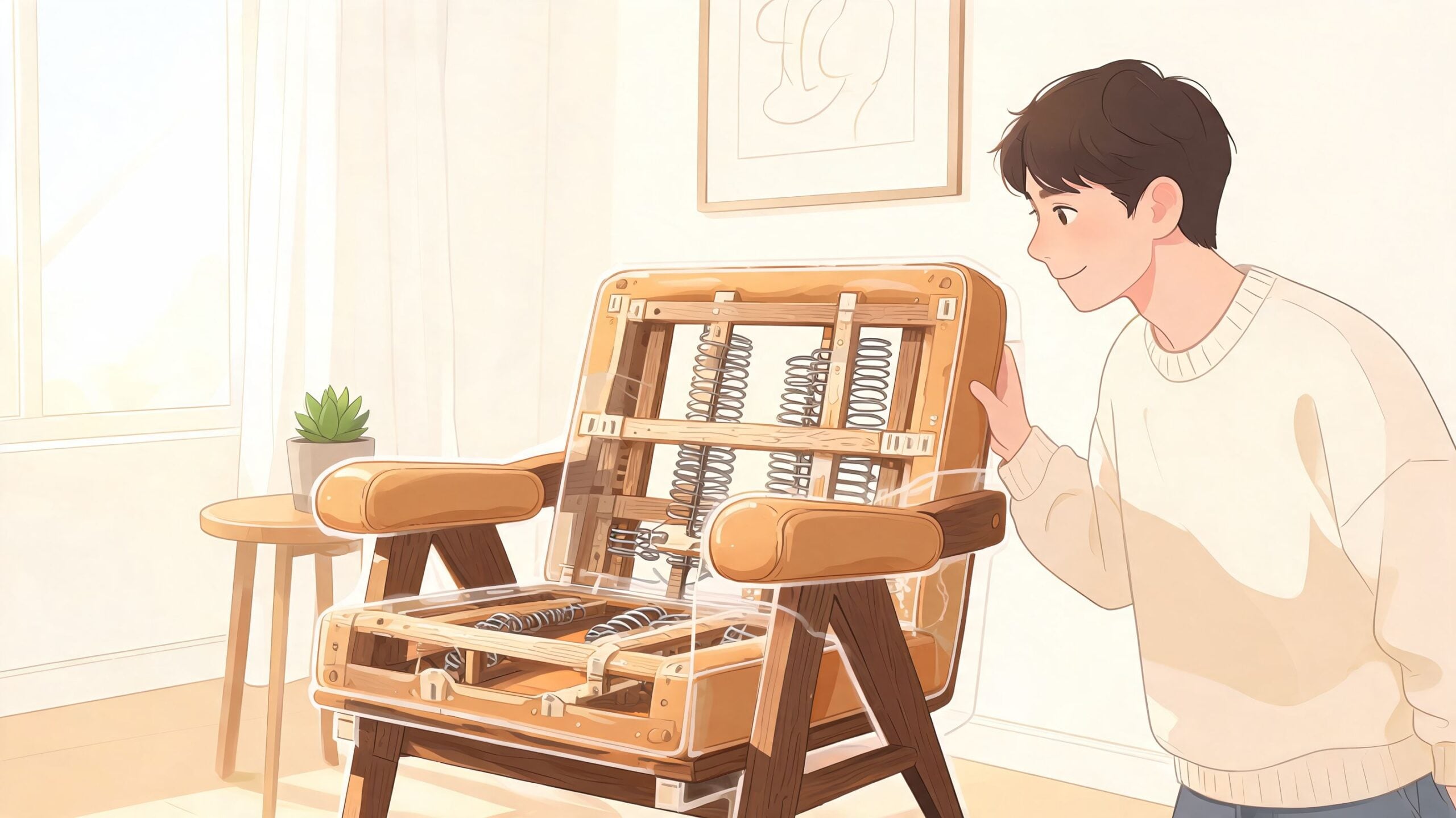
The frame is the quiet foundation
A serious chair begins with a hardwood frame. Kiln-dried hardwood is especially valued because it’s more stable and better equipped to resist the movement that can trouble lesser construction. In practical terms, that means fewer creaks, better long-term integrity, and a chair that keeps its shape.
Joinery matters just as much. When you hear terms like mortise-and-tenon, that’s a sign the maker is paying attention to structural longevity rather than relying on shortcuts.
Suspension separates good from great
If you want a chair with lasting comfort, ask how it supports the seat beneath the cushion. High-quality suspension gives the chair resilience. It also keeps the sit from feeling flat after regular use.
Many furniture makers use efficient modern support systems, and some are excellent. But in classic upholstery, eight-way hand-tied springs remain a respected benchmark because they create a balanced, responsive seat with real depth.
Here’s what to examine:
- Seat support. Does the chair feel buoyant and stable, or hollow and hard?
- Back support. A good chair should support the spine without forcing the body forward.
- Arm height. Arms that are too high or too low can ruin an otherwise handsome design.
- Weight and stillness. A well-built chair often feels grounded when you sit down and rise from it.
Cushioning changes the personality of the chair
Two chairs can share a silhouette and feel entirely different because of their cushions. Standard foam offers consistency and a cleaner, defined profile. Down-blend cushioning tends to feel more relaxed and luxurious, though it often benefits from occasional fluffing and attention.
Brand standards gain significance. Makers such as Stickley and Hancock & Moore have earned loyal followings because they combine material quality with disciplined construction. A curated selection matters. The best retailers go beyond gathering attractive pieces. They select makers known for getting the unseen details right.
A timeless chair is built from the inside out. Upholstery is the finishing expression, not the whole story.
Why design process still matters
The strongest furniture often begins long before the workshop floor. It starts with proportion, line, and a disciplined development process. If you enjoy seeing how that thinking evolves, this article on the furniture product design sketching process offers a useful look at how ideas move from concept to finished form.
That design intelligence is one reason some chairs feel resolved the moment you see them. The scale is right. The angles are considered. Nothing feels accidental.
Designing Your Room Around a Statement Chair
Late in the afternoon, when the light turns warm and the house grows quieter, a full grain leather chair often becomes the place everyone notices first. It may sit beside the fireplace, near a bookcase, or at the edge of a living room conversation area. Wherever it lives, it changes how the room feels. A chair like this has presence, and good design gives that presence a proper setting.
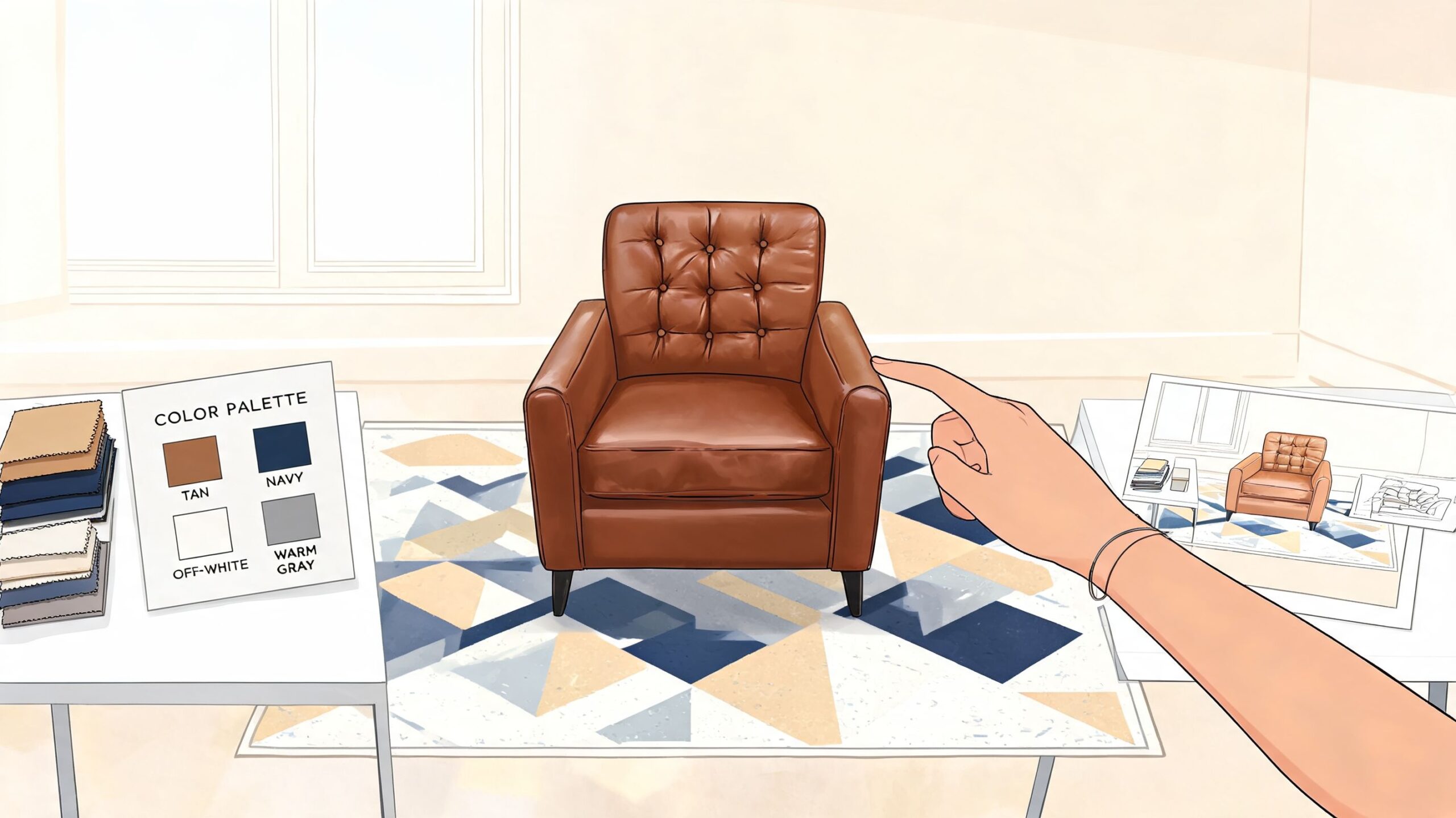
Treat the chair as an anchor
In our family business, we have always started with purpose before placement. Ask what the chair is meant to do in daily life. Is it the seat you reach for after dinner with a lamp and a novel? Is it meant to complete a seating group for visiting? Is it the piece that gives a large room a sense of focus?
That answer shapes everything around it.
A statement chair works much like a hearth in an older home. It draws attention, but it also helps organise the room around comfort and use. Once you know its role, scale, spacing, and companion pieces begin to make sense.
Leather also asks for contrast. Smooth, refined leather looks richer beside nubby wool, washed linen, or natural wood grain. A chair with more visible markings and a relaxed profile often benefits from cleaner lines nearby, so the room feels balanced rather than busy.
Personal details change the room's character
Clients are often surprised by how much can be adjusted before a chair ever enters the home. Leather colour, finish, seam treatment, nailhead trim, leg stain, and cushion fill all influence the final mood.
A few combinations show how clearly these choices speak:
- Cognac leather with walnut wood feels warm, collected, and traditional.
- Deep brown leather with a darker frame brings weight and a more architectural presence.
- Light tan leather suits transitional rooms and many contemporary homes, especially where you want brightness without losing warmth.
- Tufting or channel details give the chair more formality. A plain back feels easier and more relaxed.
In Southern Ontario, these decisions are not only about style. They are also about how the home is lived in through long winters, damp summers, boots by the door, family gatherings, and evenings spent indoors. A well-chosen full grain leather chair earns its place because it can handle real life while still looking better with age. That is part of its investment value. It is bought for today, but chosen with ten or twenty years in mind.
Designer’s Insight
Our designers often pair the warm tones of a cognac full-grain leather chair, such as one from Hancock & Moore, with a hand-knotted wool rug from our Rug Market. Those natural textures create a refined, layered foundation, then cooler accessories can sharpen the room and keep it feeling fresh.
Build the room in layers
The strongest rooms are composed in layers, much like a finely crafted outfit. The chair may be the hero piece, but it still needs supporting materials, colours, and shapes that help it belong.
Start from the ground up:
- Foundation. A rug sets the scale of the seating area and softens the visual weight of leather and wood.
- Primary placement. Put the chair where it can be seen, used, and appreciated, not pushed into a corner as an afterthought.
- Companion upholstery. Woven fabrics such as boucle, linen, or velvet give the room relief from too much visual sameness.
- Wood, metal, and lighting. These elements should echo the chair’s tone. If the leather feels warm and timeworn, harsh chrome and cold lighting may fight it.
This whole-room approach matters even more with heirloom furniture. A full grain leather chair is rarely an impulse piece. It is an investment in craftsmanship, and the room should support that decision. If you are planning around one for your own home, our guide to how to care for leather furniture over the long term is a helpful companion as you make material and placement choices.
The best result is a room that feels settled. Nothing competes for attention. The chair leads, the other pieces respond, and the space feels as though it was shaped over time rather than filled in a weekend.
Long-Term Care for Your Leather Investment in Ontario
A full grain leather chair ages much like a good wood floor or a fine wool rug. It responds to the house around it. In Southern Ontario, that means your chair lives through damp summers, forced-air heating in winter, and sharp seasonal swings that can dry it out and then load it with moisture again. Care works best when it respects that rhythm.
Humidity is often the quiet factor. Leather is a natural material with fibres that absorb and release moisture from the air. In a muggy Niagara summer, that can leave the surface feeling slightly heavier or tackier than usual. In a heated home in January, the same chair can feel drier and tighter. Neither condition means something is wrong. It means the material is behaving like a natural hide, not a synthetic substitute.
That is why steady indoor conditions matter more than occasional treatments.
Daily habits that protect the chair
A well-made chair does not need fussy care, but it does benefit from consistent habits that prevent small problems from settling in.
- Dust with a soft dry cloth. Fine dust acts like grit over time, especially along arms, seat edges, and stitched seams.
- Blot spills promptly. Use light pressure and avoid rubbing, which can spread moisture and disturb the finish.
- Limit direct sun. Afternoon light can dry the surface unevenly and alter colour over the years.
- Keep distance from heat sources. Vents, radiators, and fireplaces can pull too much moisture from the leather.
- Use leather care products sparingly and correctly. The goal is to support the hide, not coat it with residue.
Many owners over-condition. That is a little like polishing a dining table every week with the wrong product. The surface may look attended to, but the material itself is not better for it.
A practical Ontario approach
In homes across St. Catharines, Hamilton, and Toronto, the simplest protection is good climate control. If a room feels damp in July, a dehumidifier can help keep the air more balanced. If winter heating leaves the room dry enough to affect wood floors, leather will notice it too. Chairs placed near large windows, patio doors, or heat registers usually show wear sooner because the environment around them is less stable.
Placement and care belong together. A beautifully crafted chair can only age well if the room supports it.
Care should match the quality of the chair
An heirloom chair is never just upholstery wrapped over a frame. The leather, cushioning, suspension, joinery, and tailoring all age at different rates, and good maintenance protects the whole piece, not just the visible surface. That is one reason professional guidance matters, especially if you have invested in full grain leather for its long lifespan and character.
For a more detailed reference, keep this guide on long-term leather furniture care handy.
With the right conditions and a measured routine, a full grain leather chair does what lesser materials rarely do. It becomes more individual with age, more settled in the room, and more valuable to the household that lives with it year after year.
Experience Timeless Craftsmanship at Critelli
A full grain leather chair asks you to think differently about furniture. Not as a short-term solution, but as a lasting part of the home. The material matters. The frame matters. The suspension, the tailoring, the room around it, and the climate it lives in all matter too.
That’s why the best choices are rarely impulsive. They come from seeing quality up close, feeling the leather in your hand, testing the sit, and understanding how a chair will live in your home for years to come. When that process is handled well, the result is more than comfort. It’s continuity. A piece with presence now, and greater character later.
If you value timeless craftsmanship, a curated selection, and a complete room concept rather than a single isolated purchase, an in-person visit is still the best way to decide well.
Experience the craftsmanship in person at Critelli Furniture in the King Street Showroom. If you’re furnishing a home in St. Catharines, the Greater Niagara region, Hamilton, or Toronto, book your complimentary design consultation today and explore a design-forward, bespoke approach to heirloom quality seating, artisanal rugs, and white-glove service from selection to final placement.