CRITELLI'S SUMMER SALE | UP TO 70% OFF



Wood Joinery Techniques: A Guide to Timeless Craft

A century-old Stickley chair in a well-kept St. Catharines home can still feel steady under daily use because its frame was built around joints that lock wood to wood instead of depending on hardware alone. That kind of quiet endurance is what discerning homeowners notice first, even if they can't name the joint yet.
Wood joinery techniques turn raw timber into furniture that feels calm, solid, and worth keeping. In Southern Ontario, where indoor humidity shifts with the seasons, that matters just as much as the finish or the fabric.
The Living Legacy of Wood Joinery
A century-old artisan chair in a well-kept St. Catharines home can still feel steady under daily use because its frame was built around joints that let wood support wood instead of depending on hardware alone. That quiet endurance is what discerning homeowners notice first, even before they can name the joint.
The oldest furniture pieces worth admiring rarely depend on visible fasteners. They rely on geometry, friction, and careful fit, which is why traditional wood-to-wood connections still sit at the centre of structural performance in premium work, from cabinet frames to heirloom chairs. A 2023 review of carpentry as the craft of joining wood explains that these joints were historically designed to transfer loads while maintaining stability, and it notes that heritage structures using them exist across the world and can date back hundreds or even thousands of years (carpentry, the craft of joining wood).
That long record is not museum trivia. It is the reason a well-made mortise-and-tenon, dovetail, or related joint still feels relevant in heirloom quality furniture today, especially in a curated selection meant to hold its form through years of use. A joinery-rich piece also reads as more artisanal and more intentional in a showroom, because the construction is part of the design language rather than something hidden away.
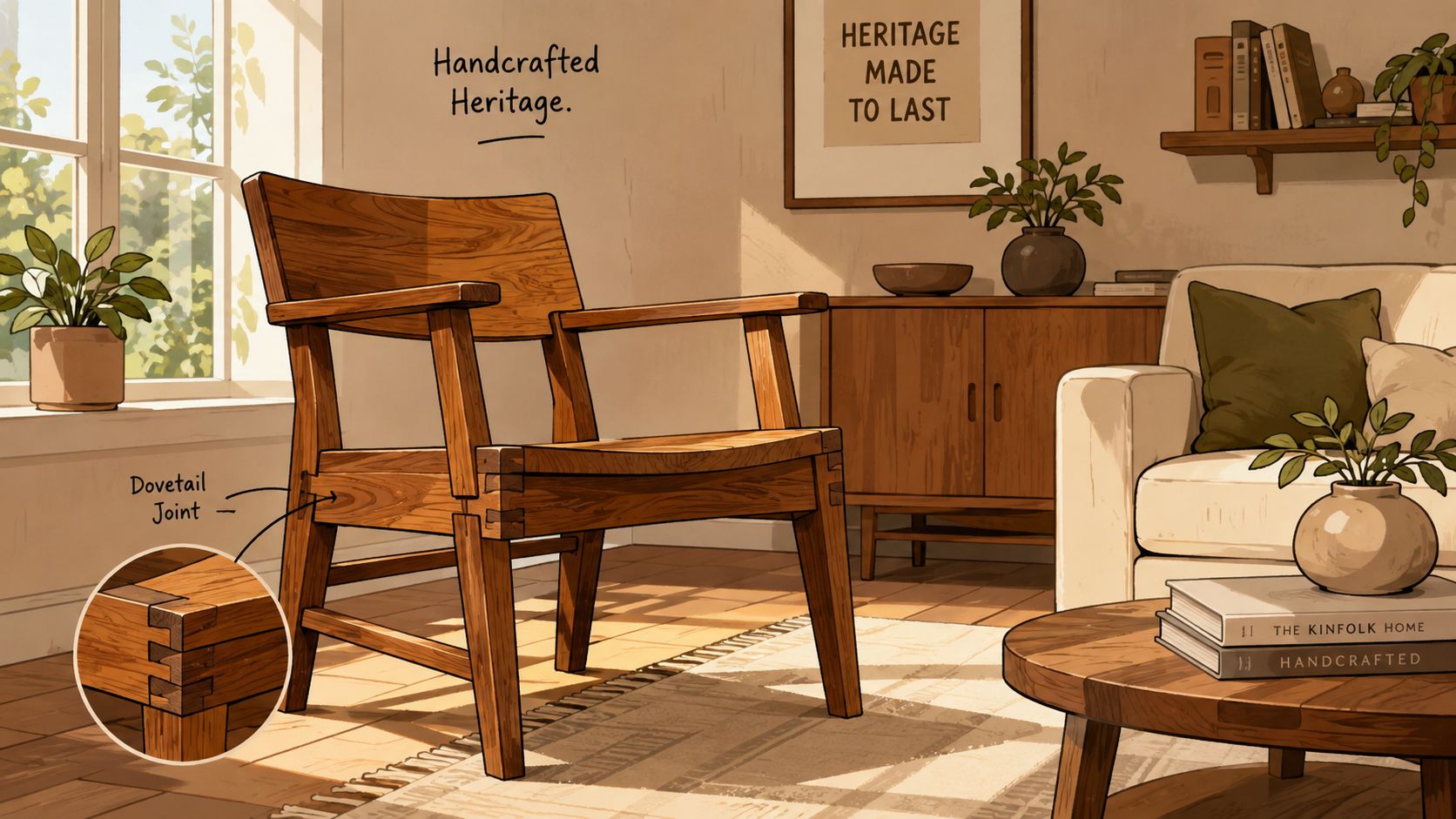
A chair or table built this way ages differently from something assembled only for convenience. The joints carry the story, and the story is usually a long one. In Southern Ontario homes, where indoor humidity shifts with the seasons, that kind of construction matters because wood that is joined to move well stays calmer over time than wood that is asked to rely on fasteners alone. The same logic behind wood fence materials for cold climates applies indoors, where temperature swings and dry winter air can test the way wood parts meet and hold.
Critelli's idea of furniture as part of a complete room concept fits this thinking well. A joinery-rich piece does not stand alone, it anchors the room, much like a strong frame supports everything placed around it, including the art for your floor found in the Rug Market. For homeowners who want a closer look at the philosophy behind lasting construction, the page on heirloom quality furniture sits naturally beside this conversation.
How Wood Joinery Works
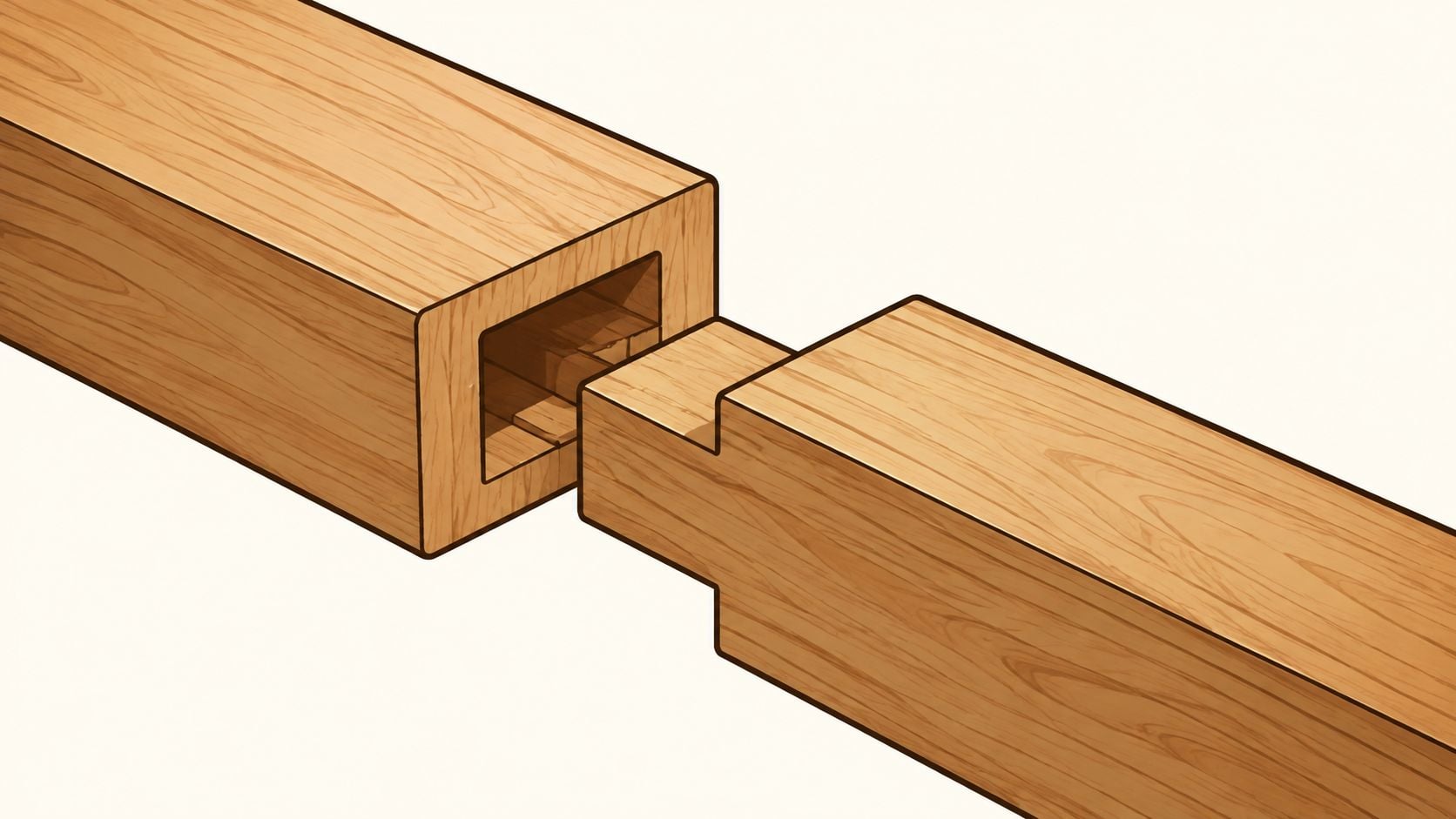
Wood joinery works best when the joint itself helps the wood carry the load. A mortise-and-tenon joins the way a key fits into a lock, while a dovetail uses interlocking geometry to resist being pulled apart. The shape does much of the work before glue is added, which is why the geometry of a joint matters so much in fine furniture.
Long grain beats end grain
The strongest bonds usually happen where long grain meets long grain. End grain behaves differently, it absorbs adhesive and offers less useful bearing surface, so a maker who wants durability aims to increase contact area and reduce stress at the joint. The U.S. Forest Products Laboratory states that joint design should increase surface area to at least 10× the cross-sectional area of the member because wood is roughly 10× stronger in tension than in shear, and for scarf joints, a slope of 1:12 or flatter produces the highest strength (Forest Products Laboratory chapter on wood joints).
That principle explains why glue alone is not the hero. Adhesive helps, but the joint shape carries the structure. A good craftsman wants the parts to lock together in a way that redirects force through the wood fibres instead of asking the glue line to do all the lifting.
Practical rule: if the joint depends entirely on adhesive, the joint design is already doing too little.
For furniture buyers, this turns visible construction into a signal. A chair rail with sound geometry says more about longevity than a decorative surface ever could, and a bed frame built with proper structure usually feels more settled under use. If you are comparing a larger sleep piece, the construction approach in Critelli Furniture's wooden bed king size shows how frame design and joinery work together in a substantial piece.
Glue supports, it doesn't replace structure
The adhesive matters, but only as part of the system. Swedish Wood's joinery handbook gives a practical adhesive-application range of 60 to 350 g/m², depending on the adhesive and wood absorbency, and it stresses applying glue to all internal surfaces and assembling within the adhesive's open/assembly time (Swedish Wood joinery handbook). That is not a finishing detail, it is central to bond quality.
Strong joints begin with fit, not with pressure.
When a joint is cut cleanly, dry-fitted carefully, and glued on time, the bond can support the interlocking geometry instead of trying to compensate for it. That is why furniture with disciplined joinery tends to feel more exact in the hand, especially in pieces meant for daily use in homes where heating systems and seasonal humidity never stay constant for long. In Southern Ontario, that same logic helps shoppers judge whether a frame will stay composed through dry winters and humid summers, just as wood fence materials for cold climates need construction choices that respect movement and exposure. For buyers comparing materials and structure, the guidance in wood furniture explained, choosing the right hardwood for longevity and style pairs naturally with this mechanical view.
Essential Joinery Types and Where They Shine
Different joints solve different problems. A dining chair needs movement resistance, a drawer front needs clean pull strength, and a cabinet face frame needs square, reliable alignment. The name of the joint matters less than whether it suits the job.
The main joints at a glance
| Joint Type | Relative Strength | Difficulty | Common Application |
|---|---|---|---|
| Mortise-and-tenon | Very strong | Moderate to high | Chairs, tables, frames |
| Dovetail | Very strong in pull-apart resistance | High | Drawer construction, case goods |
| Finger or box joint | Strong, glue-friendly | Moderate | Boxes, cabinetry, compact joinery |
| Dowel joint | Moderate to strong when well made | Moderate | Furniture assembly, casework, hidden reinforcement |
| Bridle and halving joints | Strong for frame construction | Moderate | Frames, rails, cross members |
Mortise-and-tenon and dovetail
Mortise-and-tenon remains the backbone of chairs and tables because it handles repeated load with confidence. Traditional guidance also notes that a single tenon is commonly laid out at about one-third of the timber thickness, while paired tenons should keep the width between them within a modest range for balanced strength (traditional mortise-and-tenon guidance). In premium furniture, exposed tenons can become part of the visual identity, and that honesty is one reason the joint feels so enduring.
Dovetails tell a different story. They excel where drawers need to resist being pulled apart, which is why they're associated with refined case goods and well-made drawer boxes. For a practical overview of this use case, the South Jersey cabinet drawer guide offers useful context on why dovetail geometry has such staying power in drawer construction.
Finger joints, dowels, and frame joints
Finger or box joints trade some prestige for excellent glue area and tidy repetition. They're especially useful where clean edges and efficient material use matter. Dowel joints are more discreet and can be very effective when alignment is precise, while bridle and halving joints are strong choices for frame assemblies because they keep the members square and well seated.
For readers looking at custom storage or built-ins, custom book shelving is a good example of where joint choice shapes the result, especially when shelves, rails, and uprights all need to work together without visual clutter.
When to choose which joint
- Use mortise-and-tenon when the piece must carry repeated structural load and stay composed over time.
- Use dovetails when drawer pull resistance and crisp corner integrity matter most.
- Use box joints when a compact, glue-rich connection suits the design.
- Use dowels when hidden reinforcement and clean sightlines are priorities.
- Use bridle or halving joints when frame geometry needs reliable alignment.
The Hidden Variables That Determine Joint Longevity
A joint can look perfect and still fail early if the wood was too wet, the glue was rushed, or the surfaces were poorly prepared. That's why the hidden variables matter as much as the joint name itself.
Moisture, seasoning, and climate
Historical trade practice recorded joinery wood being dried to 8 to 12% moisture content before further processing, with air-drying periods of 3 to 4 years for softwoods, up to 5 years for hardwoods, and 8 to 10 years for thicker boards after felling (trade history paper on woodworking). Those figures explain why seasoned material behaves more predictably once it's turned into furniture.
That point matters in Southern Ontario. Indoor humidity moves through the seasons, and furniture built from properly prepared stock is better positioned to stay stable through those changes. Wood that was rushed into production can keep moving long after the piece reaches the home, which is why careful seasoning remains a structural requirement rather than an old-fashioned custom.
Glue, fit, and pressure
The best adhesive bond still depends on the basics. A reliable joint starts with flat, straight, clean mating surfaces, careful dry fitting, and clamp pressure that is firm and even rather than excessive. The Swedish Wood joinery handbook also stresses not exceeding the adhesive's assembly time, because the window between glue application and assembly directly affects the bond (Swedish Wood joinery handbook).
Dry fitting reveals the trouble before glue turns the clock against the maker.
A useful comparison for homeowners is the difference between a door that closes neatly and one that rubs. Both may look similar at first glance, but one has been prepared with more care. The same is true of furniture joints. When a maker planes, tests, glues, and clamps with discipline, the resulting piece tends to feel calmer in the room and more resilient in everyday use.
For readers comparing materials and long-term performance, the broader discussion in durable wood offers a helpful reminder that species choice and joinery discipline work together, not separately. In that sense, joinery is never just a cut. It's a sequence, and every step matters.
Solving the Thin Stock and Non-Standard Angle Challenge
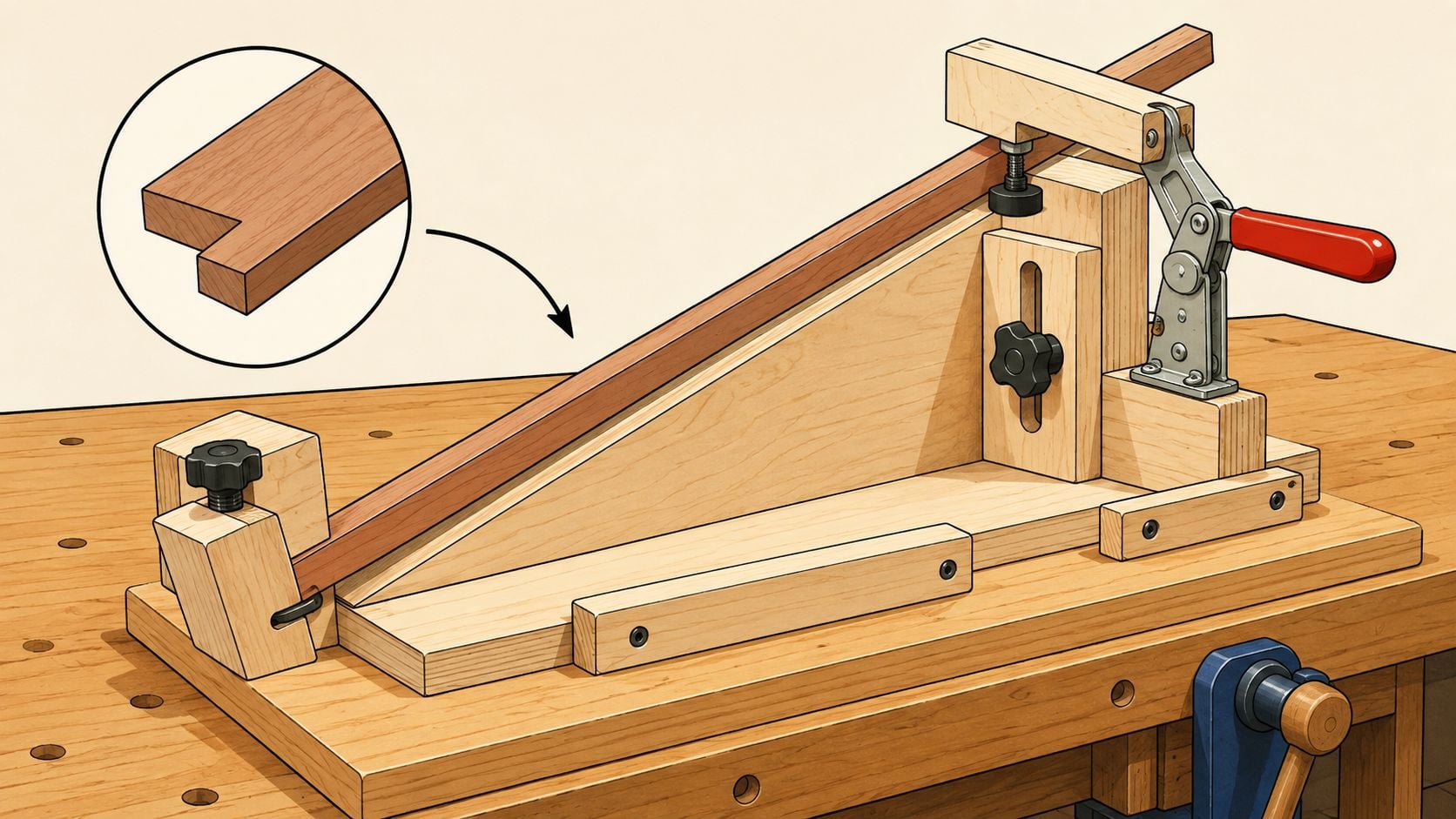
Standard joinery books usually assume square corners and generous stock. Real furniture design doesn't always cooperate. Thin parts, angled rails, and unusual silhouettes demand a maker who can adapt the joint to the shape, not force the shape to mimic the joint.
What works when the geometry gets awkward
A splined miter can stabilise a clean angled corner without making the piece look heavy. It adds a hidden key across the joint, which helps the surfaces register and strengthens the connection where simple miter glue-up would be too fragile. For thin stock, that extra reinforcement matters because the wood doesn't offer much mass for a large joint body.
Finger joints can also be scaled carefully for narrow material, provided the proportions stay tidy and the glue surfaces remain accurate. Dowel reinforcement helps when an angled assembly needs discreet support, especially in pieces where visible hardware would interrupt the line. Box joints, when reduced thoughtfully, can work well for compact drawers or small architectural details that still need a strong bite.
Why bespoke work asks for custom joinery
Design-forward furniture often has to solve problems that standard forms never meet. A curved arm, a shallow cabinet side, or an angled display shelf asks the maker to think like both an engineer and a designer. That's where bespoke construction shows its value, because the joint supports the form instead of flattening it into a template.
The best joint is the one that suits the stock, the angle, and the load together.
For homeowners furnishing a room around a statement piece, interior choices begin to connect here. A bold joinery-forward cabinet can hold its own beside hand-knotted rugs Ontario shoppers use to ground a room's colour and texture, especially when the room already leans toward white-glove polish and layered materials. In a full interior plan, the joinery, the rug, and the upholstery should feel composed as one visual sentence, not three separate notes.
A Designer's Insight block belongs here because the room has to work as a whole, not as isolated objects. The cleanest pairing often comes from letting the structure show on the furniture while the rug softens the floor plane. That balance keeps the room feeling curated rather than overworked.
Evaluating Craftsmanship When Investing in Fine Furniture
A discerning buyer does not need a workshop to recognise quality. The clues are usually visible in the fit, the lines, and the way the piece holds itself together. In a Southern Ontario home, those details matter even more because indoor air shifts with furnace heat in winter and humidity in summer, and furniture that is built well tends to handle those changes with more grace.
A showroom piece should read the way a well-set frame does. The structure should feel deliberate, not strained, and the parts should meet with the quiet certainty you see in a house built to last.
What to look for in the showroom
- Tight joints with no obvious gaps: Clean transitions usually signal better cutting and more disciplined assembly.
- Consistent reveal lines: Drawer fronts and doors should sit evenly, which suggests careful squaring and stable construction.
- Traditional joinery where structure matters: Visible mortise-and-tenon or dovetail work often tells a more honest story than staples or nails hidden in load-bearing places.
- Evidence of proper seasoning: A well-made piece tends to behave more calmly in service, especially in homes where winter heat and summer humidity change the environment.
A hand-cut joint should look settled, not forced. If the edges wander, the fit is uneven, or the reveals pull apart from one surface to the next, the piece is already telling you something about how it was assembled.
Why the maker behind the joint matters
Craftsmanship carries more weight when it is steady from one piece to the next. In a curated collection, furniture from established heritage makers or premium furniture brands can signal close attention to structural detail, while the showroom team can place those pieces into a broader room plan instead of treating them as isolated purchases. For readers comparing options, best custom furniture makers offers a useful starting point for thinking about selection and specification.
Critelli's interior design services in St. Catharines also help turn technical knowledge into real-room decisions. A complimentary consultation can clarify whether a piece belongs in the main living area, a study, or a dining space, and white-glove delivery ensures the furniture arrives, is assembled, and is placed with the same care that went into choosing it. That matters for Luxury furniture Niagara shoppers and for homes across the Greater Niagara, Hamilton, and Toronto markets, where the finish in the showroom has to survive the journey home.
The most dependable furniture rarely relies on shortcuts. It shows its strength in the calm of its construction.
Why Joinery Mastery Defines Timeless Furniture
Wood joinery techniques remain relevant because they solve the oldest problem in furniture making, how to keep wood working together over time. The fact that traditional wood-to-wood connections are among the oldest verified woodworking technologies still in active use says a great deal about their durability, but it also says something about taste. Timeless craftsmanship never depends on fashion alone.
That is why a family-run destination founded in 1914 can still feel current when its curated selection includes pieces built around sound structure, refined materials, and a complete room concept. In that setting, joinery isn't hidden technical trivia. It's part of what makes a piece feel heirloom quality, whether it anchors a dining room, a study, or a living room finished with a hand-knotted rug.
The best pieces do more than fill a corner. They hold a room together, and they keep doing it after trends change.
Experience the craftsmanship in person at our King Street Showroom, where wood joinery techniques, refined materials, and thoughtful proportions come together in a curated selection built for lasting homes. Book your complimentary design consultation today, or visit Critelli Furniture to explore bespoke furnishings, hand-knotted rugs, and white-glove delivery across Southern Ontario.