
Select Contemporary Night Tables for a Stylish Bedroom


A bedroom often comes together in layers. The bed is chosen with care. The linens soften the palette. Lighting is considered. Then the space beside the bed is left to the end, and that's usually where the room either settles into harmony or starts to feel unresolved.
That last decision matters more than most homeowners expect. Contemporary night tables aren't just places for a lamp and a book. They shape the visual rhythm of the bed wall, influence how calm the room feels at night, and determine whether the daily routine feels organised or mildly inconvenient.
For a family-run firm with roots reaching back to 1914, that distinction has always mattered. Furniture isn't treated as an isolated object. It's treated as part of a home's story, part of a complete room concept, and part of the quiet comfort that good design should support every day. In Southern Ontario homes, from heritage properties in Niagara to polished condos connected to Hamilton and Toronto, the right night table often becomes the finishing touch that makes the whole bedroom feel intentional.
Table of Contents
- The Finishing Touch Your Bedroom Deserves
- Defining the Contemporary Night Table
- Choosing Enduring Materials and Artisanal Finishes
- Mastering Scale and Proportion for a Perfect Fit
- Integrating Smart Functionality for Modern Life
- Creating a Cohesive Bedroom Design Concept
- An Investment in Craftsmanship and Care
The Finishing Touch Your Bedroom Deserves
A bedroom can be beautifully furnished and still feel unfinished. The most common reason is simple. The bed is substantial, the headboard has presence, and the pieces beside it don't carry their share of the composition.
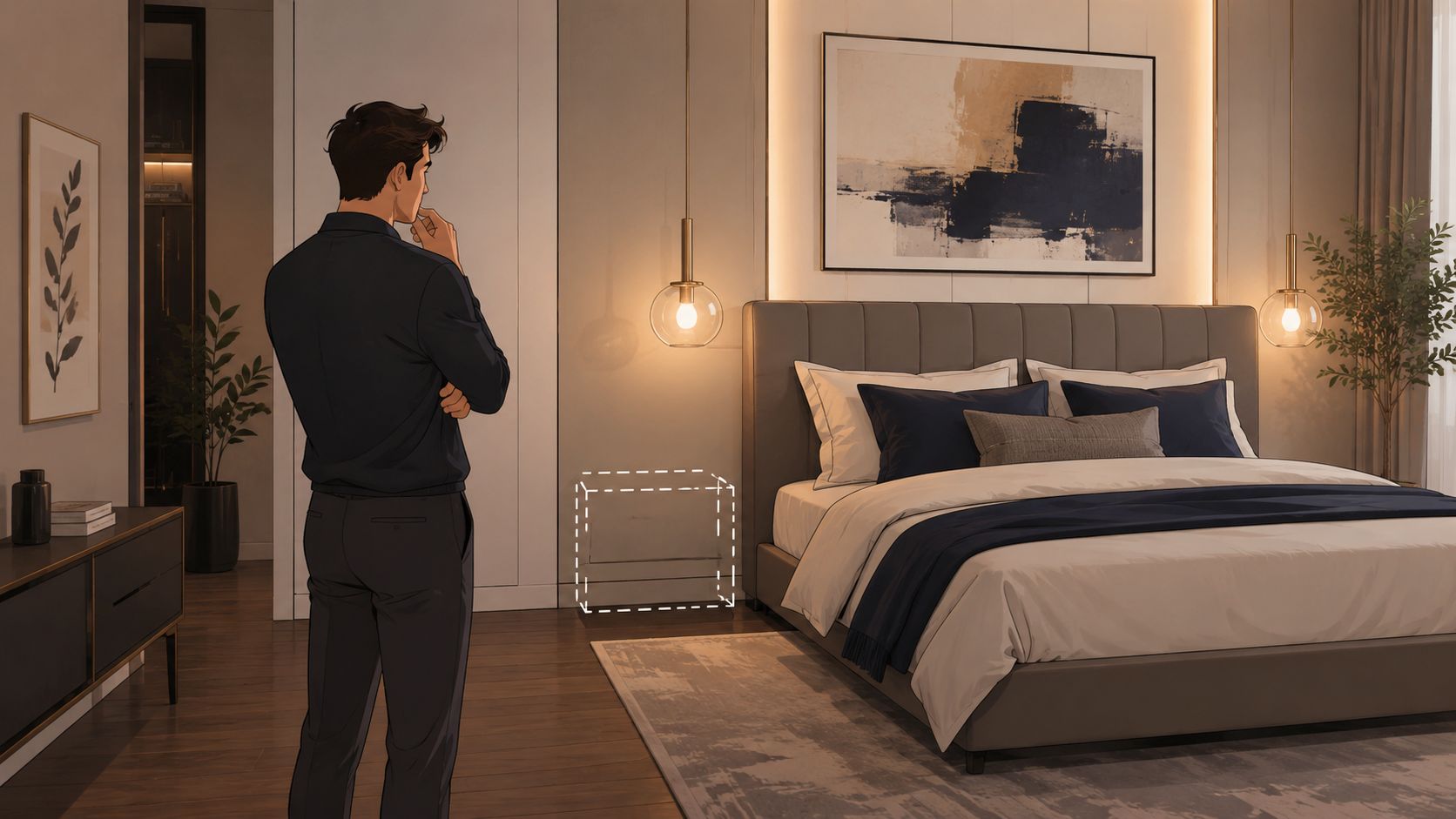
A well-chosen night table does two jobs at once. It supports the rituals that happen at the end and beginning of every day, and it gives the bed a sense of balance. Without that, even fine furnishings can look temporary.
The wider market reinforces that this category deserves real consideration. The global side table market was valued at USD 13.12 billion in 2024 and is projected to reach USD 19.03 billion by 2032, according to Fortune Business Insights on the side table market. For Southern Ontario homeowners, that points to a broader move toward design-led living spaces where compact, functional pieces are chosen with the same care as larger furniture.
Practical rule: If the bedside area feels unresolved, the answer usually isn't more décor. It's better proportion, better storage, and a night table with enough presence to belong beside the bed.
In homes with strong architectural character, that choice matters even more. A pared-back table can calm an ornate room. A richly finished wood case can warm a clean-lined condo bedroom. A piece with thoughtful drawer storage can make a compact suite feel composed rather than crowded.
That's why contemporary night tables deserve to be chosen as furniture, not as accessories.
Defining the Contemporary Night Table
The word contemporary is often used loosely. In practice, it describes a night table that feels current in proportion and restraint, not merely new in date.
From utility to design language
Historically, the nightstand began as a simple cabinet or table kept beside the bed for practical items. That evolution, noted in Wikipedia's overview of the nightstand, explains why the piece is now judged on more than utility. Scale, finish, line, and how the table contributes to the architecture of the room all matter.
That shift is easy to recognise in a premium bedroom. The bedside piece is no longer a filler item bought after the bed arrives. It's part of the composition.
For readers comparing cabinetry language across rooms, the principles behind contemporary cabinets for South Jersey offer a useful parallel. Clean profiles, reduced ornament, and material-led design translate just as well at the bedside as they do in kitchens and built-ins.
What contemporary looks like at the bedside
A contemporary night table usually has a few defining traits:
- Clean geometry that feels deliberate rather than severe
- Balanced massing so the table has presence without heaviness
- Subtle detailing such as a recessed pull, shadow line, or refined plinth
- Material expression where wood grain, lacquer, stone, or metal becomes the ornament
- Visual calm created through proportion and negative space
That's where contemporary diverges from styles that rely on carved trim, applied decoration, or overt historical references. It also differs from stricter modernism. Contemporary pieces often feel warmer and more adaptable. They can sit comfortably beside an upholstered bed, a low platform frame, or even a more transitional architectural envelope.
A good contemporary night table doesn't ask for attention through embellishment. It earns attention through proportion.
Many clients start by searching broad categories and only begin to understand the differences once they see a curated assortment in context. Looking through modern bedside tables helps clarify how finish, silhouette, and drawer architecture affect the mood of a bedroom.
The strongest examples have presence, but they don't interrupt rest. That's the benchmark. Bedside furniture should support the room's quiet authority.
Choosing Enduring Materials and Artisanal Finishes
Materials decide how a night table will look on day one. Craftsmanship decides how it will look after years of use.
How materials behave in Southern Ontario homes
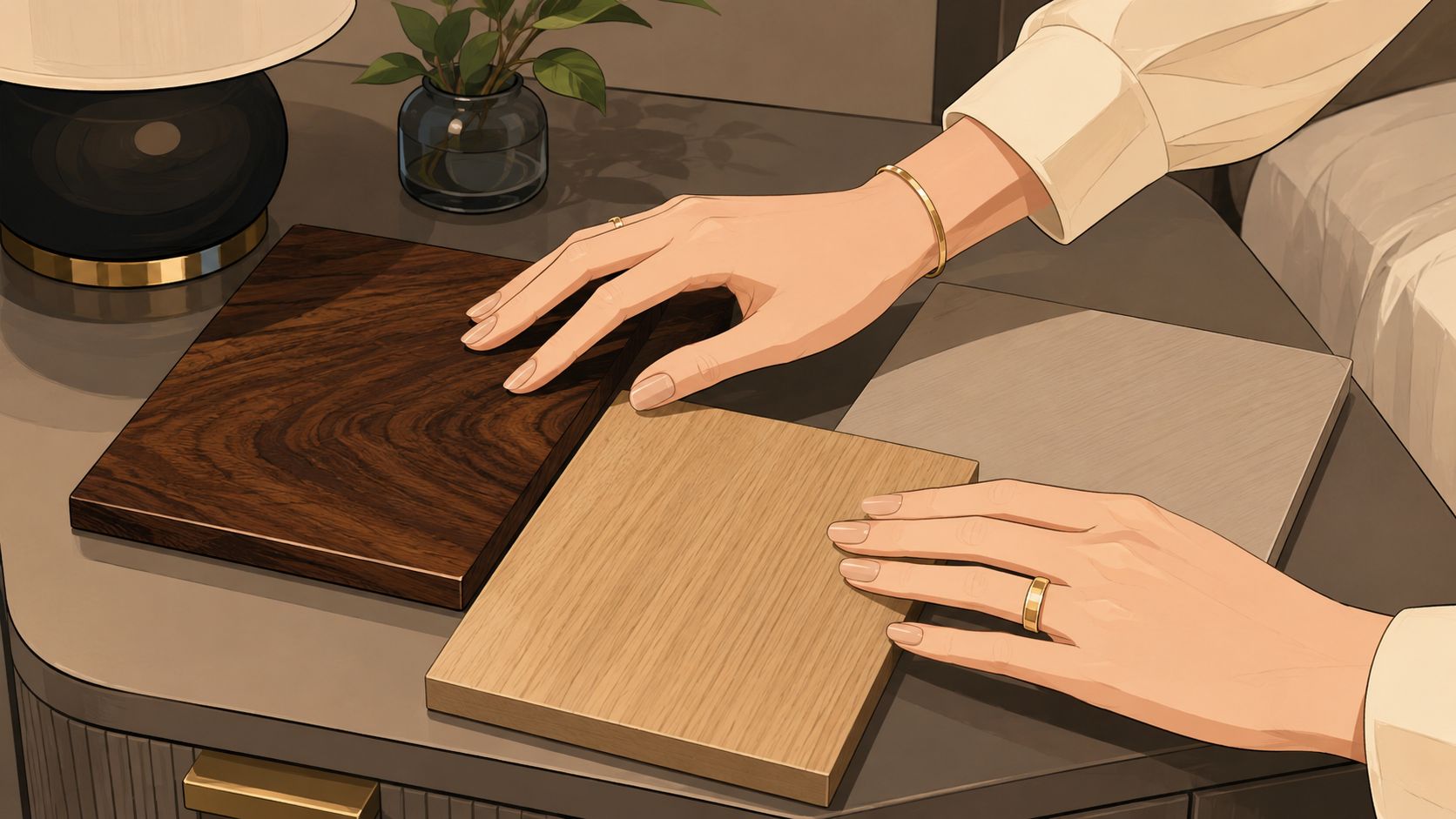
Ontario bedrooms see meaningful seasonal change. Humid summers and dry winters place stress on furniture, especially near vents, radiators, and sun-exposed walls. As noted in this discussion of modern nightstands and material considerations, solid wood can be affected by humidity changes, while high-quality veneers on a stable substrate often offer better resistance to warping. The same source notes that integrated tech features such as USB ports should be considered carefully because convenience can come with obsolescence.
That doesn't make solid wood a poor choice. It means buyers should understand the trade-off. Solid walnut or oak offers warmth, depth, and the kind of tactile character associated with heirloom quality furniture. It can also respond more visibly to environmental fluctuation if construction and placement aren't considered.
Veneer, when done well, is often misunderstood. A premium veneer on a stable core can deliver excellent visual consistency and a more controlled response to climate. In many contemporary pieces, veneer allows larger, cleaner surfaces with less movement and a more architectural expression.
Other common options have their own strengths:
- Metal suits sharper silhouettes and slimmer profiles. It's useful when a room needs visual lightness.
- Painted finishes and lacquer create a crisp, design-forward effect, though they tend to show knocks more readily in busy households.
- Stone tops bring weight and refinement. For homeowners exploring how marble introduces permanence and polish, these Tiles Mate insights on marble are a helpful design reference.
The finish tells the real story
A night table can have respectable materials and still feel disappointing if the finish work is careless. The pieces that endure tend to reveal quality in quieter ways:
- Joinery that aligns cleanly, especially where drawers meet the case
- Drawer action that feels composed, not loose or abrupt
- Edges with intention, whether softened, chamfered, or kept square for a reason
- Finish depth that allows wood grain or colour variation to read naturally
- Back and interior detailing that suggests the maker cared beyond the visible front
These are the signs of timeless craftsmanship. They don't announce themselves loudly in a showroom. They reveal themselves through use.
For buyers drawn to wood furniture with substantial build and classic material integrity, solid hardwood end tables offer a useful point of comparison, even when the final bedroom selection leans more contemporary than traditional.
Designer's Insight
Designer's Insight
In a calm bedroom, contrast usually works better than matching. A warm wood night table beside an upholstered bed creates depth. A stone or metal accent works best when the rug and bedding soften the rest of the room.
Artisanal quality isn't about making every surface look precious. It's about choosing finishes that age with dignity and materials that still feel grounded years after trends shift.
Mastering Scale and Proportion for a Perfect Fit
Nothing undermines a bedroom faster than bedside furniture at the wrong height. Even beautiful pieces look awkward when they sit too low, tower over the mattress, or crowd the bed with unnecessary width.
Height comes first
The most dependable rule is simple. The nightstand surface should be level with the top of the mattress or up to about 2 inches below it, and with many mattresses sitting around 24 inches from the floor, the ideal nightstand height typically falls within the 22 to 28 inch range, according to Froy's nightstand height guide.
That guideline works because it supports comfort and visual unity. Reaching for a lamp, glasses, or a glass of water should feel natural. If the table is much lower, the gesture becomes awkward. If it's too high, the bedside area starts to feel top-heavy.
A few practical checks help:
- Measure from floor to mattress top, not just bed frame height.
- Account for pillow depth and lamp base size so the surface doesn't become cramped.
- Choose symmetry in height even if the tables differ in design, especially when both sides use table lamps.
When the table and mattress align, the room feels settled. When they don't, even non-designers notice something is off.
Width should support the bed, not fight it
Width is a composition issue as much as a practical one. The bedside table needs enough surface for nightly use, but it also has to respect circulation and the scale of the bed.
For many full and queen beds, a night table in the familiar mid-width range feels right. In compact rooms, a shallow profile can be more valuable than added width because it preserves movement around the bed. In larger rooms, narrow tables can look underdressed against a substantial headboard.
The bed itself should lead the decision. A delicate table beside a broad upholstered bed often looks accidental. A bulky case beside a light platform frame can feel overcommitted.
Homeowners refining a complete bedroom plan often find it useful to review modern bed design before finalising bedside scale, because the proportions of the bed and the night tables should be resolved together.
Night Table Sizing Guide by Bed Type
| Bed Size | Recommended Nightstand Width | Ideal Nightstand Height |
|---|---|---|
| Full | 22–28 inches | 22–28 inches |
| Queen | 22–28 inches | 22–28 inches |
This table isn't a style rule. It's a proportion rule. Once that framework is right, finish and detailing can vary freely.
Integrating Smart Functionality for Modern Life
A serene bedroom depends on containment. The more frequently used objects that remain visible, the more restless the room tends to feel.
Storage should reduce visual noise
A practical night table earns its place by holding more than it displays. As noted in Paolo Moschino's guide to choosing a bedside table, a standard width of 22 to 28 inches pairs well with full and queen beds, and integrated storage such as drawers helps maintain the clean lines central to contemporary design by reducing surface clutter.
That's a useful design principle because the bedside surface is one of the first places visual disorder appears. Chargers, hand cream, reading glasses, books, tissues, and medication quickly compete with lighting and decorative objects.
A strong storage plan usually falls into one of these patterns:
- Two-drawer night tables suit primary bedrooms where visual calm matters and everyday essentials need to disappear.
- Drawer plus open shelf works for readers who want one accessible layer and one concealed layer.
- Open designs look lighter, but they require disciplined styling or the room starts to feel busy.
Technology should stay useful
Luxury at the bedside isn't about adding every available feature. It's about making the nightly routine feel effortless. Cable management matters. A lamp should have a proper place. A charging setup should be tidy and easy to reach.
Built-in charging can be convenient, but fixed technology can age faster than good furniture. In many homes, the more durable decision is a well-placed outlet and a discreet charging accessory rather than committing the case itself to a specific port format.
The most successful bedside setup often looks almost empty, even though it supports everything needed for the evening and the morning.
That's where function becomes design. The room feels quieter because the furniture is doing more work behind the scenes.
Creating a Cohesive Bedroom Design Concept
Night tables rarely succeed when chosen in isolation. They need to belong to the bed, the lighting, the rug, the architecture, and the rhythm of movement through the room.
Build the room from the ground up
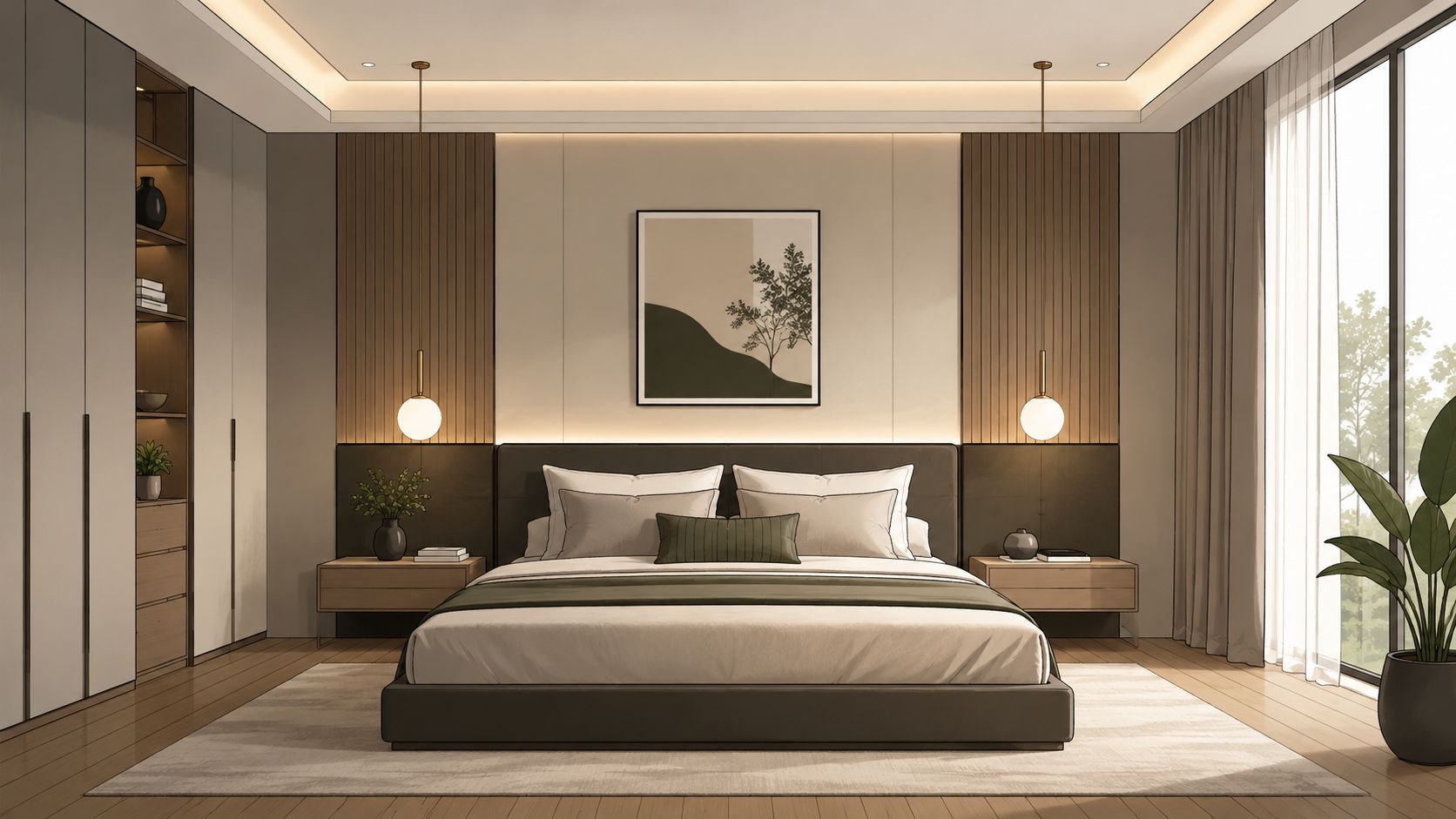
The most composed bedrooms are usually resolved from the floor upward. That's one reason the rug matters so much. In a design studio setting, Art for your Floor isn't a slogan. It's a practical way of thinking. A hand-knotted rug often determines the room's undertone, texture balance, and degree of formality before a single bedside finish is selected.
A few combinations consistently work:
- Upholstered bed with walnut night tables brings warmth and softness into balance.
- Platform bed with floating or recessed-base tables reinforces horizontal lines and keeps the room visually light.
- Metal-accented bed with painted or stone-topped tables creates a sharper architectural mood when the bedding remains restrained.
For homeowners reviewing bedroom options as a complete scheme, modern bedroom furniture collections can help clarify how beds, storage, and bedside pieces relate when chosen as a family rather than as disconnected purchases.
Small bedrooms still deserve architectural thinking
This is especially relevant in Southern Ontario's compact homes. Statistics Canada reports that 46.7% of Ontario households were renter households in 2021, and condo living continues to shape how many people furnish bedrooms. In that context, AllModern's nightstand category discussion is helpful for one practical point: floating nightstands can create an illusion of space, while efficient drawer depth matters in compact rooms.
That matters in real rooms where every inch of visual and physical clearance counts.
In smaller bedrooms, a cohesive concept usually depends on restraint:
- Keep the footprint disciplined. Bulky legs and overdeep cases make circulation feel tighter.
- Use floating forms where appropriate. They reveal more floor, which helps a room feel more open.
- Let one finish lead. Too many competing materials make small rooms feel fragmented.
- Choose lamps and rugs with the tables in mind. Bedside scale isn't solved by the tables alone.
A complete room concept also protects against a common mistake. Homeowners often buy a handsome pair of contemporary night tables, then discover the lamps are oversized, the rug is too slight, or the bed sits too visually heavy between them. The pieces aren't wrong. The composition is unresolved.
That's exactly where an interior design service earns its keep. The bedroom starts to function as a whole rather than a sequence of separate purchases.
An Investment in Craftsmanship and Care
The right contemporary night table does more than fill a gap beside the bed. It resolves proportion, supports routine, and contributes to the atmosphere of rest that a bedroom should provide.
The best choices tend to follow the same principles. Choose the height with care. Select materials that suit the home's conditions. Favour storage that protects visual calm. Think in terms of a complete room concept rather than a single isolated purchase.
That's also why well-made furniture rewards a buy-once, buy-well mindset. A bedside piece is touched every day. Drawers open thousands of times. Finishes meet lamps, books, jewellery, water glasses, and sunlight. Heirloom quality isn't abstract in a setting like that. It's practical.
Long-standing firms understand that selection is only part of the experience. Care matters after delivery as well, whether the room includes wood, leather, stone, or textile elements. Thoughtful maintenance guidance, such as these notes on how to care for leather furniture, reflects the same respect for longevity that should guide the original purchase.
For homeowners shaping a refined bedroom in Niagara, Hamilton, Toronto, or anywhere across Southern Ontario, Critelli Furniture offers a thoughtful path from selection to placement, including a curated showroom experience, a complete room perspective, and white-glove delivery that ensures an effortless transition from showroom to home. Experience the craftsmanship in person at our King Street Showroom. Or book your complimentary design consultation today.