
Southern Ontario Style: Table and Chairs with Bench


Breakfast is on the table, a school bag is resting by the door, and someone is answering emails at one end of the dining room while another family member finishes coffee at the other. That's how many Southern Ontario homes live now. The dining area isn't reserved for formal occasions. It carries weekday routines, holiday gatherings, quick meals, and long conversations.
A well-planned table and chairs with bench arrangement suits that reality beautifully. It softens the formality of a traditional dining set, adds flexibility where space is limited, and gives the room a more welcoming rhythm. In homes across Greater Niagara, Hamilton, and the Toronto market, that balance matters. Rooms need to feel polished, but they also need to work.
There's also a reason this arrangement doesn't feel fleeting. Benches predate many chair-led dining rooms because they seat multiple people with a smaller footprint, and that practical legacy still makes sense today in more compact and design-conscious homes, as noted in this discussion of the history of tables and benches. In a family-run firm with roots reaching back to 1914, that kind of continuity carries weight. The right dining composition isn't a passing idea. It becomes part of the home's long story.
Table of Contents
- The Modern Gathering Place Reimagined
- The Art of Arrangement Measuring for Flow and Function
- Choosing Your Composition Bench Chairs or Both
- Curating Your Style Materials and Craftsmanship
- The Foundation of Your Room Pairing with the Perfect Rug
- From Showroom to Home The Bespoke and Delivery Experience
The Modern Gathering Place Reimagined
On a winter evening in Southern Ontario, the dining room often carries more weight than its square footage suggests. It hosts weeknight dinners, holiday overflow, homework, coffee with neighbours, and the kind of long conversations that make a house feel lived in. A table and chairs with bench setup works well here because it can support that range of use without making the room feel crowded or overfurnished.

The bench is rarely the whole story. In a properly resolved room, it changes the way the entire space reads. It lowers the visual weight on one side of the table, keeps sightlines cleaner from the kitchen or adjoining living area, and gives the room a more settled rhythm. In many Southern Ontario homes, especially where dining areas open into family rooms, that matters just as much as seating capacity. The goal is not only to fit more people at the table. The goal is to make the room feel calm, connected, and easy to live with for years.
That is why I treat this choice as a foundation piece rather than a quick seating decision. A bench can help a room feel more architectural and less cluttered, but it also asks for discipline elsewhere. Storage needs to be considered. Lighting has to relate to the full table composition. The surrounding pieces should support the same balance of comfort and restraint. Homeowners planning adjoining spaces often benefit from studying living room furniture arrangement ideas for better flow, because the dining zone should read as part of one continuous plan, not a separate moment.
A strong dining room always shows intention.
That same principle appears in thoughtfully prepared interiors for resale. Resources on home staging furnishings are useful because they show how furniture placement affects spaciousness, welcome, and circulation. In a permanent home, the standard should be higher. The best table and chairs with bench arrangements do more than save space. They anchor the room, respect the home's character, and leave enough flexibility for daily life to unfold gracefully.
The Art of Arrangement Measuring for Flow and Function
A room can be beautifully furnished and still feel wrong the first time chairs scrape back for dinner. In Southern Ontario homes, where dining areas often sit beside kitchens, family rooms, or main traffic paths, layout decisions need to do more than look balanced in a photograph. They need to support daily movement, seasonal entertaining, and the long view of how the home will be lived in.
Why footprint matters more than style boards
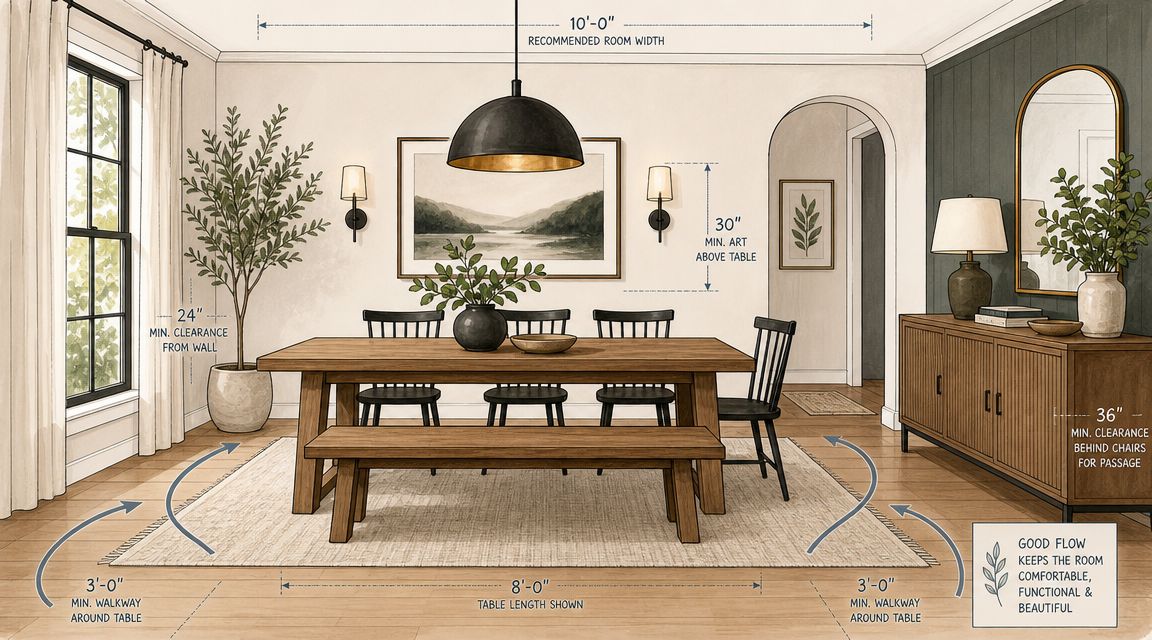
I start with the footprint because the room will always tell you what it can handle. Industry guidance recommends a minimum of 36 inches of clearance around a dining table and 22–24 inches of linear space per diner for comfortable seating, according to this table and seating size guide. Those numbers matter even more with a bench, because one shared seat changes how people slide in, shift position, and leave the table.
Often, many layouts go off course. A table may fit on paper, yet the room still feels crowded once people are seated and moving naturally. That is especially common in open-concept homes, where the dining area has to work as part of a larger composition rather than as an isolated furniture grouping.
For households shaping connected spaces, the same discipline used at the dining table should carry into the surrounding plan. Good living room furniture arrangement for better flow helps the entire main floor read as one considered room sequence, with clear circulation and proper visual weight from zone to zone.
Measurements that keep a room comfortable
Bench height and table height need to relate properly. Practical sizing guidance notes that standard dining benches are typically 18–20 inches high, and the seat should sit about 12 inches below the tabletop to preserve legroom, based on this practical guidance for choosing a dining bench. When that proportion is right, the bench feels intentional. When it is off, even a well-made set becomes tiring to use.
A few measurements are worth checking before any order is placed:
- Give each person enough width: Allow 22–24 inches of table edge per diner so meals feel comfortable instead of compressed.
- Protect the passage around the table: Keep 36 inches of clearance where possible so chairs, benches, and walkways do not compete with one another.
- Size the bench to tuck properly: The bench should be slightly shorter than the clear inside span between the table legs so it slides in cleanly and does not strike the supports.
Practical rule: If the bench cannot tuck fully beneath the table, it will make the room look tighter and feel busier every single day.
That is the difference between furnishing a dining area and designing a room. Good measurements protect comfort, preserve flow, and let the table and chairs with bench arrangement support the home's character for years, not just the first reveal.
Choosing Your Composition Bench Chairs or Both
The question isn't whether a bench is fashionable. The question is whether it improves daily living in that specific room.
When a bench earns its place
A bench performs well when one side of the dining arrangement sits near a wall or in a tighter zone where fewer people need to move in and out from that side. In that context, it keeps the room visually light and can make the arrangement feel more architectural than a full ring of chairs.
It's also a comfortable choice for more casual family use. Children tend to move on and off a bench easily, and the seating line feels sociable during relaxed meals or weekend gatherings. For homes that lean informal, that can be exactly the right note.
Homeowners exploring options can browse indoor benches for dining and accent use to compare silhouettes, upholstery, and wood finishes against the rest of the room.
When chairs serve the room better
A bench isn't always the more functional answer. In open-concept layouts common in Southern Ontario homes, traffic flow often decides the matter. Guidance from this dining layout video discussion notes that a dining path of travel should be 3 feet, while chairs need 24–30 inches to push back. That means a bench can create bottlenecks if it's used on the wrong side of the table or placed where people regularly pass behind it.
A full-chair arrangement often suits households that entertain formally, host older relatives often, or want easier individual entry and exit. Chairs with backs and arms can also make longer meals more comfortable for certain guests.
A mixed composition is frequently the strongest answer.
| Layout choice | Best suited to | Watch for |
|---|---|---|
| Bench on one side, chairs on the other | Families, casual entertaining, tighter rooms | Bench access if the side is exposed to traffic |
| Bench against a wall with chairs opposite | Compact dining zones | Limited exit flexibility for those seated on the bench |
| Chairs all around | Formal dining, multigenerational use, frequent entertaining | A heavier visual footprint |
The most successful rooms don't chase maximum seat count. They protect comfort and movement first.
Curating Your Style Materials and Craftsmanship
Once the layout is resolved, the eye starts noticing the details that make a dining space feel enduring. Material choice, joinery, finish, and upholstery all influence whether a room feels temporary or settled.
What gives a dining piece lasting character
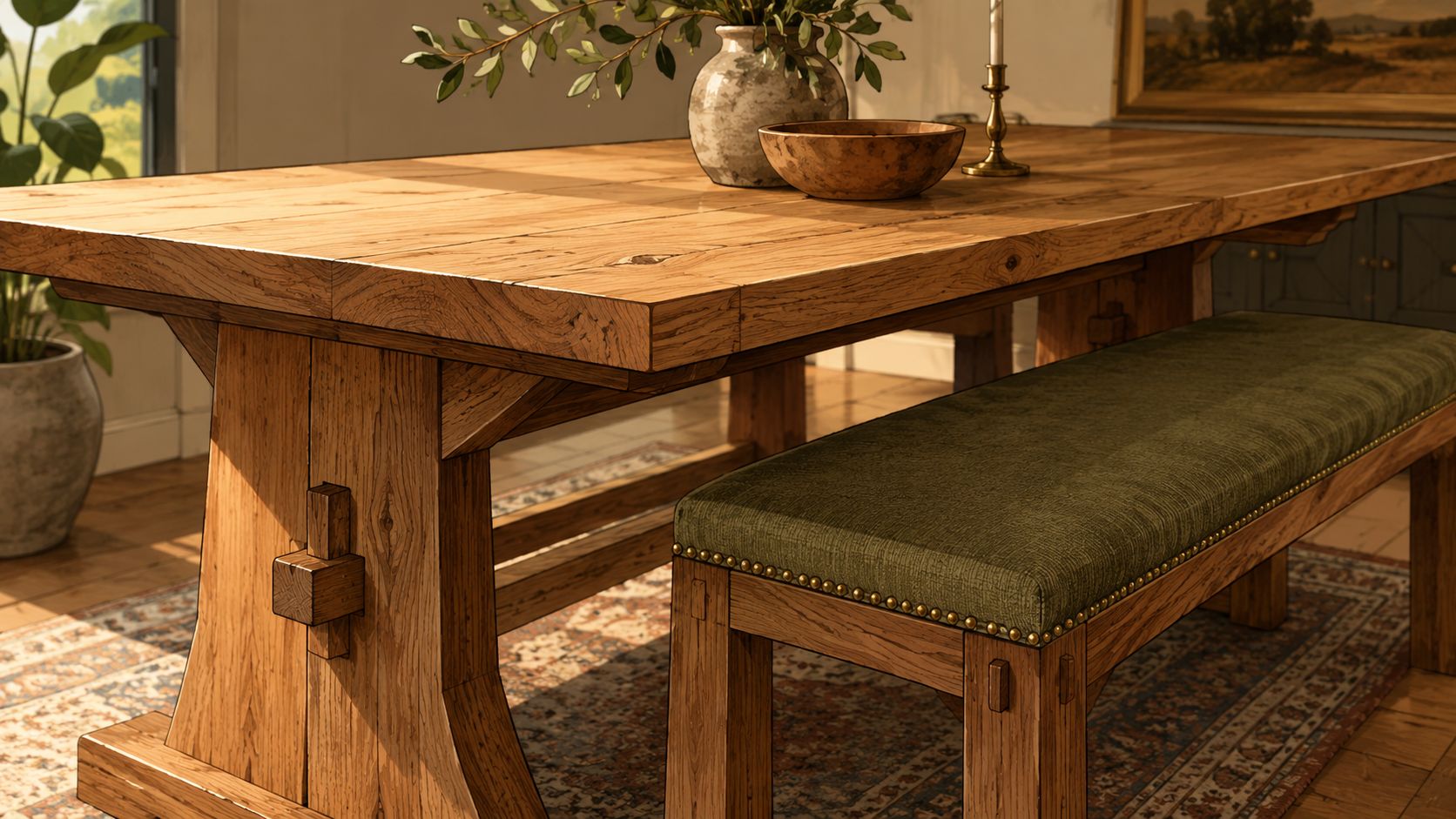
Heirloom quality usually begins with restraint. A table should have enough visual presence to anchor the room, but not so much ornament that it dates itself quickly. Benches benefit from the same discipline. Clean lines, well-shaped legs, and thoughtful proportions tend to age far better than novelty.
Wood selection also changes the feeling of the room. A deeper stain gives weight and formality. A lighter finish opens the space and suits homes that receive generous daylight. Upholstered benches add softness, though they require a more considered fabric choice in active households. Leather can bring depth and ease of care, while a meticulously fashioned woven textile often creates a quieter, more bespoke look.
Established makers such as Stickley remain relevant in these conversations because they reflect timeless craftsmanship through proportion, finishing, and construction details rather than trend-led styling.
Where style and use meet
The strongest dining rooms don't match every surface exactly. They coordinate. That distinction matters. A wood table paired with fully matching chairs and bench can feel heavy. Mixing texture often produces a more collected result.
A balanced approach might include:
- A solid wood table: This gives the room permanence and helps the dining area read as an anchor within an open plan.
- An upholstered bench: This softens the long horizontal line and introduces another material note.
- Chairs with visual contrast: A different seat treatment or shape prevents the room from feeling too uniform. Those considering options can review dining chairs in Canada to compare forms that complement rather than duplicate a bench.
- A finish with depth: Slight variation in grain, sheen, and edge treatment usually feels more artisanal than a flat, overprocessed surface.
Good dining furniture should hold up to daily handling and still deserve a place in the room when the table is empty.
This is where a design studio approach matters. A table and chairs with bench arrangement isn't an isolated purchase. It's one layer in a room that should feel curated from floor to lighting.
The Foundation of Your Room Pairing with the Perfect Rug
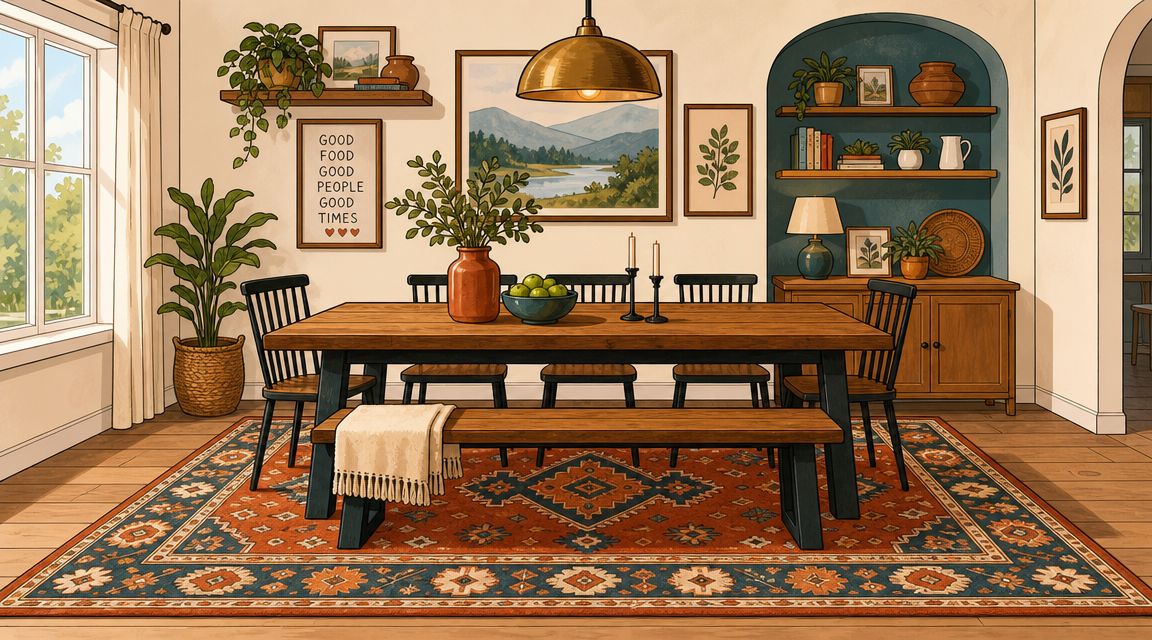
A dining room usually feels unresolved until the rug is right. Set a solid wood table, chairs, and a bench on bare flooring in an open Southern Ontario home, and the group can read as a collection of pieces rather than a settled part of the room.
Why the rug changes everything
The rug establishes the perimeter of the dining area and gives the furniture visual weight. It also softens the sound of chairs shifting, tempers the hardness of wood and stone surfaces, and helps the dining space relate to adjacent rooms without feeling disconnected. In open-concept layouts, that grounding role is often what makes the room feel designed rather than furnished.
Pattern and texture deserve as much attention as size. A quiet wool field lets a sculptural chair profile or upholstered bench stand out. A more detailed rug can calm a plain room and tie together wood tones, metal finishes, and wall colour. In heritage homes, I often prefer rugs with subtle variation and age-friendly character because they sit more comfortably with older millwork and collected furnishings than stark, high-contrast patterns.
Scale still decides whether the composition works. The rug should allow the full dining group to sit comfortably within its border, including the bench and chairs in everyday use. For a practical sizing framework, see this guide on how to choose an area rug size.
Designer's Insight
Designer's Insight: The best dining rugs support the furniture without competing with it. If the table has a strong grain pattern or a prominent base, keep the rug quieter. If the furniture lines are simple, the rug can carry more of the room's character.
Material choice affects daily livability. Wool remains a dependable option because it wears well, holds colour depth, and suits both formal and family dining rooms. Low piles are usually easier under moving chairs and benches, while heavily textured rugs can catch legs and feel awkward during regular use.
For homes with hardwood, the rug pad matters as much as the rug itself. Guidance on preventing rug damage to flooring is useful because it addresses how pads, finishes, and long-term contact affect wood surfaces. A well-designed dining room should feel layered on day one and still look considered years later.
From Showroom to Home The Bespoke and Delivery Experience
A bench-and-chair dining set rarely enters a Southern Ontario home under perfect conditions. Floors may be getting refinished, a kitchen project may still be underway, or the dining room may be waiting on window treatments and lighting. That is why the final stage deserves as much attention as the selection stage. The room has to come together in the right order.
Why custom choices matter
Custom work earns its place in the details. A stain that feels balanced in a showroom can read flat in a red-brick century home. A bench depth that suits occasional hosting can feel tight in a household that uses the table for homework, weeknight dinners, and holiday overflow. Good specification addresses those realities before the furniture arrives.
Our trade has always worked this way. Homes are not furnished piece by piece in isolation. The table, chairs, bench, rug, circulation space, and surrounding finishes need to relate to one another so the room feels settled, not assembled over time by accident. Within that process, Critelli Furniture offers custom furniture solutions, design consultation, and dining pieces that can be customized to fit a complete room plan.
Timing matters too. If delivery overlaps with a renovation or a move, On The Move furniture storage advice can help homeowners plan sequencing, protection, and access without rushing decisions that affect the finished room.
The final step is part of the design
Delivery and installation shape the result just as much as fabric, finish, or scale. A solid wood table can be damaged by careless handling. Chair spacing can feel awkward if placement is rushed. A bench can crowd the passage behind it if no one checks clearances in the actual room.
Professional setup solves those problems on site. Inspection, assembly, packaging removal, and exact placement protect both the furniture and the design intent. In older Southern Ontario homes especially, where door openings, trim profiles, and uneven floors often need accommodation, experienced installers save a great deal of correction later.
For households across Greater Niagara, Hamilton, and Toronto, professional furniture assembly and placement helps the room feel resolved from the first day. The furniture arrives, fits the plan, and begins to live well with the rest of the home.
Experience the craftsmanship in person at Critelli Furniture. For homeowners seeking luxury furniture in Niagara, custom furniture in Southern Ontario, interior design services in St. Catharines, and hand-knotted rugs in Ontario, the most successful dining rooms begin with a complete vision. Book your complimentary design consultation today, or visit the Rug Market to find your room's foundation.