
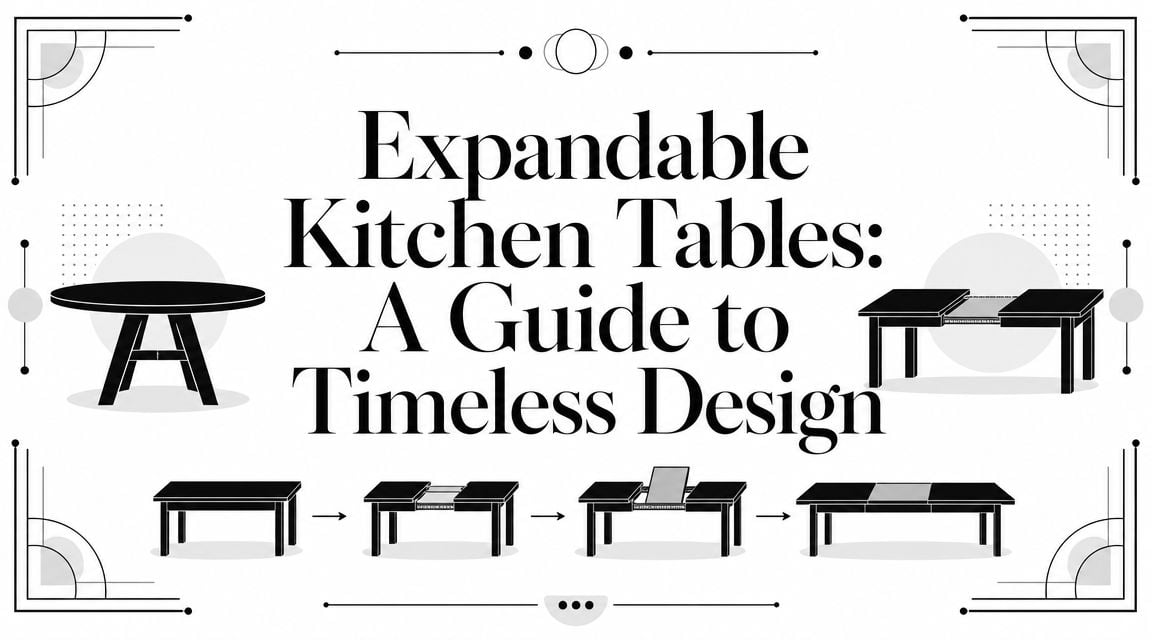
Expandable Kitchen Tables: A Guide to Timeless Design

A great many homes ask one dining table to do several jobs at once. It may host a quiet weekday supper, hold laptops and school papers the next morning, then welcome friends for a birthday dinner by the weekend. That tension between everyday scale and occasional generosity is exactly where expandable kitchen tables earn their place.
For homeowners across Southern Ontario, that decision often feels more important than it first appears. The dining table sits at the centre of family rhythm, but it also shapes circulation, sightlines, and the overall tone of a room. Chosen well, it doesn't merely solve a seating problem. It supports a more graceful way of living.
That is why an expandable table deserves to be considered as part of a larger, design-forward room concept. In a family firm founded in 1914, that long view matters. A table should serve the present beautifully, age with dignity, and still feel right when the room evolves around it.
Table of Contents
- The Heart of the Home Reimagined
- Understanding Expansion Mechanisms
- Choosing Materials for Heirloom Quality
- Sizing Your Space for Perfect Proportions
- Integrating Your Table into a Room Concept
- Caring for Your Investment
- From Our Showroom to Your Home
The Heart of the Home Reimagined
One of the most common scenes in a well-loved home is also one of the most revealing. A household wants a table that feels appropriately scaled on an ordinary Tuesday, yet generous enough for grandparents, neighbours, or holiday guests without borrowing chairs into the hallway. Fixed tables often force a compromise. They are either too large for daily life or too small when the room is called upon to host.
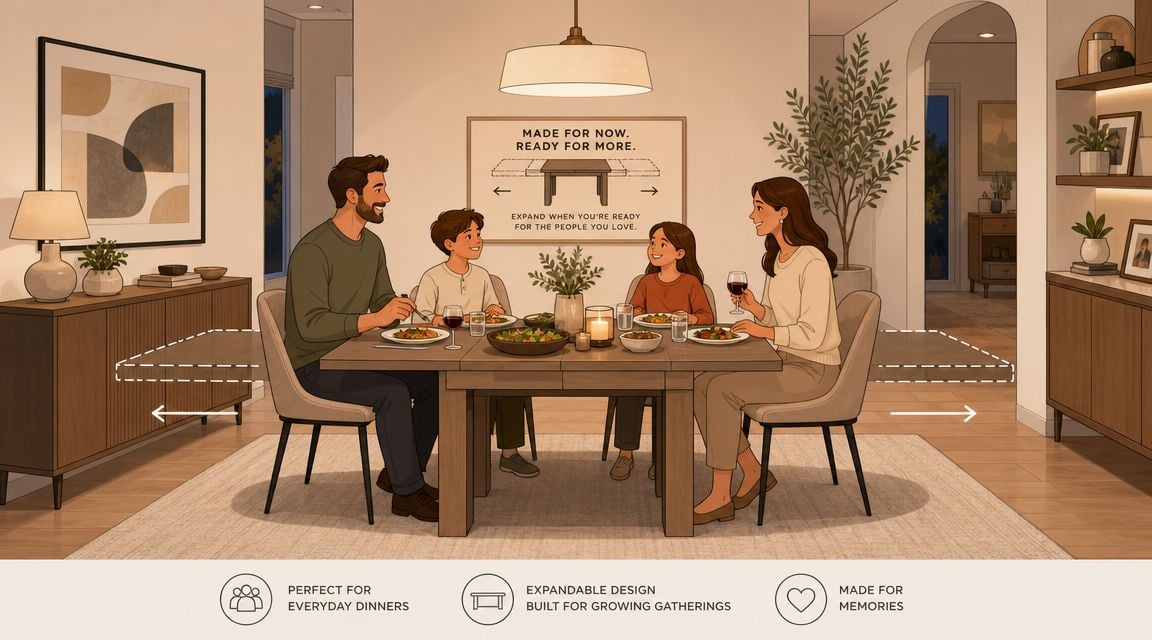
That is why expandable kitchen tables have become such an intelligent choice for design-led buyers. As noted in this overview of extendable dining table living, the average household size in many North American markets is around three people, which makes a table that seats four in daily use and expands for six to eight guests a natural fit. The value isn't only in extra seating. It lies in keeping precious floor area open when the larger size isn't needed.
Daily intimacy and occasional abundance
A smaller everyday footprint changes how a room feels. Traffic moves more naturally. Chairs don't crowd adjacent cabinetry. The table remains welcoming rather than imposing.
When company arrives, the same piece can shift with the occasion. That quiet adaptability is part of what gives expandable tables their enduring appeal. They answer a recurring domestic need without asking the room to surrender its balance.
Practical rule: The best dining furniture doesn't dominate the room every day simply to prepare for a few special evenings each year.
In homes that treat furniture as a long-term investment, that balance matters. A family-run firm with a heritage dating to 1914 tends to see dining tables not as disposable conveniences, but as pieces tied to memory, ritual, and continuity. A well-made expandable table belongs in that tradition. It is functional, yes, but also composed, thoughtfully designed, and capable of becoming part of the household's story.
Why this choice feels current and timeless
Modern homes often ask one dining zone to support several roles. It may be a place for meals, reading, hosting, planning, or gathering at day's end. Expandability responds to that reality with elegance.
That is what makes the category feel timeless rather than trendy. The need hasn't changed. Only the design has become more refined.
Understanding Expansion Mechanisms
The mechanism is where beauty meets engineering. Many buyers focus first on shape, finish, or wood species, then discover that the way a table opens has just as much influence on everyday satisfaction. A handsome table that feels awkward to extend won't age gracefully in use.
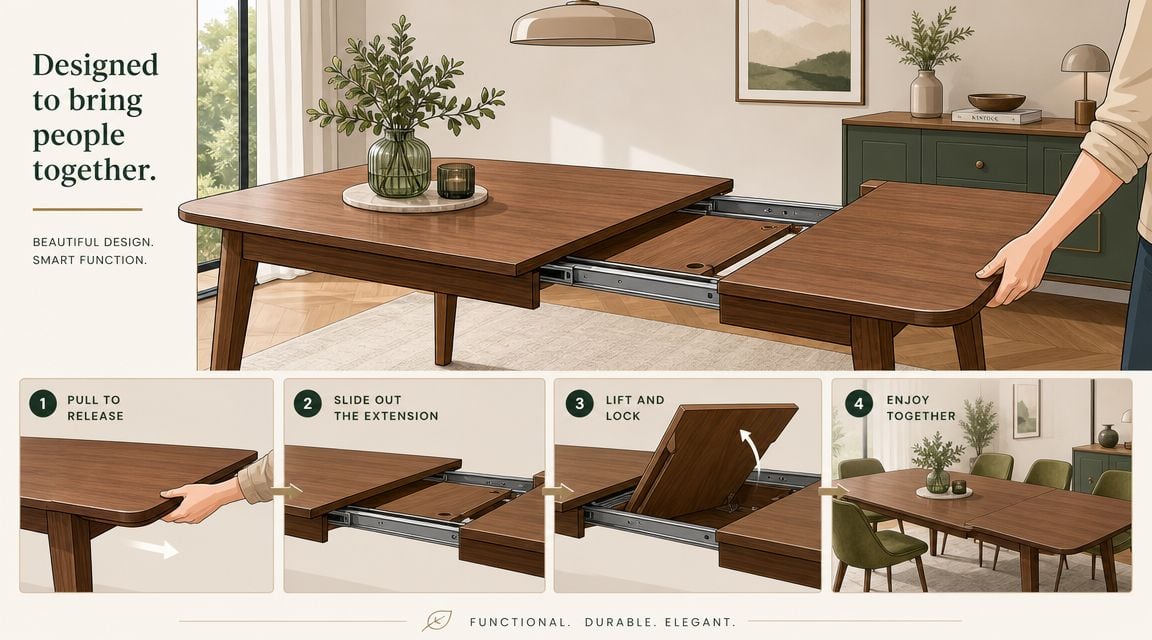
As explained in this look at extendable table construction, the extension mechanism is critical to stability. Hidden leaves and telescoping systems manage structural load differently, and longer spans increase bending risk at the centre. That is why strong aprons and secure locking hardware matter so much once the table is fully opened.
Butterfly leaf systems
A butterfly leaf is often the most elegant option for daily convenience. The leaf stores within the table, folded beneath the top. The user separates the two halves, lifts the folded centre section, and opens it into place.
This type tends to appeal to households that want minimal fuss. There is no separate leaf to retrieve from a cupboard, and the motion often feels neat and self-contained.
Its visual strengths are equally important:
- Cleaner storage because the extension stays with the table
- Faster setup for impromptu guests
- A tailored appearance when closed, with no obvious sign of its flexibility
For many clients browsing a dining table with a leaf collection, the butterfly format strikes an excellent balance between convenience and refined detailing.
Drop-in and extension leaf designs
This is the more traditional approach. The table pulls apart, and one or more leaves are inserted between the end sections. In some cases, the leaves store separately. In others, they have dedicated onboard storage.
There is something reassuring about this style. It often suits more classic silhouettes and can feel especially appropriate in rooms with established millwork, antiques, or a formal dining sensibility.
A traditional extension table often asks for one extra moment of effort, then rewards that effort with a silhouette that feels settled and architectural.
Buyers sometimes worry that a separate leaf means inconvenience. In practice, the key question is whether the household will mind storing and handling that extra piece. If the answer is no, this mechanism can be wonderfully straightforward.
Pull-out and telescoping formats
Telescoping systems are clever and highly space-aware. The frame extends outward, creating room for one or more leaves, or in some designs transforming a narrow format into a much longer entertaining surface.
These systems tend to suit contemporary interiors, smaller footprints, or multipurpose rooms where the table must shift character quickly. Their appeal lies in compactness and surprising range.
A careful buyer should look for three signs of quality:
| Feature | Why it matters |
|---|---|
| Smooth glide | The table should open without strain or twisting |
| Positive locking | Sections should secure firmly once extended |
| Centre support | Longer spans need reinforcement to avoid movement |
The mechanism should feel decisive, not delicate. When opened for a festive meal, the table should still read as one composed piece, not several parts temporarily persuaded to cooperate.
Choosing Materials for Heirloom Quality
Material selection determines whether an expandable table merely serves a need or becomes part of a household's inheritance. The mechanism may provide flexibility, but the material gives the piece its voice, weight, and long-term character.
Why solid wood still leads
For buyers seeking heirloom quality, solid hardwood remains the benchmark. It brings visual depth, takes finish beautifully, and tends to age with more dignity than thinner, more temporary-feeling materials. A well-crafted top gathers patina rather than looking tired.
That matters even more with expandable kitchen tables because movement is built into the design. The table opens, closes, and handles repeated use. Materials must feel substantial enough to support that rhythm over time.
A deeper understanding of species, grain, and durability can help narrow the field, which is why many homeowners find value in reading about choosing the right hardwood for longevity and style before making a final selection.
A related consideration is how the table will live with the surfaces around it. For readers comparing wood tones across the home, this practical guide to selecting wood floors for Long Island homes offers useful perspective on undertones, variation, and how timber finishes influence a room as a whole.
Finishes that suit real life
The finish should align with the household's habits, rather than a showroom impression. A natural-looking finish can reveal grain beautifully and lend warmth, while a more protective finish may better suit a kitchen where daily use is vigorous and frequent.
When weighing finishes, three questions help:
- How visible should the grain be. Some finishes celebrate movement and character in the wood, while others create a more uniform surface.
- How formal should the piece feel. A soft, low-sheen finish often feels relaxed and architectural. A richer sheen may suit a more refined room.
- How much wear will it see. A busy family kitchen may favour a finish chosen for resilience and easier day-to-day maintenance.
Craftsmanship shows at the edges
Material quality also reveals itself in the details buyers sometimes overlook first. The meeting lines between leaves should feel deliberate. Grain direction should make visual sense. The colour match between fixed top and extension panel should feel considered, not accidental.
Designer's Insight: A table earns its timelessness in the small transitions. The edge profile, the joinery, and the finish continuity matter just as much as the species itself.
Timeless craftsmanship separates a bespoke-feeling piece from one that imitates the look of quality.
Sizing Your Space for Perfect Proportions
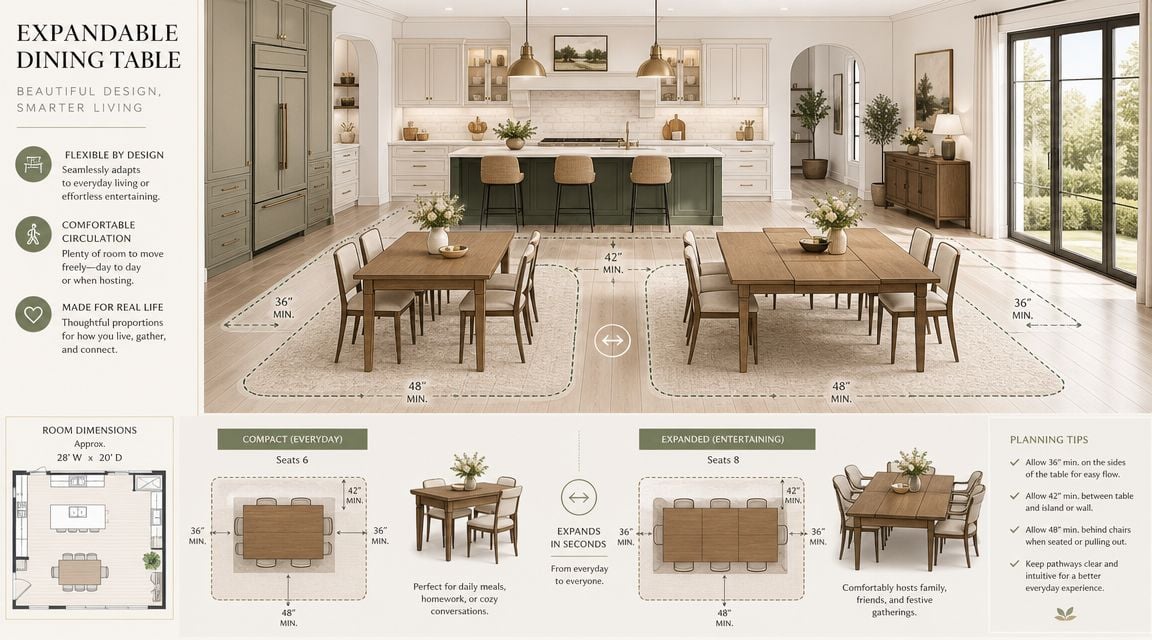
A table can be beautifully made and entirely wrong for its room. Sizing errors usually happen because buyers measure only the table itself, not the way people move around it. With expandable kitchen tables, that mistake becomes more noticeable because the room must work in two states, closed and open.
Measure the room in two modes
As shown in this guide to extendable table sizing, the size gain can be dramatic. A compact table may extend from 59 inches to 79 inches and seat up to eight, while some console-style designs can stretch from 18 inches to 118 inches. The lesson is simple. A table that fits comfortably when stored may fail once open if perimeter clearance disappears.
That is why both lengths matter. So does chair pull-back, access to nearby cabinetry, and the path from the kitchen to the table.
A simple planning method
A measured, room-first approach keeps the process calm and clear.
Mark the compact footprint
Tape out the table in its everyday size. Include the chairs as they sit tucked in.Mark the extended footprint
Add the full open length and test the room again. At this point, many layouts reveal their pressure points.Walk the routes people use
Check the path to the refrigerator, patio door, island, or sideboard. If movement feels pinched now, it will feel worse during a gathering.Account for the chair zone
The table footprint alone isn't enough. Chairs need room to slide and people need room to pass behind them.
For some rooms, shape can solve what raw length cannot. In tighter layouts, a round extendable dining table can soften corners, improve circulation, and keep conversation feeling intimate.
In smaller dining areas, the most successful table often isn't the largest one that fits. It's the one that preserves ease of movement when people are actually using the room.
Common points of confusion
Buyers often assume the open size is only for holidays, so they don't need to test it carefully. That logic can be costly. Occasional use still has to feel comfortable.
Another common misunderstanding is thinking only in terms of seating count. Capacity matters, but proportion matters more. A room should still feel composed when every chair is occupied and serving dishes are on the table.
A successful fit has two qualities at once. It feels generous during a gathering and unobtrusive during ordinary life.
Integrating Your Table into a Room Concept
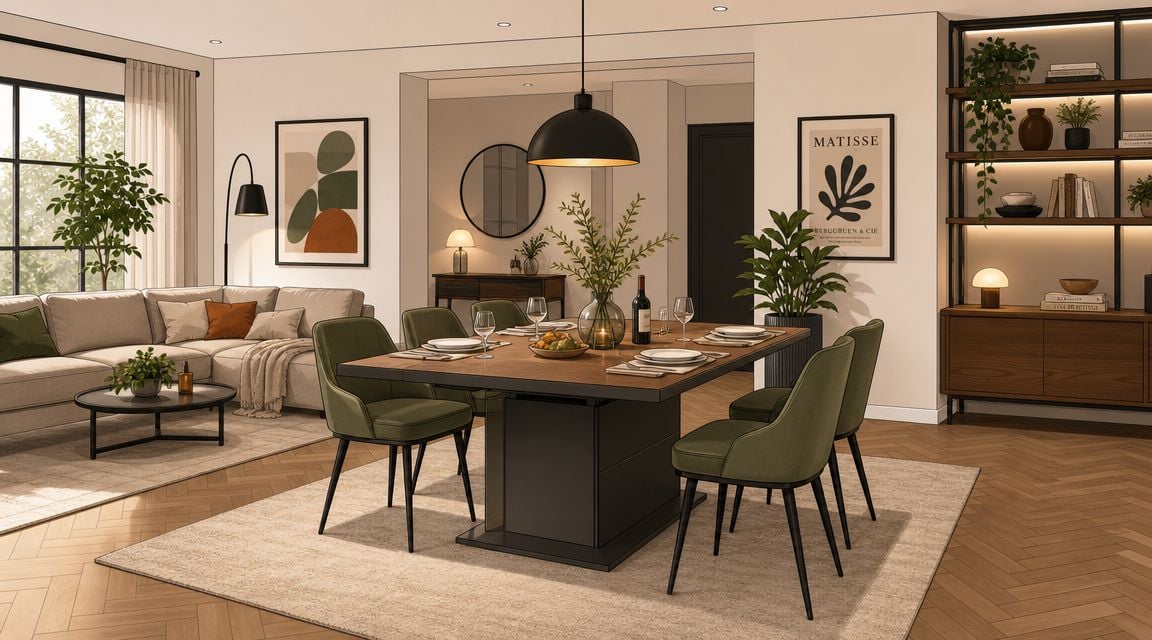
An expandable table should never be treated as an isolated object. It becomes far more persuasive when considered as the anchor of a complete room concept. Proportion, chair style, lighting, storage, and textile choices all influence whether the room feels resolved.
Start with the table as the anchor
The table usually establishes the room's architectural language. A substantial wood top with visible grain may suggest precisely chosen upholstery and a grounded palette. A sleeker profile may invite lighter visual contrast and cleaner-lined case pieces.
Chair selection should support both comfort and line. Fully upholstered chairs soften a room and invite lingering. Mixed seating can bring character, especially in spaces that want a more collected look. For households considering more relaxed arrangements, a table and chairs with bench pairing can offer flexibility while keeping the composition visually lighter on one side.
A thoughtful design studio approaches this as choreography, not shopping. Every element should reinforce how the room is meant to feel and function.
Art for your floor
The rug is often the element that completes the room. It defines the dining zone, softens acoustics, and provides the colour and texture bridge between wood, fabric, and surrounding finishes.
In a design-led home, rugs aren't an afterthought. They are often the foundation. That is why the idea of the Rug Market as Art for your Floor is so useful. A hand-knotted rug can steady a strong wood table, add subtle pattern, or introduce the tonal complexity that makes the whole space feel curated rather than assembled.
Designer's Insight: Pair a richly figured wood table with a quieter hand-knotted rug when the goal is balance. Let one element lead, and let the other support.
The room should feel complete in both table positions
Many interiors succeed or fail based on these considerations. The room must look intentional when the table is closed and still composed when extended. Lighting should remain centred enough to feel right in either state. Sideboards should be scaled to support entertaining without crowding the open layout. Decorative objects should have enough restraint that the room can transition easily from daily life to hosting.
That is the ultimate promise of a bespoke, design-forward approach. The table doesn't merely fit. It belongs.
Caring for Your Investment
A well-made table rewards consistent, quiet care. It doesn't need fuss, but it does benefit from good habits. That is especially true when a dining surface serves many roles throughout the week.
Surface care and daily habits
For wood tops, a soft cloth and gentle routine matter more than aggressive cleaning. Wipe spills promptly, especially moisture and heat-producing items from serving dishes or mugs. Use protective pads where needed, particularly during longer meals or celebrations.
Daily stewardship is mostly about prevention:
- Keep moisture brief so water doesn't linger at seams or edges
- Use protection under heat to preserve the finish
- Lift rather than drag objects across the surface to reduce wear
Protecting the mechanism over time
The extension system also deserves attention. Crumbs and debris can collect where parts meet, so occasional cleaning around the tracks, joints, or leaf storage area helps preserve smooth operation. Open and close the table carefully rather than forcing alignment.
If a household is relocating, careful handling becomes especially important. Guidance on moving furniture safely on the Central Coast offers useful general principles for protecting surfaces, edges, and structural parts during transport, many of which apply equally well to a cherished dining table.
A dining table lasts longest when the household treats extension hardware as part of the craftsmanship, not as a rough utility feature.
With that kind of care, a table remains not just presentable, but dependable. That reliability is part of what makes timeless craftsmanship worth preserving.
From Our Showroom to Your Home
Expandable tables continue to matter because homes continue to ask more of fewer rooms. As reflected in this discussion of flexible dining spaces, modern dining areas often serve more than formal meals, and a compact table that enlarges when needed is more efficient than living every day with a permanently oversized piece.
For discerning homeowners, the final decision usually comes down to four things. The mechanism must feel sound. The material must age well. The scale must support both daily use and entertaining. The room around it must feel complete.
For those exploring more tailored options, custom dining room tables can help align size, finish, and style with the architecture of the home rather than forcing compromise.
The ownership experience matters too. A premium table should arrive with the same care with which it was selected. White-glove delivery ensures proper placement, assembly, and a smooth transition from showroom to home, particularly for clients across the Greater Niagara, Hamilton, and Toronto markets. That final step protects the investment and preserves the calm of the design process.
Experience the craftsmanship in person at Critelli Furniture at the King Street Showroom, book your complimentary design consultation today, or visit the Rug Market to find your room's foundation.