
Best Area Rugs Canada: A Design-Forward Guide for 2026

A room can be beautifully furnished and still feel unsettled. The sofa is elegant, the lighting is right, the artwork is considered, yet the space seems to float. In most homes, the missing piece isn't another chair or a larger coffee table. It's the rug.
That's why the search for the best area rugs in Canada often begins at the exact moment a room feels almost finished. In Southern Ontario homes, that choice carries a little more weight. A rug has to do more than look handsome. It has to soften long winters, stand up to daily traffic, and bring order to open-concept layouts that can otherwise feel visually loose.
For a family-run business with roots reaching back to 1914, the rug has never been treated as an afterthought. It is the room's foundation, part of a complete room concept, and often the first layer that gives furnishings their proper context.
Table of Contents
- The Foundation of Your Room's Story
- Choosing Rug Materials for the Canadian Climate
- The Art of Rug Construction and Artisanal Quality
- Mastering Size and Layout in Canadian Homes
- Pairing Rug Styles with Your Décor
- Your Canadian Buyer's Journey From Showroom to Home
- Investing in an Heirloom for Your Floors
The Foundation of Your Room's Story
A well-chosen rug does something furniture alone can't. It gathers the seating, settles the proportions, and gives the eye a place to rest. That's why rugs are often described as Art for your Floor. They aren't filler. They're structure, warmth, and mood all at once.
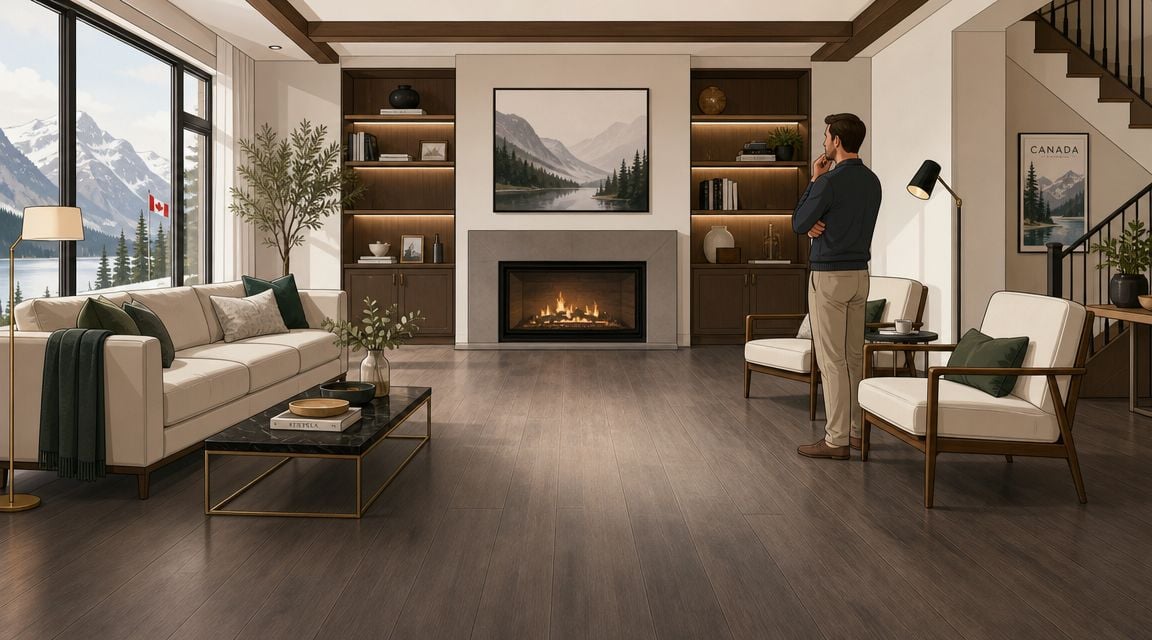
In many Greater Niagara, Hamilton, and Toronto homes, the challenge is familiar. A sofa and chairs may be proportioned correctly, but without a rug beneath them, the conversation area feels scattered. In a primary bedroom, fine case goods can look abrupt against bare flooring. In a condo, the wrong rug can make a compact room feel even smaller.
A category that matters in Canadian homes
This is not a minor furnishing category. The Canadian area rugs market was valued at USD 411.2 million in 2024 and is projected to reach USD 547.8 million by 2030, signalling meaningful and growing demand for quality floor coverings in Canadian homes.
That matters because it confirms what thoughtful homeowners already feel in practice. A rug isn't a decorative afterthought. It's a serious part of how a room is built.
A strong room rarely starts with accessories. It starts with a foundation that tells the furnishings where they belong.
Why the rug often comes first
Designers frequently begin with the rug because it solves several problems at once:
- It anchors the plan by visually linking the seating and table pieces.
- It softens architecture in rooms with hard flooring, tall ceilings, or broad sightlines.
- It introduces character through texture, pattern, and colour without overwhelming the space.
- It supports longevity when the selection balances beauty with the realities of Canadian living.
In a design-forward home, the rug is both practical and expressive. It can quiet a room or give it energy. It can support a traditional interior with timeless craftsmanship or sharpen a modern setting with a more defined line. Either way, it tells the rest of the room how to behave.
Choosing Rug Materials for the Canadian Climate
Material is where many rug purchases go right or wrong. A rug may look beautiful in a photograph and still disappoint in a Southern Ontario household if it can't handle winter boots, family traffic, or the feel of a cold morning underfoot.
Why wool leads in Canadian homes
For climate performance, wool remains the benchmark. Canadian rug guidance identifies wool as the technical standard for cold-weather performance because its crimped fibres create insulating air pockets and its natural lanolin helps resist dirt and minor spills.
That combination matters in a four-season home. Wool feels warm, has natural resilience, and tends to recover better from the compression caused by furniture and foot traffic.
A dense wool rug often suits:
- Family rooms where seating is used daily and comfort matters.
- Living rooms where a room needs softness without sacrificing refinement.
- Bedrooms where warmth underfoot changes the feel of the space.
- Design-led interiors that call for heirloom quality rather than short-term convenience.
Designer's Insight
In many Southern Ontario family rooms, a dense wool rug offers the most balanced answer. It brings warmth in winter, stands up well to daily use, and still reads as tailored rather than overly casual.
Where synthetics make practical sense
Not every room needs the same level of luxury or the same fibre. Synthetic constructions can be sensible in spaces where moisture, grit, or frequent cleaning take priority over nuance of texture.
Polypropylene and other washable synthetics are often considered for entry-adjacent spaces, busy family zones, or homes with children and pets. They can be easier to maintain, and they usually come at a lower cost. The trade-off is that they don't typically offer the same depth, warmth, or long-term character as a fine wool rug.
Silk and silk-look fibres bring lustre and delicacy, but they usually belong in quieter rooms where the rug is admired more than tested.
Rug Material Comparison for Canadian Homes
| Material | Feel & Comfort | Durability | Winter Performance | Typical Cost |
|---|---|---|---|---|
| Wool | Soft, warm, cushioned | Strong resilience for daily living | Excellent for comfort and insulation | Higher |
| Silk or silk-look fibres | Smooth, refined, luminous | Better for lower-traffic rooms | Best in formal, less demanding settings | Higher |
| Polypropylene | Practical, lighter feel | Good for everyday utility | Suits messy zones more than cosy ones | Lower |
| Washable synthetics | Convenient, casual | Useful where frequent cleaning matters | Helpful near slush-prone areas | Lower to moderate |
A better way to decide
Instead of asking which material is most fashionable, it helps to ask which material suits the room's behaviour.
- For warmth and longevity choose wool.
- For formal elegance consider a more delicate fibre in a quieter room.
- For winter-prone utility areas lean toward practical synthetics.
- For a complete room concept think about the furniture, traffic, and climate together, not in isolation.
A beautiful rug should still make sense in March, when snow, salt, and damp footwear are part of daily life.
The Art of Rug Construction and Artisanal Quality
Construction determines how a rug ages. Two rugs can appear similar at first glance and perform very differently over time because they were made in completely different ways.
How construction changes the life of a rug
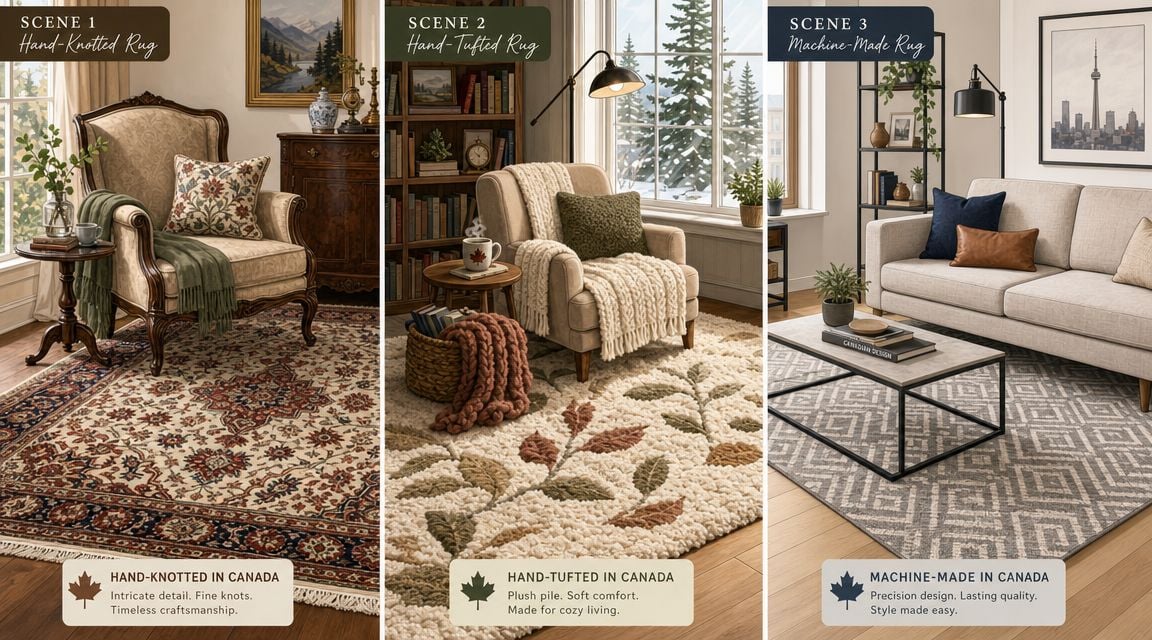
A hand-knotted rug is the closest thing to an heirloom in this category. Individual knots create the design and structure. That process gives the rug depth, subtle variation, and a sense of artisanal permanence that machine production rarely replicates.
A hand-tufted rug is often softer in immediate feel and more accessible in price, but it doesn't usually offer the same lifespan or structural integrity as a hand-knotted piece.
A machine-made rug can serve well in certain rooms, especially when the goal is practicality or a temporary layer. It's often the right answer for households that want style with fewer concerns about upkeep. What it generally won't offer is the same bespoke character or lasting value.
Practical rule: Turn the rug over when possible. A hand-knotted piece shows its pattern through the back with clarity and variation. That visible structure tells a story about how it was made.
What to look for before bringing one home
A discerning buyer doesn't need to memorise weaving terminology. A few observations usually reveal a great deal.
- Check the surface by hand. A quality rug has body, not just softness.
- Look for depth in the pattern. Fine construction often gives the design a layered, living quality.
- Notice the edges and finish. Strong finishing speaks to long-term durability.
- Consider the room's purpose. The most refined construction belongs where its value will be appreciated and preserved.
For those exploring hand-knotted rugs and carpets, the essential distinction is simple. One rug is made to decorate a period of life. Another is made to travel through it.
That's the difference between a furnishing and a piece of timeless craftsmanship.
Mastering Size and Layout in Canadian Homes
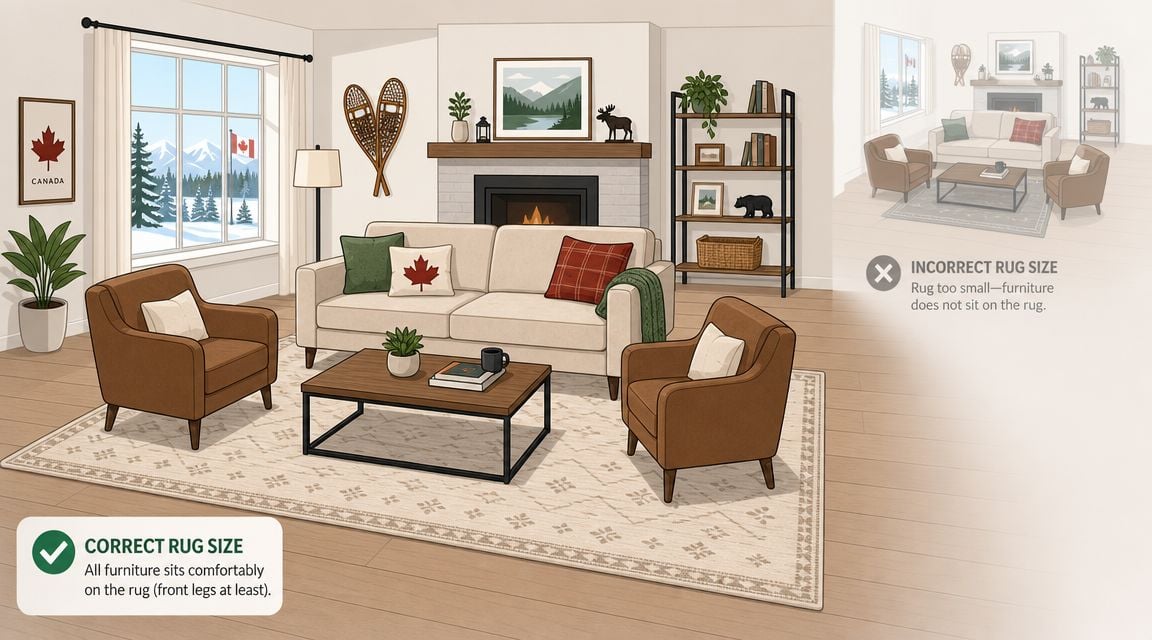
Size is the decision that confuses most shoppers. A rug may be beautifully made, well priced, and perfectly coloured, yet still fail if it's too small for the room. In Canadian homes, especially open-concept builds and urban condos, correct sizing does more for elegance than almost any pattern choice.
Living rooms and open-concept spaces
For most living rooms in Canada, 8×10 ft and 9×12 ft are considered ideal benchmark sizes, with 18 to 24 inches of bare floor around the perimeter to frame the room well. That exposed border prevents the room from feeling carpeted wall to wall and helps the rug read as a deliberate design element.
In open-concept rooms, the rug should usually anchor the full seating zone. Front legs of the sofa and chairs should sit on the rug at minimum. In a more generous room, all major seating pieces can rest on it comfortably.
A common mistake is choosing a smaller rug because it feels safer. In practice, that often makes the room feel disconnected.
In many homes, the larger rug doesn't overwhelm the room. It organises it.
Condos dining areas and narrow layouts
Condos and semidetached homes often need more precision. A rug should define a zone without interrupting circulation. In a narrower living area, an oversized rug can make the room feel broader because it unifies the layout rather than chopping it into pieces.
For planning, these steps work well:
Mark the footprint first
Use painter's tape to outline the rug before ordering. This shows how the room will breathe.Place furniture with intention
The rug should support conversation areas, not float under only the coffee table.Respect walkways
Leave enough visible floor so movement around the room feels natural.Consider adjoining zones
In open spaces, the living rug and dining rug should relate in scale and tone, even if they aren't a matched set.
Dining rooms need a different test. Chairs should remain on the rug as they move back from the table. If the rug edge catches chair legs, the room never feels composed.
For homeowners working through measurements, this area rug size guide can help translate room dimensions into a more confident layout decision.
A room should feel grounded, not crowded
The best area rugs in Canada go beyond being the prettiest options on the floor. They're the ones that make the room function better. Good size improves flow, supports furniture placement, and gives the eye a clear sense of order.
That's why rug sizing is never just a decorating detail. It's space planning.
Pairing Rug Styles with Your Décor
Once material, construction, and size are settled, the pleasure of selection begins. Style is where a rug stops being merely useful and starts becoming part of the home's personality.
Using colour pattern and texture with intention
A rug should speak to the room's architecture and furnishings, not compete with them. In a traditional interior, a layered pattern with quiet complexity often supports wood tones, structured upholstery, and classic detailing. In a contemporary space, a more restrained field with texture may be enough.
Colour works best when it connects rather than matches. A rug doesn't need to repeat the exact tone of the sofa or drapery. It needs to make those pieces feel as though they belong in the same conversation.
Helpful pairings often follow this logic:
Bold furniture, quieter rug
A strong leather silhouette or sculptural chair benefits from a calmer foundation.Restrained furnishings, expressive rug
When upholstery is neutral, the rug can bring movement and identity.Textured room, balanced pattern
If the space already has rich wood, layered textiles, and statement lighting, a simpler rug often brings relief.
Matching rugs to furnishings without making the room feel staged
A Stickley piece often appreciates a rug with depth and authenticity, something with enough character to stand beside its joinery without looking rehearsed. A Stressless seating area can be softened by a rug that tempers sleek lines with warmth and tactile ease.
A timeless room doesn't look perfectly coordinated. It looks collected, calm, and resolved.
For smaller lower-level living spaces, proportion and visual restraint matter even more. Readers working on compact secondary suites may find useful ideas in these Tips for decorating and decluttering basement apartments, especially where layout and storage influence how much pattern and texture a room can comfortably hold.
Runners deserve the same attention as full-size rugs. A corridor, kitchen pass-through, or bedside path can benefit from a long, narrow piece that adds softness without cluttering the room. For modern spaces, contemporary rug runners can help carry the design language from one zone to the next.
The strongest interiors rarely rely on one dramatic gesture. They build harmony through several thoughtful ones. A rug is often the quietest of those decisions, and one of the most important.
Your Canadian Buyer's Journey From Showroom to Home
The buying experience shapes the outcome more than many people expect. Rugs are tactile. Their weight, finish, softness, and colour shift in different light. What appears perfect on a screen can feel entirely wrong once it meets the flooring, furnishings, and daylight of a real home.
What changes when the rug is chosen in person
A showroom visit allows the buyer to test the qualities that matter most. Pile can be touched. Colour can be judged against wood finishes and upholstery. Scale can be discussed in the context of a complete room concept rather than guessed in isolation.
For shoppers in Southern Ontario, visiting a destination such as a rug store serving Hamilton and surrounding areas often removes the uncertainty that comes with online-only selection. Questions about proportion, texture, and placement can be answered before the rug enters the home.
That process is especially valuable for busy professionals furnishing homes across Niagara, Hamilton, and the GTA. A rug isn't just purchased. It is placed into a larger design plan.
The final step matters as much as the first
Delivery is often treated as a logistical detail, though it affects the final result. A large rug can be awkward to manage, difficult to position precisely, and easy to mishandle if the room contains fine furnishings and delicate flooring.
The best buying experience doesn't end at the cash desk. It ends when the rug is in place, the room is settled, and the home feels finished.
That's where white-glove service matters. Professional placement helps ensure the rug sits correctly beneath furnishings, aligns with the room's layout, and arrives without the strain or guesswork that often follows a premium purchase.
The transition from showroom to home should feel smooth. In a design-led environment, that last stage isn't separate from the design process. It is part of it.
Investing in an Heirloom for Your Floors
A rug can be bought as a quick solution, or it can be chosen as a lasting part of the home. The second path usually serves people better. When material suits the climate, construction suits the lifestyle, and size suits the room, the rug stops feeling like an accessory and starts feeling inevitable.
That's the standard behind the search for the best area rugs in Canada. Not novelty. Not excess pattern. Not a fashionable look that fades after one season. The right choice brings comfort in winter, grace to the layout, and a sense of permanence to daily life.
For ongoing care, practical cleaning habits matter as much as good selection. Homeowners looking for simple maintenance guidance may find these rug washing tips from Neat Hive Cleaning useful for routine upkeep habits around the home.
For those ready to explore rugs as the foundation of a room, the Rug Market offers a setting where craftsmanship, proportion, and design can be considered together. That's often how a rug becomes more than décor. It becomes part of the home's story, and part of what gets passed on.
Experience the craftsmanship in person at Critelli Furniture. Visit the Rug Market to find your room's foundation, or book your complimentary design consultation today at the King Street Showroom.