
The Essential Guide to the Mid Century Lounge Chair

A room can be beautifully furnished and still feel unfinished. The sofa is in place. The rug is down. The lighting is thoughtful. Yet the space lacks that one piece that invites a person to sit, read, exhale, and stay awhile.
That missing piece is often a mid century lounge chair. Not because it is fashionable, but because it solves several design problems at once. It introduces shape without clutter. It offers a personal seat within a shared room. It brings a sense of design history that helps a home feel collected rather than decorated.
For homeowners across Southern Ontario, that decision often carries more weight than it first appears. A lounge chair isn't only a visual accent. It may become the chair used for morning coffee, evening reading, conversation with guests, or quiet time in the evening. When chosen well, it becomes an heirloom quality part of the home.
Families who have lived with fine furnishings for generations tend to recognise this quickly. A firm with roots going back to 1914 understands that enduring rooms are rarely built around impulse purchases. They are shaped by pieces with proportion, material integrity, and timeless craftsmanship, such as a carefully chosen living room lounge chair.
Table of Contents
- The Quest for the Perfect Chair
- Anatomy of an Icon What Defines a Mid Century Lounge Chair
- Heirloom Quality A Look at Materials and Construction
- Beyond Beauty Ergonomics Scale and Everyday Comfort
- A Designers Guide to Styling Your Timeless Piece
- Caring for Your Investment in the Canadian Climate
- Experience Timeless Craftsmanship in Southern Ontario
The Quest for the Perfect Chair
Most well-designed rooms have a moment of tension. The room looks polished, but it doesn't yet feel lived in. Often, a homeowner has chosen the larger pieces responsibly, then hesitates over the final seat. Should it be sculptural or soft, architectural or welcoming, distinctive or quiet?
A mid century lounge chair answers that question with unusual grace. It has presence, but it doesn't dominate. It can sharpen a traditional room or soften a modern one. Above all, it gives one person a place that feels intentionally theirs.
In many homes around St. Catharines, Hamilton, and the edges of the Toronto market, this chair ends up serving more than one purpose. In the morning, it catches natural light beside a window. In the evening, it works as a reading chair near a lamp and side table. During gatherings, it completes the conversation area without the weight of another sofa.
A strong lounge chair doesn't just fill a corner. It gives the room a centre of gravity.
That is why the best selections are rarely based on trend alone. A chair of timeless craftsmanship should still feel right years from now, after paint colours change, rugs are replaced, and family routines shift. The most successful rooms are built this way, through a curated selection of pieces that continue to earn their place.
A heritage-minded approach helps here. Family-run design businesses tend to look past novelty and ask harder questions. Will the scale hold up? Will the frame age well? Will the materials still feel handsome after daily use? Those are the same questions that turn a lounge chair from a decorative purchase into an heirloom piece.
Anatomy of an Icon What Defines a Mid Century Lounge Chair
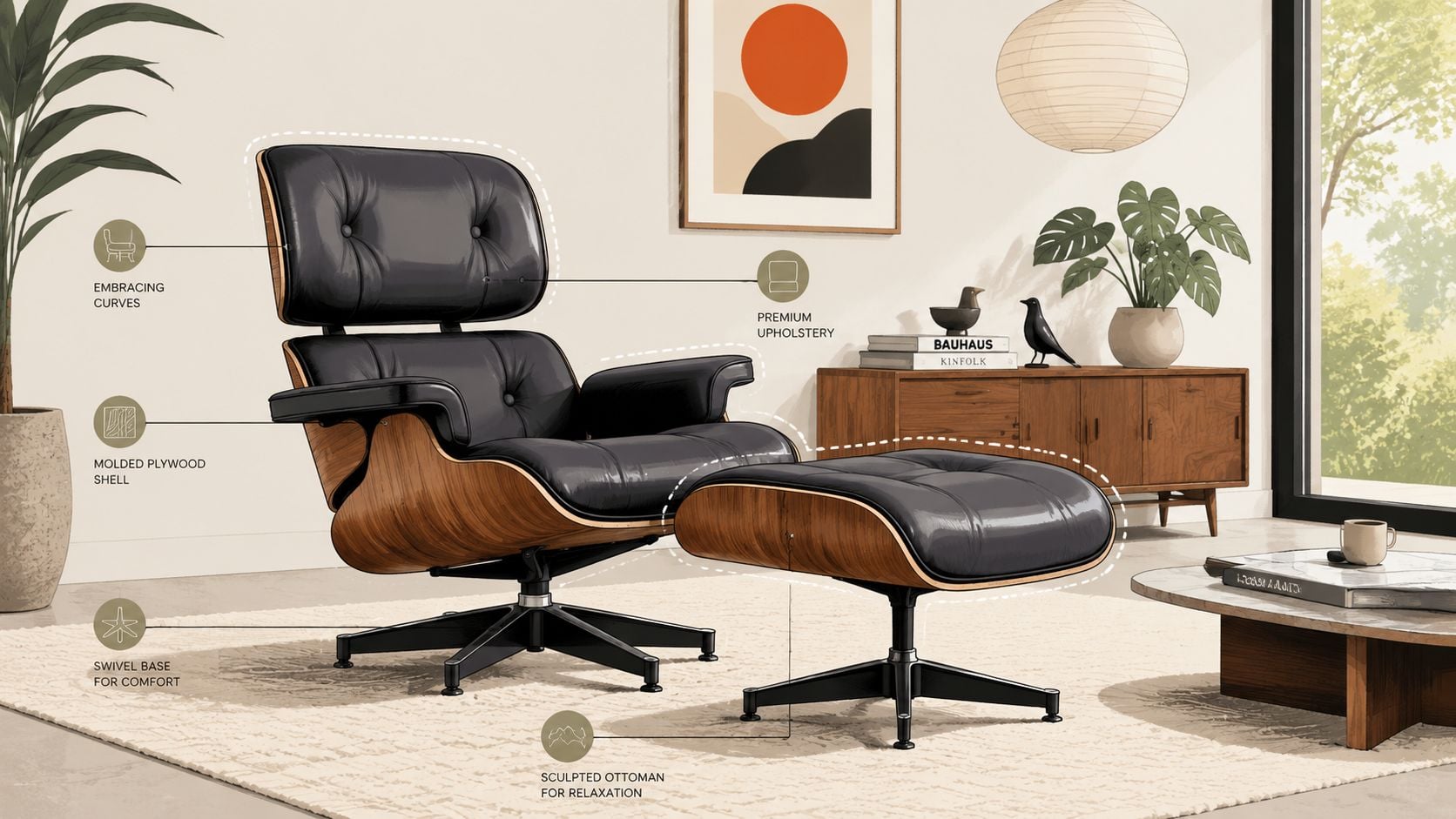
A genuine mid century lounge chair is easy to recognise once the eye knows what to look for. The profile is usually low. The lines are clean rather than ornate. The frame often appears light on its feet, even when the chair itself feels substantial.
The historical roots
The style belongs to the 1940s to 1960s, a period strongly associated with functionality, simplicity, and mixed materials such as plywood, metal, glass, vinyl, and wood, as noted in this design history of mid-century modern furniture. That combination still explains the style's appeal in Canadian homes. It feels warm, practical, and design-forward without appearing fussy.
One design stands above all others as a reference point. The Eames Lounge Chair and Ottoman was introduced by Herman Miller in 1956, and the company describes it as one of the most recognizable objects in modern design. Its use of molded plywood and its efficient-production thinking helped establish the chair as a foundational benchmark for lounge-chair design worldwide, including in Canada, according to the Eames Lounge Chair design history from Herman Miller.
For readers who want a broader visual primer before shopping, it can also help to discover timeless mid century style through a wider furniture lens.
The visual language
A mid century lounge chair usually brings together four elements:
- Clean structure. Arms, back, and seat read as deliberate shapes rather than decoration.
- Organic curves. The chair softens geometry with gentle bends and human-centred contours.
- Mixed materials. Wood, metal, and upholstery work together instead of pretending to be one thing.
- Visible function. The chair looks like it was designed to be used, not only admired.
That last point often confuses buyers. Some assume mid-century means minimal to the point of austerity. In fact, the strongest examples balance restraint with comfort. That is why so many homeowners continue to explore modern mid-century furniture in Canada when they want a room to feel both polished and welcoming.
Practical rule: If a chair relies only on nostalgia or surface styling, it may look mid-century. If its form, materials, and comfort logic work together, it is much closer to the real design tradition.
Heirloom Quality A Look at Materials and Construction
A chair becomes heirloom quality long before the upholstery goes on. The visible finish matters, of course, but the deeper story sits in the frame, the joinery, and the way weight moves through the structure when someone leans back into it day after day.
What quality looks like beneath the upholstery
Mid-century lounge chairs depend on precision. Their low, angled stance is elegant, but it gives sloppy construction nowhere to hide. One documented build shows how much detail goes into making that silhouette durable. It uses 1/4-inch by 1/2-inch tongues, dowels, and countersunk fasteners set about 1/8 inch below the bracket surface, details that help reduce splitting risk and improve long-term durability, as shown in this documented lounge chair build process.
That may sound technical, but the takeaway is simple. A fine chair shouldn't creak under ordinary use, twist slightly on the floor, or show strain where arms meet the seat. If the underlying frame is imprecise, the chair may still photograph well, but it won't age with dignity.
Buyers often focus first on leather, boucle, or wood finish. Those choices matter. But load-path control matters more. When a person sits, the chair must transfer force evenly through the frame. Good craftsmanship manages that invisibly.
A useful companion mindset is learning about making smart furniture investments, especially when choosing pieces expected to remain in the home for many years.
Comparing upholstery and frame materials
Material choice should reflect lifestyle, not just appearance. A formal sitting room asks different things of a chair than a family reading corner.
| Material | Primary Benefit | Best For | Consideration |
|---|---|---|---|
| Leather | Ages with character and is relatively straightforward to wipe clean | Reading chairs, statement seating, rooms that benefit from warmth and polish | Needs thoughtful care in homes with seasonal dryness |
| Wool upholstery | Soft texture and visual depth | Cosy spaces, layered interiors, quieter colour palettes | Can need more attentive cleaning depending on weave |
| Performance fabric | Practical everyday use | Busy households and frequent sitting | May offer a different hand-feel than natural fibres |
| Wood veneer | Classic mid-century visual character | Design-forward rooms where the frame is meant to be seen | Benefits from stable indoor conditions and careful placement |
| Solid wood elements | Structural confidence and repair potential | Long-term ownership and bespoke furniture programs | Quality varies depending on fabrication accuracy |
Well-made furniture rarely announces itself loudly. It feels composed, balanced, and calm under use.
When clients compare chairs in person, the differences often become obvious through touch. Edges should feel finished. Arms should meet the frame cleanly. Cushions should support rather than collapse. Those are the quiet signs of artisanal making, and they are often what separate a temporary purchase from a lasting one.
Beyond Beauty Ergonomics Scale and Everyday Comfort
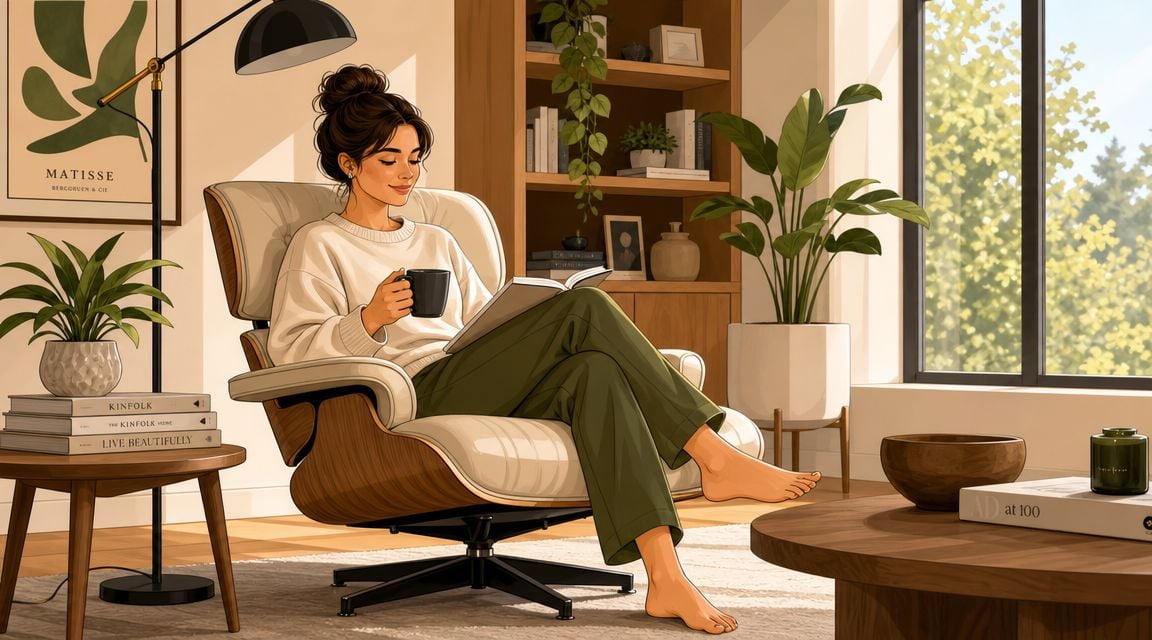
A common mistake is assuming that any chair labelled “lounge” will be comfortable for long stretches. It won't. Some are ideal for a short sit and a handsome silhouette. Others support reading, conversation, or an evening film without leaving the body restless.
Why beautiful chairs can disappoint
The gap between appearance and comfort is real. Design commentary often celebrates the look of iconic chairs but gives far less practical guidance about seat depth, back recline, arm height, and cushion density, as discussed in this piece on the lasting appeal of modern chairs. That leaves many Canadian buyers judging comfort from photos alone.
In practice, a chair may fail in several ways. The seat may be too deep for someone who wants upright reading support. The back angle may be so relaxed that conversation feels awkward. The arms may sit too high, causing the shoulders to tense. The cushion may look plush yet offer little support after a few minutes.
Online shopping presents a particular risk. A room can absorb a decorative mistake more easily than a comfort mistake. If the chair is meant for daily use, the body notices every shortcut.
How to judge comfort before it is too late
A more disciplined approach helps. Buyers should evaluate the chair in relation to how it will be used.
- For reading. Look for a back that supports a settled posture and arms that allow the elbows to rest naturally.
- For conversation. Favour a seat that doesn't tip the body too far back from the room.
- For unwinding. Slightly more recline can be welcome, provided the neck and shoulders still feel supported.
- For flexible layouts. A swivel lounge chair can add movement and make a chair more useful in open-plan spaces.
The most beautiful chair in the room can still become the least used if the scale and posture are wrong.
Three comfort checks tend to clarify the decision quickly:
- Sit for longer than a minute. Initial softness can be misleading.
- Notice where the body lands. Knees, lower back, neck, and shoulders usually reveal fit first.
- Test the chair in context. A chair beside a side table or lamp should support the activity planned for that spot.
A well-proportioned mid century lounge chair has something rare. It feels composed both from across the room and from within it.
A Designers Guide to Styling Your Timeless Piece

A lounge chair should never feel like an afterthought placed in leftover space. It works best as part of a complete room concept, where the chair relates to the rug, the sofa, the lighting, and the architecture around it.
Think in room relationships
The easiest way to style a mid century lounge chair well is to stop treating it as a solitary object. Its job is to create balance.
If the sofa is broad and low, the chair can introduce lift through visible wood, a sculptural frame, or a distinct upholstery texture. If the room already has many straight lines, the chair's curves can soften the composition. If the palette is neutral, the chair may carry the richest material note in the room.
One of the most effective anchoring elements is the rug. In a considered interior, a rug is not background. It is Art for your Floor. It sets the visual foundation, defines the seating zone, and helps a lounge chair feel placed rather than floating. In many Southern Ontario homes, that single decision changes the room more than an added accessory ever could.
For households building a coordinated seating area, a chair often sits best when paired with a sofa from the same broader design family, not necessarily as a matching suite. This is why clients exploring mid-century modern couches often benefit from viewing the chair and sofa together rather than separately.
Colour deserves careful thought as well. For anyone refining palette decisions, Striped Circle's colour guide offers a useful perspective on how colour affects the mood of a room.
Designer's Insight
Designer's Insight
A rich leather lounge chair often looks its most sophisticated when grounded by a neutral hand-knotted wool rug. The contrast balances the room's energy and lets each material read clearly.
Other styling details matter more than many realise:
- Lighting placement. A chair intended for reading needs task lighting that falls where the eye works, not just a decorative lamp nearby.
- Negative space. A fine chair needs breathing room around it. Crowding weakens its silhouette.
- Material echo. A walnut frame can feel more integrated if another wood note appears elsewhere in the room, perhaps in a table, cabinet, or picture frame.
- Textile balance. If the chair is smooth and crisply upholstered, softer surrounding textiles can keep the room from feeling severe.
A design studio approach is particularly helpful here because it views the chair as one note inside the whole composition. That shift, from object to room concept, is where homes begin to feel bespoke rather than assembled.
Caring for Your Investment in the Canadian Climate
A well-made chair can last for decades, but Southern Ontario homes ask a great deal from natural materials. Seasonal heating, changing indoor moisture levels, and ordinary placement decisions all affect how leather, wood veneers, and upholstery age over time.
What seasonal change does to furniture
This practical side of ownership is often overlooked. Much of the public conversation around mid-century furniture focuses on style history, yet buyers in this region often need straightforward advice about how materials behave in homes with seasonal indoor dryness and temperature swings, a gap noted in this discussion of lounge-chair shopping and ownership realities in Canadian home settings.
Wood can respond to environmental fluctuation by expanding and contracting. Leather can feel drier during heating season. Veneers can be stressed by poor placement near direct sun or strong heat sources. None of this means delicate furniture is impractical. It means placement and maintenance should be intentional.
Furniture ages best in stable conditions, not extreme ones.
A practical care routine
A few habits make an enormous difference over the long term:
- Keep distance from heat sources. Radiators, vents, and intense sun can dry materials unevenly.
- Dust gently and regularly. Fine particles are abrasive over time, especially on finished wood.
- Condition leather thoughtfully. A chair that feels dry should be cared for with methods suited to fine upholstery. Guidance on how to care for leather furniture is especially useful for homes that feel noticeably drier in winter.
- Rotate cushions where appropriate. Even wear helps the chair keep its shape and visual balance.
- Lift rather than drag. Moving the chair carefully protects both joints and flooring.
Owners sometimes assume heirloom furniture should be used cautiously. The better perspective is this: it should be used confidently and cared for consistently. That is how a chair develops character without slipping into neglect.
Experience Timeless Craftsmanship in Southern Ontario
Choosing a mid century lounge chair online can narrow preferences, but it rarely settles the decision. The hand wants to feel the arm. The eye wants to judge the wood in natural light. The body wants to know whether the chair invites an hour of sitting or only a few minutes.
Why seeing the chair in person matters
That is especially true for buyers in the Greater Niagara, Hamilton, and Toronto markets who are furnishing homes with a long view in mind. A premium lounge chair isn't a casual purchase. It is part of daily life, and it should be selected with the same care given to a dining table, a bed, or a hand-knotted rug.
A showroom visit helps answer questions that photographs cannot. Does the chair feel too low for the household? Is the leather supple or overly slick? Does the wood finish harmonise with existing floors? Does the scale hold up beside the sofa being considered for the same room?
This is also where bespoke possibilities enter the conversation. Upholstery, finish, and room context all matter. A design consultation can tie those decisions together so the chair works not as an isolated purchase, but as part of a complete interior concept.
From showroom to home
For many homeowners, the final concern is practical rather than aesthetic. How does a substantial chair get from showroom to house without stress, scuffs, or awkward compromises at the doorway?
That is why white-glove service matters. Professional delivery, careful placement, and packaging removal create a smooth transition from the showroom floor to the finished room. The process should feel organised and respectful of the home.
There is also a useful logistical point when evaluating more compact mid-century-inspired lounge chairs. One commercially listed model ships in a single carton measuring 27 x 9 x 35 inches and weighing 36 lb, suggesting a relatively compact delivery footprint that can be easier to manage through tighter residential access points, while also offering multiple cushion colours and fabrics, according to this commercial listing for a mid-century lounge chair. For urban and older Southern Ontario homes, that kind of packaging practicality can matter.
For shoppers seeking Luxury furniture Niagara, Interior design services St. Catharines, Custom furniture Southern Ontario, or Hand-knotted rugs Ontario, the most valuable next step is often the simplest one. See the craftsmanship in person. Sit in the chair. Test the proportions. Consider the rug beneath it and the lamp beside it. That is how lasting decisions are made.
Experience the craftsmanship in person at the Critelli Furniture King Street Showroom. Homeowners across Southern Ontario can also book your complimentary design consultation today, or visit the Rug Market to find your room's foundation.