
Custom Interior Design: Process, Costs and Benefits


The sofa looked perfect in the showroom, but at home its arm crowds the doorway, the rug feels too small, and the lamps don't quite work beside it. Nothing is necessarily wrong with the individual pieces. They weren't chosen together.
Custom interior design starts before those purchases happen. A designer helps a household settle the layout, scale and practical requirements first, then selects furnishings that belong in that particular room. The benefit isn't just a more polished appearance. It's the chance to make changes on a plan rather than after delivery.
What Custom Interior Design Really Means
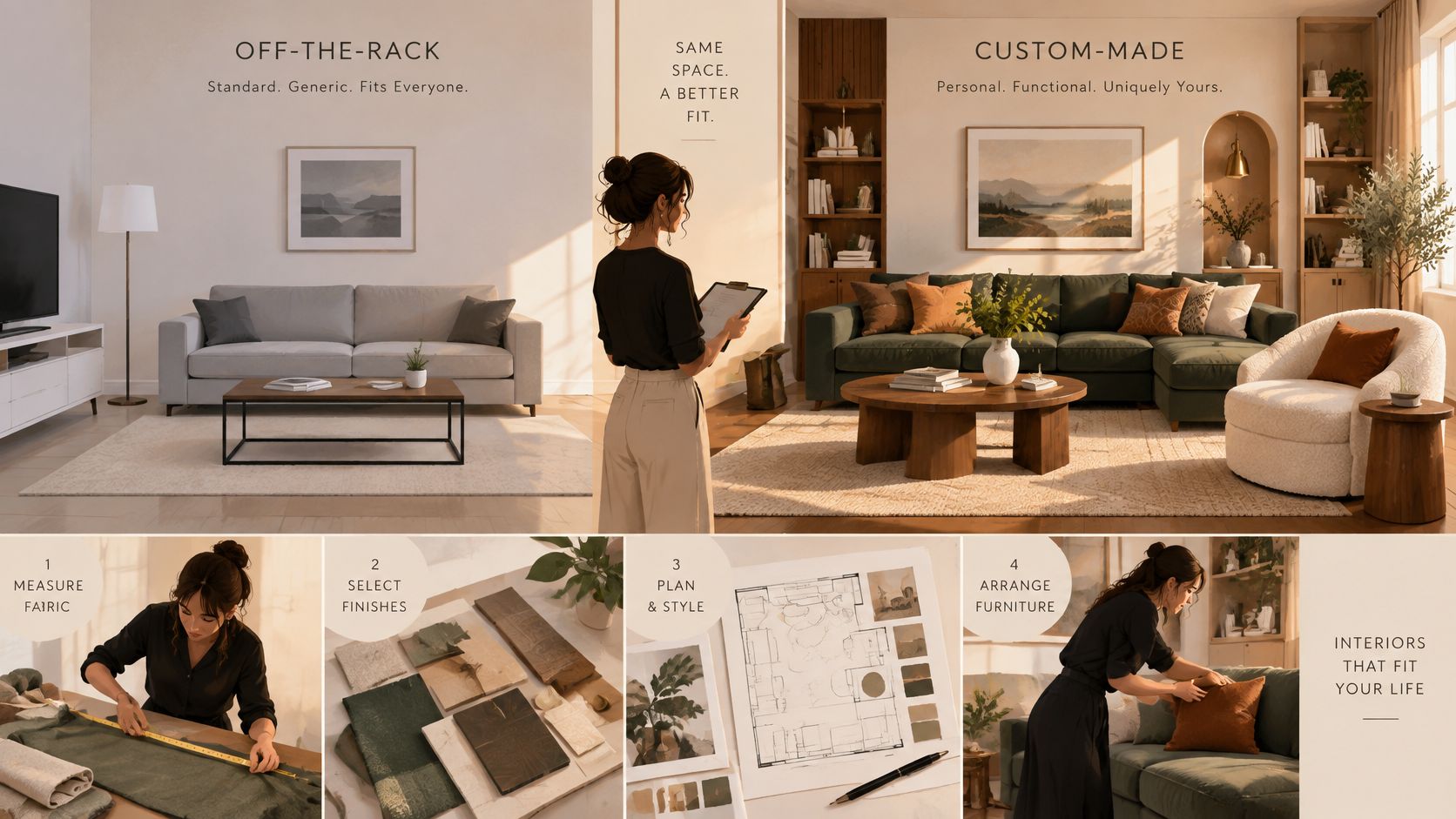
Off-the-rack clothing can fit reasonably well, while a suit made to measure is designed for one person. Custom interior design applies the same principle to a home: the designer considers its architecture, natural light, traffic paths and daily routines before recommending furniture or finishes.
A sofa chosen alone might compete with the rug or leave insufficient room for side tables. Within a complete room concept, its dimensions, upholstery and placement are considered alongside everything around it. Critelli's interior design and space planning provides a useful starting point for understanding that coordinated approach.
Bespoke Doesn't Always Mean Built From Scratch
Custom has distinct meanings. A bespoke cabinet may be built to fit an alcove, while a configurable armchair uses an established frame with upholstery and finish selected from a curated selection. Neither route is automatically preferable; the room determines what needs tailoring.
This balance between appearance and usefulness extends beyond living spaces. Modern Bathrooms' guidance on how to balance bathroom style and practicality offers a related perspective on planning attractive rooms around everyday tasks.
Heritage With a Practical Purpose
The Greater Niagara Chamber of Commerce records Critelli's founding in 1914, in Thorold, Ontario, by Joseph Critelli and his young son Thomas, its later expansion to Niagara Falls and St. Catharines during the 1930s, and its continuing family ownership with fourth-generation Joe Critelli and fifth-generation Julia involved in leadership.
For households exploring luxury furniture in Niagara or custom furniture across Southern Ontario, that heritage provides context for a design philosophy centred on timeless craftsmanship rather than disconnected purchases. Heirloom quality should still be assessed through construction, comfort and suitability, not appearance alone.
Custom interior design delivers a room designed as one system, not assembled one purchase at a time.
How Custom and Ready-Made Furniture Differ
Custom and ready-made furniture compared
| Factor | Ready-made | Custom |
|---|---|---|
| Fit to the room | Chosen from stock sizes | Sized to walls, doorways and traffic paths, where the product permits |
| Materials and finishes | Fixed options on the floor | Selected from a curated library of fabrics, leathers and finishes |
| Layout planning | Left to the buyer unless separately arranged | Space planning included in the agreed design process |
| Lead time | Often available now | Usually longer; confirm the schedule with the designer |
| Changes after ordering | Limited | Adjusted during customization before fabrication, subject to approval deadlines |
| Cost predictability | Price shown on the tag | Set in a quotation once scope is agreed |
| Best suited to | Single pieces and tight timelines | Whole rooms, unusual spaces and heirloom-quality pieces |
Fit and Change Decide Most Projects
Ready-made furniture often suits a straightforward replacement. A standard-size sofa in a regularly proportioned room may need no dimensional modification, particularly when an available piece already meets the household's comfort and material preferences.
Custom work reverses the selection process. The designer establishes requirements first, then checks which dimensions and materials the maker can supply. Made-to-order doesn't mean unlimited adjustment: some collections offer upholstery choices without allowing changes to frame size.
An alcove, sloped ceiling or heritage home with unusual proportions may justify more extensive tailoring. The same measurement discipline applies to architectural elements; Black Badge Doors' explanation of how to order custom windows and doors is a useful companion when a furnishing project also involves openings or joinery.
Compare the Whole-Room Outcome
A studio can incorporate established collections such as Stickley and Stressless when their proportions suit the plan. Design-forward rooms don't require every object to be made from scratch, and Critelli's guide to custom furniture makers can help frame questions about available construction and customization.
Custom isn't automatically less expensive, but neither does its higher individual ticket price prove that the finished room will cost more. Returned purchases, replacement rugs and unsuitable seating can change the comparison. Compare the total planned room, including delivery and any alterations, rather than contrasting isolated price tags.
A practical household test is to list the home's three hardest spaces and identify the problem in each: awkward dimensions, demanding use or a deadline. The appropriate route becomes clearer when the constraint is named.
How the Critelli Design Process Unfolds
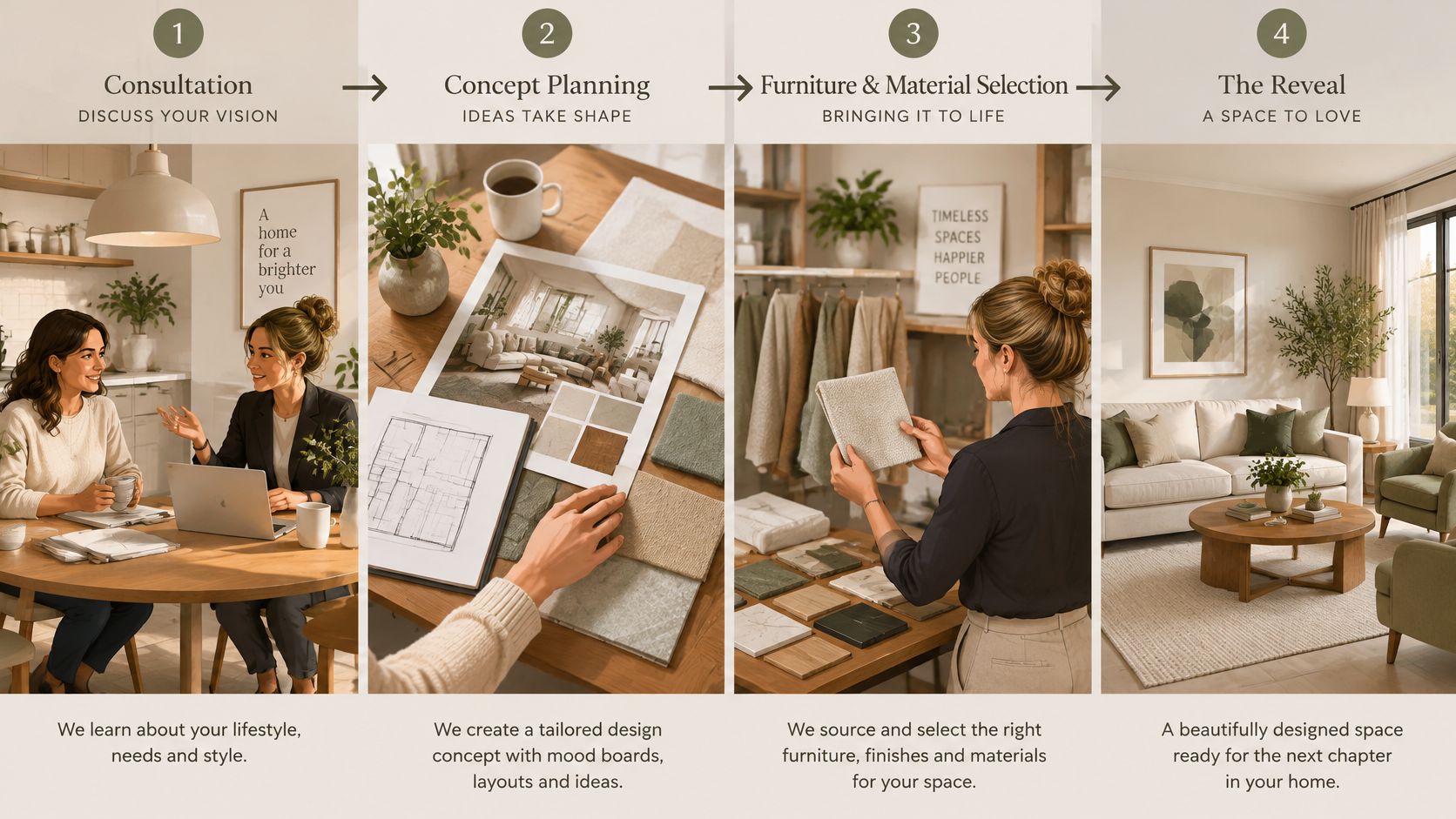
Custom interior design works as a chain of decisions rather than a single purchase. Each approval sets the boundaries of the next stage, the way a foundation sets the footprint of the walls above it. The sequence below moves through four stages, keeping the in-home sample check and written authorization ahead of ordering so changes happen on the plan, while they are still easy to make.
Consultation and Space Planning
Consultation establishes the brief. Critelli's published showroom information identifies its St. Catharines locations at 126 King Street and 169 St. Paul Street, and describes designers working directly with clients on personalised homes.
The complimentary consultation can begin in the showroom or, where the project warrants it, in the home itself. Useful preparation includes measurements, photographs in changing daylight and a list of furnishings that must remain. The client establishes priorities; the designer clarifies what the consultation covers.
A helpful brief describes behaviour rather than style alone. A living room used for reading, conversation and visiting grandchildren calls for more information than a preference for neutral upholstery.
Space planning settles the working layout. Before finishes enter the conversation, the designer works through circulation, furniture scale, lighting positions and rug dimensions. Door swings, drawer openings, radiators and window access all go on the plan, where a correction costs a pencil line.
Approval here means the household understands how the room will function day to day. A beautiful upholstery sample should never distract from a chair that blocks the most-used route.
Customization and Written Approval
Customization turns the layout into specific selections. Fabrics, leathers, woods and finishes are compared as a coordinated palette, with rugs shortlisted through the Rug Market. Each candidate should earn its place: softening contrast, introducing texture or standing up to daily wear.
Samples deserve practical handling. View upholstery beside the existing flooring, and compare wood finishes vertically as well as flat, because reflected light changes how each finish reads.
Designer's Insight: Pairing a bold Hancock & Moore leather with a neutral hand-knotted wool rug can balance a room's energy, allowing the seating to remain expressive without making every surface compete.
The in-home visit tests the shortlist. Before an order is authorised, the designer and client check samples against the home's natural light and architecture, catching the piece that reads grey in the showroom and green beside the window. This visit sits inside the ordering schedule, ahead of any written authorization.
Written approval should identify the selected product, dimensions, fabric or leather, finish and relevant placement details. If a substitution is still open, write it down and resolve it before ordering.
Critelli's collaborative design process offers a starting point for that conversation. For households considering interior design services in St. Catharines, the most useful invitation is simple: bring the difficult room as it is, and let the scheme develop from there.
Pricing and Financing Touchpoints to Plan For
Canadian residential renovation costs increased by 0.9% in the second quarter of 2025, according to Statistics Canada's Residential Renovation Price Index. That's a construction-cost signal, not a furniture price forecast, but it supports checking renovation-related budgets against current quotations.
Custom interior design doesn't have a universal room rate. Scope, materials and service arrangements determine the quotation, so a useful budget separates what is being purchased from what is being planned, fabricated or delivered.
Cost drivers and questions at each touchpoint
| Touchpoint | What Moves the Price | Question to Ask |
|---|---|---|
| Consultation | Scope, from one corner to a whole home | What is included in the complimentary consultation? |
| Space planning | Number of rooms and built-in work | Are plan revisions included before approval? |
| Customization | Leather grade, fabric, wood and finish | How are finish samples approved before ordering? |
| Rugs | Size, material, hand-knotting and origin | Can the rug be viewed in the room before purchase? |
| Financing | Term, rate and approved credit | Which flexible financing options fit the project timeline? |
| Delivery and placement | Access, stairs and packaging removal | Is white-glove placement included, and to which area? |
| Price assurance | Published Low Price Guarantee | What are the terms and exclusions? |
Financing Should Support the Plan
Flexible financing may help align a larger order with a household's payment schedule, subject to available terms and credit approval. It shouldn't conceal the total commitment. Compare the rate, term, monthly payment and total payable, including any conditions attached to promotional arrangements.
Critelli's furniture financing information is the appropriate starting point for current options. For broader renovation budgeting, Home Pro's Remodeling & Repairs funding tips can prompt useful questions, although Ontario applicants should confirm locally applicable lending terms.
A Room-by-Room Quotation Is the Benchmark
Request a scope-based quotation for each room, then combine the totals. This makes it easier to postpone occasional tables or decorative accessories without weakening the seating and rug that establish the room.
The published Low Price Guarantee also merits a direct conversation about eligibility, exclusions and comparison requirements. Current written terms should govern any decision.
Budget rule: With no confirmed published price range for a complete custom room, the reliable benchmark is an itemised quotation for the agreed scope.
Benefits of a Design-Led Home
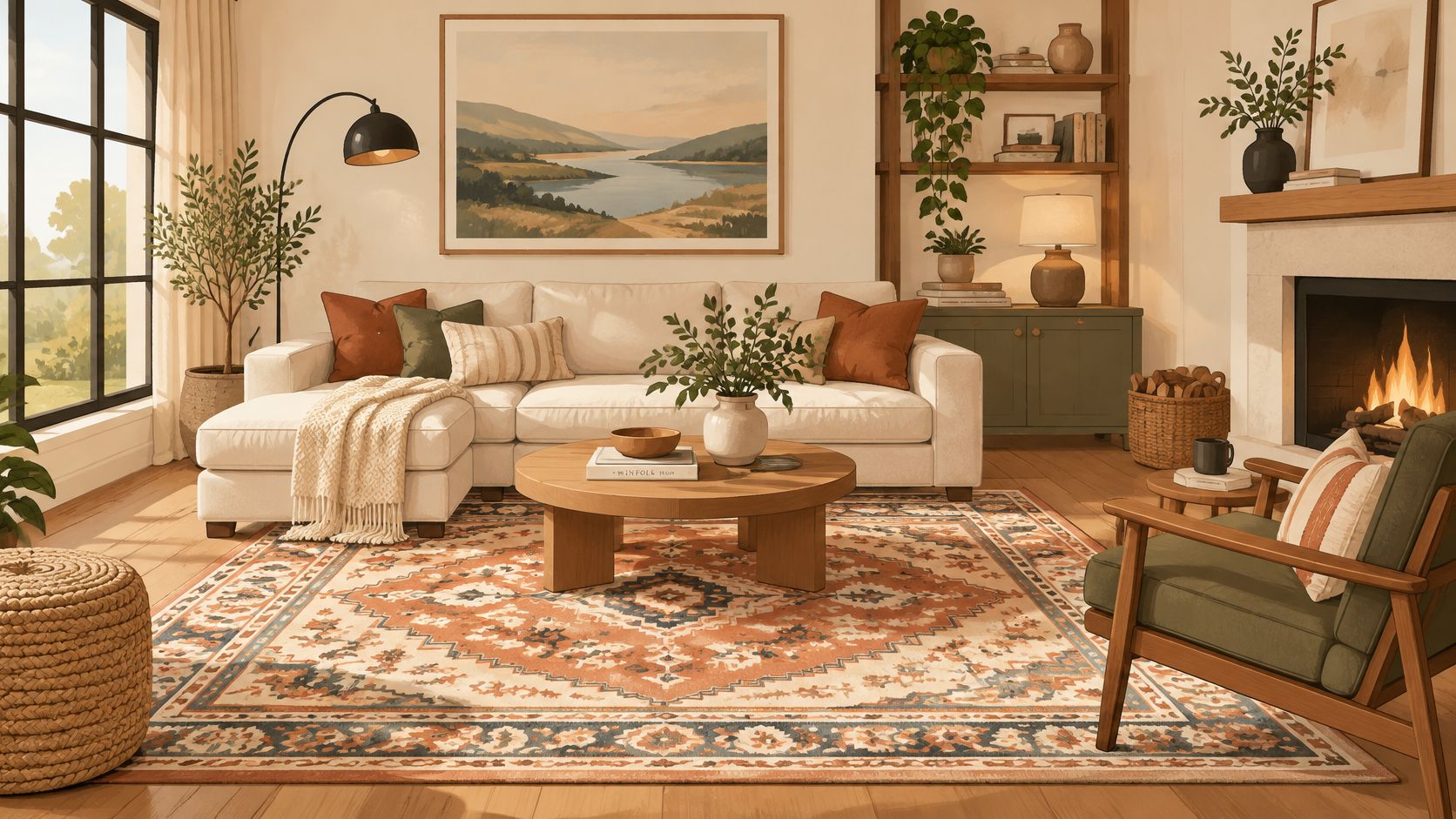
A rug is often the most useful foundation for a room. At the Rug Market, the idea of Art for your Floor encourages consideration of pattern, texture and character before smaller decorative decisions accumulate.
For households exploring hand-knotted rugs in Ontario, comparing pieces in person helps distinguish a quiet foundation from a room-defining focal point. Ask about each rug's origin, construction and available sourcing rather than assuming that every piece shares the same provenance.
Comfort That Accommodates Change
Accessibility belongs in the first planning conversation. Research cited in a March of Dimes Canada submission to Ontario's Building Code advisory process estimated that accessible-ready construction adds approximately $3 per square foot during initial construction and can reduce future retrofit costs by an average of 57%.
Those findings concern construction, not savings guaranteed by a furniture purchase. The practical lesson for interiors is to consider future use while decisions remain easy to adjust.
- Circulation: Keep routes open around seating and between frequently used rooms.
- Everyday reach: Position useful storage where household members can access it comfortably.
- Ease of operation: Consider lever hardware and seating that supports sitting down and standing up.
- Layered illumination: Combine ambient, task and accent lighting rather than relying on a single ceiling fixture.
An artisanal piece should work as well as it looks. When considering partner lines such as Hancock & Moore or Century, confirm current availability and assess seat support, arm height and upholstery alongside decorative details.
From Showroom to Home
White-glove delivery should make the transition from showroom to home feel organised, not leave the household managing unfinished placement decisions. Clients across Greater Niagara, Hamilton and Toronto should confirm location-specific arrangements before booking.
The team should clarify inspection, assembly, placement and packaging removal in writing. A finished room depends on those practical details as much as on the selections themselves.
Myths and Your First Consultation
Custom is only for large homes: a single hand-knotted rug or carefully specified armchair can be a valid first project, scaled to the household's budget.
A designer requires a full renovation: space planning can work within existing walls, doorways and windows, with phased work beginning in the most-used room.
Custom always means a long wait: material availability and fabrication requirements affect schedules, so an available configurable piece and a fully bespoke cabinet shouldn't be assigned the same timeline.
All three assumptions share the same flaw. Each treats the scale, scope or schedule of a project as settled before anyone has looked at the room, which is precisely the decision the first consultation exists to make.
What to Bring to the First Meeting
A productive consultation doesn't require a professionally prepared presentation. It requires enough information to distinguish firm constraints from preferences. The measurements and daylight photographs described in the consultation and space planning steps still apply. A few less obvious details help just as much.
- Pieces to keep: Identify inherited furniture, artwork and other items that need a place in the scheme.
- Existing rugs: Note dimensions and condition, since a rug's size shapes furniture placement and can anchor the palette the rest of the room builds on.
- Delivery access: Note narrow stairs, tight corners and elevator clearances that a large piece must pass on delivery day.
- A realistic budget range: Separate the comfortable spending level from the absolute ceiling.
- The target timeline: Identify events, renovation dependencies and any period when delivery would be difficult.
- Household needs: Include accessibility, pets, frequent entertaining and maintenance preferences.
Photographs of appealing rooms can also help, provided the client explains what feels right about them. The attraction might be generous seating or warm wood rather than the entire style.
What a Useful Consultation Produces
A complimentary interior design consultation gives the Critelli design team and household an opportunity to discuss the space, identify suitable options and agree on a clear written next step. The next step is usually a measured layout, a sample review, or a detailed scope. Each keeps the project in planning, where changes are still inexpensive to make.
Clients travelling from Greater Niagara, Hamilton or Toronto can follow the same preparation process, with delivery arrangements confirmed for their location. The aim is an informed decision, with responsibilities and approval points understood before commitment.
Critelli Furniture offers coordinated furnishings, rug selection and design guidance for households planning a complete room or a carefully chosen first piece. Visit Critelli Furniture to arrange a showroom conversation and begin with the room's measurements, priorities and budget.