
Shop the Best Power Recline Sofa Collection in 2026


You're likely asking the same question many thoughtful homeowners ask when they begin refining a living room: can a sofa feel fully restorative without looking mechanical, oversized, or out of place in a well-composed home?
It can. The right power recline sofa no longer belongs to the category of compromise furniture. In a design-forward room, it can deliver the kind of comfort people once associated only with dedicated recliners, while still holding its place among expertly crafted upholstery, fine lighting, and architectural finishes. That's the difference between shopping for a feature and selecting a piece with heirloom quality potential.
At a family firm founded in 1914, we've watched comfort furniture evolve from utilitarian seating into a far more nuanced category. Buyers in Southern Ontario, from St. Catharines to Hamilton and the GTA, are seeking more than motion. They want wellness, craftsmanship, and a room that still feels collected rather than convenience-driven.
The Convergence of Comfort and Craftsmanship
A well-designed living room has to do more than photograph beautifully. It has to support real life at the end of a long day, during a quiet morning read, and through the kind of evenings when everyone gathers in one room but wants to settle differently.
That's why the modern power recline sofa has become so relevant. It answers a tension many homeowners feel but don't always name clearly. They want clean lines and refined materials, yet they also want support that doesn't ask the body to adapt to the furniture.
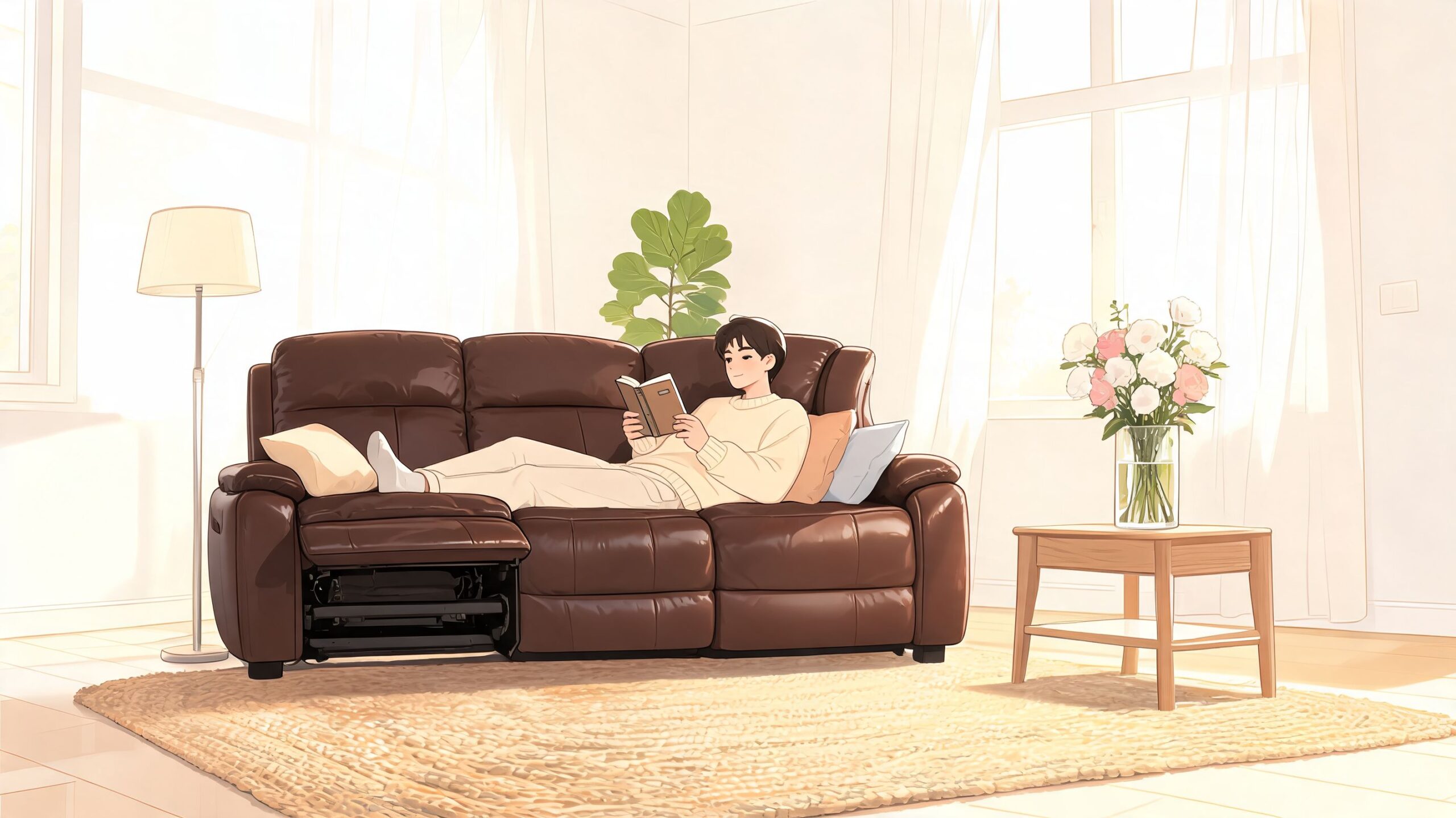
The category itself reflects that shift. The global reclining sofa market was valued at USD 4.45 billion in 2023 and is projected to reach USD 6.18 billion by 2030, driven by demand for advanced comfort solutions, according to Couchery's overview of reclining sofa evolution. That growth doesn't happen because people suddenly want more gadgets in the living room. It happens because buyers have become more selective about how furniture should feel and function.
Why the old assumptions no longer apply
The old stereotype still lingers. Many people hear “reclining sofa” and picture thick arms, overbuilt backs, and visible mechanisms that dominate the room.
That's not where the premium end of the market sits now.
Today's better pieces are quieter in profile and more disciplined in proportion. They're designed for homes where upholstery has to coexist with custom drapery, proper lighting, art, and rugs chosen as the room's foundation. In that context, a power recline sofa isn't a technical novelty. It's part of a larger furnishing plan.
Practical rule: If the sofa only solves comfort but undermines the room, it's the wrong sofa.
Comfort as long-term value
A sofa you use every day should support posture, reduce friction in daily living, and age gracefully in both style and construction. That's where timeless craftsmanship matters. Good motion is only half the story. The frame, seat architecture, upholstery, and silhouette determine whether the piece still feels dignified years from now.
For many clients, the best choice isn't the model with the longest feature list. It's the one that integrates modern convenience into a composed room without announcing itself. That's the enduring appeal of a curated selection. It places comfort inside a broader design language rather than treating it as a separate category.
Understanding the Modern Recliner
The modern power recline sofa didn't appear overnight. It grew out of a long line of engineering refinements that shifted recliners from manual, effort-based movement to precise electric adjustment. Early recliner history reaches back to a 1928 patent by Edward Knabusch and Edwin Shoemaker, and later innovations accelerated power reclining into mainstream home use, as described in this history of recliner technology.
That history matters because it explains why a premium power piece feels different from a manual one. Beyond being easier to operate, the better examples allow the body to settle in smaller increments, with less force and less disruption to the rest of the room.
Power and manual are not the same decision
A manual recline sofa still has a place. It appeals to buyers who want mechanical simplicity and don't need fine-tuned positioning.
But in practice, the trade-off is clear. Manual motion tends to be more abrupt, and the act of reclining often asks more of the user. A power recline sofa offers controlled movement, which is especially helpful for anyone who reads, watches television, recovers at day's end, or wants to move between upright conversation and deeper relaxation without wrestling with the seat.
| Feature | Power Recline | Manual Recline |
|---|---|---|
| Adjustment | Button-operated, gradual positioning | Lever or body-weight operated |
| Ease of use | Better for daily use and varied mobility needs | Simpler, but often requires more physical effort |
| Comfort precision | More exact positioning for back and legs | Fewer resting points |
| Aesthetic potential | Often integrated into more tailored silhouettes | Can still be attractive, but usually less refined in motion |
| Placement planning | Needs power access or battery option | No electrical planning required |
| Long-term experience | Better for households that use recline frequently | Better for buyers who prioritise simplicity over precision |
What works well and what doesn't
What works well is choosing power when the sofa will be used as a serious daily seat. That includes family rooms, media rooms, and open-concept living areas where one sofa has to do many jobs.
What doesn't work is assuming every power model is equal. Some feel smooth and discreet. Others look acceptable when upright but awkward once extended. The mechanism may be hidden, but the comfort profile usually tells the truth.
For households comparing broader mobility-focused seating, Helping Mom's lift chair guide is useful because it shows how powered seating categories differ depending on physical support needs. A lift chair solves a different problem than a reclining sofa, but the comparison helps clarify what kind of assistance and motion your household needs.
The best test is simple. Sit upright, partially reclined, and fully relaxed. If only one of those positions feels good, the sofa isn't resolved.
If you're browsing the broader category, Critelli's collection of recliners in Canada gives a practical sense of how varied these silhouettes have become, especially once you move beyond the bulky forms many people still expect.
The Hidden Engineering of Superior Motion
Most buyers notice the upholstery first. Designers notice the motion system almost as quickly.
That's because the quality of a power recline sofa reveals itself in movement. You hear it. You feel it. You notice whether the back and footrest seem to fight each other or whether the body settles naturally into place.
Why dual motors matter
A premium motion system often uses dual motors, which allow the backrest and footrest to adjust independently. That's not a small upgrade. It changes the ergonomics of the seat in a meaningful way.
According to Sofabed's power recliner sofa guide, premium dual-motor configurations enable independent adjustment of the backrest and footrest, which is critical for achieving zero-gravity positions that can reduce spinal load by up to 65%. The same guide notes that programmable memory is particularly useful in multi-user households.
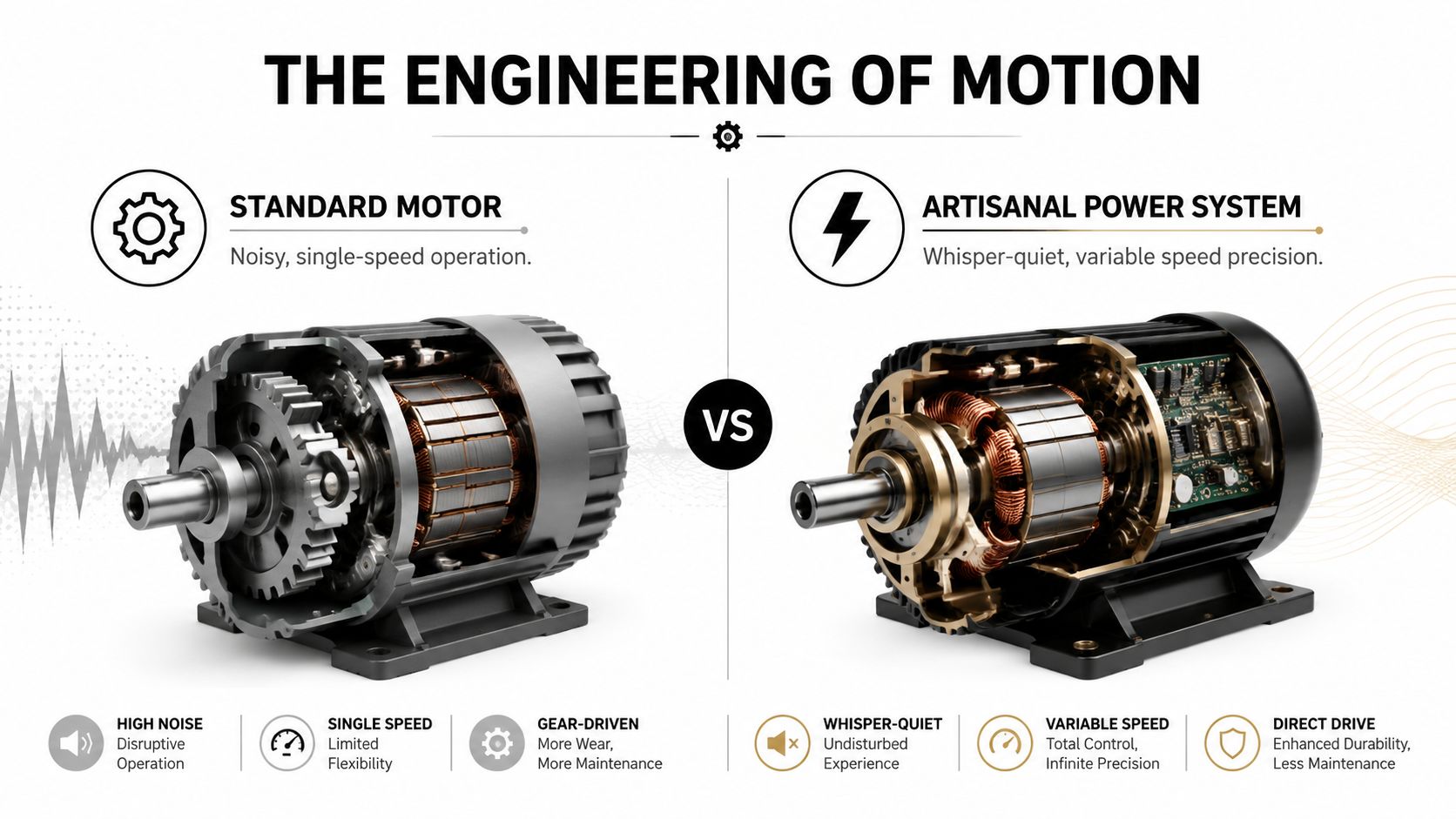
In practical terms, dual motors let one person raise the legs slightly while keeping the torso more upright, while another may prefer a deeper recline. A single-path system can feel restrictive because it forces one part of the body to follow the other.
Signs of better engineering
You don't need to study mechanics to recognise a well-built motion sofa. Look for these signals in person:
Smooth start and stop
The movement should feel controlled, not jerky. Good systems transition cleanly between positions.Low operational noise
A soft hum is normal. Grinding, clicking, or laboured movement is not.Stable support while moving
The seat shouldn't wobble or shift under you when the mechanism engages.Useful memory settings
In shared rooms, saved positions reduce constant fiddling and make the sofa more intuitive to live with.Battery flexibility when needed
This is valuable when the ideal furniture placement doesn't line up perfectly with an outlet.
A motion sofa should disappear in use. If you're constantly aware of the machinery, the engineering isn't refined enough.
Precision supports design too
Technology and aesthetics stop being separate conversations. Better engineering allows designers to specify a sofa for a more polished room because the motion is controlled enough to sit inside a disciplined form.
When homeowners ask whether a power recline sofa can still feel bespoke, the answer often depends less on the visible styling and more on what's happening under the seat. Fine motion gives the exterior permission to stay elegant.
For anyone comparing mechanisms more closely, Critelli's guide to types of power reclining seating is useful for understanding how various power configurations affect comfort and use.
Crafting Comfort From the Inside Out
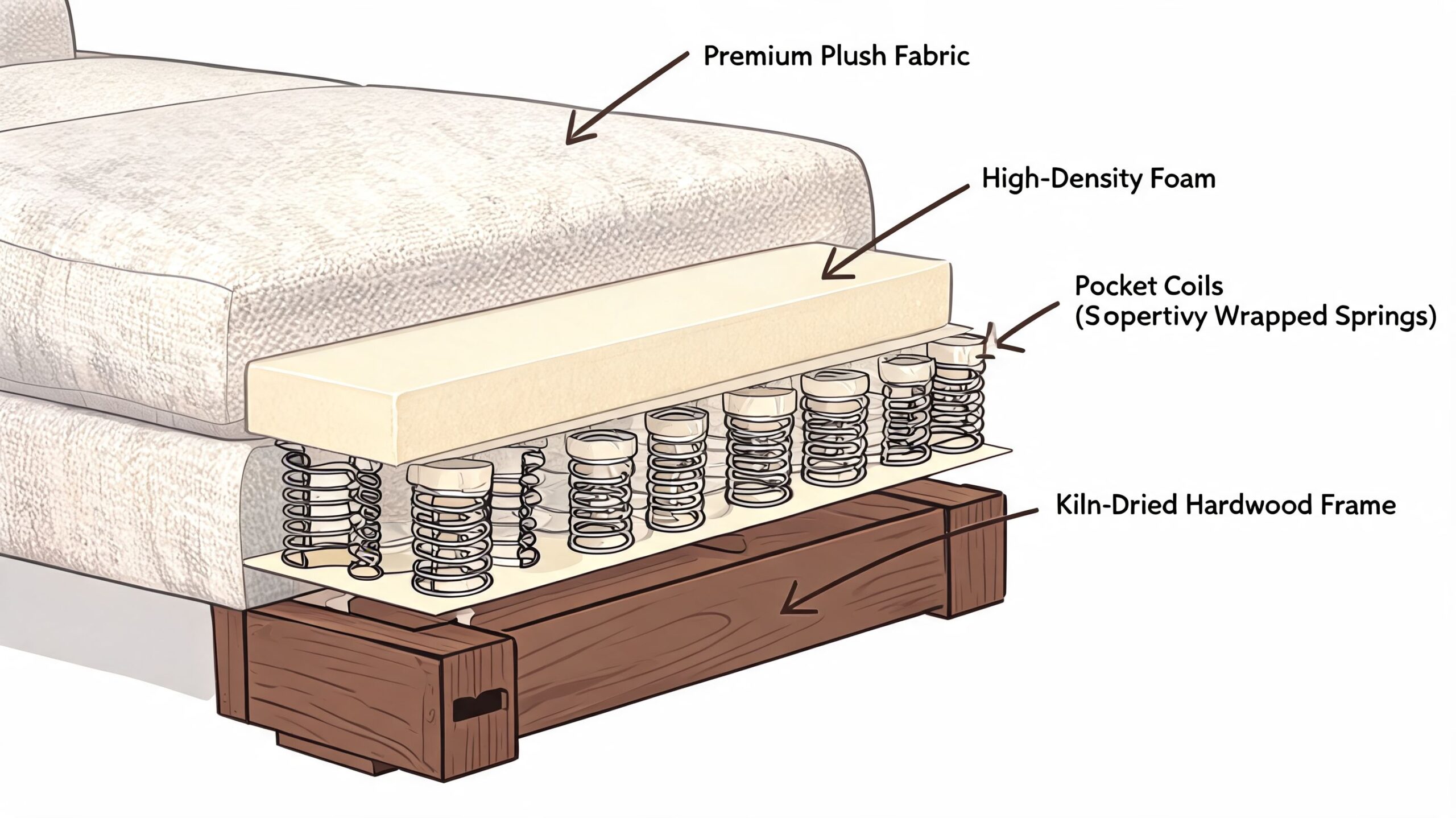
The motion mechanism may win attention, but the fundamental quality of a sofa still begins where great upholstery has always begun. In the frame, the suspension, the cushion build, and the upholstery selection.
A beautifully engineered recline sofa still disappoints if the seat crowns poorly, the arms soften too quickly, or the leather loses character instead of gaining it. That's why long-term comfort has to be built from the inside out.
Start with the frame
A strong sofa begins with a stable frame. In better furniture, you see discipline in the parts the client rarely sees. Proper hardwood construction, reliable joinery, and a frame designed to support repeated motion matter far more than decorative details alone.
Reclining furniture asks more of a frame than a stationary sofa does. Movement places repeated stress on the structure. If the frame is underbuilt, the sofa won't age with grace, no matter how attractive it looked on the showroom floor.
Cushion architecture matters more than softness
Many shoppers make the same early mistake. They sit in the softest seat and assume softness equals quality.
It doesn't.
The best cushions balance comfort with recovery. You want a seat that welcomes the body but returns to form rather than collapsing into hollows. In practical terms, that means asking how the seat is built, not just how it feels for the first thirty seconds.
A useful outside reference is Meliusly's guide on ways to prevent sofa cushion sinking, which highlights the everyday causes of premature sagging. It's a helpful reminder that cushion durability depends on both construction and how the seat is supported over time.
Upholstery shapes the character of the piece
A power recline sofa moves from functional purchase to bespoke furnishing in this context.
Full-grain leather
For many clients, this is the most compelling choice. It develops patina, holds visual depth, and suits both contemporary and classic rooms.Performance fabric
Ideal for households that want a softer visual hand or need practical resilience for daily use.Detailed stitching and panel planning
On motion furniture, seams do more than decorate. They guide how the upholstery behaves as the sofa opens and closes.
The upholstery should still look composed when the sofa is fully reclined. If the tailoring only works in the upright position, the design isn't complete.
For clients weighing leather more carefully, this overview of a full-grain leather chair is a good reference point for understanding why premium hides age so differently from corrected or heavily processed leather.
One practical example in this category is the Your Way Power Recline Sofa, which is offered through Critelli Furniture as a customisable motion option. That matters less as a brand statement than as a reminder that good power seating can be specified through a design lens, with material and finish choices shaping how the piece lives in the room.
Designing Your Room Around Your Sofa
The smartest way to buy a power recline sofa is to stop thinking about the sofa in isolation.
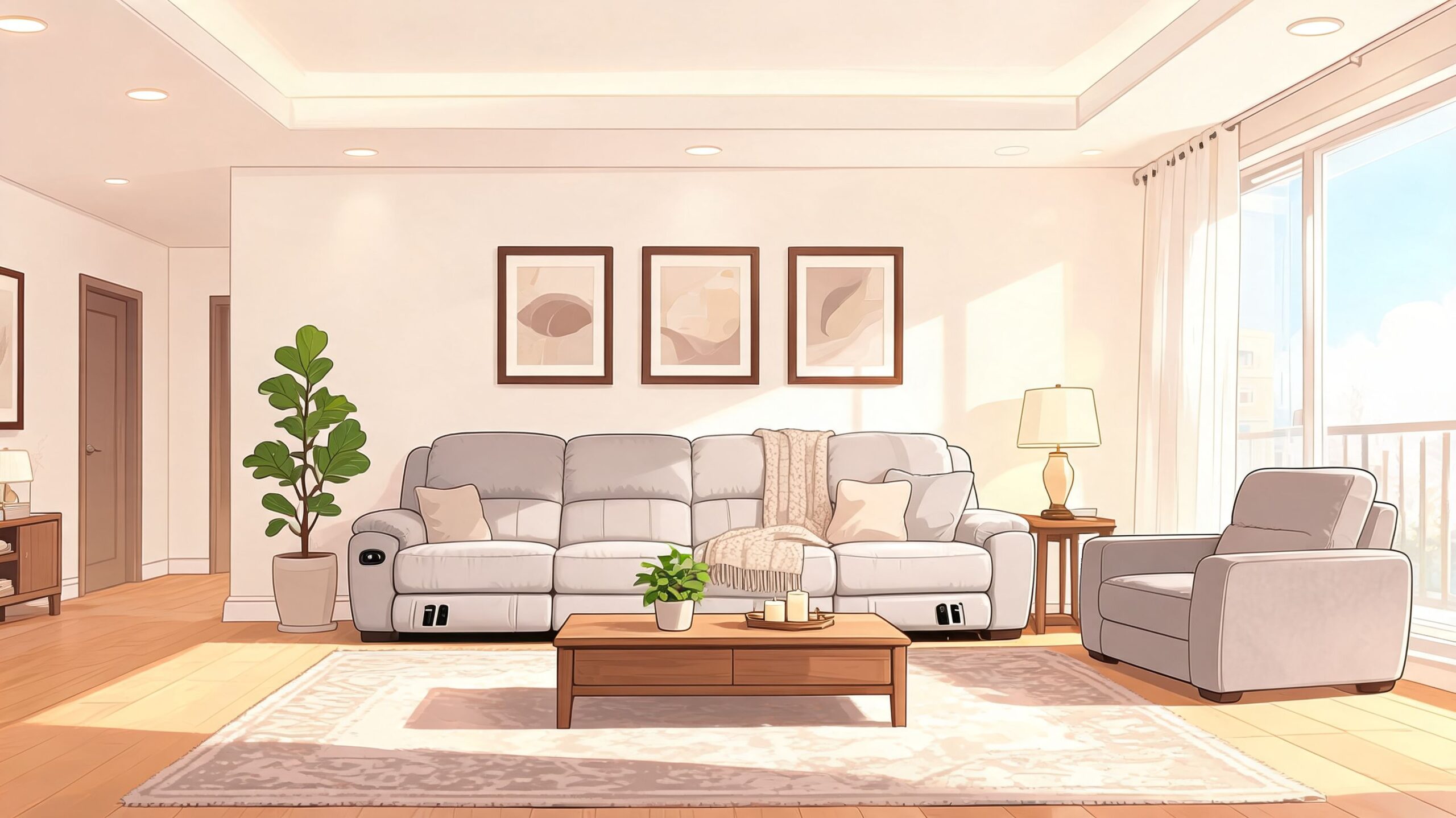
A living room works as a composition. Scale, sightlines, circulation, rug placement, lighting, and the architecture of the room all affect whether the sofa feels intentional or intrusive. That's why the best selections often come through a complete room concept, not a single-product mindset.
Measure for the room you actually have
Power motion changes how a piece occupies space. You're not only measuring width. You're measuring what happens when the sofa opens.
That's especially relevant in condo settings across Hamilton, Toronto, and newer Southern Ontario developments where every inch has to earn its place. According to Bless'er House's review of modern reclining sofas, emerging zero-wall power recliners require only 3-4 inches of wall clearance compared to 12+ for traditional models, and sales of these space-saving models surged 28% year-over-year in 2025 in the Niagara and GTA markets.
For compact homes, that distinction is significant. A zero-wall design can make the difference between a room that feels relaxed and one that feels permanently overfurnished.
Think like a designer, not just a buyer
A power recline sofa shouldn't become the visual centre of gravity unless that's intentional. In many rooms, it works best when grounded by a rug, balanced with cleaner-lined tables, and paired with lighting that softens the mechanics of the seating zone.
Designer's Insight
Our designers suggest pairing a rich leather power recline sofa with a neutral hand-knotted wool rug to steady the room's energy. In the Rug Market, we often describe this as choosing Art for your Floor first, then letting the seating draw its warmth and proportion from that foundation.
That's one reason rugs matter so much. They help a reclining sofa feel anchored rather than floating. They also create a visual field generous enough to support open and closed seating positions without making the room feel fragmented.
Fit the body as carefully as you fit the room
Good design is physical. Seat depth, head support, arm height, and leg elevation all affect whether the sofa serves the person using it.
Consider:
Reading posture
If you read or work on a tablet, head and upper-back support matter more than dramatic recline.Conversation mode
Some sofas look excellent when open but feel too passive when upright. That's a problem in a main living room.Shared use
In households where people differ in height or preferred posture, adjustable positions become more valuable.
A practical planning tool is Critelli's guide on how to arrange furniture in a living room. It's useful because layout mistakes with motion seating are rarely about style. They're usually about clearance, balance, and traffic flow.
When the layout is resolved properly, a power recline sofa doesn't read as specialist furniture. It reads as a well-chosen sofa that happens to perform beautifully.
The Critelli Experience and Lifelong Care
A well-made power recline sofa should feel better after proper settling-in, not worse. Ownership comes down to maintenance habits as much as purchase decisions.
Keep the mechanism area clear of dust and obstruction. Don't force the motion if something seems misaligned. If your model includes removable power components or a battery option, follow the maker's charging and care instructions rather than improvising. Small habits protect long-term performance.
Caring for the upholstery and the room
Leather needs regular but restrained care. Fabric needs consistent attention before soil becomes wear. In both cases, the point isn't constant intervention. It's steady stewardship.
Position thoughtfully
Keep the sofa away from harsh direct sun and strong heat sources where possible.Clean gently
Use methods appropriate to the material. Aggressive cleaners often do more harm than everyday dust.Check movement zones
Ensure throws, side tables, and cords don't interfere with opening and closing.
A sofa becomes heirloom in the way it's lived with. Good materials reward care, but they don't tolerate neglect forever.
For a deeper upholstery reference, Critelli's guide on how to care for leather furniture is a sensible place to start.
From showroom to home
The purchase experience matters too, especially with power furniture. Delivery isn't a minor final step. It's part of whether the piece enters the home correctly, fits the room as planned, and arrives ready to live with.
That's where white-glove service earns its value. Careful placement, proper setup, and packaging removal make the transition feel smooth, whether the destination is in Greater Niagara, Hamilton, or the Toronto market. And when the selection has been made through a design lens, the sofa doesn't arrive as an isolated object. It arrives as part of a more organised, more liveable room.
If you're considering a power recline sofa as part of a more refined living space, Critelli Furniture offers the benefit of a family-run legacy, a design studio perspective, and a professional white-glove approach from selection to placement. Experience the craftsmanship in person at our King Street Showroom. Or, if you'd like guidance on layout, upholstery, and a complete room concept, book your complimentary design consultation today. If the room still needs its foundation, visit the Rug Market to find your room's foundation.