
Indoor Benches Furniture: A Guide for Your Home


There's often one place in the home that refuses to settle. It might be the hall that feels too bare to be welcoming, the window wall that looks unfinished, or the foot of the bed that seems to ask for one final layer. In well-designed rooms, that missing piece is often a bench.
Among indoor benches furniture, the strongest choices do more than fill a gap. They soften circulation, introduce another material, and give a room a sense of completion. In Southern Ontario homes, where entryways work hard through winter and floor plans range from compact Toronto condos to more generous Niagara homes, that balance of beauty and utility matters.
The Enduring Allure of the Indoor Bench
A bench has a quiet way of solving problems that bulkier furniture often makes worse. In a narrow foyer, it gives you a place to sit without closing off the room. Beneath a window, it anchors the architecture without stealing light. In a bedroom, it creates a gracious pause between bed and wall.
That versatility is one reason benches have lasted so long in domestic interiors. They aren't trend furniture. They belong to a much older language of living.
From communal seat to design icon
Benches have deep roots in furniture history, once serving as common seating when chairs were reserved for the most important person in the room. That lineage eventually evolved into modernist landmarks, including the Nelson Platform Bench, which Herman Miller says helped “radically reimagine” the postwar home landscape.
For a designer, that history matters. It explains why a bench can feel both humble and dignified at once. A well-made bench isn't merely practical. It carries a sense of permanence, especially when the silhouette is clean and the craftsmanship is disciplined.
A bench works best when it looks inevitable, as though the room always meant to have it there.
Why it still feels current
In homes across Greater Niagara, Hamilton, and Toronto, I see benches used most successfully when they support the architecture rather than compete with it. A transitional interior may call for an upholstered seat with refined legs. A pared-back modern room may want oak, walnut, or a slatted profile that reads more sculptural. If you're refining that middle ground between traditional warmth and modern restraint, transitional style interior design offers a useful design vocabulary for choosing the right direction.
Critelli has been family-run since 1914, and that kind of legacy tends to sharpen one's eye for furniture that lasts beyond a season. The bench belongs in that conversation. It's one of those rare pieces that can be modest in scale yet significant in effect.
An investment in the room, not just the object
The mistake is to treat a bench as an accessory purchased at the very end. The better approach is to see it as part of the room's composition from the beginning.
Consider what happens when a hall bench repeats the wood tone of a nearby table, or when an upholstered bench introduces the same tactile note as the drapery. The room feels resolved. That's the enduring allure. A bench doesn't ask for attention, but the right one gives the home a more thoughtful kind of order.
A Curated Typology of Indoor Benches
Not all benches solve the same problem. The form that works beautifully in a dining room can feel awkward in an entry, and the bench that finishes a bedroom may be entirely wrong for a mudroom. Choosing well starts with understanding the role each type plays within a complete room concept.

The entryway bench
This is the first note in the home's design story. It sets tone before a guest reaches the living room.
An entry bench needs visual discipline. If the frame is too heavy, it crowds the threshold. If it's too delicate, it won't hold up to daily use. In Southern Ontario, where boots, bags, and seasonal layers collect quickly, I usually favour a bench with a clearly defined purpose. Either it offers open space beneath for baskets and shoes, or it includes concealed storage and keeps the view calm.
Good entry benches tend to have:
- A durable finish that won't show every scuff from bags and footwear
- A clear silhouette that suits the width of the hall
- A practical seat that makes putting on shoes feel easy, not precarious
The dining bench
A dining bench changes the social rhythm of a room. It creates a more communal side of the table and can make a dining area feel less formal without becoming casual in the wrong way.
This type works especially well in breakfast areas, kitchens with banquettes, and homes where circulation around the table matters. It can also lighten a dining room visually, since one continuous seat reads less cluttered than multiple chair backs.
The storage bench
Storage benches succeed when the storage is part of the architecture of the piece, not an afterthought. A lid that's too heavy or a base that looks bulky often spoils the effect.
For foyers, mudrooms, and smaller homes, this is often the most useful category. The bench becomes a quiet workhorse. Shoes disappear. Seasonal accessories stay close. The room feels more composed.
Practical rule: If a bench includes storage, the mechanism and proportions matter as much as the upholstery or finish. Convenience you won't use isn't good design.
The window seat bench
A window bench asks for restraint. Its purpose is to work with light, view, and architecture. It shouldn't shout.
In bay windows and alcoves, this type can transform an underused edge of the room into a reading perch or a simple place to pause. The most successful examples often echo the trim, flooring, or nearby casegoods so the seat feels integrated into the envelope of the home.
The upholstered bench
This is the most textural of the group and often the most luxurious. Upholstery softens hard lines, introduces fabric into rooms that need it, and offers comfort in bedrooms, dressing areas, and more formal sitting spaces.
A few placements where upholstered benches excel:
- At the foot of the bed, where they add a refined, hotel-like finish
- In a dressing area, where comfort matters more than hidden storage
- Along a corridor wall, where a softer profile can warm a long passage
The accent bench in a living space
Some benches are chosen less for strict utility and more for composition. They might sit behind a sofa, beside a coffee table grouping, or near a fireplace wall. Their job is to add rhythm, lower the visual horizon, and bring another layer of craftsmanship into view.
That's where indoor benches furniture becomes most interesting. The bench stops being a category and starts becoming a design instrument.
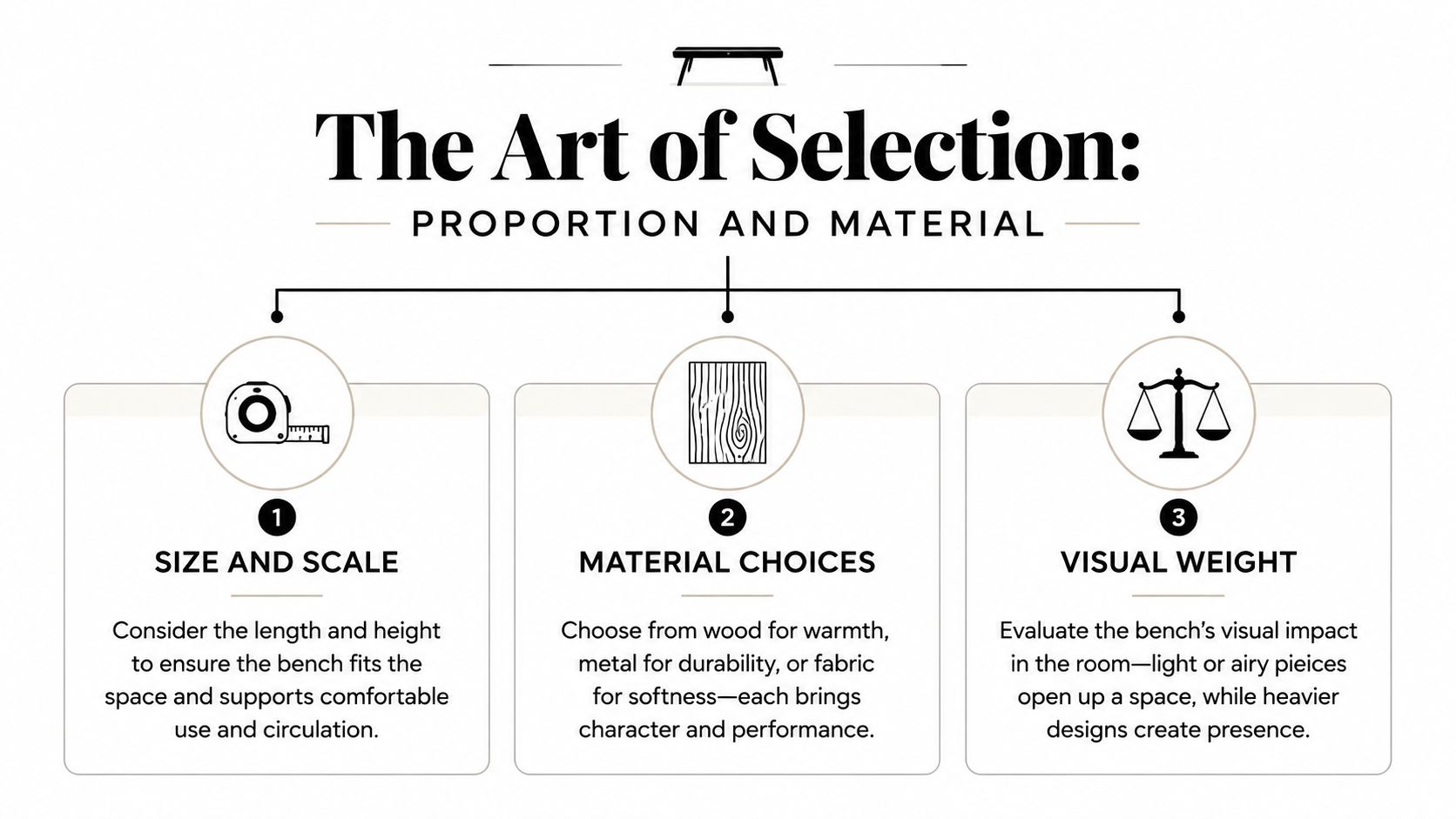
The Art of Selection Proportion and Material
Most bench mistakes come down to one of three things. It's too deep for the room, too weak for the job, or made from materials that don't suit the space it's entering.
The strongest selections are grounded in proportion first. After that, material and construction determine whether the bench will age gracefully or become a compromise you notice every day.
Proportion that supports comfort
For dining use, dimensions aren't decorative details. They affect posture, reach, and how natural it feels to sit down and stand up. For indoor dining benches in Canadian homes, a seat height of 18 to 20 inches and a seat depth of 15 to 20 inches align with standard table geometry, and a depth around 17.5 inches is often ideal for more natural posture according to Premier Polysteel's bench dimension guide.
That depth matters more than many buyers realise. Too shallow, and the bench feels temporary. Too deep, and people lean back awkwardly or perch at the edge.
For room planning, I often use a simple screening lens:
| Location | What usually works | What often fails |
|---|---|---|
| Dining area | Controlled depth and easy table fit | Overly deep seats that push diners too far back |
| Entryway | Narrower profiles with stable seating | Thick, bulky bases in tight halls |
| Bedroom | Upholstered or lower visual weight | Pieces that are too tall and interrupt the bed line |
Material has to match real life
Wood remains the most versatile choice because it can read traditional, transitional, or modern depending on the detailing. It also tends to age with dignity when the species and finish are chosen well. If you're weighing long-term durability, this guide to choosing the right hardwood for longevity and style is worth reviewing before you commit.
Metal can sharpen a room, especially in contemporary homes, but it needs balance. A slim metal base paired with a wood or upholstered top can keep the piece from feeling cold. Fully upholstered benches bring comfort and softness, yet they need more care in high-use zones.
For upholstery details, trim, and construction ideas, the Lewis and Sheron Textiles design guide is a useful reference. It helps buyers think beyond fabric colour and consider how a bench is crafted.
Designer's Insight
Our designers suggest pairing a bench with one hard element and one soft element in the same sightline. A walnut frame with a tailored cushion beside a wool rug often feels richer than an all-wood or all-fabric solution because the room gains contrast without becoming busy.
Construction tells you whether it will last
A bench can look refined on the showroom floor and still fail under daily use if the frame lacks integrity. Joinery, leg stability, and the relationship between seat and base all matter. In practical terms, a stable frame and controlled seat depth usually perform better than designs that chase visual novelty.
The material question becomes even more important near Southern Ontario entryways. Winter boots carry moisture, salt residue, and grit. In those spaces, easy-clean finishes, durable upholstery, and sturdy frames aren't optional. They're what keep a beautiful piece from becoming a tired one by the end of the season.
When clients compare options, I often suggest they test three things in person:
- Sit and rise naturally without adjusting your posture
- Press for movement in the frame or wobble at the joints
- Look underneath at how the piece is built, not just how it's styled
That's usually where quality reveals itself.
Placement and Styling A Bench Within the Home
A bench earns its place when it improves flow and finishes the visual story at the same time. Placement isn't just about finding an empty wall. It's about deciding what the room needs more of. Seating, softness, symmetry, storage, or a quieter transition from one zone to another.
For compact Southern Ontario homes, multifunctional benches are especially valuable. Since 1-person and 2-person households are the most common in Canada, the bench often needs to handle seating, storage, and visual lightness at once, particularly in condo foyers and townhome mudrooms, as noted in Home Depot's entryway bench category context.

In the entryway
The bench should create ease the moment you walk in. That may mean a storage bench under hooks, or a slimmer open bench with baskets beneath. What matters is preserving movement.
A common mistake is pushing too much furniture into the first few feet of the home. If the bench blocks circulation or crowds the door swing, it adds friction instead of calm. In tighter Toronto or Hamilton layouts, a visually lighter bench often performs better than a deep, enclosed one.
In the dining room
Here, the bench should feel intentional, not like a chair substitute that appeared because of a sale. It works best when it relates to the table in scale, finish, or upholstery, and when the room still breathes around it.
This is also where a rug becomes critical. The bench may provide the horizontal line, but the rug defines the dining zone and gives it gravity. In our studio, we often describe the Rug Market as Art for your Floor because a hand-knotted rug can establish colour, soften acoustics, and hold the entire composition together.
A bench without a rug can look temporary in an open-plan room. A bench anchored by the right rug looks placed.
If you're refining the full room around seating, tables, and circulation, thoughtful living room furniture arrangement offers a useful framework that carries into adjacent open spaces as well.
In the bedroom and window zone
At the foot of the bed, a bench should never feel like a barricade. It should be scaled to the bed and leave enough visual and physical room around it so the bedroom still feels restful.
A window bench has a different task. It should support the architecture and catch light without becoming visually top-heavy. In these quieter zones, I prefer benches that contribute texture more than ornament. Bouclé, linen-blend upholstery, softly grained wood, or a restrained leather detail can all work beautifully.
A few styling combinations that tend to hold up well over time:
- Bedroom bench plus wool rug for warmth and acoustic softness
- Entry bench plus mirror and basket for practical rhythm
- Window bench plus floor lamp and side table for a complete reading corner
How benches help a room feel finished
This is the part buyers often sense before they can articulate it. A bench can close a visual gap in a way few other pieces can. It lowers the eye line, introduces a horizontal pause, and keeps a room from feeling top-heavy with cabinets, art, and upholstery all competing above.
That's why indoor benches furniture works best when chosen as part of a complete room concept. The bench isn't the headline. It's the piece that helps the whole composition read as composed.
Bespoke Benches and Timeless Craftsmanship
A bench often reaches its full value when the room asks for something exact. In a South Oakville entry with a tight turn to the stair, or in a dining area where the table, passage, and window trim all compete for inches, standard sizing can leave the composition feeling unresolved. Custom work answers those conditions with precision.
A bespoke bench earns its place by solving for the room as a whole. It can be built to suit an awkward wall length, pick up the wood tone of nearby millwork, or introduce the missing texture that helps a space feel complete rather than assembled piece by piece.

Why custom often ages better
A well-made bench lasts because its specifications match daily life. In Southern Ontario homes, that may mean a finish that stands up to wet boots and grit in January, a seat cushion with enough density to hold its shape, or upholstery chosen for years of use rather than a quick first impression. At Home's bench category guidance reflects that practical concern, and it helps explain why custom specification can be a sensible investment.
The order of decisions matters. Start with placement and use, then choose materials. An entry bench usually benefits from a harder-wearing surface and easier-clean fabric. A bedroom bench can carry a softer hand and finer detailing. A dining bench has its own demands, especially if it must tuck properly under the table and still offer comfortable support through a long meal.
The role of the design studio
In our studio, a bench is never developed as a stray accent. We review it against the flooring, the rug border, nearby upholstery, sightlines from adjoining rooms, and the architectural character of the house. That process is what gives the piece continuity with the rest of the interior.
For clients planning a cohesive dining room, the bench is often discussed alongside custom dining room tables, because proportion, leg placement, finish, and seat height need to relate cleanly.
Families who want a coordinated room instead of a one-off purchase often value that studio approach. Critelli Furniture offers bench categories and custom-focused design support within its showroom model, which suits homeowners looking to complete a room concept with discipline and consistency.
Heirloom quality is built, not advertised
Heirloom quality comes from joinery, material integrity, and restraint in the right places. A walnut frame with a fitted cushion, properly scaled legs, and a finish with depth will usually outlast trend-driven details that date quickly.
I have found that the best custom benches do quiet work. They settle the proportions of a room. They connect one material story to another. Years later, they still belong because they were made for the house, not bought just to fill a gap.
Your Buying Checklist and The Critelli Experience
A bench should satisfy the eye, but it also has to pass a few practical tests before it earns a place in the home. Buyers who slow down and check those basics usually end up happier with the result.
Five things to confirm before you buy
Measure the room first
Don't measure only the wall. Measure circulation around the wall. A bench may fit on paper and still feel intrusive once doors, rugs, and daily movement are considered.Decide what the bench must do
If it's for shoes, you may need storage or a tougher finish. If it's for dining, comfort and table relationship matter more. If it's for the end of a bed, visual balance may be the priority.Match width to real seating needs
A practical rule is that a bench 42 to 52 inches wide comfortably fits two adults, while 53 to 80 inches accommodates three, with the reminder that circulation and delivery access remain important in Ontario homes, according to Wayfair's bench dimensions guide.Think about the floor beneath it
A bench doesn't float in isolation. Flooring, rug scale, and texture all change how substantial it feels. This is especially true in open-plan homes, where a bench may need a rug to define its zone.Plan for delivery, placement, and final fit
Large benches can be awkward through stairwells, tight turns, and condo lifts. Before ordering, review dimensions with the same care you'd use when learning how to read furniture product descriptions and buy with confidence.
Why the final step matters
Beautiful furniture can lose its pleasure quickly if arrival is chaotic. In premium homes across Niagara, Hamilton, and Toronto, buyers usually want the last stage handled with the same care as the selection stage.
That's where white-glove delivery matters. Professional placement, careful handling, and removal of packaging help ensure the bench arrives as part of a finished design experience, not as a logistics problem left in the hallway.
The complete room matters more than the single piece
The best indoor benches furniture doesn't announce itself too loudly. It settles the room. It gives architecture something to lean on. It adds a layer of craftsmanship where the home needs one.
When clients approach the decision through a complete room concept, the choice becomes clearer. The bench doesn't just fill space. It improves the way the whole home lives.
Experience the craftsmanship in person at our King Street Showroom, where a curated selection of heirloom quality furnishings, rugs, and bespoke options can be viewed within complete room settings. If you'd like guidance suited for your home in Niagara, Hamilton, or the Greater Toronto market, book your complimentary design consultation today. And if the room still needs its foundation, visit the Rug Market to find your room's foundation through hand-knotted rugs and artisanal floor coverings.