
Elevate Your Home With the Perfect Corded Pendant Light

A room can be beautifully furnished and still feel unfinished. The sofa is right. The rug grounds the seating area. The dining chairs have the right silhouette. Yet the eye keeps searching for one last note of definition overhead.
That missing piece is often a corded pendant light. It doesn't just brighten a surface, but it gives shape to the room itself. It marks the centre of a table, softens a corner, draws the ceiling into the composition, and adds the kind of visual rhythm that makes a home feel considered rather than merely furnished.
In our family's work since 1914, we've seen this again and again across Southern Ontario homes, from historical properties in Niagara-on-the-Lake to newer condominiums in Toronto. The right pendant behaves like jewellery for the architecture. It doesn't shout. It completes.
Beyond the Bulb The Art of Pendant Lighting
A pendant light has a long decorative lineage. Sources tracing the history of pendant lighting describe early pendant-style lamps as hanging oil vessels in ancient Greece, while modern forms expanded with gas lighting in the 19th century and electric fixtures in the 20th century. In California, later building standards also pushed lighting toward more efficient, code-conscious forms, especially after the adoption of Title 24 in 1978, which shaped how luminaires evolved to use LED sources and dimming controls according to this pendant lighting history overview.
That history matters because it changes how we think about a corded pendant light today. It isn't a trendy extra. It's one of the oldest architectural gestures in interior design, reinterpreted for modern living.
Why a room often needs light from above
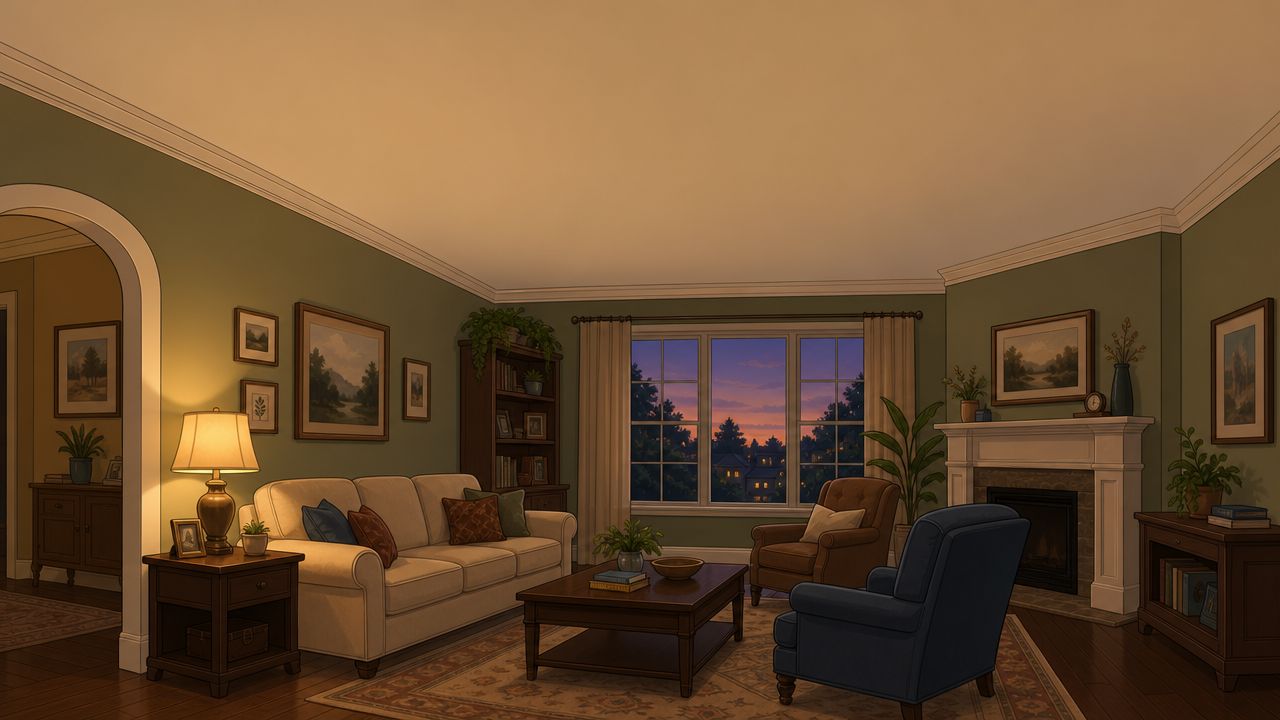
Consider a dining room with a handsome walnut table, upholstered chairs, and a hand-knotted rug. Without a ceiling focal point, the furnishings can feel as though they're floating. Add a pendant, and the room suddenly has a centre of gravity.
The same is true in an open kitchen. Cabinetry and stools establish function, but a pendant defines use. It tells you where to gather, where to work, where to pause with a cup of tea at the end of the evening.
A well-chosen pendant doesn't just light a room. It gives the room a point of view.
For homeowners balancing aesthetics with renovation planning, it also helps to understand broader project costs before choosing decorative lighting. A practical companion resource is this guide to pricing for smart remodeling projects from SouthRay Kitchen & Bath, especially if your pendant selection is part of a wider kitchen or dining refresh.
The pendant as an architectural gesture
Pendant lights are typically suspended by a cord, chain, or rod, and they're commonly used over kitchen countertops, dining areas, hallways, and stairwells. In architectural practice, they may stand alone as focal points or appear in clusters connected to one central fixture, which is part of what makes them so adaptable in open-plan interiors as outlined in this pendant light reference.
If you're exploring forms and finishes, a curated look at modern pendant lighting options can help you see how different silhouettes change the mood of a room. Some create intimacy. Others add clarity and structure. The point is never the fixture alone. It's what the fixture allows the room to become.
Understanding the Corded Pendant Light
A corded pendant light is a ceiling-suspended luminaire where the cord is both a visual element and part of the support system. That sounds technical, but the idea is simple. The cord doesn't merely deliver power. It also contributes to the fixture's presence, proportion, and hanging height.
Many people confuse pendants with chandeliers. The distinction is useful. A chandelier tends to spread outward with multiple arms or branches. A corded pendant usually reads more cleanly. One form, one drop, one clear architectural statement.
The four parts worth knowing
When you understand the anatomy of a pendant, shopping becomes much easier.
Canopy
This is the ceiling cover. It conceals the electrical connection and gives the fixture a finished look where it meets the ceiling.Cord or suspension element
The cord, chain, or rod determines how the fixture hangs. In a corded pendant light, the cord is often intentionally visible and becomes part of the design language.Socket and lamp holder
This is the working heart of the fixture. It holds the bulb and connects it to the electrical supply.Shade or body
Glass, metal, fabric, wood, or woven material all change the character of the light. A metal shade directs light. Frosted glass softens it. Woven fibres create a filtered glow.
Why strain relief matters
One of the most overlooked details is strain relief. In expert installations, strain relief is essential because it provides the load path that prevents the fixture's weight and cord tension from pulling on the electrical connections, which reduces the risk of mechanical failure at the connection point as explained in this practical pendant lamp guide.
That detail matters even more in decorative fixtures, where the cord is visible and expected to look elegant. Beauty is never separate from construction. In a well-made pendant, the engineering supports the grace of the piece.
Practical rule: If the cord is doing visual work in the room, the hidden support details must do even more work behind the scenes.
Why this fixture type is so versatile
A corded pendant light works because it can define a zone without the visual bulk of a chandelier. Over a breakfast table, it feels intimate. In a stairwell, it draws the eye upward. Beside a bed, it clears the tabletop and gives the room a polished, hotel-like calm.
For homeowners comparing categories, it can also help to look beyond ceiling fixtures alone. Reviewing wall mount lighting fixtures alongside pendants often clarifies where you want directed light, where you want ambient glow, and where you want a sculptural focal point.
Curating Your Style Materials and Forms
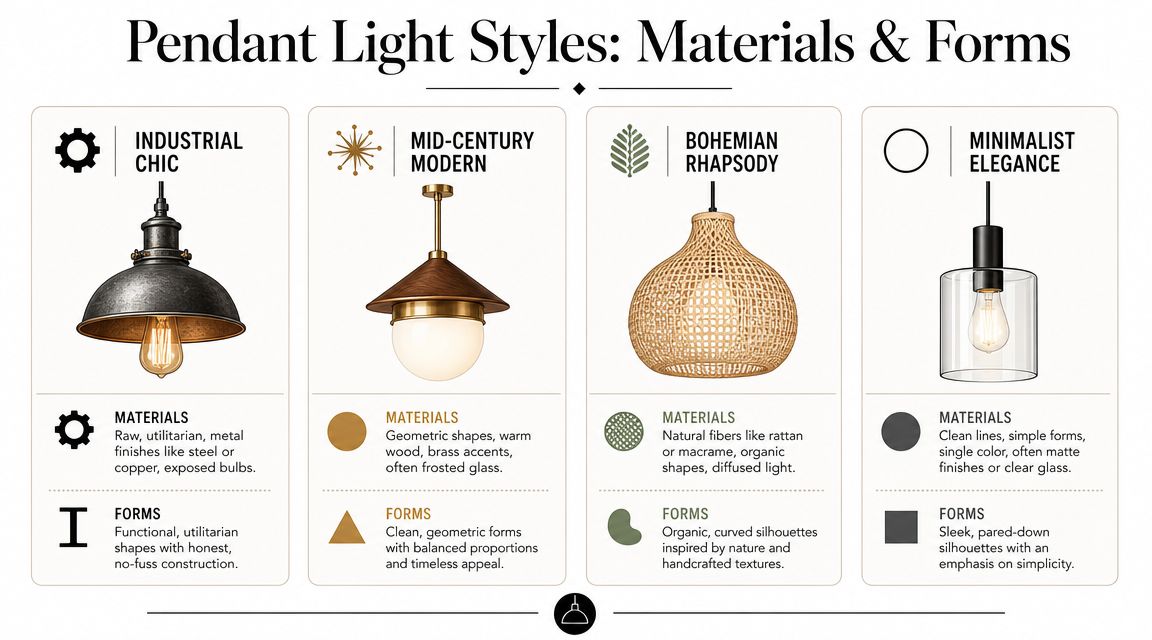
Style begins with shape, but mood comes from material. Two pendants may share roughly the same size and placement, yet feel entirely different because one is hand-blown glass and the other is patinated metal.
Good selection becomes curation. You don't need hundreds of options. You need the right vocabulary for your home.
How different forms change the feeling
A narrow cone directs attention downward. It's disciplined and useful over islands or side tables.
A globe feels softer. It spreads light more evenly and often suits rooms where you want a gentler, more atmospheric effect.
A drum shape has presence. It can bridge traditional and contemporary interiors because the form is familiar, but the material can shift the expression in either direction.
A designer's comparison
| Style direction | Typical material mood | Best suited feeling |
|---|---|---|
| Industrial | Steel, copper, darker finishes | Crisp, architectural, slightly utilitarian |
| Mid-century | Brass, walnut tones, frosted glass | Warm, tailored, design-forward |
| Artisanal | Hand-blown glass, ceramic, woven fibre | Collected, bespoke, expressive |
| Minimalist | Matte finishes, clear glass, simple profiles | Quiet, airy, restrained |
The most enduring rooms usually mix discipline with softness. A severe metal pendant in a room with too many hard surfaces can feel cold. A woven pendant in an already relaxed room can drift into vagueness. Balance is the principle.
Matching the pendant to the furniture language
If your room includes sculptural walnut case pieces, a mid-century form often feels natural. If the architecture has stronger lines and fewer ornaments, minimalist pendants tend to honour that restraint. In homes with textured woods, limewashed finishes, or handmade ceramics, artisanal pendants can feel especially at home.
For readers drawn to that clean but warm profile, browsing modern mid-century furniture in Canada can be surprisingly useful. Furniture style often reveals which pendant language will look coherent overhead.
The pendant should echo the room's character, not compete with it.
Material affects light quality
The fixture's material also changes how light behaves.
- Clear glass shows the bulb and gives a more sparkling presence.
- Frosted or opal glass diffuses light and softens glare.
- Metal shades focus illumination downward, which is useful over work surfaces.
- Fabric or woven forms create a muted, atmospheric glow that suits lounges and dining areas.
This is why heirloom quality lighting isn't only about finish or price. It's about how form, material, and light interact over time. A beautiful pendant in daylight should still feel composed when switched on at dusk.
The Geometry of Light Sizing and Placement
Poor placement can make an excellent fixture look awkward. The pendant may be lovely, but if it hangs too high, it loses intimacy. Too low, and it interrupts sightlines. Too small, and it disappears. Too large, and it starts to dominate instead of define.
Most placement decisions become easier when you think in terms of human scale and room geometry rather than decoration alone.
Over a dining table
A dining pendant should relate to the table, not the room at large. The visual conversation happens between those two elements.
A practical guide is to choose a fixture width that feels proportionate to the table's footprint, then hang it low enough to create intimacy without blocking conversation. The room should feel gathered.
Keep the light low enough to belong to the table, but high enough that seated guests still see one another comfortably.
In a traditional Southern Ontario home with taller ceilings, you may have a little more vertical room to play with. In a condo dining area, restraint usually serves you better. A simpler form with a clean silhouette often keeps the room feeling generous.
Over a kitchen island
Island pendants need a different temperament. They often work in multiples, and their job is partly visual, partly organisational. They help break up long horizontal cabinetry and establish the island as a distinct work zone.
If you're using several pendants, consistency matters more than ornament. Matching forms with modest scale often feels cleaner than oversized statement pieces competing for attention.
A few principles help:
- Preserve sightlines so the kitchen still feels open.
- Use repetition to bring order to a long surface.
- Respect the architecture by aligning pendants with the island, not just the ceiling box.
- Avoid crowding large shades too closely together.
In hallways, foyers, and beside the bed
A pendant in an entryway introduces the home's tone immediately. In a Victorian property near the Niagara region, a pendant can honour ceiling height and historical character without becoming overly ornate. In a modern apartment, the same category of fixture can act as a precise sculptural mark in an otherwise minimal envelope.
Bedside pendants are one of the most elegant uses of this fixture type. They free the nightstand surface and create a custom, boutique-hotel look. The key is scale. Keep them small enough to feel intimate, not theatrical.
Designer's Insight
Our designers suggest hanging island pendants at a height that protects conversation across the counter while still defining the workspace. In bedrooms, a pendant should support reading comfort without becoming the room's loudest object.
A complete room concept proves valuable. The fixture doesn't stand alone. It relates to table height, headboard height, art placement, and even the scale of the rug below. If you're considering lighting in a sleeping space, looking at bedroom pendant light applications can help you judge proportion more clearly.
A quick placement check before installation
| Location | What to watch | Common mistake |
|---|---|---|
| Dining area | Centre it to the table | Centring to the room instead |
| Kitchen island | Keep rhythm even across the surface | Using pendants that are too large |
| Foyer | Maintain clear walking space | Hanging too low for circulation |
| Bedside | Match the scale of the bed and nightstand | Choosing a fixture that feels oversized |
Good placement often looks effortless. It rarely is. It comes from paying attention to alignment, proportion, and how people move through the room.
Finer Points Bulbs Wiring and Safety
Most disappointment with lighting doesn't come from style. It comes from performance. A pendant can look marvellous in a showroom and feel wrong at home because the bulb is harsh, the cord is messy, or the installation choice doesn't suit the room.
That's why I encourage homeowners to decide three things before buying. How will it be installed, what quality of light do you want, and who should handle the electrical work?
Hardwired or plug-in
For Southern Ontario homeowners seeking flexibility, plug-in corded pendants are a high-control option. They can be placed over tables or seating areas where ceiling junction boxes are absent. Proper installation still matters. The cord should be managed neatly, the strain relief preserved, and the electrical connection should follow the fixture's specified conductors for safety as demonstrated in this installation guidance.
That makes plug-in pendants especially attractive in older homes where you don't want to open ceilings, disturb plaster, or alter original architectural details.
Hardwired pendants, by contrast, usually offer the cleanest permanent look. They're often the right choice over islands, in foyers, and anywhere the fixture is central to the architecture.
The bulb changes everything
Even the most refined pendant will fail if the bulb is wrong. I advise clients to think about these factors:
LED compatibility
Many contemporary pendants are selected with LED use in mind. They support efficiency and often pair well with dimming.Colour temperature
Warmer light usually flatters residential interiors better than cooler light, especially in dining areas and bedrooms.Glare control
If the bulb is fully exposed, choose carefully. A bare bulb seen at eye level can feel much sharper than expected.Dimming behaviour
A dining pendant that can't dim often feels too rigid for evening use.
When to call a professional
A simple plug-in arrangement may be manageable for a confident homeowner if the product is designed for that use and the cord path is clean. Hardwired installation is a different matter. If there's any uncertainty around conductors, grounding, support, or ceiling conditions, bring in a licensed electrician.
If you want a technical primer before that conversation, this guide on how to wire a ceiling light from DLG Electrical is a useful reference. It won't replace local professional advice, but it does help you understand the language of the work.
Beautiful lighting should never depend on guesswork behind the ceiling.
One factual example from the market illustrates the practical side of corded pendants. Critelli Furniture lists ceiling-light options that include pendant-style fixtures such as a 3-light burlap drum pendant with a 10-foot cord for adjustable installation, which shows how cord length can support placement flexibility when matched properly to the room.
Creating a Complete Room Concept
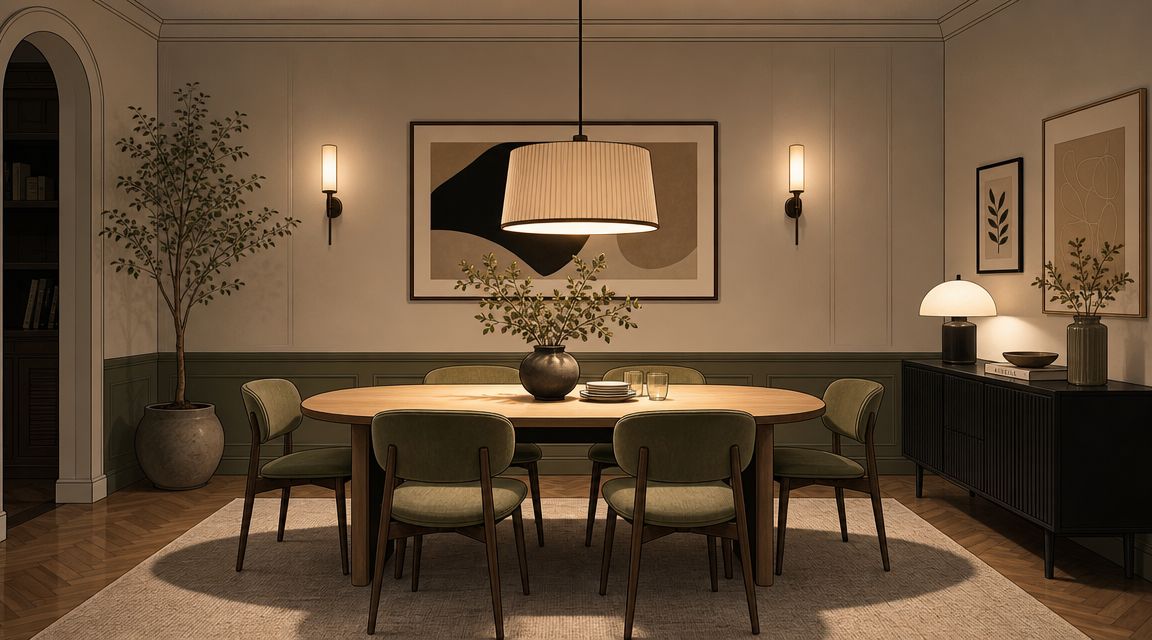
A pendant should never be the last isolated purchase made in a hurry. It belongs to the larger room story. That has always been the more enduring philosophy in our design studio. We don't look at lighting as a single object. We look at how it participates in a complete room concept.
That means asking different questions. What anchors the space at floor level? Where does the eye rest? What needs softening? What deserves emphasis?
Start from the floor and build upward
The most composed rooms usually begin with a rug. In our Rug Market, we often describe rugs as Art for your Floor because they establish palette, texture, and emotional tone before lighting is even discussed.
A hand-knotted rug with subtle movement might call for a pendant with quiet geometry. A more minimal rug may invite a sculptural glass form overhead. The point is relationship.
Layer the light for Southern Ontario living
In Ontario, long winters increase reliance on indoor lighting. The right corded pendant does more than illuminate. It helps reduce glare and improve visual comfort. In open-concept homes, designers often use pendants as accent lighting rather than primary task lighting to maintain sightlines and create a layered, less harsh effect, which improves the perceived luxury of the space as discussed in this lighting commentary.
That approach works beautifully in family homes across Greater Niagara, Hamilton, and Toronto. One pendant over the table, discreet lamps in the corners, perhaps a wall light near a reading chair. The room feels settled, not overlit.
Good lighting lets a room unfold in layers. You notice the comfort before you notice the fixture.
Pairing pendants with furniture and finish
A few combinations tend to age gracefully:
Wood table and glass pendant
The grain brings warmth. The glass adds lightness.Custom dining chairs and a metal shade
This pairing sharpens the architecture and gives the room structure.Soft upholstery and a woven pendant
Useful when you want an informal, artisanal atmosphere.A timeless Stickley dining setting and a restrained pendant
The lighting should support the furniture's craftsmanship, not compete with it.
If your kitchen update includes cabinetry, surfaces, and lighting together, it can help to find kitchen remodeling pros who understand how these decisions interact rather than treating lighting as an afterthought. For inspiration specific to cooking and dining zones, modern kitchen lighting ideas can also help clarify what belongs overhead and what belongs elsewhere in the room.
The finish of the experience matters too
Design doesn't end at selection. In a premium home, the transition from showroom to installation should feel calm and organised. That's why white-glove delivery and coordinated placement matter. The room should come together with care, not chaos.
When all the elements are working, a corded pendant light does something subtle and memorable. It defines space, refines mood, and gives the architecture a graceful point of focus. That's not a small role. It's one of the quiet ways a house begins to feel like it has been lived in, and thoughtfully composed.
If you'd like help choosing a corded pendant light as part of a complete room concept, Critelli Furniture offers a complimentary design consultation through its Interior Design Studio. You can also experience the craftsmanship in person at the King Street Showroom, explore bespoke furnishings, visit the Rug Market for your room's foundation, and rely on white-glove delivery to carry the vision from selection to final placement.