
Dining Room Sideboards: A Guide to Timeless Style

A dining room often reaches a point where the table is right, the chairs are settled, and the lighting feels considered, yet the room still seems unfinished. That missing layer is usually storage, but not storage in the purely practical sense. It’s the piece that lets a room feel composed during ordinary family dinners and ready for gracious entertaining when guests arrive.
That’s where dining room sideboards earn their place. In a well-designed home, they do far more than hold serving pieces. They steady the room visually, give you a proper surface for candles or platters, and connect the dining area to the rest of your interior so the space feels curated rather than assembled.
For families across Southern Ontario, from heritage homes in St. Catharines to newer spaces in Hamilton and Toronto, the right sideboard isn’t a finishing touch in the minor sense. It’s often the element that makes the whole room make sense.
The Unsung Hero of Your Dining Room
A sideboard has always carried more meaning than its modest name suggests. Historically, it evolved alongside the dining room itself. As noted in this history of the sideboard’s development, the piece began as a simple serving board in the 16th century and, by the Federal era in North America, had become a marker of refined domestic life, often measuring up to 7 feet wide and 2.5 feet deep and built to hold silver, linens, and serving dishes.
That history still matters because it explains why a sideboard feels so natural in a dining room. It was never meant to be incidental furniture. It was designed to support the rituals of gathering, serving, storing, and displaying.

Why the room feels incomplete without one
A dining table occupies the centre of the room. A sideboard gives the room a perimeter anchor.
Without it, everyday essentials tend to migrate to less suitable places. Table linens end up in a hallway closet. Serving pieces are tucked into kitchen cupboards. Candles, matches, and extra glasses never have a proper home. The room works, but it doesn’t flow.
With a sideboard, several things happen at once:
- Storage becomes elegant: Linens, platters, cutlery, and glassware stay close at hand.
- Serving becomes easier: You gain a landing place for dishes during family meals or holiday dinners.
- Styling becomes intentional: Lamps, art, and collected objects suddenly have a natural stage.
- The room feels finished: The eye reads the space as balanced, not sparse.
A dining room sideboard is one of the few pieces that solves a practical problem and a visual one at the same time.
A timeless piece in a room meant for living
In a centennial family business, you come to appreciate which furniture types remain relevant through changing fashions. Sideboards have done exactly that. Since 1914, when Critelli’s story began in St. Catharines, dining furniture has changed in line and proportion, yet the need for a handsome storage piece has remained constant.
That’s especially true when you’re thinking about the room as a whole rather than shopping piece by piece. If you’re starting to shape your dining space from the ground up, this guide on designing a dining room where to start offers a helpful companion perspective.
What a sideboard does today
The modern sideboard still honours its original purpose, but it also adapts beautifully to contemporary living.
In one home, it may store formal china and host a pair of lamps. In another, it becomes a bar station for weekend entertaining. In a smaller Southern Ontario home, it may hold everyday dinnerware while visually grounding an open-plan dining area.
The point isn’t to add another piece of furniture. It’s to choose the piece that lets the room function with more grace.
Finding the Perfect Fit for Your Space
Most mistakes with dining room sideboards come down to proportion. People choose a piece that’s beautiful on its own, then discover it’s too long, too deep, or too visually heavy for the room. The answer isn’t guesswork. It’s measurement, followed by restraint.
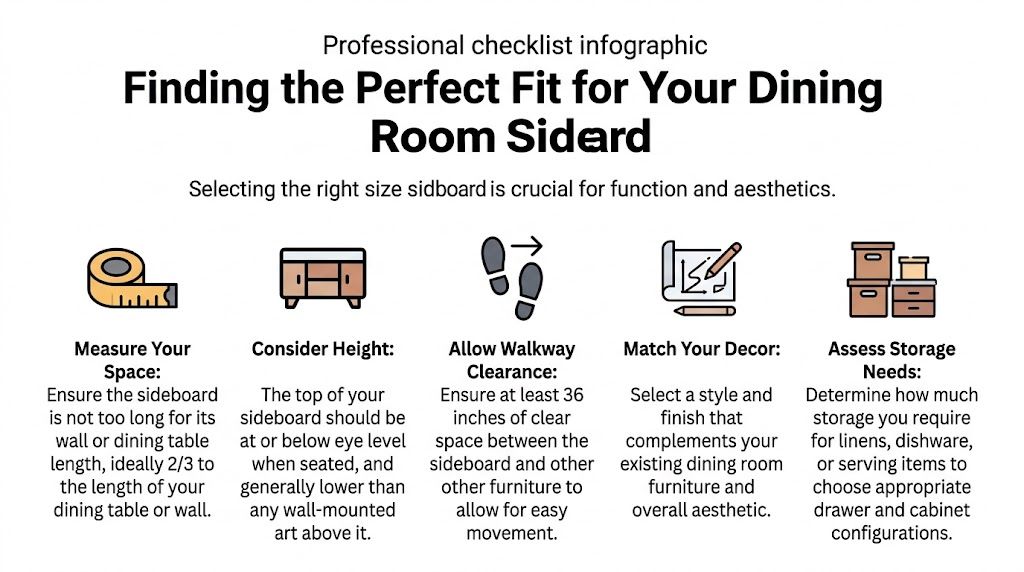
For Southern Ontario homes, where dining tables often range from 60 to 84 inches, designers recommend choosing a sideboard that is 12 to 24 inches shorter than the table, with a height of 32 to 36 inches and at least 36 inches of clearance between the table and sideboard for easy movement, according to these dining sideboard sizing guidelines.
Start with the table, not the wall
A sideboard relates to the dining table first. That surprises people, because the sideboard usually sits against a wall. But visually, the table and sideboard are in conversation.
If your table is substantial and your sideboard is too slight, the room feels underfurnished. If the sideboard is too large, it competes with the table.
A simple working method helps:
- Measure the table length
- Subtract 12 to 24 inches
- Use that range as your target sideboard width
- Confirm that the wall still gives the piece enough breathing room
Clearance is what makes a room feel calm
The number many homeowners overlook is the walkway. A room can look generous in photographs and still feel frustrating in daily use if chairs and casegoods are too close.
Practical rule: Keep at least 36 inches between the table and the sideboard so people can move comfortably around the room, especially when chairs are occupied.
That one measurement often determines whether a sideboard should be fuller and more traditional, or shallower and more architectural.
A quick sizing checklist
- Width matters most: Aim for a sideboard that feels subordinate to the table rather than equal to it.
- Height should support sightlines: A piece in the 32 to 36 inch range usually feels comfortably grounded without becoming bulky.
- Depth affects circulation: Shallower forms often work better in condos and tighter dining rooms.
- Leave edge space: A sideboard shouldn’t press awkwardly into trim, drapery, or door casings.
- Think about chairs pulled out: Measure for the room in use, not just the room at rest.
If you’d like a second resource on evaluating storage proportions and function, this article on 5 things to consider when selecting a dining storage piece is worth reviewing before you commit.
Don’t forget the rug beneath the room
A sideboard never lives alone. The table, chairs, lighting, and rug all affect how large or small the room feels. If you’re trying to balance those elements together, this guide on how to choose the best size rug for your dining room is useful because it helps you think about proportion across the entire dining setting, not just one furniture piece.
Two common fit problems
When the sideboard is too small
The room can feel temporary. You may also lose the serving surface that makes the piece so useful during gatherings.
When the sideboard is too deep
Traffic suffers first. Even a beautiful cabinet becomes irritating if people have to angle past it.
In design work, careful measuring saves regret. A well-proportioned sideboard doesn’t draw attention to its dimensions. It feels right the moment it’s placed.
A Legacy of Craftsmanship in Materials and Finishes
The difference between a sideboard that lasts a few years and one that stays in the family is usually hidden below the surface. Finish colour matters, of course. Hardware matters. But the true story begins with what the piece is made from, how the wood has been prepared, and how the drawers are built.
In the Great Lakes region, humidity shifts are part of daily life. According to this materials guide on sideboards and buffets, solid hardwoods such as oak and maple that have been kiln-dried to 6 to 8% moisture content are especially important for preventing warping, and dovetail joinery can double the lifespan of drawers.
Why hardwood matters in Southern Ontario
A sideboard holds weight. Platters, stacked dishes, serving bowls, glassware, and silver all ask something of the cabinet over time. That’s why solid hardwood remains the benchmark for heirloom quality.
Oak and maple are especially dependable choices in our region because they respond well when properly dried and constructed. They also age gracefully. Small marks tend to read as patina rather than failure.
Engineered materials can have a place in some interiors, but for a dining room sideboard intended to anchor a room for years, hardwood usually offers more confidence.
Sideboard Material Comparison
| Material | Durability | Best For | Maintenance |
|---|---|---|---|
| Solid oak | High | Traditional and transitional dining rooms, heavy everyday use | Dust regularly, protect from standing moisture, occasional polish |
| Solid maple | High | Clean-lined, tailored interiors, family dining rooms | Similar care to oak, benefits from stable indoor conditions |
| Reclaimed wood | High, with character variation | Rustic, collected, textural rooms | Gentle cleaning, embrace natural variation and patina |
| MDF or engineered wood | Moderate | Budget-conscious or short-term applications | Keep dry, avoid heavy impact, monitor edges and finish wear |
For readers weighing construction materials more broadly, this explanation of the choice between MDF and wood for cabinet construction can help clarify where each material tends to perform best.
Joinery you can feel every day
Drawers tell the truth about a sideboard.
A drawer that sticks, racks, or feels thin will colour your experience of the piece every time you set the table. Dovetail joinery, by contrast, tends to feel composed and secure. It isn’t just an old-world flourish. It’s a structural decision with practical consequences.
When a dining room sideboard is built for real use, the drawers should feel as reassuring as the exterior looks.
Artisanal construction earns its value through durability. The cabinet should support years of opening, closing, loading, and serving without feeling strained.
Finishes should support the room, not dominate it
A finish should answer the architecture and the other furnishings in the space. In a room with warm flooring, a sideboard in a similarly warm wood often feels settled and natural. In a brighter room with painted trim and contemporary lighting, a quieter finish can keep the atmosphere light.
That decision becomes easier when you understand wood species first. This guide to choosing the right hardwood for longevity and style is a useful reference if you’re comparing wood tone, grain, and long-term wear.
Designer’s Insight
If your dining table has strong grain movement or a darker finish, consider a sideboard that relates in undertone rather than matching exactly. Rooms feel more collected when wood finishes converse instead of repeating one another too literally.
Canadian-made and thoughtfully sourced
Many Southern Ontario clients are paying closer attention to where furniture is made and how materials are selected. That’s a welcome shift. A sideboard built with care, from well-chosen wood, tends to carry a sense of integrity you can see and feel.
This is also where a curated selection matters. Some homeowners want a traditional cabinet with time-honoured detailing. Others want a more design-forward silhouette in a quieter finish. The underlying question is the same in both cases. Is the piece built to live beautifully over time?
If the answer is yes, style becomes the pleasure. Construction remains the assurance.
Defining Your Style with Form and Function
Once proportion and materials are settled, the sideboard becomes personal. Often, clients discover that they aren’t choosing between “pretty” and “practical.” They’re choosing the form of practicality that fits how they live.
A family that entertains often may need broad drawers and concealed storage. A collector may want glass-front cabinets to display serving pieces. Someone in a compact city dining area may need a cabinet that works as storage by day and a drinks station by evening.
Traditional, contemporary, and the space between
Style begins with silhouette.
A traditional sideboard often brings carved detail, richer wood tones, framed doors, and a sense of permanence. It pairs beautifully with classic dining tables, heritage architecture, and layered rooms.
A contemporary sideboard usually relies on cleaner lines, quieter hardware, and a more edited profile. It works especially well in open-plan interiors where visual calm matters.
If you’re comparing those two worlds directly, this discussion of contemporary vs traditional design styles can help clarify which direction aligns with your home.
Match the interior layout to your routines
Exterior style draws people in. Interior configuration determines whether they’ll love the piece a year from now.
Consider what you need to store most often:
- Deep drawers: Best for table linens, placemats, and larger serving tools.
- Cupboards with shelves: Useful for platters, bowls, and less frequently used dishware.
- Glass-front sections: Ideal if you’d like display without fully open shelving.
- Specialised compartments: Helpful for silverware, bottles, or bar accessories.
A sideboard shouldn’t ask you to change your habits. It should support them.
A strong choice for smaller Niagara dining rooms
In many urban homes, space is less about square footage on paper and more about where circulation pinches. That’s why slimmer sideboards are so useful.
For the 68% of urban homes in the Niagara Region with dining areas under 120 sq ft, a multi-functional sideboard with a 12 to 16 inch depth can work especially well, doubling as a bar or serving station without obstructing movement or natural light, as outlined in this small-space sideboard guide.
That’s an important distinction. A shallow cabinet isn’t a compromise if it’s selected deliberately. In many homes, it’s the more optimal solution.
Which form suits which lifestyle
The gracious host
A longer sideboard with a broad serving surface, concealed storage, and room for lamps often suits frequent entertaining.
The compact-space realist
A shallower profile with disciplined storage keeps the room open and useful.
The collector
A sideboard with mixed storage, some concealed and some display-oriented, allows personality to enter the room without clutter.
The family household
Durable finishes, straightforward drawers, and practical shelving usually matter more than ornate features.
The best dining room sideboards always feel specific to the household. They don’t just fit the wall. They fit the life being lived around them.
The Art of Curation and Complete Room Concepts
A sideboard looks most convincing when it’s part of a complete room concept. Left bare, it can seem like a useful cabinet waiting for instructions. Styled with intention, it becomes one of the most expressive surfaces in the home.
That doesn’t mean decorating it heavily. It means giving it a role within the room’s larger composition.
Start from the floor up
In Southern Ontario homes, clients are increasingly drawn to pieces with soul. A 2025 survey found that 71% of Southern Ontario homeowners prioritise unique, character-rich pieces such as reclaimed wood sideboards, and that the strongest dining rooms often pair them with a foundational hand-knotted rug whose palette helps unify the entire space, according to this Houzz feature on room-defining pieces.
That idea matters because many people style from eye level first. Designers often do the opposite. We begin with the foundation.
A hand-knotted rug sets the tone for everything above it. It softens the room acoustically, grounds the table, and introduces colour relationships that can be repeated in artwork, ceramics, lamps, and textiles. It’s why the Rug Market philosophy of Art for your Floor resonates so strongly. The rug doesn’t merely sit under the furniture. It organises the room emotionally and visually.
Build the top of the sideboard in layers
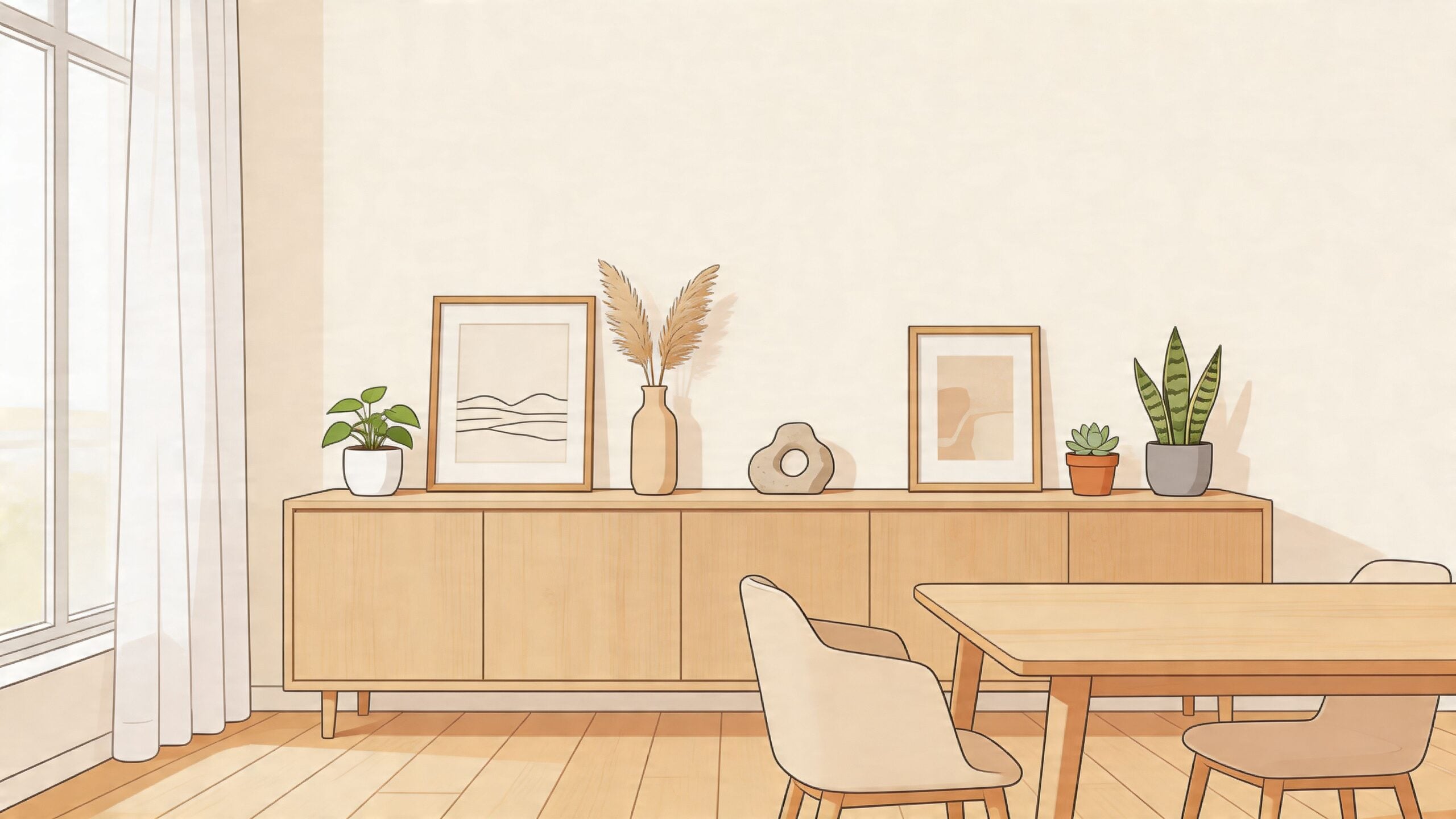
A sideboard vignette usually works best in three layers.
The anchor
This is the visual backdrop. It might be a mirror, a painting, or a substantial framed work. The anchor gives the sideboard presence on the wall.
The light
Lamps add warmth and shape. A pair creates symmetry. A single sculptural lamp can feel more relaxed and contemporary.
The life
This layer includes books, bowls, flowers, ceramics, branches, or personal objects. It should feel edited, not crowded.
Good styling leaves some surface visible. The wood itself is part of the composition.
Let the sideboard speak to the table
The dining room reads best when the furniture is connected by intention rather than exact matching. If your table is the largest visual element, the sideboard should support it in mood, scale, and finish family.
That relationship becomes easier to judge when you consider the room as a whole. This guide on how to pick the right dining room table is a useful companion if you’re balancing sideboard choice with table shape, scale, and style.
A designer’s way to edit the look
Try this simple arrangement:
- One large piece: Art or mirror
- One source of light: Lamp or candles
- One natural element: Greenery, branches, or flowers
- A small grouping: Bowl, box, or stacked books
That formula prevents two common errors. The first is under-styling, where the sideboard feels forgotten. The second is over-styling, where every object asks for attention.
Why curation matters more than decoration
Decoration adds objects. Curation creates relationships.
In a complete room concept, the sideboard may echo the table’s wood tone, pick up colour from a hand-knotted rug, and support the rhythm established by artwork and lighting. That’s what makes a dining room feel settled and memorable.
This is also where design services become valuable. Many homeowners can identify individual pieces they love. Fewer feel fully confident assembling them into a harmonious whole. A sideboard often becomes the bridge between utility and beauty, which is why it deserves more thought than a quick catalogue decision.
The Critelli Experience From Bespoke to White-Glove
A finely made sideboard should arrive in your home with the same level of care that went into building it. That sounds obvious, but many furniture disappointments happen after the selection is made. The dimensions looked right in the showroom. The finish seemed perfect under one set of lights. Delivery day felt rushed. Placement became an afterthought.
That’s why the process matters almost as much as the piece.
Bespoke decisions change the outcome
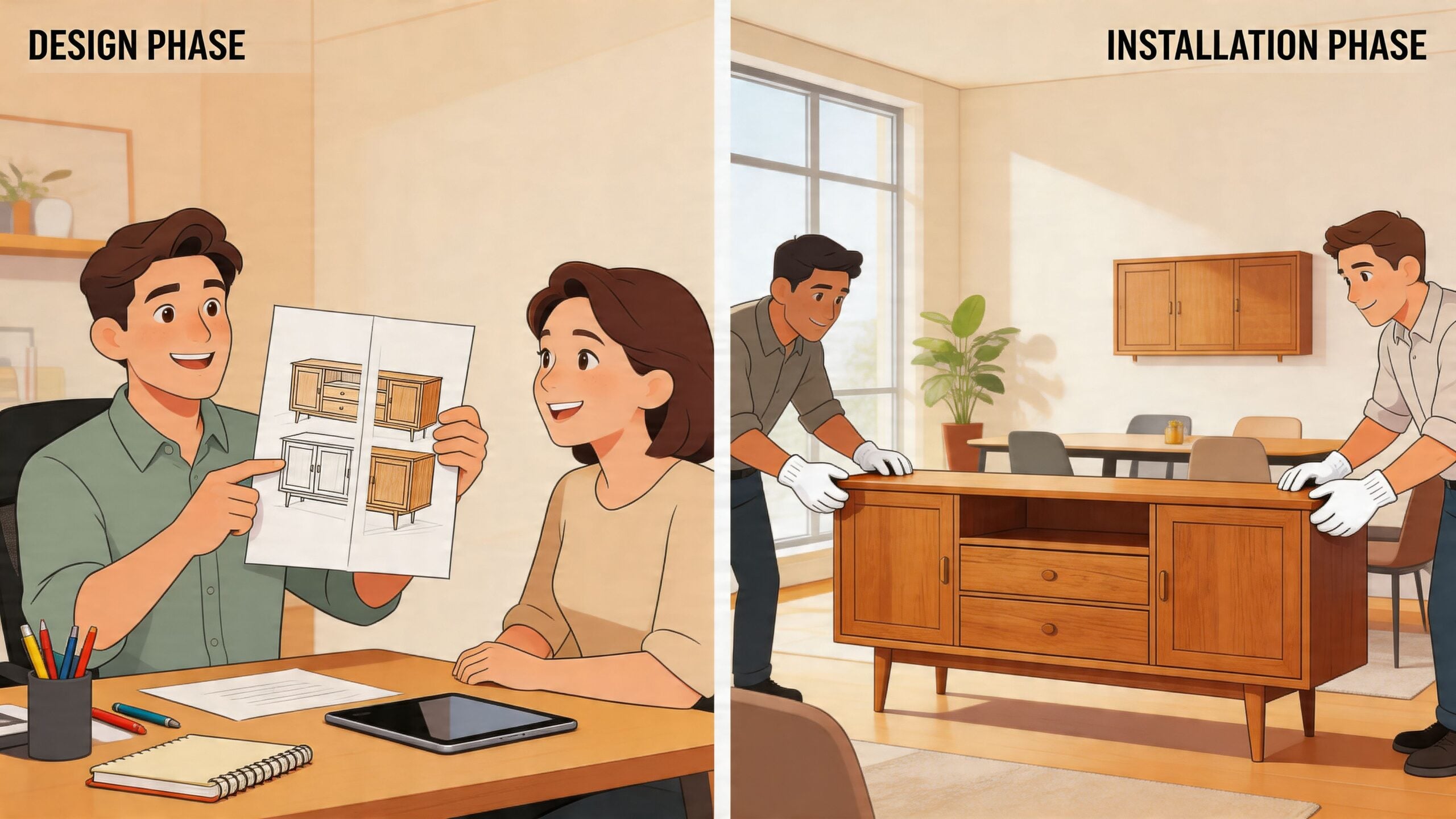
A sideboard often sits in one of the most visible places in the room. Small customisations can make an enormous difference to how naturally it belongs.
Those decisions might include:
- Finish selection: Choosing a wood tone that responds to flooring, trim, and table finish
- Hardware choice: Shifting the piece from formal to understated
- Interior configuration: Prioritising drawers, shelves, or a combination
- Scale adjustment: Favouring a more fitted silhouette for a specific wall
In practice, that’s where a curated showroom and design guidance become useful. Critelli Furniture is one option Southern Ontario homeowners use when they want access to dining storage pieces, design consultation, and custom furniture considerations within a broader room-planning process.
The value of a design studio approach
The strongest dining rooms are rarely built from isolated decisions. They come together because someone is paying attention to scale, architecture, lighting, flooring, and how the family uses the space.
A design studio approach helps answer questions clients often struggle to resolve alone:
Will this sideboard feel too heavy with my table?
That depends on line, finish, and what else is in the room, not just width.
Should the rug come first or the case piece?
Either can lead, but one should clearly set the palette for the other.
Can a formal sideboard work in an open-plan home?
Yes, if its profile, finish, and styling are balanced appropriately.
A sideboard shouldn’t look imported into the room. It should look as though the room was waiting for it.
White-glove delivery is part of the design result
For clients in the Greater Niagara, Hamilton, and Toronto markets, white-glove service matters because it protects both the furniture and the final design intent.
Professional placement changes the experience in practical ways:
- The piece is inspected before it enters the room
- Positioning is refined rather than guessed
- Packaging is removed cleanly
- The room is left ready to enjoy
That final point is often underestimated. Large case pieces can be awkward to manoeuvre, especially in older homes, stair halls, and tighter urban layouts. Proper delivery preserves walls, flooring, and the furniture itself.
From showroom to home, continuity matters
A sideboard may be chosen for beauty, but satisfaction comes from continuity. The showroom conversation, material selection, custom choices, and in-home placement all need to support one another.
When they do, the piece doesn’t just arrive. It lands well. It looks settled on the first day, and it begins serving the room immediately.
That’s what clients usually remember. Not that they bought a sideboard, but that the process respected the importance of the room they were creating.
A Timeless Foundation for Your Home
The best dining room sideboards do three jobs at once. They store what a dining room needs. They steady the architecture of the room. They express something about the household that chose them.
That’s why selecting one thoughtfully matters. Proportion determines whether the room feels comfortable. Materials determine whether the piece matures well. Style determines whether it feels connected to the rest of your home. When those three decisions align, a sideboard stops being an accessory and becomes part of the home’s long story.
What to remember before you choose
- Measure first: A beautiful cabinet still has to leave the room easy to move through.
- Ask about construction: Hardwood, proper drying, and strong joinery are worth understanding.
- Think beyond storage: The top surface, wall above, and rug below all affect the result.
- Choose for your life: Formal entertaining, family dinners, compact rooms, and collected interiors all call for different solutions.
A piece that stays relevant
Trends come and go, but sideboards have lasted because they answer enduring needs. Families still gather. Rooms still need storage. Beautiful surfaces still matter. A well-made sideboard continues to serve through changing houses, evolving tastes, and new generations around the table.
That’s what makes it an heirloom-quality decision. Not age alone, but usefulness joined to timeless craftsmanship.
If you’re considering dining room sideboards for a Southern Ontario home, take the time to see them in person, study the details, and imagine the room as a complete composition. The right piece won’t merely fill a wall. It will help the whole dining room feel more resolved, more gracious, and more like home.
If you’re ready to shape a dining room that feels complete, refined, and personal, explore Critelli Furniture. Experience the craftsmanship in person at our King Street Showroom, book your complimentary design consultation today, or visit the Rug Market to find your room’s foundation.