

Plugin Wall Light: Easy Lighting Solutions


A room can be beautifully furnished and still feel unfinished. The sofa sits perfectly. The rug grounds the seating area. The artwork has presence. Yet by evening, one chair feels dim, the bedside table needs a reading light, or a hallway lacks that gentle glow that makes a home feel settled.
That's often where a Plugin Wall Light proves its worth. Not as a compromise, and not as a temporary fix, but as a design-forward tool that solves a very specific problem with grace. It adds light exactly where a room needs it, without asking for a full electrical renovation.
For households across Southern Ontario, that flexibility matters. In older homes, condominiums, guest rooms, and thoughtfully refreshed apartments, the right wall-mounted light can complete the composition with very little disruption. A broader lighting plan may still include overhead fixtures, natural daylight, and even references to skylight and LED systems when planning the full atmosphere of a home, but the plugin wall light often handles the intimate layer of illumination that makes a space feel personal.
Since 1914, Critelli has helped families shape rooms with lasting character, and lighting has always been part of that larger conversation. A wall light isn't only about brightness. It's about proportion, comfort, and how a room offers a sense of welcome and rest.
Table of Contents
- Illuminating Possibilities with Plugin Wall Lights
- Understanding the Plugin Wall Sconce
- Curating Your Light Source
- Strategic Placement and Design Integration
- Installation and Thoughtful Cord Management
- Bring Your Vision to Light with Critelli
Illuminating Possibilities with Plugin Wall Lights
A guest room is nearly finished. The quilt is layered beautifully, the wood tones feel warm, and the bedside tables are just the right scale. Then one practical problem appears. Table lamps crowd the surface, a floor lamp looks heavy, and opening the wall for new wiring feels out of proportion to the room. A plugin wall light solves that problem with the kind of discretion designers value.
Its appeal begins with what it changes in the room, not just how it plugs in. By lifting light off the tabletop and onto the wall, it clears space, adds a vertical line, and gives the room a more considered rhythm. In rooms with heirloom case goods, custom upholstery, or carefully chosen art, that shift can make the arrangement feel more composed.
The appeal of a lighter touch
Many homes benefit from lighting changes that respect the architecture already in place. A plugin wall light offers that lighter approach. It can add focused illumination for reading, soften a bedside arrangement, or give a sitting area its own pool of light without turning a modest update into a larger construction project.
That flexibility also suits homes that evolve over time. A young family may need a nursery to become a guest room later. A reading corner may move from the living room to a primary bedroom. Designers often use adaptable lighting in exactly this way. It works much like a well-made occasional chair. Easy to place, but most successful when chosen with the whole room in mind.
For homeowners comparing daylighting options with layered interior lighting, skylight and LED systems can be part of the broader conversation. Wall lighting serves a different purpose. It brings light closer to where life happens, at the bed, beside the chair, along the hall, and near the artwork that gives a room its character.
A well-placed wall light can feel custom because it solves a specific problem with restraint.
More than a practical shortcut
The strongest plugin wall lights never read as an afterthought. They frame a headboard with balance. They give a breakfast nook a gentle glow after sunset. They help a corridor feel welcoming rather than merely passable.
Professional designers use them as part of a layered plan, much the way trim, textiles, and accent tables are used to complete a composition. The fixture itself may be simple to install, yet its design role is quite refined. Chosen carefully, a plugin wall light helps the room feel finished, gracious, and comfortably lived in.
Understanding the Plugin Wall Sconce
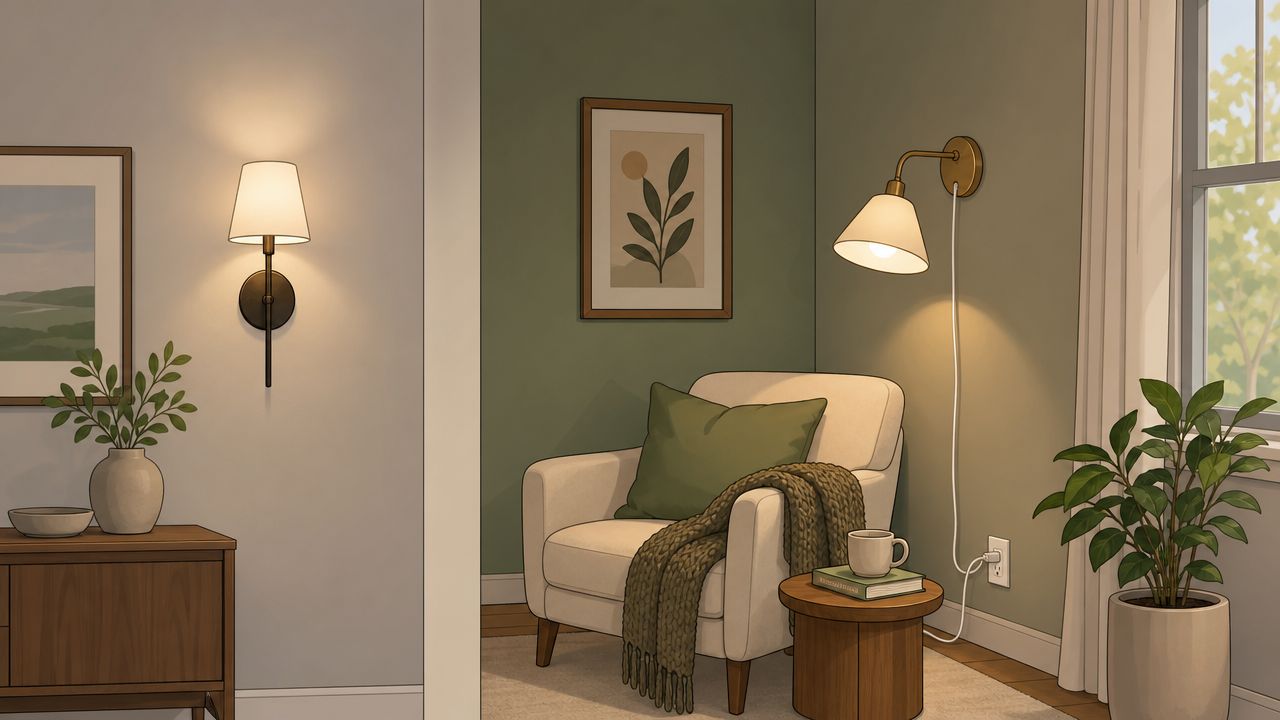
A Plugin Wall Light mounts to the wall like a traditional sconce, but instead of being wired directly into the home's electrical system, it plugs into a nearby outlet. That single difference changes how the fixture is used, where it can go, and how quickly a room can be refined.
Hardwired sconces are permanent. They usually require electrical work inside the wall, which can make excellent sense in a renovation or new build. A plugin wall sconce offers a different kind of value. It gives the room the visual language of built-in lighting while preserving flexibility.
What makes it different
Industry guidance notes that plugin wall lamps are designed to illuminate only the areas that need light, can use LED or CFL bulbs, and often include dimming or smart-plug compatibility. That shift from fixed, hardwired sconces to flexible plug-in formats makes them especially useful for fast, reversible upgrades in bedrooms and living areas without the cost of rewiring, as described in this lighting guidance on plug-in wall lamps.
That point confuses some homeowners at first. A plugin wall light is not meant to replace the room's main ceiling fixture. It's usually accent lighting or task lighting. Its role is narrower, and that's exactly why it can be so effective.
A useful analogy is this. Overhead lighting is the architecture. A plugin wall sconce is the jewellery. It doesn't carry the entire room, but it finishes it.
For readers exploring styles and formats, wall mount lighting fixtures offer a helpful view of how broad this category can be, from simple forms to more decorative silhouettes.
Where it shines best
A plugin wall light tends to work especially well when the room needs one of the following:
- Focused reading light near a bed, chaise, or lounge chair
- Ambient glow to soften a living room in the evening
- Decorative emphasis beside artwork, panelling, or a fireplace wall
- Surface-space relief when bedside tables or consoles feel crowded
Practical rule: If the room already has general lighting but still feels flat in one area, a plugin wall light is often the missing layer.
The main drawback is obvious. There is a cord. But the cord doesn't make the fixture inferior. It makes placement and finishing details more important. With artisanal craftsmanship, considered scale, and thoughtful cord management, many plugin sconces feel every bit as composed as their hardwired counterparts.
Curating Your Light Source
Choosing a plugin wall light isn't only about selecting something attractive. The fixture has to suit the task, the furniture beneath it, and the mood of the room after sunset. The most successful choices look effortless because several decisions were made carefully.
Choosing a silhouette that suits the room
Some forms are naturally more versatile than others.
A swing-arm light suits reading corners and bedside placement because the arm can shift the light closer when needed. A fixed sconce is steadier and more architectural, which makes it useful where symmetry matters. A picture-style wall light can wash a framed piece, shelving, or a vignette with a more decorative glow.
A room with traditional millwork may welcome brass or bronze with timeless craftsmanship. A cleaner, contemporary room may prefer matte black, antique nickel, or a quieter mixed-metal treatment. The right finish should speak to the room's existing hardware, nearby tables, and any visible metal details in mirrors or frames.
Choosing Your Plugin Wall Light Style
| Light Style | Primary Use | Best Placement |
|---|---|---|
| Swing-arm sconce | Reading and task lighting | Beside a bed or lounge chair |
| Fixed wall sconce | Ambient and accent lighting | Hallways, living rooms, flanking focal points |
| Picture-style wall light | Highlighting art or shelving | Above artwork, shelving, or a styled console |
Selecting finish, scale, and glow
Scale often matters more than shoppers expect. Many plugin wall sconces listed in Canada-compatible retail listings are built for a wide 110–250V input range, which suits standard Canadian 120V household outlets. Yet the more actionable buying details are often physical dimensions, such as a model measuring 14.75 inches wide, 22 inches high, and 14.75 inches deep, because projection and clearance determine how the light will behave beside furniture, according to this Canadian-compatible plug-in sconce listing.
That's where many rooms go wrong. A handsome fixture can still feel awkward if it projects too far over a nightstand, interrupts traffic flow beside a hallway console, or sits too small above a substantial headboard.
When evaluating a light, it helps to consider:
- Projection: How far the shade or arm extends from the wall
- Height: Whether the fixture feels balanced above the furniture below
- Shade shape: How narrowly or widely the light will spill
- Bulb character: Whether the light feels warm and inviting rather than stark
A dimmable bulb or compatible control can be especially valuable. It allows one fixture to serve a practical role for reading and a softer role for evening ambience.
For homeowners refining a broader lighting language, a guide to modern pendant lights can be useful when balancing wall lighting with overhead fixtures. In a well-composed interior, these choices should feel related rather than isolated.
A lighting fixture shouldn't merely match the room. It should clarify the room's intention.
This is also where a Design Studio perspective becomes powerful. A plugin wall light may be modest in scale, but it performs best when chosen as part of a complete room concept. The finish can echo a table base. The shade can soften a bold headboard. The glow can flatter the tones in upholstery and wood. That's the difference between adding a fixture and curating a room.
Strategic Placement and Design Integration
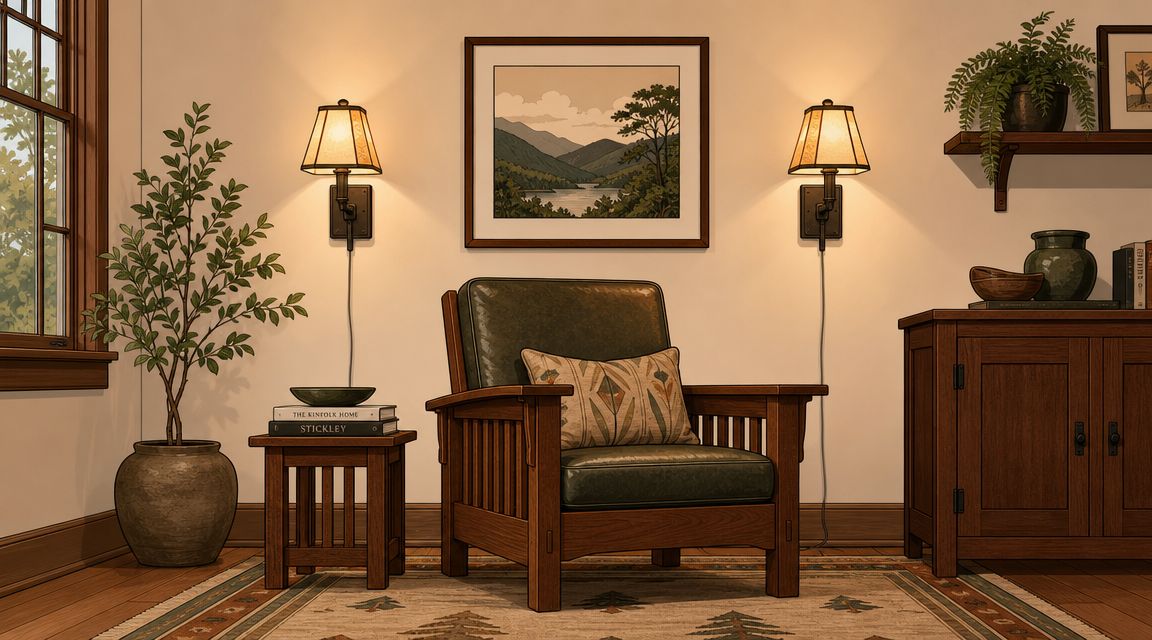
A plugin wall light often earns its place in a room the moment a practical problem appears. A bed sits where there is no junction box. A favorite reading chair needs focused light, but a floor lamp would crowd the arrangement. A hallway wants warmth and rhythm without the visual weight of another table or cabinet. Designers use plug-in sconces for precisely these moments, not as a shortcut, but as a refined way to place light exactly where the room needs it.
Good placement starts with the furniture, not the wall. The fixture should relate to the piece below it the way a frame relates to a painting. Close enough to feel intentional, balanced enough to feel calm. Guidance on plug-in wall fixture placement also reinforces a few practical principles: mount the fixture securely, keep it level, plan the cord route carefully, and place reading lights near eye level so the glow supports the task without shining harshly into the eyes, as explained in this guide to plug-in wall fixture placement.
The application changes by room.
- In the bedroom: A pair beside the bed can clear the nightstand surface and give the sleeping area a more defined outline. The sconces should visually anchor the bed, especially when a tall headboard or layered bedding already gives the wall strong presence.
- In the living room: A single plugin wall light can define a reading corner with the same precision as a well-placed armchair or side table. It is particularly useful where a floor lamp would interrupt the circulation path or make the grouping feel crowded.
- In a hallway or transition space: Smaller fixtures can create repetition and warmth, helping artwork, paneling, or plaster texture read with more depth.
There is also a practical design advantage. As noted earlier, hardwired wall lighting usually involves more labor, more disruption, and more coordination than a plug-in fixture. That makes the plugin wall light a thoughtful choice for homes where the goal is a finished, custom look without opening walls.
Designer's Insight
Layer light at three levels when possible: overhead for function, eye-level wall lighting for comfort, and low lighting through lamps or reflected glow for atmosphere.
Rooms feel richer when those layers support the materials in the space. Wood gains depth. Upholstery reads warmer. Stone, plaster, and aged metal catch light in a gentler way. Even living accents respond beautifully to this approach. For readers interested in styling with organic form, Integrating bonsai into home decor offers a thoughtful perspective on bringing sculptural greenery into a refined interior.
Lighting as part of the complete room concept
A plugin wall light should always be considered in conversation with the room around it. The finish might echo the hardware on a case piece. The shade might soften the lines of a more architectural bed or sofa. The pool of light might be used to flatter the weave of a rug, the curve of a chair arm, or the patina of a wood surface.
This is how a professional interior feels composed. Each element supports the next.
Floor coverings play a quiet but powerful role here. A richly textured rug can absorb glare, deepen the palette, and make the light above it feel more deliberate. In dining rooms and adjacent entertaining spaces, that same discipline helps wall lighting support the main fixture rather than compete with it. For a broader view of that relationship, contemporary dining room lighting offers useful guidance on building a room that feels connected from ceiling to floor.
Installation and Thoughtful Cord Management
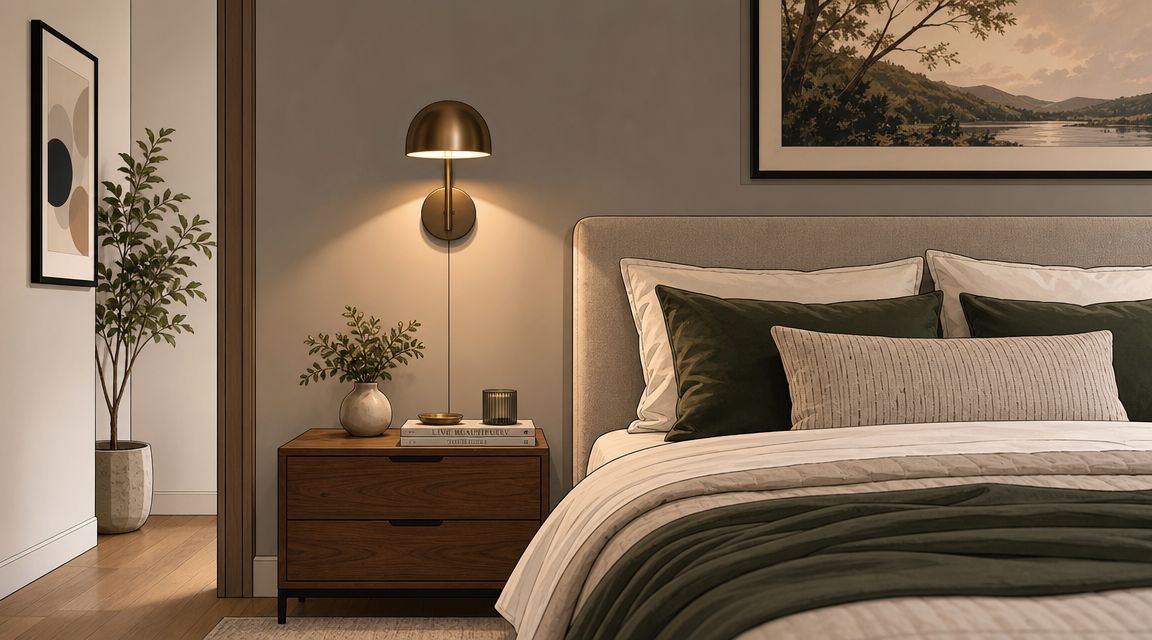
Many people hesitate over a plugin wall light for one reason alone. The cord feels visible before the fixture ever has a chance to prove its elegance. Yet the cord is rarely the underlying issue. Untreated, it can look accidental. Managed well, it becomes part of a composed installation.
Mount first, then refine the line
A plugin wall light should be mounted securely and level before any decision is made about the cord path. Once the fixture is in the right place, the cord can be guided with much more confidence.
Several strategies keep the result orderly:
- Paintable cord channels: These help the line recede into the wall.
- Fabric or braided covers: These can feel decorative in more layered interiors.
- Furniture-assisted concealment: A headboard, tall chest, or console can hide part of the descent.
- Deliberate routing: A straight, disciplined line nearly always looks better than a loose curve.
One useful mindset shift helps here. Cord management isn't a cover-up. It's trim work for lighting.
For homeowners who also think broadly about household electrical safety, residential electrical fire prevention can be a worthwhile complementary read alongside decorative planning.
A corded fixture category such as corded pendant lighting can also help readers recognise how visible cords can be integrated thoughtfully when the design is handled with intention.
Safety deserves equal attention
This is the point many casual tutorials skip. In Ontario, electrical installations fall under the oversight of the Electrical Safety Authority. For plugin fixtures, safe use includes making sure the cord isn't damaged, isn't placed under rugs, and doesn't create a trip hazard, as highlighted in Ontario-focused guidance referenced through the Electrical Safety Authority lens.
The safest installation is also usually the calmest looking one. Clean routing, secure mounting, and a clear floor line serve both beauty and peace of mind.
Near beds, upholstered seating, and children's rooms, thoughtful placement becomes even more important. The outlet must suit the intended location, the cord shouldn't cross a walkway, and the switch should remain practical to reach. If the room requires more than careful mounting and cord refinement, a hardwired option or professional advice may be the better path.
That distinction matters in a heritage-minded home. Good design doesn't ignore practical realities. It resolves them elegantly.
Bring Your Vision to Light with Critelli
A plugin wall light may be small, but its role is significant. It adds intimacy where ceiling lights can feel blunt. It solves reading and accent-lighting problems with less disruption than hardwiring. It helps a bedroom, living room, or hallway feel finished rather than merely furnished.
A small fixture with a large design role
The most successful installations share a few traits. The fixture suits the room's purpose. The scale respects the furniture below it. The placement feels natural. The cord is handled with care. When those details align, the result feels bespoke rather than improvised.
One example within that wider category is the Compass Black Wall Sconce, which illustrates how a wall-mounted light can function as both illumination and visual punctuation within a room.
Professional guidance makes it feel effortless
For many homeowners in the Greater Niagara, Hamilton, and Toronto markets, the question isn't whether a plugin wall light can work. It's how to make it feel integrated with heirloom quality furnishings, existing architecture, and a room's full material palette.
That's where experienced design guidance matters. A light should support the seating plan, flatter the rug, and belong to the architecture of the room. At Critelli, that thinking has shaped interiors for generations. As a family-run company founded in 1914, the firm approaches lighting as part of a whole home experience. The Design Studio helps clients build complete room concepts, and White-Glove Delivery ensures larger furnishings arrive and are placed with the same level of care the room itself deserves.
A plugin wall light may begin as a practical choice. In the right room, with thoughtful curation, it becomes part of a lasting interior story.
A beautifully lit room is never accidental. It's curated. To explore lighting, rugs, and heirloom quality furnishings as part of one complete vision, experience the craftsmanship in person at Critelli Furniture. Readers seeking luxury furniture Niagara, interior design services St. Catharines, custom furniture Southern Ontario, or hand-knotted rugs Ontario can also book your complimentary design consultation today or visit the Rug Market to find your room's foundation.