
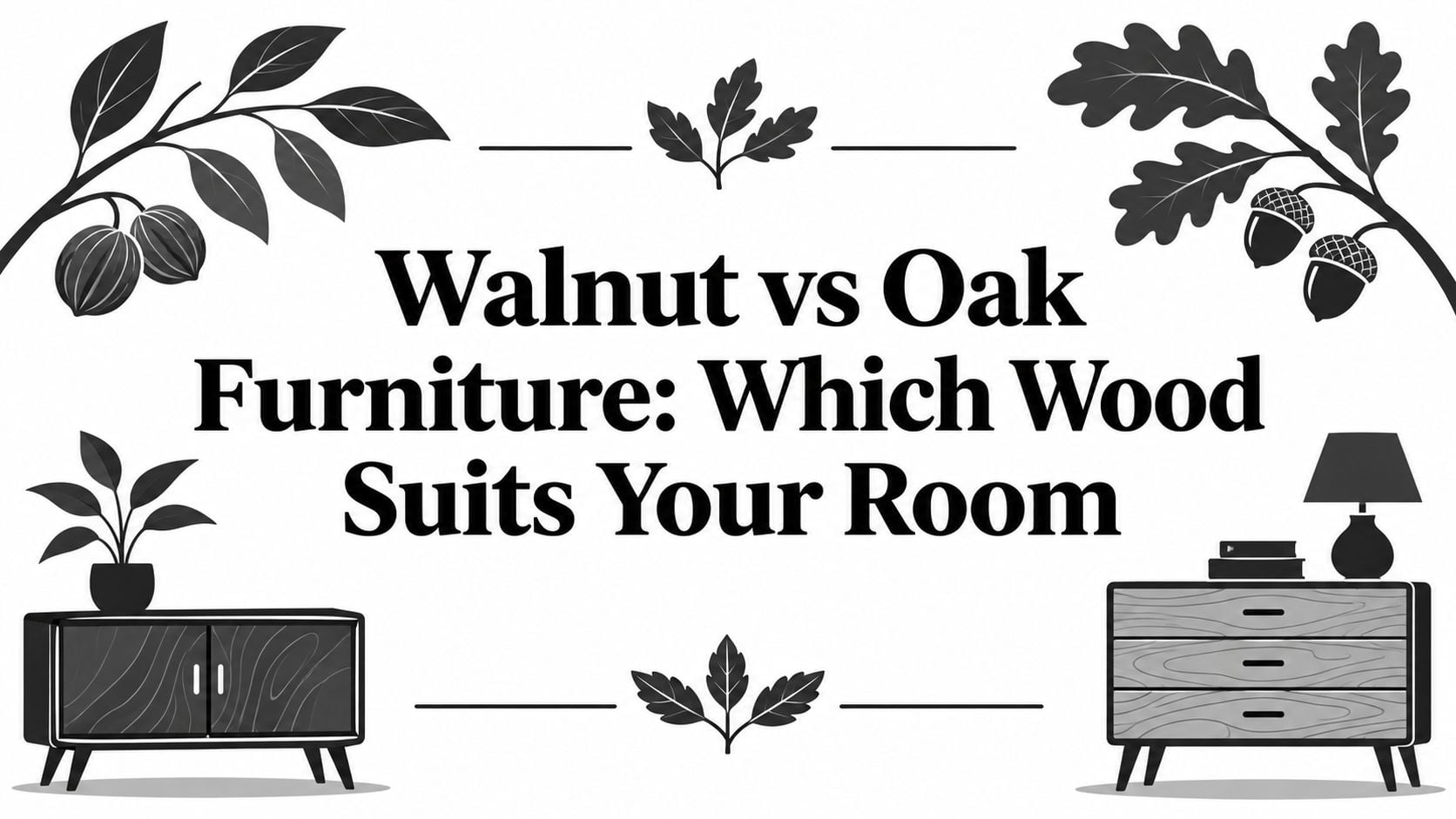
Walnut vs Oak Furniture: Which Wood Suits Your Room

A dining table decision usually starts in a kitchen. One person wants walnut for its deep warmth. Someone else points out that the children do homework at that table, that chairs scrape across it, and that a cast-iron pan has already landed hard on the current top.
Both instincts are right, and that's precisely why most Walnut vs Oak Furniture comparisons go wrong. They turn a room-level question into a species-level answer, then argue about hardness charts for a thousand words and leave the reader no closer to a decision.
Four variables decide how a piece performs over twenty years: the wood, the construction, the finish, and the conditions in the room where it will sit. Wood is the variable buyers argue about most and the one that matters least once the other three are settled.
Walnut and Oak Side by Side
A family in a St. Catharines kitchen has narrowed the choice to two tables of identical dimensions in a similar price bracket, one in black walnut and one in white oak. The question isn't which looks better under showroom lighting. It's which one still pleases when it has been sat at, spilled on and pushed against a wall for a decade.
Black walnut and white oak at a glance
| Criterion | Black walnut | White oak |
|---|---|---|
| Janka hardness | Approximately 1,010 lbf | Approximately 1,360 lbf |
| Specific gravity | Roughly 0.55 | About 0.68 |
| Typical grain | Straight and even | Prominent ray flecks when quartersawn |
| Colour | Deep, warm brown | Paler, more golden |
| Machining | Easier to work | Harder to machine |
| Weight of an equivalent piece | Lighter | Heavier and more substantial |
The measurable rows do most of the arguing. Hardness explains why oak tolerates a dropped set of keys; density explains why an equivalent oak component feels heavier in the hand and more planted on the floor. Red oak sits between the two on hardness, which is why it turns up in so many family dining sets.
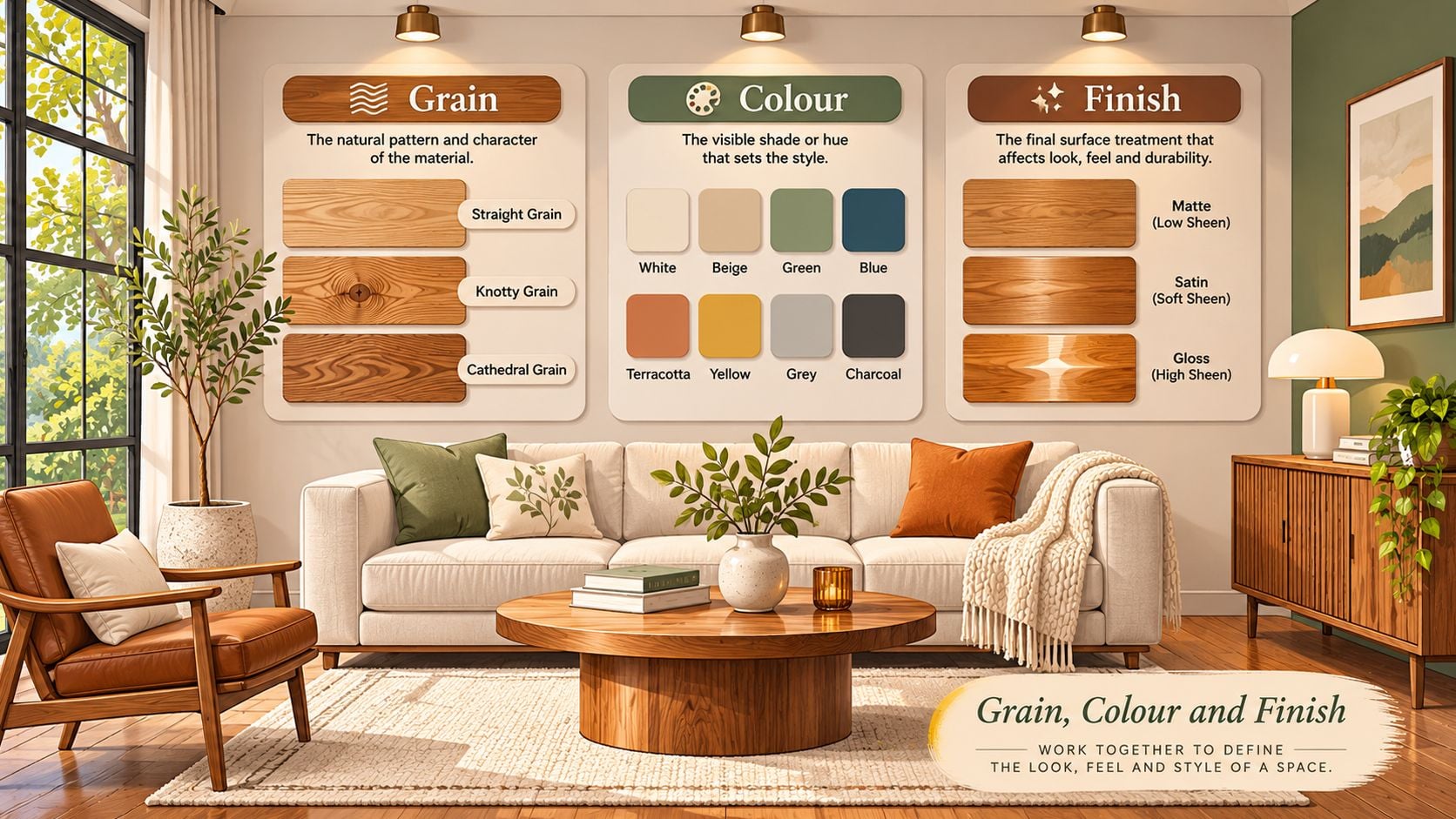
Grain and colour settle the rest. Walnut runs straight and even, forgiving in a formal room and easy to machine into clean edges and tight joinery. Quartersawn oak shows ray flecks that read as texture rather than colour, and plain-sawn boards carry broad cathedral arches that some rooms wear well and others find busy.
The short verdict. Specify oak for high-contact surfaces such as dining tables, desks and seating frames. Specify walnut where a refined look, lower weight and easier machining matter more than dent resistance. That's the whole trade-off in two sentences.
The advice has a specific local history behind it. Critelli Furniture has been family-run in the Niagara area since 1914, which means the store has been furnishing Southern Ontario homes across several generations of local winters. That continuity frames the purchase around heirloom quality and room longevity rather than a trend-driven replacement cycle.
Anyone weighing furniture against the floor beneath it will find this guide to wooden floor types useful for matching tone and grain direction underfoot. For the table itself, kiln drying, joinery and finish schedules are covered in this overview of solid wood furniture. Use the table by finding the row that matches the piece in question, then read the section that explains it. A dining table and a bedroom dresser don't need the same answer.
Grain, Colour and Finish in a Styled Room
A living room in Hamilton holds a walnut sideboard and an oak coffee table at the same time. The pairing sounds like a mistake until it's styled: linen slipcovers, a brass lamp, and textiles that pull the two browns into one palette. The walnut sideboard gives the back wall warmth and visual weight. The oak coffee table, lighter and more open in the grain, stops the centre of the room from going heavy.
Southern Ontario daylight shapes that balance. Winter light comes in low and cool for months, and oak reads brighter and airier under it, which is why a pale oak table doesn't feel cold in February. Walnut absorbs more of that light and holds its depth in the evening under lamps, when the room is in use.
Finish changes the outcome as much as species does. An oil finish lets grain show and can be refreshed on a small area later. A film finish such as lacquer gives a sleeker, more uniform surface. A stain pushes either wood towards a different colour entirely, which is how a pale oak top ends up impersonating something else. Compare the finish as carefully as the wood.
How each wood ages
Walnut deepens and warms with exposure to light, so a piece bought dark will mellow rather than stay exactly as delivered. Oak develops an amber tone over the years. Neither change happens at a fixed rate, and a cabinet beside a bright window ages differently from one against an inside wall.
Designer's Insight: Approve a finish under the room's weakest light, not its best. A walnut top that glows under a warm lamp can go flat on a grey January afternoon, so look at the sample at midday and again after dark before signing off.
That single-room logic scales to the whole floor plan. Critelli Rug Market treats rugs as "Art for Your Floor" and as the foundation of a room's colour palette rather than an afterthought to furniture selection. A hand-knotted wool rug can mediate walnut's deeper presence or ground oak's lightness, which is why the rug gets chosen first and the woods fall in behind it. Furniture, rug, upholstery and lighting get chosen as one composition, and a design mood board keeps those choices coherent before anything is ordered.
Before committing, take finished samples of both woods home and lay them beside the rug, the flooring and the largest upholstered piece. Check them in daylight and again under evening lamps, because warm bulbs push oak towards gold and walnut towards red. Sample size matters as much as the test itself: a palm-sized offcut hides the cathedral arches that a full oak tabletop will show, so ask for a board wide enough to read the grain clearly.
Durability and Dent Resistance at Home
Two questions get confused constantly on the showroom floor: will it dent, and will it move. Different properties answer them. Dent resistance follows hardness and density, which the USDA Forest Products Laboratory quantifies for both species and which the comparison table above sets out.
White oak's higher hardness means chairs, tableware and everyday impact leave less of a mark, and its greater density makes an equivalent component feel heavier and more substantial. On a table used daily, that shows up as a surface still reading flat after a decade of plates set down hard.
Walnut's advantages sit elsewhere. It is normally straight-grained and comparatively stable in use, which suits fine furniture, cabinetry and natural finishes where a calm, even surface matters more than impact tolerance. Finish quality, edge design, joinery and moisture control routinely outweigh species in service life, and a well-built walnut table will outlast a badly built oak one by a wide margin.
What decides how long a piece lasts
Service life is set by how well the maker controlled moisture before assembly, how the edges are shaped to take wear, how the joints are cut, and how the finish is built up in coats. Species sets hardness, while craftsmanship sets how long the piece lasts. Buyers who compare only the wood are reading the least informative line on the specification sheet.
The rule that saves the most furniture: judge the construction first, the finish second, the species third.
The same logic runs through kitchens and built-ins, where the choice between solid wood versus MDF cabinets decides how a door takes a knock and how refinishable the surface stays. A frame is only as good as its joints, and these notes on wood joinery techniques walk through the joints worth asking about.
Three checks on the showroom floor
- Confirm the lumber was kiln-dried. Stock that hasn't been brought down to indoor moisture content keeps moving after it lands in a heated house.
- Pull a drawer and look at the joints. Cleanly fitted, with no visible gaps and no filler, tells you more about the workshop than any brochure.
- Ask whether the top is finished on all faces. A top sealed on one side and left raw on the other takes on and releases moisture unevenly, and that's how a top cups.
Properly prepared walnut and oak, stabilized to an equilibrium moisture content of roughly 12 to 16 percent, are both unlikely to warp or develop structural problems as indoor conditions change, as this overview of custom furniture construction sets out. That conditioning is the best insurance policy, more than the name on the label.
Humidity and Care in Southern Ontario Homes
Heated interiors in January run bone dry, and by July the air turns heavy again. Each swing pushes wood to take on or release moisture, and the damage shows up slowly: a hairline crack at the end grain, a door that starts to drag, a joint that works loose after a few winters.
The practical question for a St. Catharines, Hamilton or Toronto homeowner is what construction and care come with the piece. A wide solid top moves more across the seasons than a veneered panel built on a stable core, which is one reason well-made veneer work earns a second look in a room that swings between dry heat and summer damp. Whatever the construction, the job is the same: hold indoor humidity in a moderate, steady band all year instead of letting it climb and crash. I'd put a hygrometer on a shelf near the furniture, run a humidifier through the heating season, and let a dehumidifier or air conditioning handle the sticky weeks.
Placement and care that make a difference
- Keep pieces off heat sources. Radiators, forced-air vents and direct sun through south-facing glass dry one side faster than the other and fade colour unevenly.
- Dust with a dry, soft cloth. Skip silicone polishes, which build up and can dull a film finish over time.
- Wipe spills promptly and use coasters and felt pads. Rings come from moisture sitting on the surface, not from the wood being soft.
- Recoat oil finishes on the maker's schedule. A thirsty-looking surface is asking for it, and a small refresh beats a full refinish. This guide to protecting wood furniture from scratches and stains covers day-to-day protection in more detail.
When to call for help
A hairline split at the end grain of a solid top usually closes on its own as humidity rises. A gap opening along a glued joint, a drawer that has started to stick, or a top that cups tells a different story, one that wants attention before it worsens.
Walnut and oak answer to the same air. A well-made walnut piece holds up beautifully where humidity stays controlled, while oak's harder surface earns its keep where daily knocks are constant. Hardness handles dents; dimensional stability comes from how the lumber was dried and how the piece was built. For added peace of mind, Critelli Furniture offers the Guardsman Gold Furniture Protection Plan, which covers damage and stains on fabric, leather or wood furniture.
Matching Each Piece to Its Room
A walnut buffet beside an oak dining table works in a family dining room when each tone shows up twice. Repeat the walnut in a shelf or frame, repeat the oak in a bench or sideboard, and the pairing reads as deliberate instead of mismatched.
The table below is scanned by use rather than by species, because the piece in front of you is the deciding factor.
Best species by furniture piece and room use
| Piece or use | Better species | Reason |
|---|---|---|
| Dining table used daily | Oak | Higher hardness resists dents from plates and chairs |
| Desk and work surface | Oak | Stronger impact and scratch resistance under heavy use |
| High-traffic seating frame | Oak | Denser frame that tolerates everyday stress |
| Bedroom case goods | Walnut | Easier to machine, warm tone, stable indoors |
| Living room cabinetry and entertainment unit | Walnut | Refined appearance and lighter weight |
| Occasional table | Either | Choose by grain and finish rather than hardness |
The dining-table row carries one caveat. Humidity swings are what push a top around, so a well-engineered walnut table stays viable in a dining room held at steady indoor humidity all year. An uncontrolled room running dry in winter and damp in July gives oak's harder, denser surface a little more margin against daily knocks.
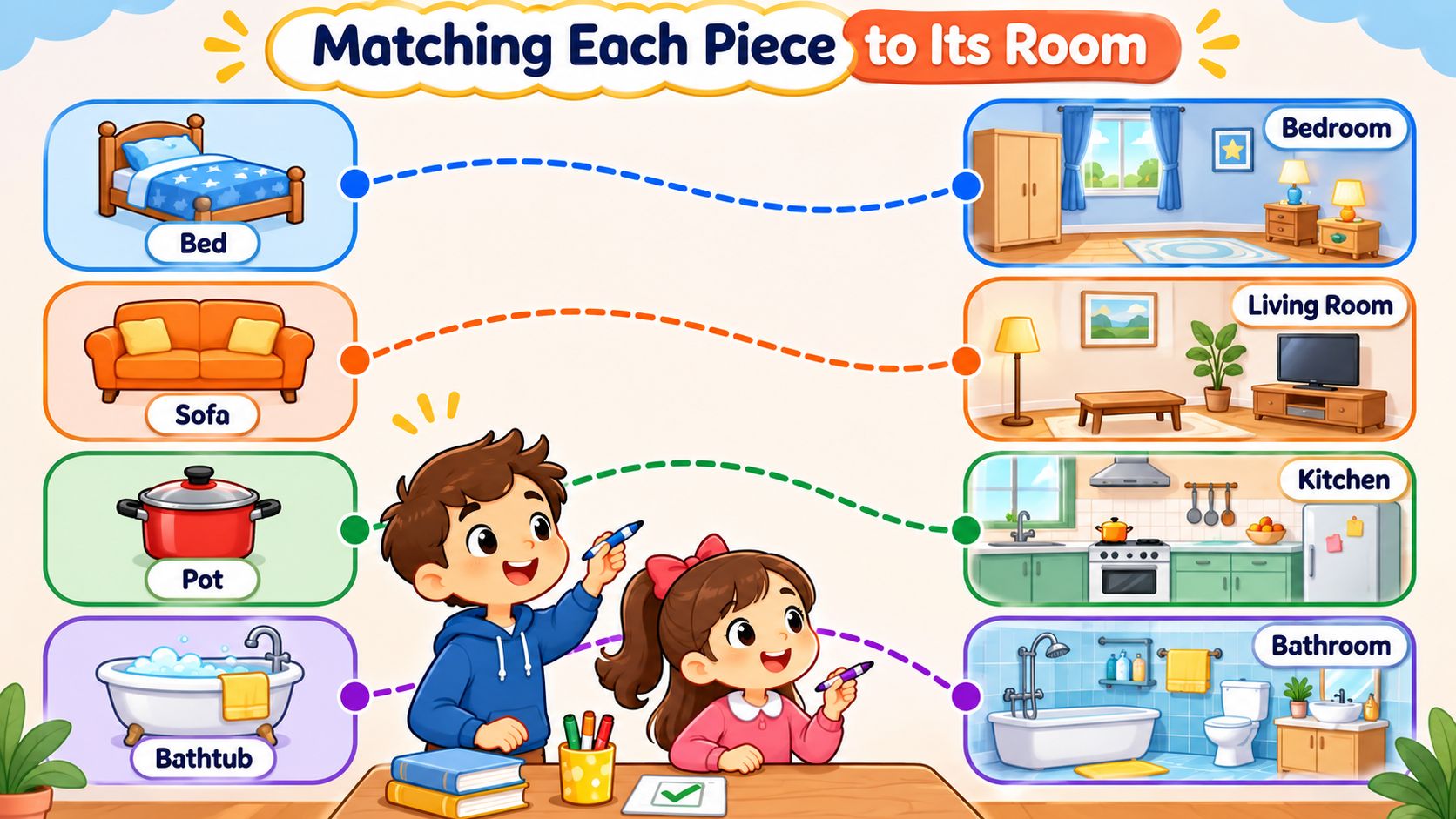
Bedroom case goods are where walnut earns its keep. It machines cleanly, holds a warm tone under bedside lighting, and stays stable indoors, which matters for drawer fronts that need to keep an even reveal across seasons. Occasional tables are the one place the species argument dissolves: a side table holding a lamp and a book rarely meets the abuse a dining table does, so grain and finish decide it.
Construction belongs in the same decision. A walnut-veneer cabinet on a stable core can hold flatter through a dry winter than a wide solid top, which is why species, build and room humidity get chosen together rather than one at a time.
Getting the surrounding room right is the other half. Guides like these Tony Painting dining room decor tips show how sideboards and cabinets sit inside a scheme rather than on their own. Mixing species takes more care than a single-wood room: a walnut chair set beside an oak top often looks mismatched in a photo when the undertones sit far apart, while a shared finish sheen or grain direction makes the same pair look intentional. Walnut dining chairs around an oak table either commit to that contrast or fight it, so decide which before ordering.
Range helps here. With more than 60 brands of furniture from around the world, the majority of them North American made, a showroom can furnish one room in either wood or a considered mix. A Made in Canada category narrows the search further for buyers who want the piece built closer to home.
What Drives the Price of Walnut and Oak
Two dining tables of identical size, one walnut and one oak, can land far apart in price, and the gap rarely runs in the direction buyers expect. Species is one cost driver among several. On the evidence of real retail listings, construction and board selection move the number further.
The clearest example is a pair of veneer dining tables from the same round of listings. One, an extendable table, was offered in walnut or washed-oak veneer at a single identical price for both finishes. The second, a walnut-veneer table built to California's Phase 2 composite-wood standard, listed well above it. Two finishes at one price means the species contributed nothing to that figure. The build underneath did the work.
Six walnut and oak listings, placed side by side. The piece descriptions are real; read the last column to see how the set orders itself.
| Piece | Construction | Where it sat in the set |
|---|---|---|
| Walnut-finish solid quartersawn American oak platform bed, hand-built in California | Solid | Highest of the six |
| Solid quartersawn American oak sofa table | Solid | Lowest of the six |
| Walnut-veneer dining table, California Phase 2-compliant | Veneer | Middle |
| Extendable dining table in walnut or washed-oak veneer | Veneer | Second lowest, identical across both finishes |
| California-made solid walnut library table | Solid | Third highest |
| California-made solid quartersawn oak desk | Solid | Second highest |
The order is messier than a simple rule because piece size matters too: the cheapest listing is also the smallest piece in the set. Even so, the top of the range is all solid construction, and the one piece offered in two species carries a single price tag. When the same table costs the same in walnut and in oak, the species debate stops being about money.
What moves the price most
- Solid versus veneer construction. The biggest single lever. A veneered top uses a thin layer of real wood over a core, which lowers cost and can stay perfectly stable across a wide surface, but it limits how many times the top can ever be sanded.
- Quartersawn versus plain-sawn boards. Quartersawn oak carries a premium because the cut yields less usable timber and produces the ray figure buyers ask for by name.
- Grade and figure of the timber. A matched, consistent set of boards costs more than a mixed bundle, which is how two walnut tables of identical size end up far apart.
- Joinery quality. Hand-cut dovetails, mortise and tenon frames and properly fitted drawer boxes take hours that stapled construction doesn't.
- Finish complexity. A hand-applied multi-step schedule is labour, and labour is priced.
- Catalogue versus custom. A stocked piece costs less than a bespoke one built to a specific dimension, fabric and wood choice, and custom work runs on a longer clock.
Three questions sort out most of the difference at any seller. Is the top solid or veneered, and which parts are which. How was the lumber dried, and to what moisture content. What is the finish schedule, and how is a scratch repaired five years from now. That second question is the one sellers skip most often, and it is the one that decides whether a top stays flat through a Southern Ontario summer. A seller who answers all three without checking a sheet understands what they are selling.
A higher upfront price is justified when it buys a solid, repairable piece that will still be serviceable decades on. The cheapest table often costs more across a lifetime of use, once it has been replaced twice. For a piece built to a specific dimension, timber and finish, Critelli Furniture takes custom orders made to a customer's needs, offers financing, and backs the purchase with a Low Price Guarantee.
Choose Your Wood and Plan Its Arrival
Choose oak when the piece will take daily impact and the room is hard to hold at a steady humidity. Choose walnut when warmth, lighter weight and workability lead, and the room can stay within a comfortable indoor range year-round. Choose both when the space can carry contrast: oak where wear is heaviest, walnut where the eye rests longest.
Then plan how the piece gets through the door. A solid walnut sideboard is heavy, its surfaces are finished, and fitted components can shift if it is tipped on a stair turn. White-glove delivery is a defined final-mile process that covers pre-delivery inspection, careful handling, in-home assembly where required, precise placement in the designated room, and removal of all packaging and installation debris.
That sequence matters more with hardwood than with flat-pack. When the crew assembles and places the piece, the room is composed and ready to use the moment they leave, with no homeowner left holding a hex key over a pile of cardboard.
Delivery timeframes for custom made furniture vary between brands, and buyers are asked to call for details, so the date belongs in the conversation before the order is placed. My advice is to settle it early: a complimentary design consultation at the King Street showroom can decide wood, dimensions and timing in one visit, and the delivery window then shapes the order rather than surprising it.
Walnut and oak both reward a considered purchase, and the difference between a piece that lasts for decades and one that does not is usually visible in the joints before it is visible in the grain. Critelli Furniture has helped Southern Ontario homeowners make that call since 1914, with dining tables, bedroom case goods and custom orders in both woods. Visit Critelli Furniture to compare the two side by side, in daylight and under lamplight, before deciding which one belongs in your room.