
Dining Room Rug Dimensions: A Timeless Sizing Guide

A dining room rug often becomes the last decision in the room and the one that establishes the room's final cohesion. The table may be chosen, the chairs may be in place, and the lighting may already cast the right evening glow. Then comes the practical question on the floor. What size functions best?
That question matters more than most homeowners expect. A rug that's too small looks skimpy and catches chair legs. A rug that's too large can crowd the perimeter and make a beautifully proportioned room feel pinched. In heritage homes across St. Catharines and the Greater Niagara area, the challenge is often architectural. In Toronto condos, it's often square footage. In both cases, correct dining room rug dimensions shape how the room lives day after day.
Table of Contents
- An Introduction to Heirloom Quality Underfoot
- The 24-Inch Rule The Cornerstone of Functionality
- How to Measure Your Space for a Bespoke Feel
- Rug Sizing Recommendations for Your Table
- Common Sizing Mistakes and Advanced Considerations
- Find Your Room's Foundation at Critelli
An Introduction to Heirloom Quality Underfoot
A familiar scene plays out in many homes. The dining table is in place, the chairs feel right, and the room is almost complete. Yet the floor still feels unresolved. The missing layer isn't only decorative. It's what anchors the composition, softens the acoustics, and gives the room its sense of permanence.
That's why many designers speak of a rug as Art for your Floor. It isn't filler. It's the visual foundation that helps every other element belong. In a design-forward room, the rug often establishes the mood before a guest notices the finish on the table or the silhouette of the chandelier.
A century-old family-run design authority founded in 1914 brings a useful perspective to this decision. Rooms with timeless craftsmanship rarely feel accidental. Their proportions are organised. Their materials have weight. Their layers feel curated rather than crowded. The rug plays a central role in that balance, especially in a dining room where movement matters as much as appearance.
A dining rug has two jobs at once. It should look composed when the chairs are tucked in, and still work beautifully when every chair is pulled back.
For households thinking long term, maintenance also belongs in the decision. A helpful guide on how to clean a rug from Altitude Cleaning Crew offers practical care ideas that support heirloom quality over time.
Those exploring a more artisanal, hand-selected foundation can also browse a curated rug collection to see how texture, pattern, and scale influence the complete room concept.
The 24-Inch Rule The Cornerstone of Functionality
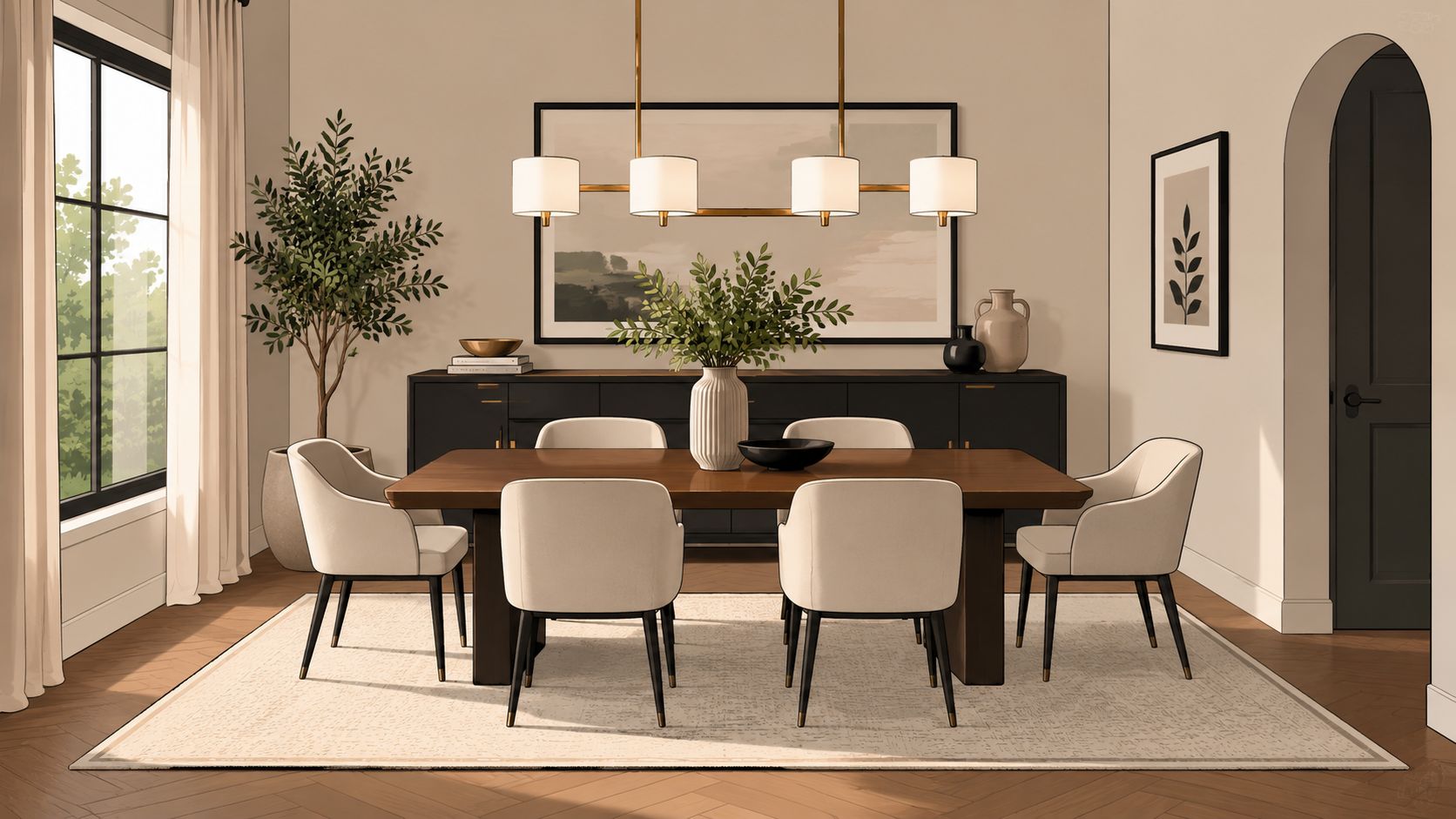
The most reliable starting point for dining room rug dimensions is simple. The rug should extend beyond the table far enough that a pulled-back chair remains on the rug.
Why this rule matters in daily life
For dining tables in Southern Ontario homes, the industry-standard technical specification for rug dimensions calls for a minimum peripheral extension of 24 inches (61 cm) beyond all table edges, a requirement tied to average seat depth and full chair retraction for premium ergonomic seating such as Stressless collections, as noted in this guidance on how to choose an area rug size.
That measurement isn't an aesthetic trick. It solves a daily problem. When the chair slides back for someone to stand, the rear legs shouldn't drop off the edge of the rug onto a hard surface. When they do, the motion feels awkward and the chair can lurch, scrape, or snag.
Think of the rug as the stage beneath the table. If the stage ends too early, the performance becomes clumsy. Dining should feel smooth, stable, and quiet. The correct extension creates that experience.
A simple way to think about clearance
A practical method is to picture the table in two positions:
- At rest. Chairs are tucked in and the rug frames the entire dining group.
- In use. Chairs are pulled back and still sit fully supported.
- In circulation. Guests move in and out without catching a chair leg on the rug's edge.
Practical rule: Measure the table first, then add the needed clearance on every side before looking at patterns or colours.
A common point of confusion for homeowners arises. They shop by standard rug size first and room function second. That sequence tends to produce mistakes. A beautiful hand-knotted rug can still be the wrong rug if it fails the chair test.
The 24-inch rule is the cornerstone because it protects comfort before style enters the conversation. Once that functional threshold is met, material, colour, border detail, and bespoke character can follow with confidence.
How to Measure Your Space for a Bespoke Feel
Good proportions come from two measurements, not one. The table determines the minimum working size. The room determines the maximum comfortable size.
Start with the table, not the room
Begin with the dining table itself. Measure the full length and width if it's rectangular, or the diameter if it's round. Include the table in its everyday configuration, especially if leaves stay in place most of the year.
Then consider the chairs used in the room. A slim wood chair and a generously upholstered dining chair don't behave the same way when pulled back. This is why bespoke planning always starts with real furniture, not a generic chart.
A straightforward measuring sequence helps:
- Measure the tabletop in its normal dining position.
- Account for the chairs that belong with it, especially if they have deeper seats or curved backs.
- Add the necessary pull-back space around the table footprint.
- Mark the outline on the floor with painter's tape to judge the scale before ordering.
For homeowners planning a broader refresh, ideas that transform your home's interior can help frame the rug as part of a larger room composition rather than an isolated purchase.
Then measure the room perimeter
Once the working rug size is clear, the room itself becomes the next test. In Southern Ontario estates where dining rooms often range from 14 to 18 feet in width, the bare floor border guideline calls for 12 to 18 inches of exposed flooring between the rug edge and the wall, and the optimal footprint is found by subtracting 24 to 36 inches from the room's total length and width, a principle applied by professional space planners in design studio work.
A dining rug shouldn't float too small, nor should it press against the walls and baseboards.
Leave enough visible floor around the rug for the room's architecture to breathe. Trim, sunlight, and wall lines all read more elegantly when the rug stops short of the perimeter.
A quick example makes this easier to visualise:
- If the room feels generous, a larger rug can define the dining zone while preserving a border of floor.
- If the room is narrower, the maximum rug size may be set by wall clearance before the ideal chair clearance is achieved.
- If those two needs conflict, the chair style often decides the best compromise.
That's where a complete room concept becomes valuable. In well-resolved interiors, the rug, table, and seating are measured together, not selected in isolation.
Rug Sizing Recommendations for Your Table
Standard rug sizes are useful, provided they're treated as starting points rather than rigid rules. Table shape, seating style, and room layout all influence the best choice.
A compact overview helps narrow the field before final measuring.
| Dining Rug Size Guide | ||
|---|---|---|
| Table Size & Shape | Seats | Minimum Rug Size |
| Rectangular table | 4 | 8×10 feet |
| Rectangular table | 6 | 8×10 feet |
| Rectangular table | 6 | 9×12 feet |
| Round table | 4 to 6 | 8-foot diameter rug |
| Round table | 6 to 8 | 9-foot or 10-foot diameter rug |
| Square table | 4 | 8×10 feet |
For a fuller look at dining group proportions, this guide to dining tables, chairs, and benches helps place the rug within the larger furniture plan.
Rectangular tables
For standard 4-person dining tables, the safest and most common starting rug size is 8×10 feet, which provides the recommended clearance. For 6-person tables, 8×10 can work in compact layouts, but 9×12 is the stronger choice when chair movement is the priority.
That recommendation aligns with what many households discover in practice. The smaller option may fit the room. The larger one usually feels calmer once the chairs are in use.
Round tables
Round tables need special attention because the clearance must remain consistent along the full circumference. In California market guidance, a 4 to 6 seat round table pairs with an 8-foot diameter rug, while a 6 to 8 seat round table usually needs a 9-foot or 10-foot diameter rug to maintain the necessary functional border.
That shape can be especially graceful in condos or breakfast-adjacent dining areas because it softens circulation paths. It also demands honest measuring. A round table on a too-small round rug looks correct only until the first chair is pulled back.
Square tables
Square dining tables are often overlooked in sizing guides, yet they follow the same logic. A square table for four generally benefits from an 8×10 starting point when paired with standard dining chairs. The shape reads especially well in rooms that are nearly square themselves because it preserves symmetry.
Designer's Insight
Our designers suggest pairing a bold Hancock & Moore leather with a neutral hand-knotted wool rug to balance the room's energy. The contrast keeps the palette grounded while allowing artisanal detail and timeless craftsmanship to stand out.
Common Sizing Mistakes and Advanced Considerations
The most common rug mistake isn't choosing the wrong pattern. It's assuming every dining chair behaves the same way.
The dynamic chair zone
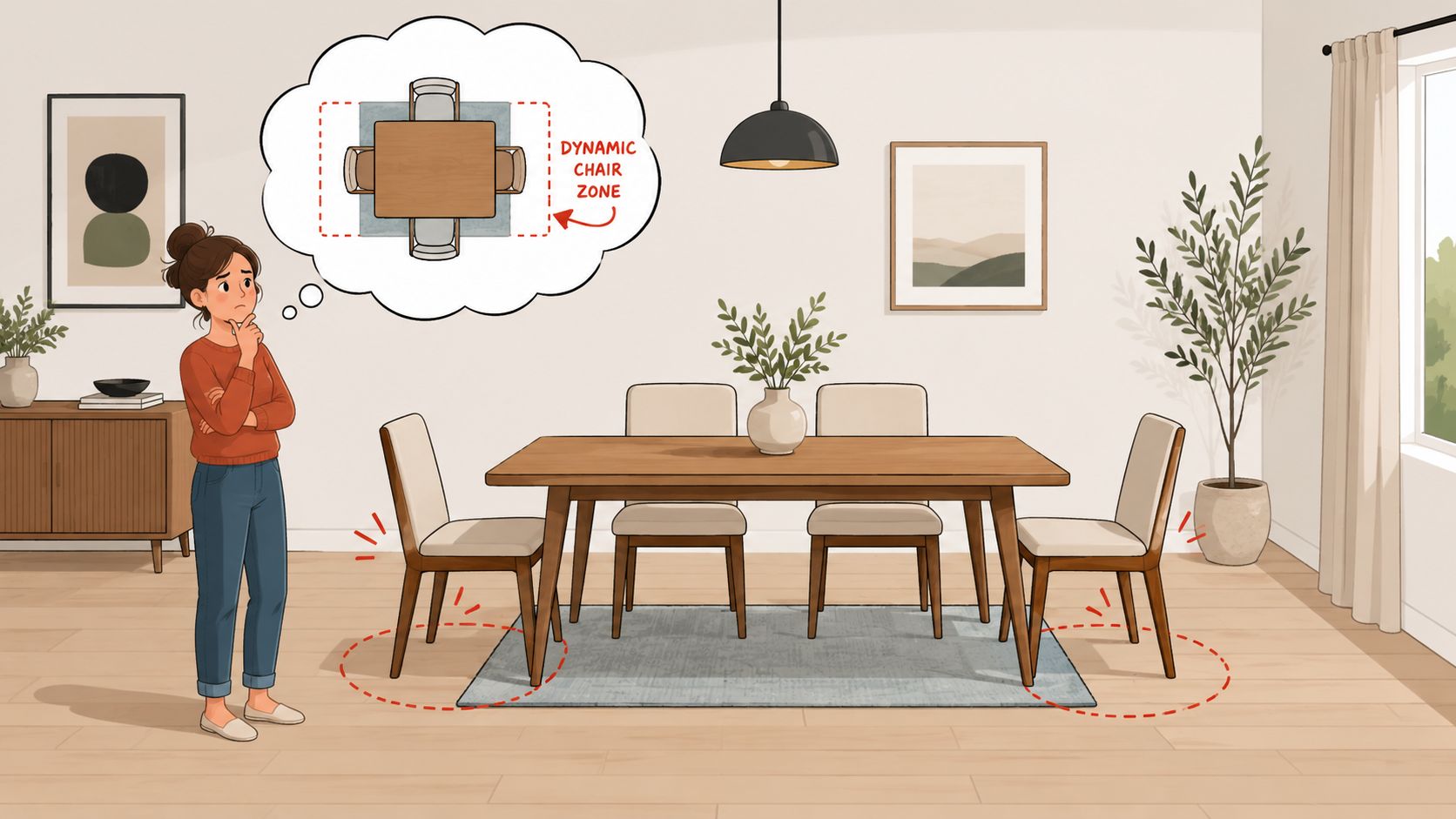
Many guides stop at the universal minimum. Real rooms often need more nuance. The National Kitchen and Bath Association notes that the average pull-back distance for deep-seated, upholstered chairs can range from 30 to 36 inches, which is why a generic buffer can fall short for larger seating.
This is particularly relevant in Southern Ontario homes that favour premium upholstered and ergonomic dining chairs. A chair with a deeper seat, reclined posture, or heavier frame creates what can be called the dynamic chair zone. That is the actual area the chair occupies when someone uses it, not merely when it sits tucked beneath the table.
A useful test is simple:
- Pull each chair back fully as it would move during a meal.
- Check the rear legs. They should remain on the rug.
- Watch the user path. The person should be able to stand and re-seat the chair without catching an edge.
For styles with a generous footprint, browsing contemporary rug runners and area rug options can help homeowners compare shapes and scales that better suit deeper seating.
Working with condos and heritage homes
Not every room can follow textbook spacing. In smaller urban dining spaces across Southern Ontario, guidance often suggests that 8 to 12 inches of perimeter floor may be the necessary compromise when a larger exposed border isn't practical. In those spaces, proportion matters more than strict perfection.
Heritage homes create a different challenge. A fireplace breast, radiator, angled wall, or off-centre doorway can make a mathematically ideal rug feel visually wrong. In those rooms, the eye should judge alongside the tape measure.
Some rooms need exact arithmetic. Others need careful editing. The best result usually comes from respecting both function and architecture.
A rug should support the way the room is used. That remains true whether the setting is a compact Toronto condo dining nook or a formal room in St. Catharines with original millwork and layered natural light.
Find Your Room's Foundation at Critelli
Dining room rug dimensions become much easier to judge when the room is viewed as a whole. The table sets the working footprint. The chairs determine how much movement must be supported. The architecture decides how much floor should remain visible around the edges. When those three elements agree, the room feels settled.
That's why the best rugs do more than fill a gap beneath furniture. They establish the room's foundation through scale, texture, and presence. In a design-forward interior, a hand-knotted or artisanal rug often becomes the piece that brings bespoke character to every other selection in the room.
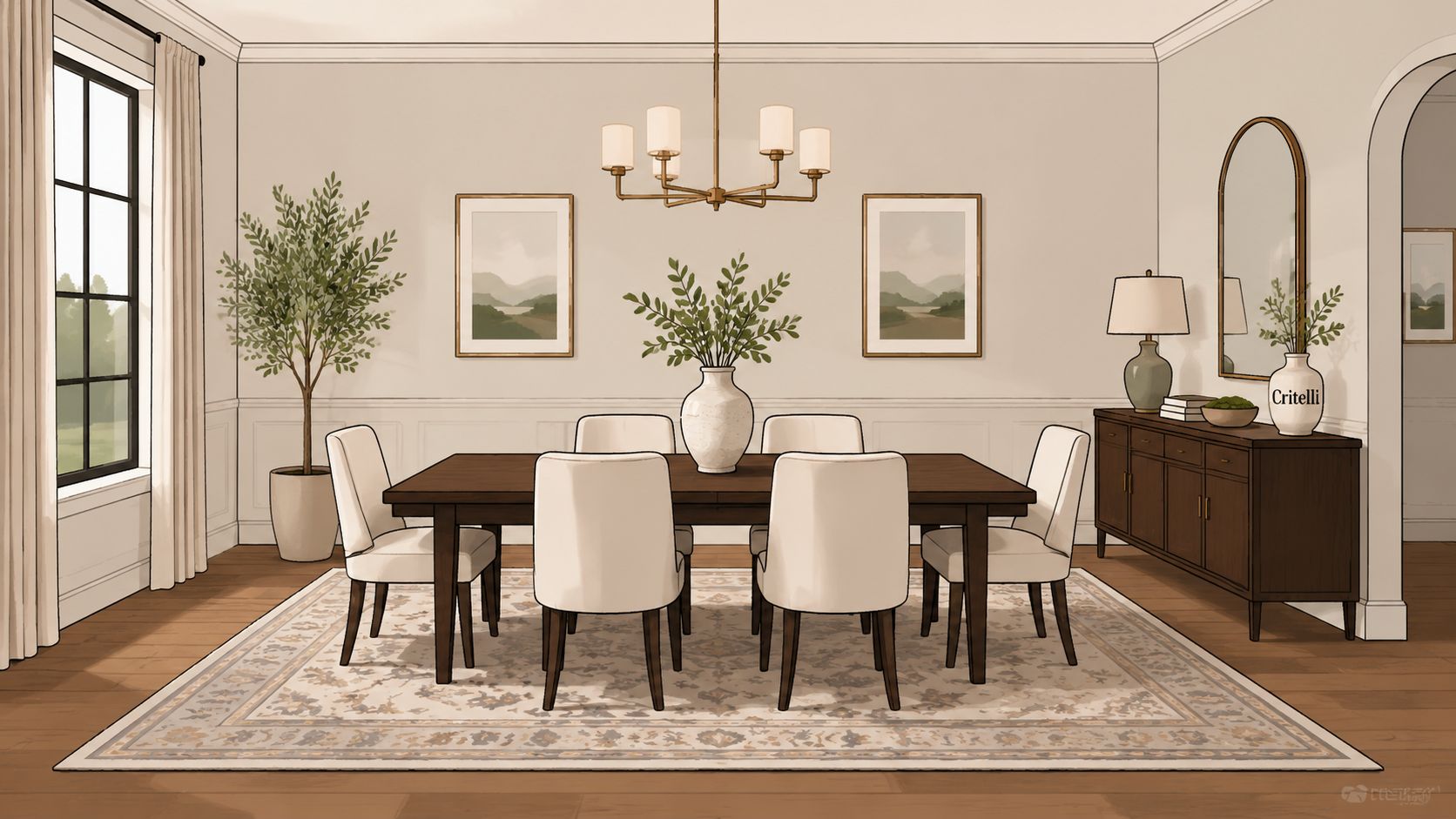
For homeowners exploring Luxury furniture Niagara, Interior design services St. Catharines, Custom furniture Southern Ontario, and Hand-knotted rugs Ontario, the strongest results come from a curated selection that considers the complete room concept rather than a single item in isolation. A thoughtful visit to the Rug Market in Hamilton can help anchor that search with pieces chosen for heirloom quality, timeless craftsmanship, and real-life use.
The process should feel smooth from first measurement to final placement. White-glove service matters because a beautiful rug deserves a careful arrival, especially in homes across the Greater Niagara, Hamilton, and Toronto markets where every architectural detail counts.
Experience refined living with Critelli Furniture, a family-run Southern Ontario design destination since 1914. Visit the Rug Market to find your room's foundation. Book your complimentary design consultation today. Experience the craftsmanship in person at our King Street Showroom.