
Heirloom Solid Wood Round Dining Room Tables

A dining room often reveals what matters most in a home. You see it on an ordinary Wednesday, when homework shares space with serving bowls, and again on a holiday evening, when one more chair is pulled in and nobody seems in a hurry to leave. In those moments, the table isn’t background furniture. It’s where conversation settles, where family rituals take shape, and where a house begins to feel layered with memory.
That’s why so many discerning homeowners pause over the choice of a dining table longer than they do over almost any other furnishing. A sofa may anchor a room, but a dining table asks more of itself. It must be practical every day, gracious when guests arrive, and beautiful enough to live with for decades. Among the many options available, solid wood round dining room tables hold a special place because they encourage connection in a way rectangular forms often don’t. Without corners, everyone sits in relationship to one another. The atmosphere changes. Meals feel more conversational, more intimate, more generous.
For clients across Niagara, Hamilton, and Toronto, that matters. Open-concept homes need pieces that soften hard architectural lines and keep movement easy. Established homes need furnishings with presence, not noise. In both settings, the right round table becomes an investment in daily life rather than a short-term style decision.
That idea of permanence has long guided the houses we most admire. At Critelli’s heritage and lifestyle story, you can see how a family-run Southern Ontario name established in 1914 has built its reputation around enduring design, careful curation, and furnishings chosen to become part of a family’s history. Heirloom quality isn’t a slogan. It’s a standard.
Introduction The Table as the Heart of the Home
A well-chosen dining table changes the rhythm of a room. In the morning, it may hold coffee cups and newspapers. By evening, it becomes the place where guests lean in, children linger, and the conversation stretches past dessert. The finest homes don’t force these moments. They support them, with pieces that feel natural, substantial, and ready for real life.
Round tables have always done this especially well. They remove hierarchy from seating, ease circulation, and create a sense of welcome that feels immediate. In homes where the dining area opens to a kitchen or family room, a round silhouette often reads as softer and more architectural at once. It gives the eye a rest from straight lines and corners, while making the room feel more social.
Why the shape matters emotionally
There’s a reason clients often describe a round table in personal terms before they mention finish or base style. They’ll say it feels inviting. They’ll say it looks easier to live with. They’ll say it’s where they picture Sunday dinners or long evenings with friends.
That instinct is sound. A round form encourages eye contact and easier conversation. It also makes the room more forgiving when life isn’t perfectly arranged. A last-minute place setting doesn’t look awkward. A smaller room doesn’t feel boxed in. The table seems to gather people rather than seat them.
A dining table should do more than fit the room. It should support the way you want people to feel when they’re in it.
Why heirloom quality changes the decision
When you begin to see the table as part of your family’s story, the buying criteria shift. You start asking better questions. Will the surface age gracefully? Can the finish be refreshed? Will the proportions still feel right in ten years? Does the craftsmanship justify the commitment?
That’s the difference between buying for the season and buying for the next generation. Solid wood round dining room tables answer those questions with unusual confidence because their value isn’t only visual. Their value is structural, tactile, and lasting.
The Enduring Allure of Solid Wood
The appeal of solid wood begins with touch. You notice it in the density of the top, the depth of the grain, and the quiet confidence of a material that doesn’t try to imitate anything else. Veneers and engineered surfaces can look polished at first glance, but they rarely offer the same sense of permanence. Solid wood has presence. It also has the rare ability to become more characterful as the years pass.

For many Southern Ontario homeowners, that matters as much practically as it does aesthetically. A dining table here doesn’t live in a static environment. Homes near the lake, urban properties with strong heating cycles, and heritage houses with older envelopes all experience seasonal shifts in interior humidity. As noted in a discussion of regional wood performance at Snyder’s Furniture, homeowners need guidance on how solid wood responds to Southern Ontario’s humidity and temperature fluctuations, because those conditions directly affect long-term stability.
What solid wood gives you that substitutes don’t
A solid wood table can age with dignity because the material is honest all the way through. If the surface picks up the marks of family life, a skilled craftsperson can often refresh it. That possibility alone changes the life cycle of the piece. You’re not merely preserving appearance. You’re preserving usefulness.
Here’s what clients tend to appreciate most:
- Repairability: Small wear marks don’t automatically mean replacement.
- Natural variation: Grain, tone, and texture create character that machine-perfect surfaces often lack.
- Visual depth: Stains and finishes sit differently on real wood, giving the surface more richness and movement.
- Long-term relevance: Solid wood doesn’t depend on a trend finish to feel substantial.
Those qualities also affect how a room feels. In a design-forward interior, authentic materials keep the space from feeling over-composed. In a traditional room, they provide continuity with the home’s architecture.
Why local climate should influence your choice
Many buyers understand that wood moves. Fewer understand that movement isn’t a flaw. It’s a natural trait that must be anticipated by good construction. That’s where well-made solid wood tables separate themselves from lower-grade alternatives. They’re built with the expectation that seasons change and homes breathe.
If you’re comparing furnishings across rooms, the same principle applies to cabinetry and casegoods. Templeton Built’s guidance on essential tips for your laundry renovation is useful because it reinforces a broader truth. Material choice should always respond to how a room is used and how moisture behaves in a home.
For dining furniture, that means asking how the wood was prepared, how the top is supported, and whether the finish suits daily use. Those are the questions that turn a beautiful table into a sensible investment.
Beauty that rewards a closer look
Solid wood also offers something more difficult to quantify. It rewards attention. A white oak top may read calm from across the room, then reveal medullary figure and grain variation when you sit beside it. Walnut brings natural depth and warmth without needing visual excess. Maple feels cleaner and more refined, often suiting interiors where subtlety is part of the luxury.
For a more detailed look at species and performance, Critelli’s guide to choosing the right hardwood is a helpful reference when you’re weighing longevity against style. That’s often the real decision. Not whether wood is beautiful, but which wood tells the right story in your home.
Decoding Timeless Craftsmanship
A dining table may look simple, but the pieces that last for decades are rarely simple in construction. The eye sees shape and finish first. The true test lies underneath, in how the wood was dried, how the top is joined, and how the base manages weight and movement over time. Confident buying begins with this understanding.
Start with the wood species
Not every hardwood creates the same feeling in a room. Clients often arrive assuming colour is the main difference, but grain and texture shape the personality of a table just as much.
Consider these familiar choices:
- White oak: Distinctive grain, architectural presence, and a natural affinity for both classic and contemporary interiors.
- Walnut: Richer in tone, often more refined in appearance, excellent for rooms that benefit from warmth and depth.
- Maple: Finer and quieter in grain, well suited to spaces where restraint matters.
A Mission-style table in oak carries a very different visual weight than a sleek pedestal in walnut. Neither is superior. The right answer depends on the room’s architecture, your flooring, and whether you want the table to command attention or anchor the composition without dominating.
If you’re exploring species with a tropical sensibility or comparing how different woods age, teak dining table inspiration can also sharpen your eye for grain, tone, and finish behaviour.
Why kiln drying is not optional
In Southern Ontario, kiln-dried hardwoods deserve special attention. According to Artisan Born’s product and material guidance, kiln drying reduces wood moisture content to 6 to 8%, which helps minimise cupping, warping, and cracking in a climate that sees meaningful seasonal variation. The same guidance notes that acclimating a table indoors for 2 weeks before installation can reduce future service calls by 40%.
That sounds technical, but the idea is straightforward. Wood behaves a bit like a natural fibre. If its moisture level isn’t properly stabilised before it enters your home, it may respond dramatically to winter heating and summer humidity. Good kiln drying narrows that risk before the furniture ever reaches your dining room.
Practical rule: Ask whether the table was kiln dried and whether the maker expects an acclimation period before final placement.
Joinery tells you how seriously the piece was made
Joinery is the hidden language of craftsmanship. Most clients don’t need to become woodworkers, but a few basic terms are worth understanding. Mortise-and-tenon joints, well-fitted supports, and thoughtfully attached tops all signal that the maker planned for weight, use, and seasonal movement.
A useful analogy is tailoring. Two jackets may look similar on a hanger, but internal construction determines how they hold their shape year after year. Furniture works the same way. Proper joinery lets the piece stay composed under the stress of daily use.
When evaluating solid wood round dining room tables, look for signs that the maker respected both beauty and physics:
- A substantial top that feels appropriately scaled to the base.
- A base structure that doesn’t rack or shift under pressure.
- Consistent finish application that protects without masking the grain.
- Clear care guidance from the retailer or maker.
Ask better questions in the showroom
The most discerning buyers don’t only ask, “Is it solid wood?” They ask how the top was prepared, what finish protects it, whether the piece was built for climate shifts, and how the table should be introduced into the home.
That change in questioning often leads to better furniture. It also gives you a clearer sense of whether you’re looking at a decorative purchase or an heirloom-quality one.
A Guide to Perfect Proportions and Seating
The most beautiful dining table can still feel wrong if the scale is off. In practice, clients rarely make mistakes because they choose a table that’s too attractive. They make mistakes because they choose one that’s too large for the room, too small for the way they entertain, or too visually heavy for the surrounding architecture.
A round table is forgiving, but it still needs proportion. The diameter influences not only how many people can sit comfortably, but also how chairs move, how the room flows, and whether the setting feels elegant or cramped.
Round Dining Table Seating Capacity Guide
| Table Diameter | Comfortable Seating | Maximum Seating |
|---|---|---|
| 48 inches | 4 | 6 |
| 54 inches | 4 to 5 | 6 |
| 60 inches | 6 | 8 |
| 72 inches | 8 | 10 |
The chart gives you a starting point, not a final answer. Chair width, base style, and how formally you like to entertain all influence your dining experience. A host who enjoys generous elbow room will make a different choice than a family who wants occasional flexibility for holidays.
For homeowners comparing options visually, round dining table collections in Canada can help translate diameter into actual room presence.
How to think about the room around the table
A round table doesn’t end at its edge. It needs breathing room for chairs to slide back and for people to pass without feeling squeezed. In open-concept homes, this clearance is what keeps the dining area from interrupting the flow between kitchen, great room, and outdoor access.
Use these design checks when assessing fit:
- Chair movement: Pull one chair out in your mind before approving the table size. If that simple action narrows the room too much, step down in diameter.
- Sightlines: A large round table can be visually calm, but if it blocks the room’s focal point, it may still feel intrusive.
- Lighting alignment: The table should sit comfortably beneath the pendant or chandelier, not drift awkwardly outside its visual centre.
- Rug relationship: If you’re placing the table on a rug, the chairs should remain on it when occupied.
The difference between fitting and belonging
A table may technically fit a room and still feel unresolved. That usually happens when the scale ignores the room’s overall composition. In a heritage home, a small top can look insubstantial beneath high ceilings. In a compact newer build, an oversized pedestal may dominate the floor plate.
The right size feels inevitable once it’s in the room. It doesn’t ask for attention through scale alone.
One practical approach is to think in terms of daily living first, entertaining second. Choose the size that supports your ordinary routine with grace. If you occasionally host more people, there are ways to supplement with nearby seating, but a too-large table imposes itself every single day.
A quick way to decide between two sizes
If you’re torn between diameters, compare them against these questions:
- Do you host more often than you dine casually as a household?
- Are your dining chairs slender, upholstered, or generously scaled?
- Does the room benefit from a stronger centrepiece, or from more visible floor area?
- Will the table be part of a complete room concept with a sideboard, rug, and statement lighting?
That final question matters. Proportion is never isolated. It belongs to the room as a whole.
Defining Your Aesthetic with Styles and Finishes
Style decisions become easier once you stop thinking of them as labels and start reading them as signals. A table’s base, edge profile, finish, and wood species all tell you how formal, relaxed, historic, or architectural the piece will feel. The best choices usually come from alignment, not novelty.
Traditional, modern, and the spaces in between
A traditional round table often leans on craftsmanship details. You’ll see richer stains, shaped pedestals, and profiles that speak to older cabinetry, millwork, or classic upholstery. In the right home, this feels grounded and cultivated rather than heavy.
A modern design tends to simplify the lines. The top may be cleaner, the bevel more restrained, and the base more sculptural. This style often suits homes where the architecture is already doing part of the visual work.
Transitional rooms sit between the two. They often benefit most from solid wood round dining room tables because the material brings history, while the silhouette keeps the room from feeling formal.
Why pedestal bases keep appearing in well-designed rooms
Pedestal tables aren’t only a style choice. They solve practical problems elegantly. According to this product guidance on round pedestal construction, pedestal base configurations provide 25 to 35% greater stability against tip-over compared with legged models. The same guidance notes that a 60-inch table with a double pedestal can distribute a 500+ lbs static load evenly, helping reduce wobble on uneven floors.
That matters in Southern Ontario, where older homes don’t always offer perfectly level surfaces. It also matters in family homes where comfort and clear legroom are essential.
From a design perspective, pedestal bases offer three advantages:
- Cleaner seating: Fewer legs mean fewer conflicts with chair placement.
- A softer centre: The room feels less cluttered beneath the table.
- Stronger silhouette: A beautifully proportioned pedestal reads as furniture, not solely utility.
Finishes shape the mood more than most buyers expect
Finish isn’t just colour. It’s atmosphere. A deep walnut stain can lend formality to a room with pale walls and plaster details. A natural oak finish feels lighter, often more architectural, and easier to integrate into a layered contemporary home. Painted or mixed finishes can feel bespoke when handled with restraint.
Window treatments also influence how that finish reads throughout the day. If you’re refining the full envelope of the room, a review of window coverings for Katy homes offers a useful reminder that filtered light, privacy, and fabric texture all affect how wood tones are perceived in lived spaces.
A finish should support the architecture and lighting of the room, not compete with them.
Small details that make a large difference
Edge profile is one of the easiest details to overlook and one of the quickest to change the tone of a table. A reverse bevel feels sharper and more refined. A fuller rounded edge can feel more traditional or family-oriented. Likewise, a slatted pedestal introduces rhythm, while a carved base introduces ceremony.
These are subtle choices, but subtlety is where enduring rooms are built.
Creating a Cohesive Space Around Your Table
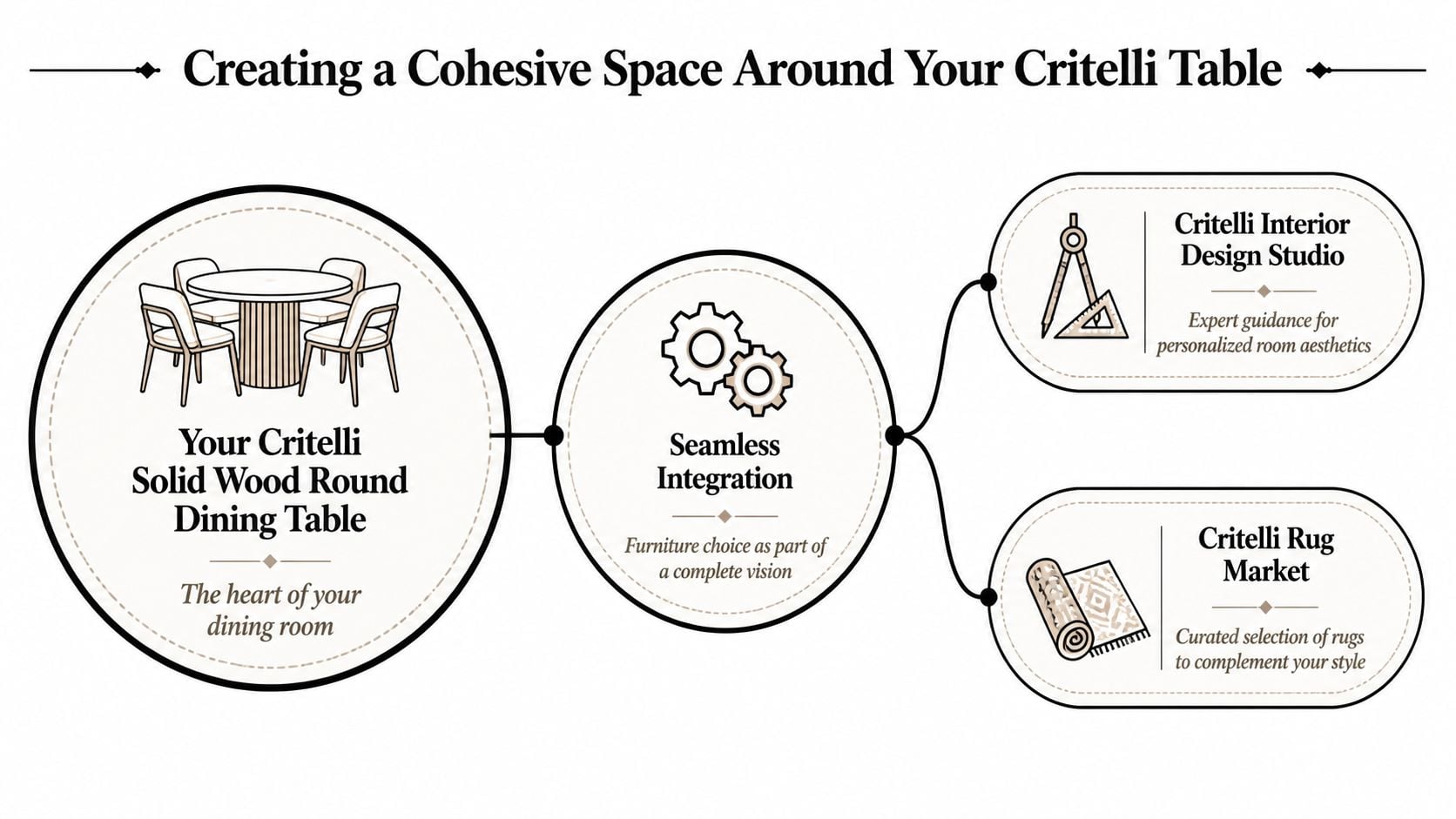
A dining table shouldn’t be chosen in isolation. The rooms that feel composed, welcoming, and luxurious are almost always designed as complete environments. The table may be the anchor, but the chairs, rug, lighting, and surrounding materials determine whether the room feels resolved.
That philosophy has become more important as homeowners move away from matching sets and toward layered interiors. The postwar popularity of round pedestal dining in Southern Ontario helped establish the form in everyday homes, and that legacy still informs the market. As noted in Casual Dine’s discussion of dining room evolution, solid wood furniture sales in Ontario reached CAD 2.8 billion in 2023, and Hancock & Moore sales at Critelli saw a 30% increase in 2024 among trade professionals. The point isn’t trend-chasing. It’s that design-aware buyers increasingly treat the dining room as a curated composition.
Start with the chairs, not as an afterthought
Dining chairs change the personality of the table immediately. Upholstered chairs soften a heavier wood top and invite longer evenings. Exposed wood chairs can sharpen the architecture of the room and keep the setting visually lighter. Leather introduces depth and formality. Mixed materials often create the most collected result.
Here are three pairings that work beautifully:
- Designed table, softer chair: Ideal when the table has a strong pedestal or a darker finish.
- Textured wood with simpler seating: Useful when the grain itself should remain the visual focus.
- Mixed host and guest chairs: A refined way to add hierarchy without making the room feel staged.
Let the rug do foundational work
A rug in a dining room is often misunderstood as a finishing touch. In well-designed interiors, it’s closer to the foundation. It defines the dining zone, introduces texture, absorbs visual noise, and often gives the room its first real layer of colour. This is why thoughtful designers describe rugs as Art for your Floor.
A hand-knotted wool rug beneath a round wood table can do remarkable work. It can cool down a warm stain, soften stone or hardwood flooring, and provide the palette that links artwork, drapery, and seating together.
Designer’s Insight
Our designers suggest pairing a sculptural wood pedestal with chairs that contrast in texture, then grounding the room with a neutral hand-knotted rug so the materials speak to one another rather than compete.
Lighting completes the composition. The fixture above the table should reinforce the room’s centre and sit in visual harmony with the shape below it. If you’re refining that layer, dining room lighting and pendants are worth studying alongside the table rather than after it.
Think in complete room concepts
The most polished dining rooms usually share a few qualities:
- Material balance: Wood, textile, metal, and glass each have a role.
- Scale discipline: No single piece overwhelms the others.
- Colour restraint: Repetition of tone creates calm.
- Functional comfort: Guests can sit, move, and linger easily.
An interior design studio offers value in this context. While a table is important, the room is your primary living space.
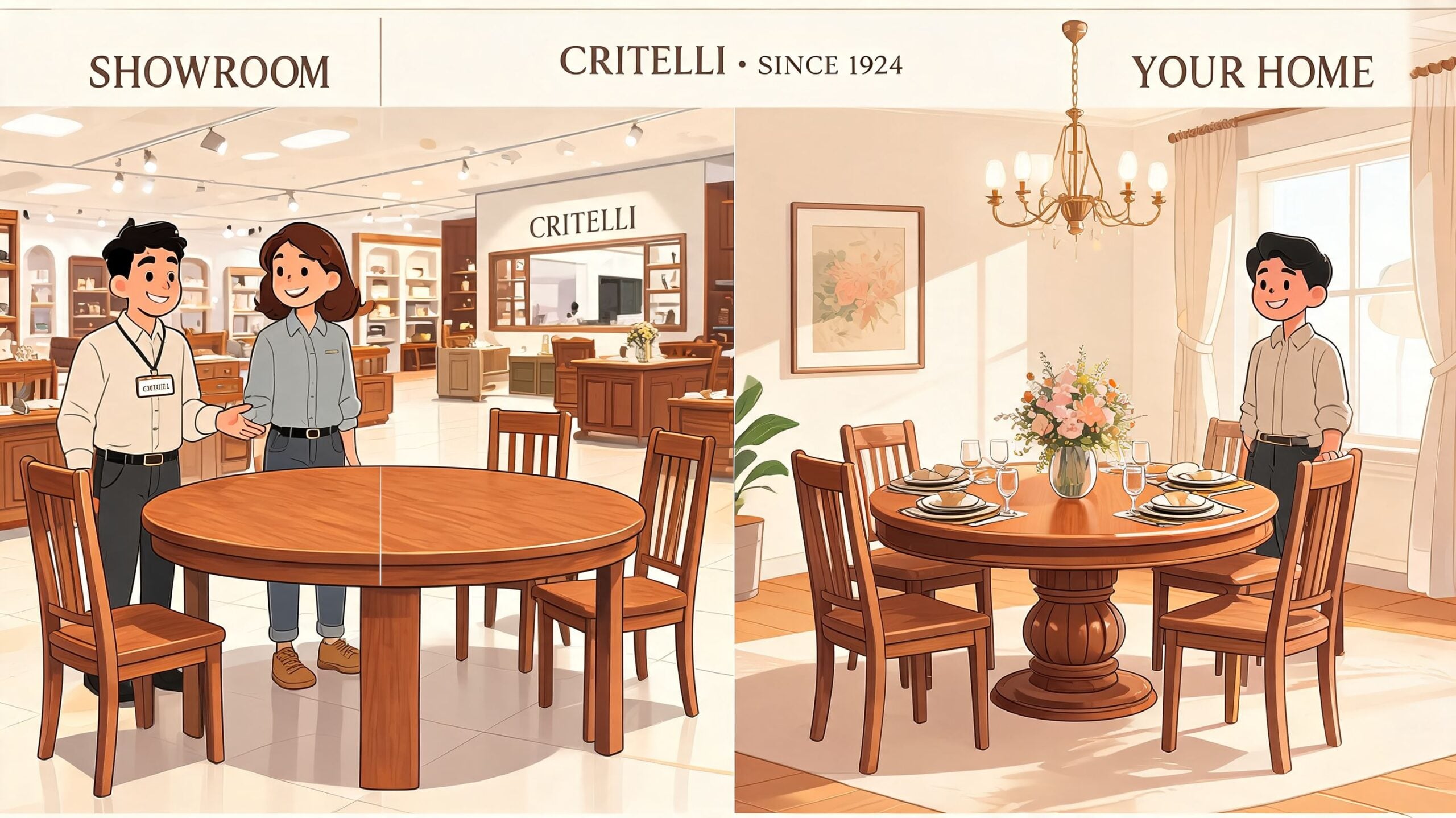
The Complete Critelli Experience From Showroom to Home
A significant furniture purchase should feel considered, not stressful. That’s especially true when you’re choosing a dining table intended to stay with you for decades. The experience matters because the purchase isn’t only about selecting an object. It’s about aligning craftsmanship, scale, finish, and home logistics in a way that feels harmonious.
One reason clients return to a heritage retailer is trust built over time. Rau Antiques’ table history overview is the reference tied to this regional market note that Critelli Furniture, established in 1914 in St. Catharines, continues a legacy in which solid wood round tables from brands such as Stickley represent 15 to 20% of dining sales. The same source notes that a 2022 survey found 62% of Southern Ontario homeowners prefer solid wood for durability and aesthetic warmth, with round shapes favoured in 35% of new builds.
Why a century-old partner changes the process
Longevity in business doesn’t guarantee taste, but it often signals something equally important. It suggests consistency in service, product knowledge, and after-purchase support. For a client investing in heirloom quality, that matters. You want guidance that goes beyond catalogue specifications.
A heritage approach usually improves the process in practical ways:
- Selection is more disciplined: You spend less time sorting through disposable options.
- Design help is more contextual: The table is viewed in relation to your full room.
- Customisation feels manageable: Finishes, scale, and upholstery decisions are easier with experienced direction.
For those seeking a bespoke result, custom furniture in Southern Ontario often begins with those quieter decisions. Which finish sits best against your flooring. Which pedestal profile respects the architecture. Which chair fabric supports daily living while still feeling luxurious.
From consultation to placement
A well-run purchase has a rhythm to it. First comes the showroom conversation, where proportions, wood species, and style direction become clear. Then comes the design refinement, often including adjacent pieces, lighting, and rugs. Finally, there’s installation.
White-glove service is where many luxury experiences either feel complete or fall apart. Professional delivery and assembly protect the investment and remove guesswork at the most vulnerable stage. For homeowners in Greater Niagara, Hamilton, and Toronto, that final layer is not a luxury in the superficial sense. It’s a practical safeguard for a substantial piece.
A beautifully made table still needs a beautifully managed arrival.
That includes careful handling, proper assembly, precise placement, and removal of packaging so the room is ready to enjoy. It’s the difference between receiving furniture and feeling that the home has been finished properly.
A purchase that respects the future
The finest dining tables are chosen with time in mind. Not just whether they suit the house now, but whether they’ll still feel right after a renovation, a move, or a change in family routine. That’s why seasoned buyers often gravitate toward timeless craftsmanship, artisanal detail, and materials with proven staying power.
A round solid wood table asks for commitment. In return, it offers years of use with grace, warmth, and adaptability.
Conclusion An Invitation to Create Your Legacy
A dining table enters the home as furniture. If it’s chosen well, it becomes something more enduring. It becomes the place where ordinary evenings gain texture, where celebrations take shape, and where the marks of use deepen the piece rather than diminish it. That’s the promise behind solid wood round dining room tables. They combine intimacy of form with lasting material, and they ask to be lived with rather than merely looked at.
For Southern Ontario homeowners, that decision is even more meaningful when it’s guided by experience rooted in place. Climate, architecture, family patterns, and design preferences all matter. So does the confidence that comes from working with a knowledgeable local partner who understands how a table should function in a Niagara heritage home, a Hamilton renovation, or a Toronto condominium with a carefully edited floor plan.
The best rooms are rarely built around impulse. They’re shaped through thoughtful choices, refined proportions, and a respect for craftsmanship that won’t date in a few years. A solid wood round table belongs to that way of living. It’s practical, design-forward, and generous in spirit.
If you’re ready to choose a future heirloom with care, take your time with the details. Sit at different diameters. Study the grain. Compare bases. Consider the rug, the chairs, and the light above. The right table does more than suit the room. It will help define the life lived within it.
Experience the craftsmanship in person at Critelli Furniture. Book your complimentary design consultation today, or visit the Rug Market to find your room’s foundation.